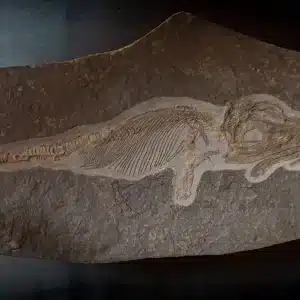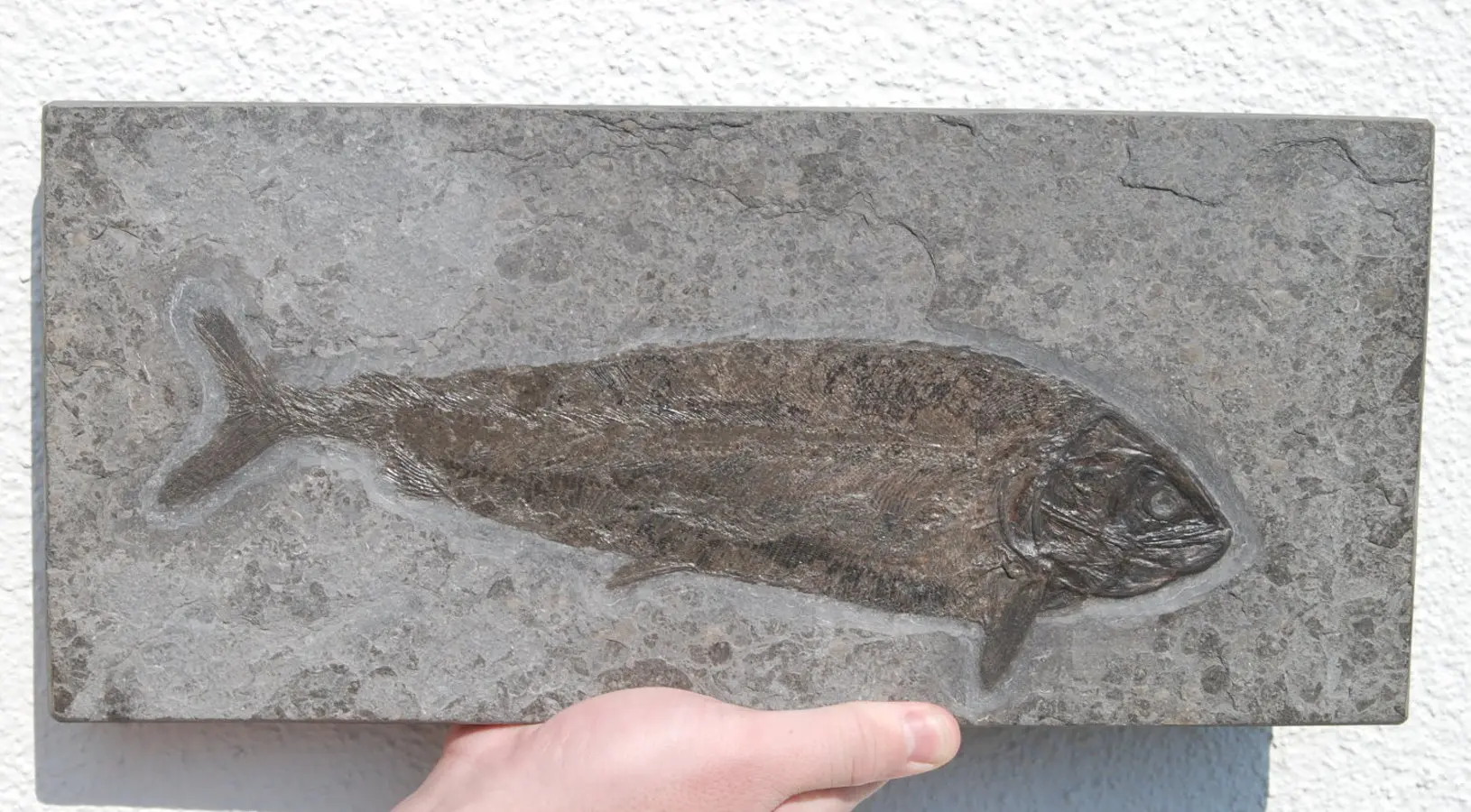
Hypsocormus insignis
38x17x1.5 cm (matrix)
Holzmaden; Lias Epsilon II/4
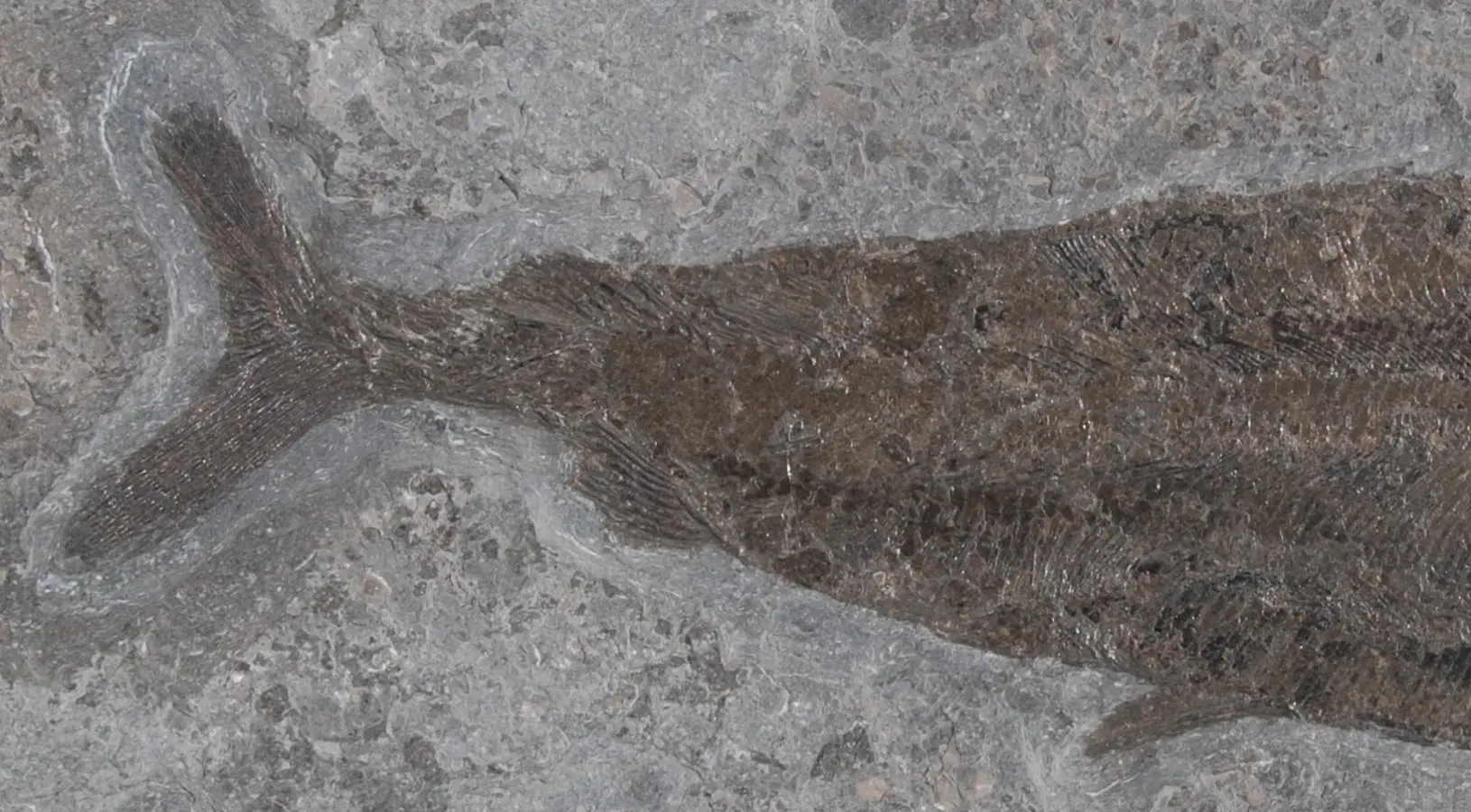
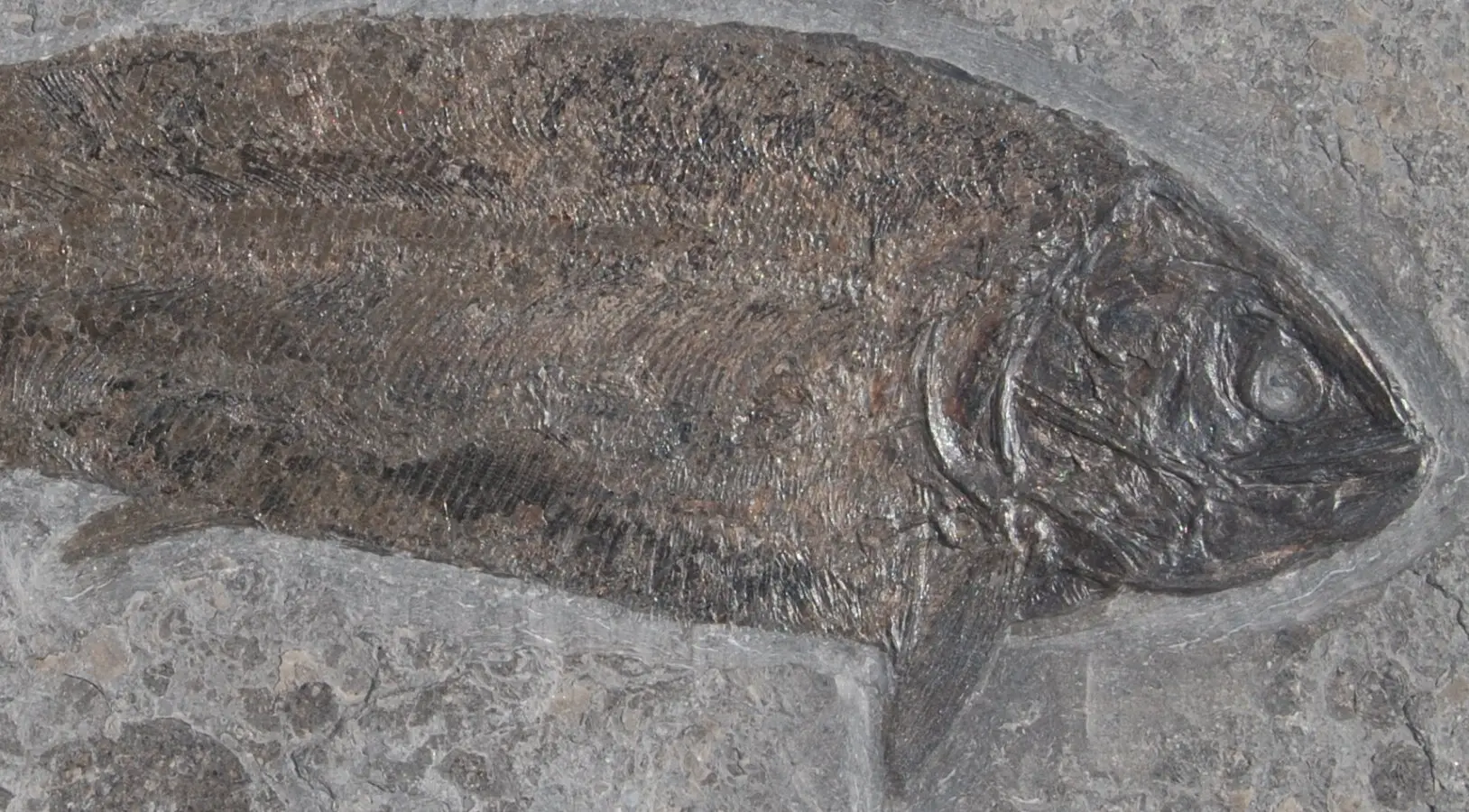
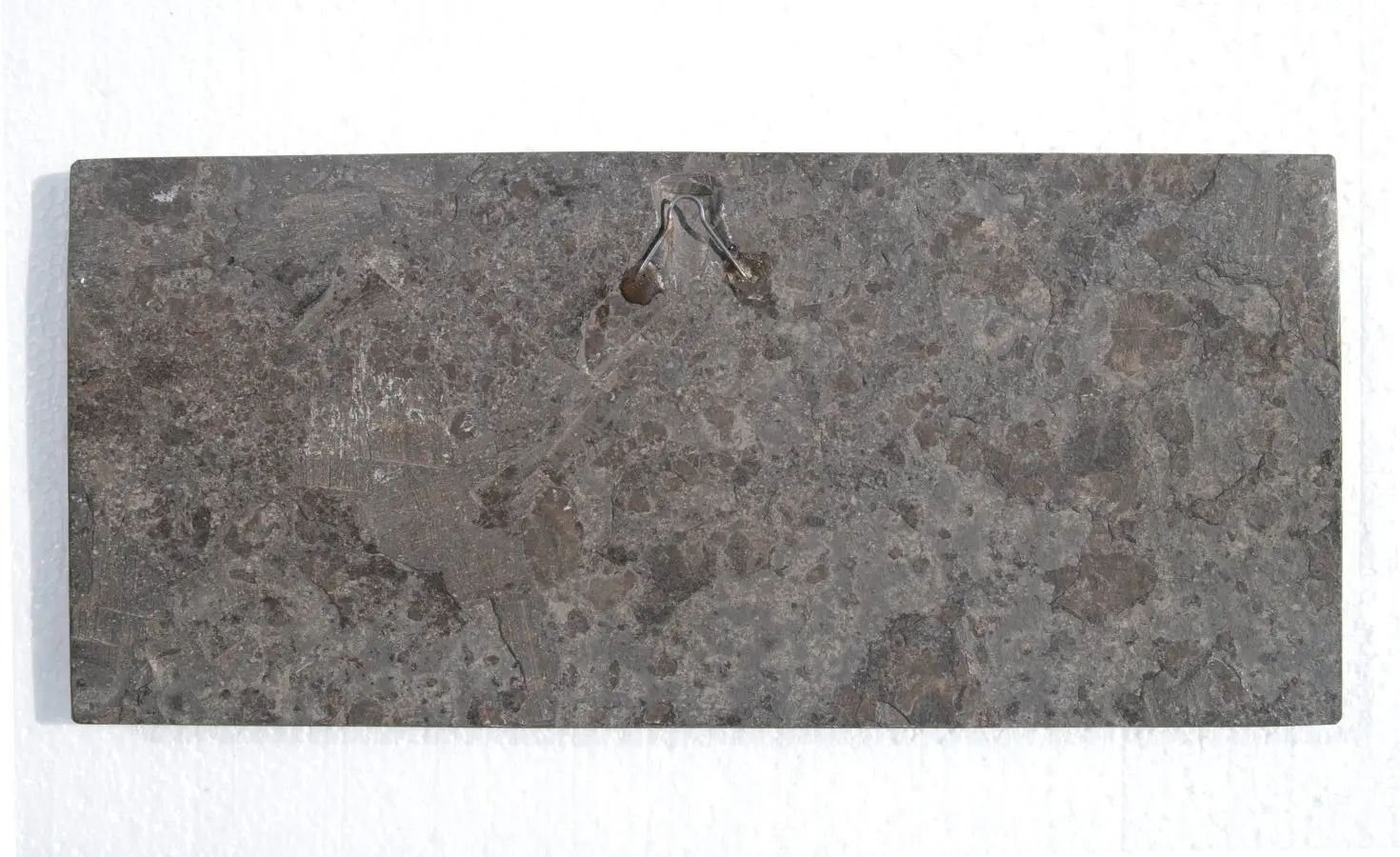
Complete fish, very rare, spectacular preservation, all original, zero restoration, detailed teeth and scleral eye ring, on natural matrix, plate with wall-hanging mold. A very delicate piece of museum quality.
Pay
The High-Speed Hunter of the Jurassic Sea: Hypsocormus insignis from Holzmaden
Hypsocormus insignis is one of the most advanced and dynamic predatory fish of the Early Jurassic. It belongs to the extinct family Pachycormidae and, about 180 million years ago, occupied an ecological niche comparable to that of modern tuna or marlin. Fossils from the Posidonia Shale at Holzmaden often show this fish preserved in a way that still gives us a sense of its power and speed today.
Biology and lifestyle
Hypsocormus was a pure-bred apex predator of open water. Its name (from the Greek “hypsi” for “high” and “kormos” for “trunk”) refers to its somewhat more compact but muscular physique compared to related species.
Its entire skeleton was trimmed for maximum efficiency in the water: The pectoral fins were extremely long and sickle-shaped, which gave it excellent stability at high speeds. The homocerke (symmetrical) tail fin is particularly characteristic, which acted like a powerful outboard motor and enabled lightning-like attacks.
In contrast to the shellfish snapper Lepidotes, Hypsocormus was a specialized fish eater. Its mouth was armed with numerous long, pointed fangs that were perfectly designed to grab smaller fish or squid in flight. Its large eye sockets prove that it was a highly developed visual hunter, able to locate its prey even in deeper or murkier water zones.
The scales and the armor
While fish like Dapedium relied on heavy armor, the scales of Hypsocormus were greatly reduced. It still had scales, but they were much thinner and smaller than the massive ganoid plates of its contemporaries. This reduction in weight and surface friction was the key to its superior maneuverability and top speed.
The special feature of the Holzmaden finds
Fossils of Hypsocormus insignis from Holzmaden are particularly prized due to their rarity compared to other species. The fine slate matrix often preserves details such as the fine fin rays or the sharp toothing in dark pyrite preservation. The pieces are often embedded in such a way that the streamlined silhouette of the animal can be perfectly traced.
A Hypsocormus is spectacular evidence of the evolutionary development leading to modern predatory fish and offers a fascinating contrast to the more armored inhabitants of the Jurassic Sea.