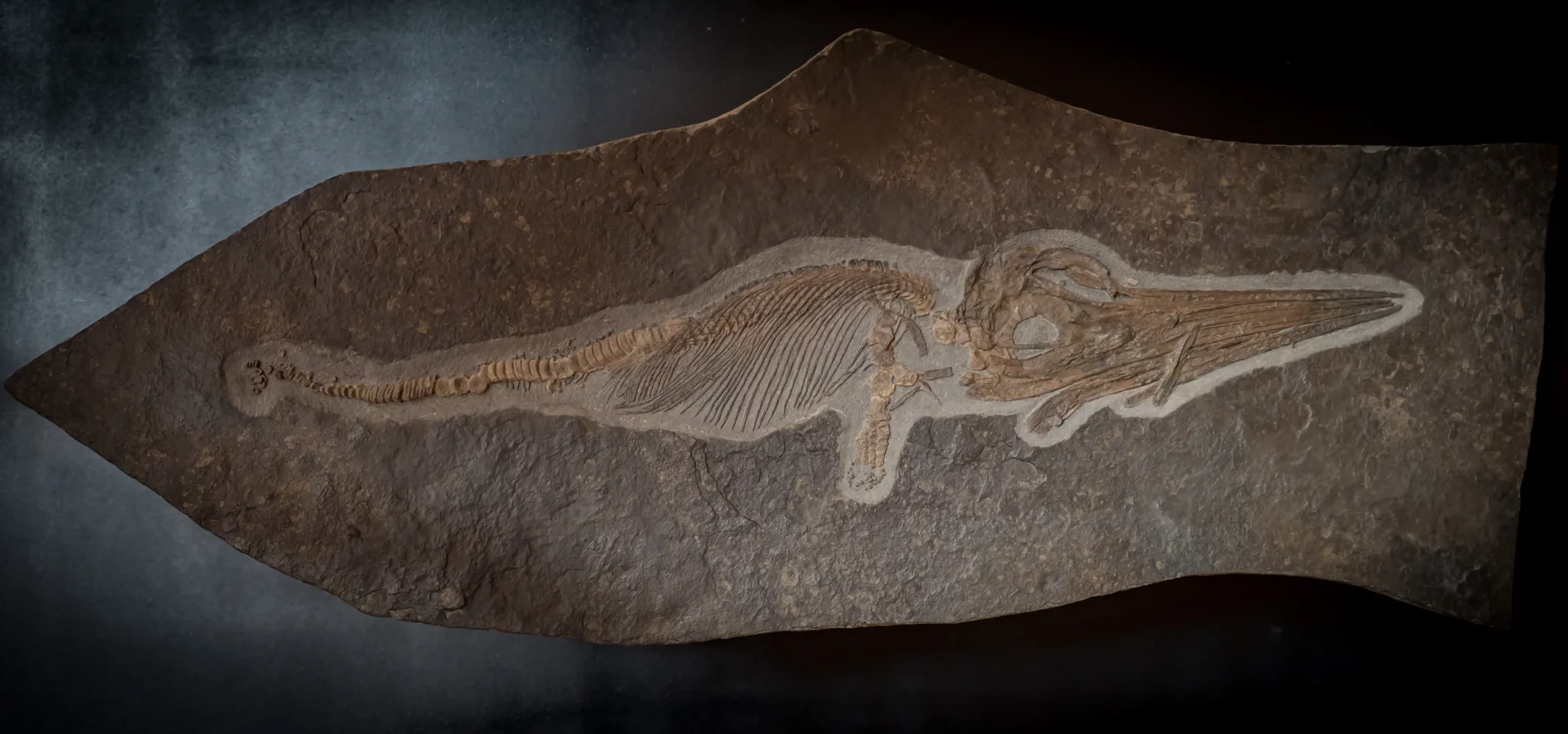
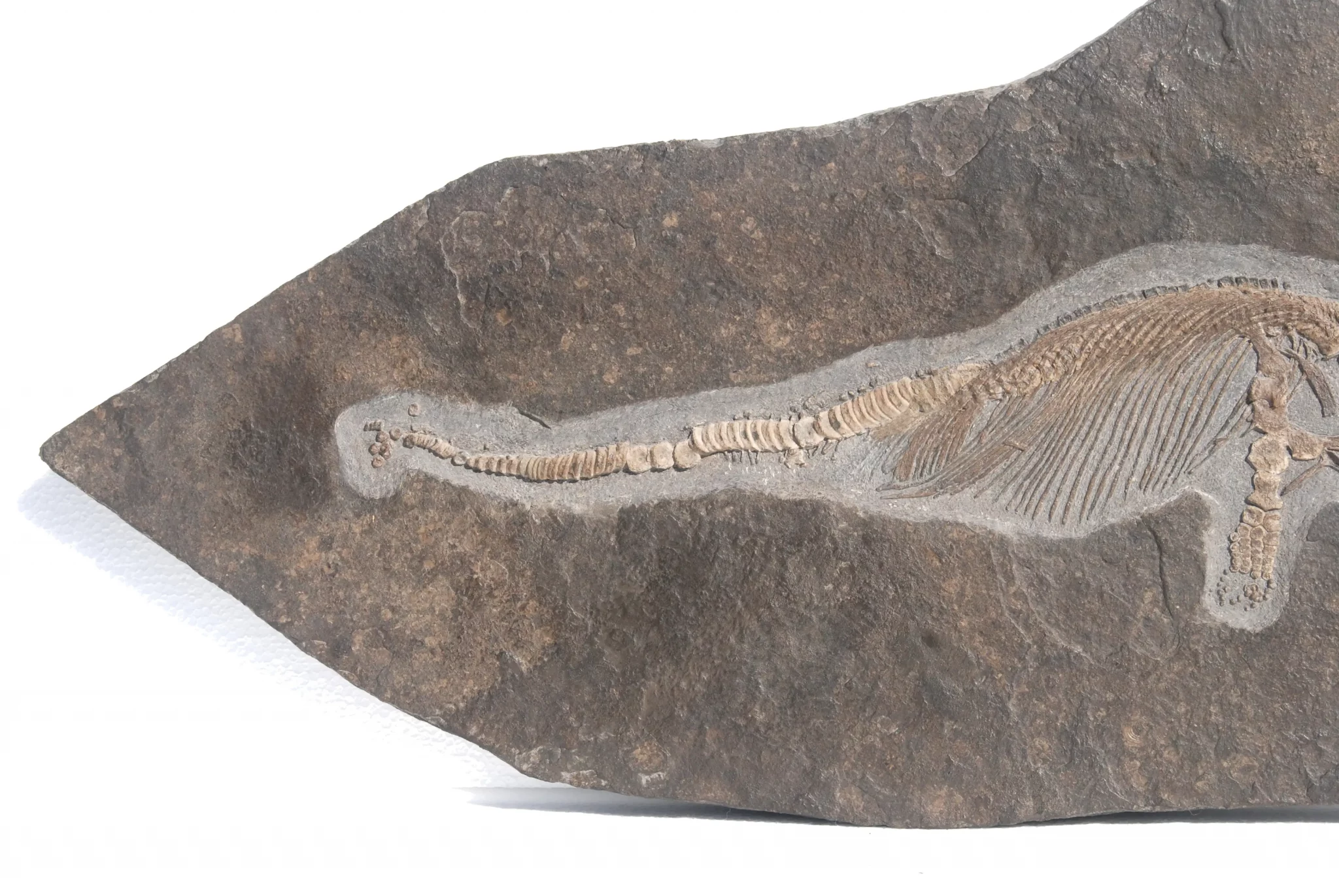
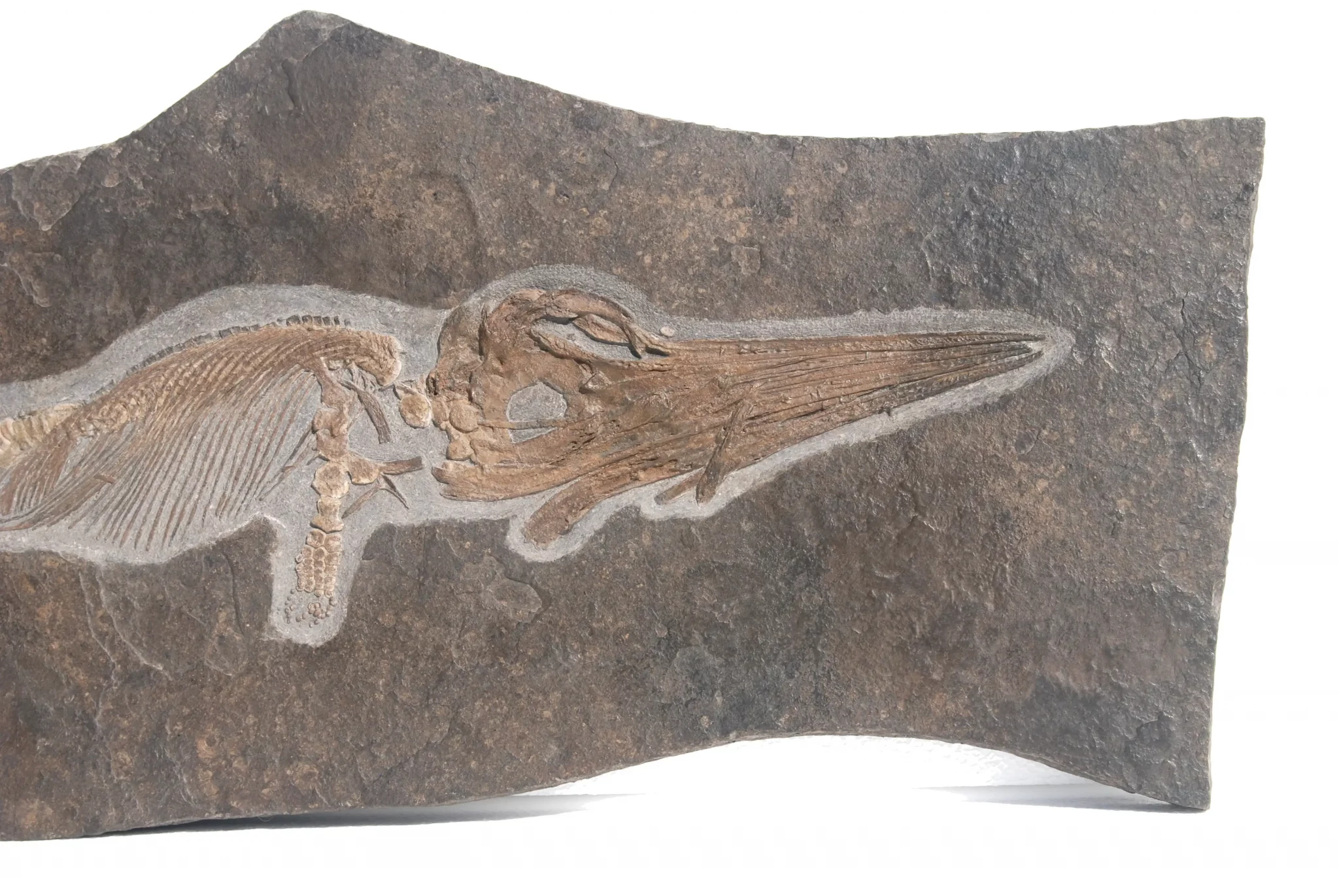
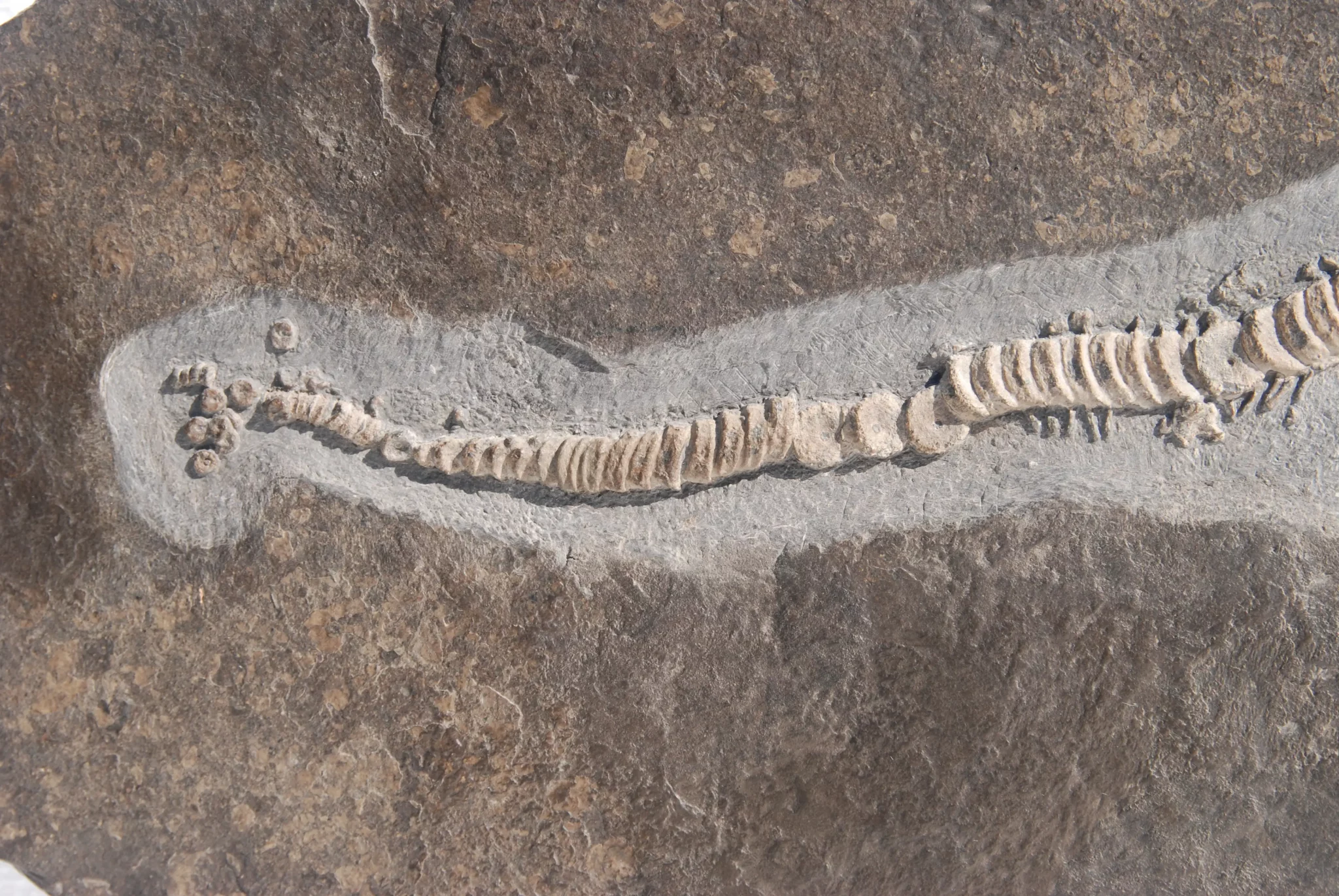
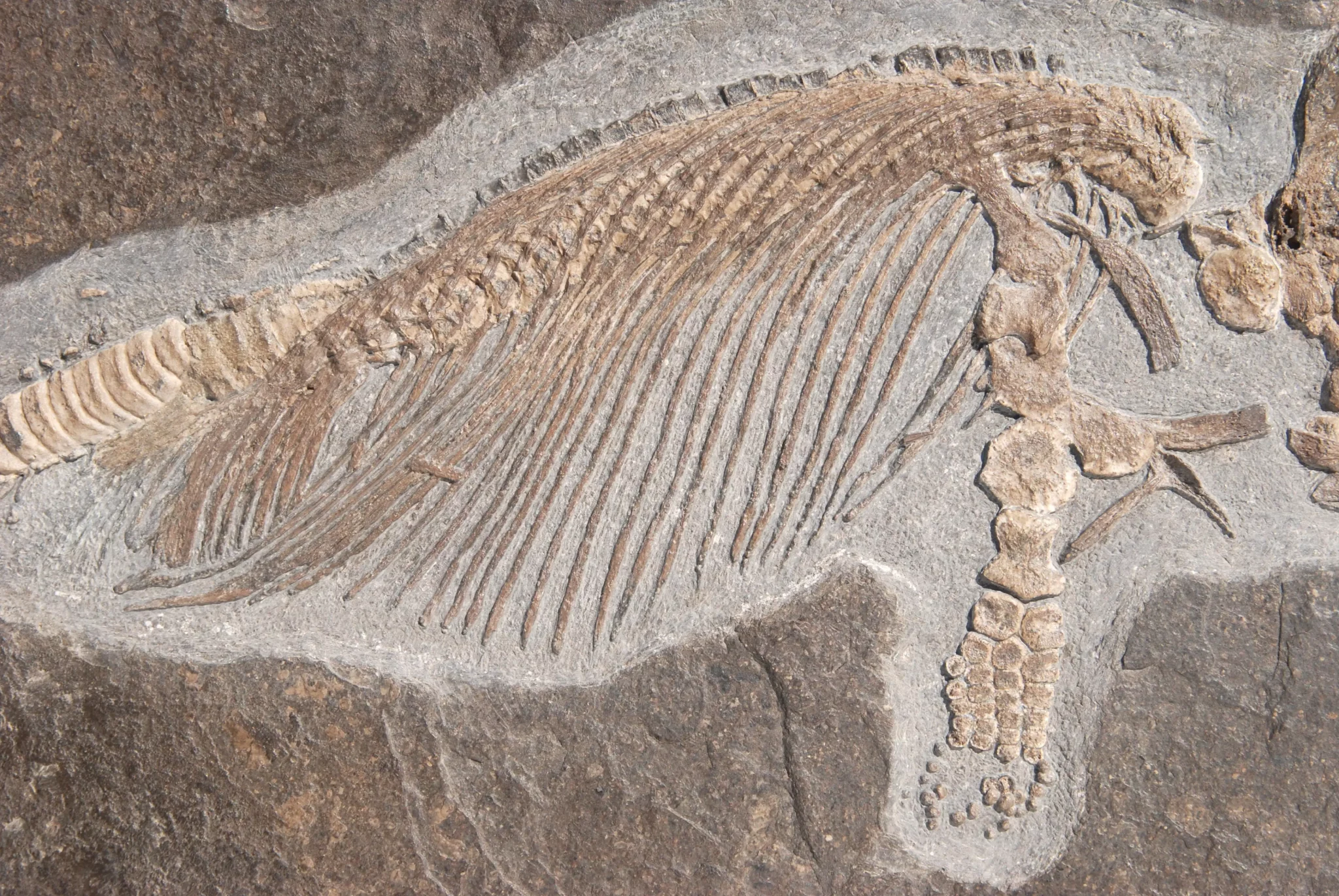
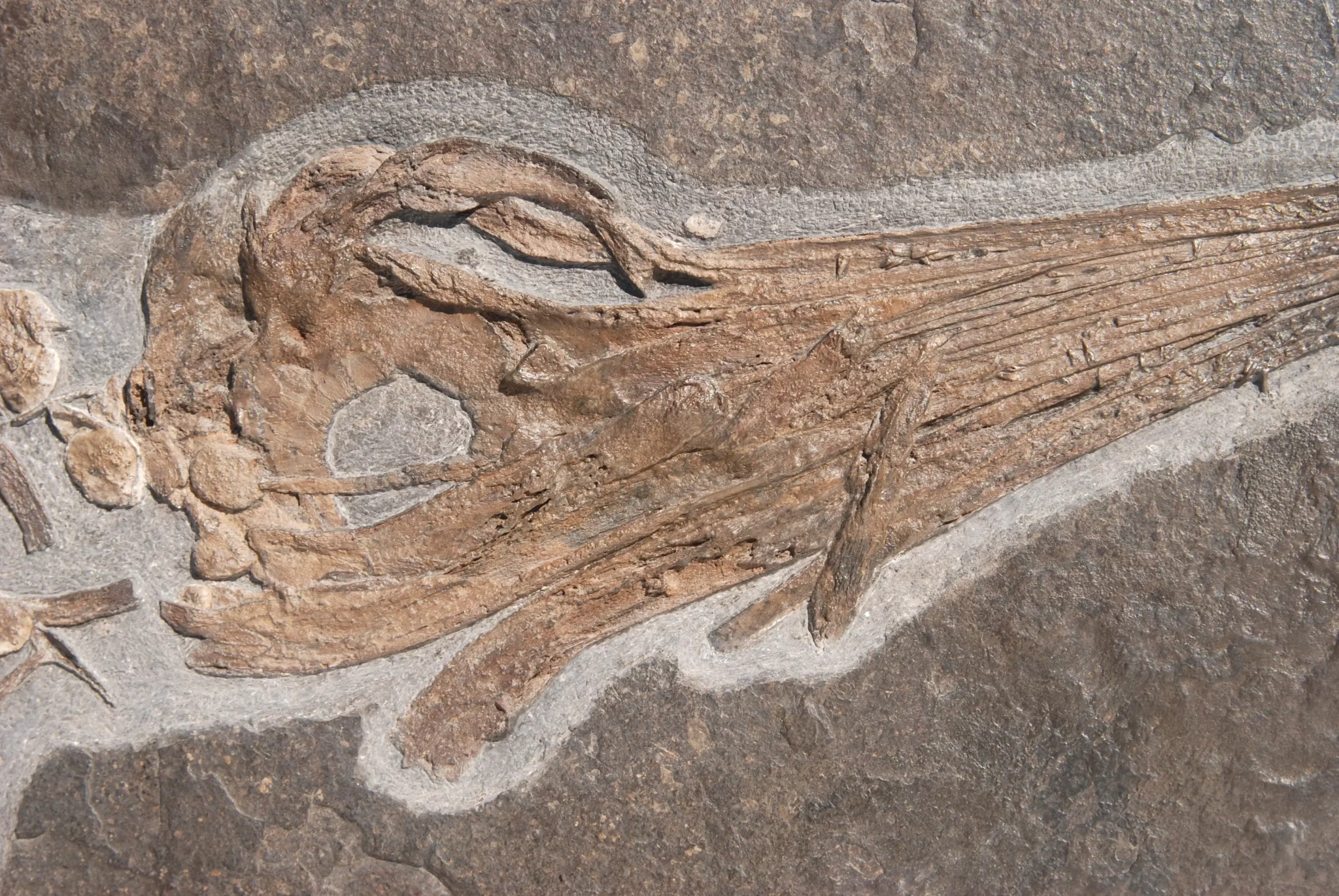
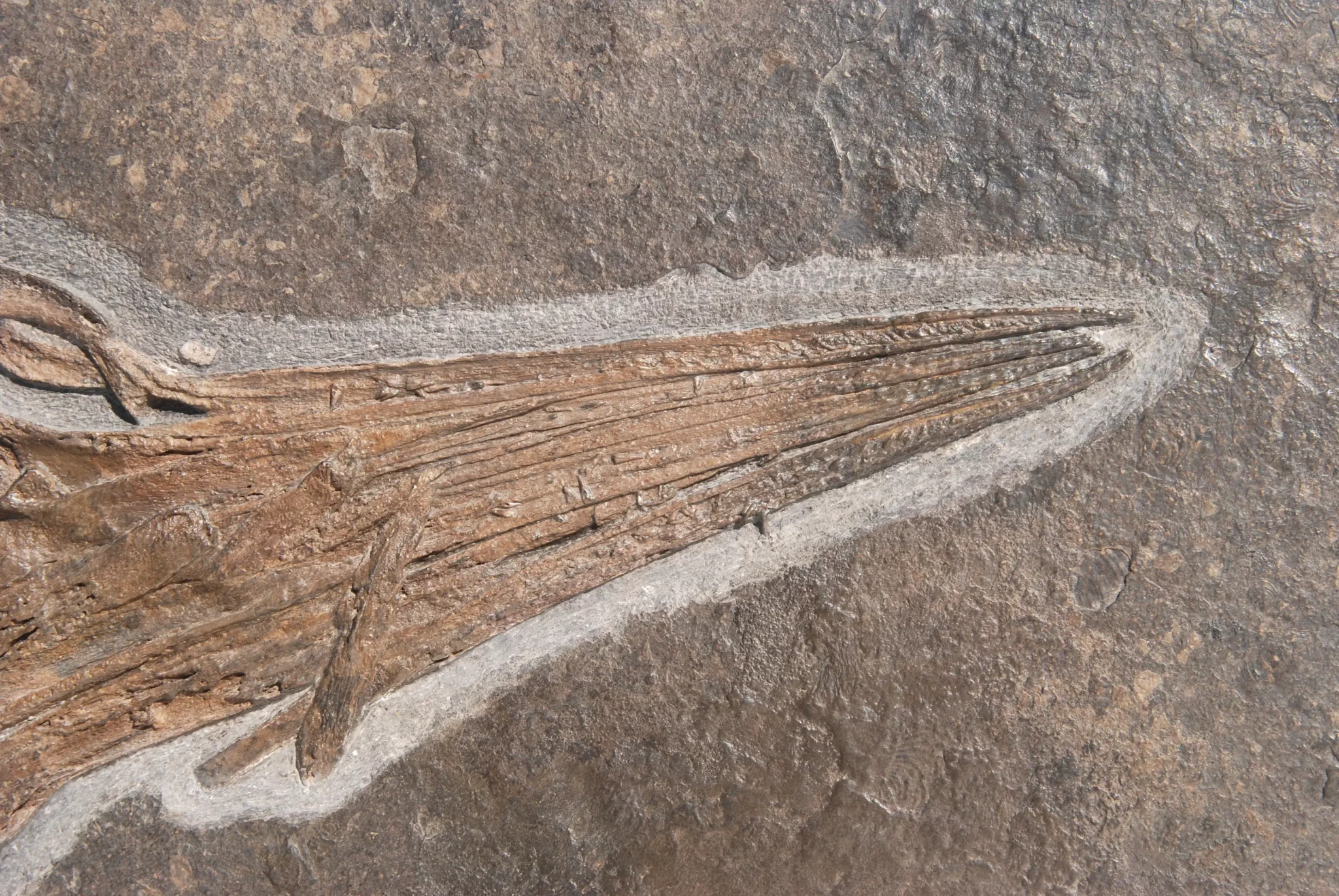
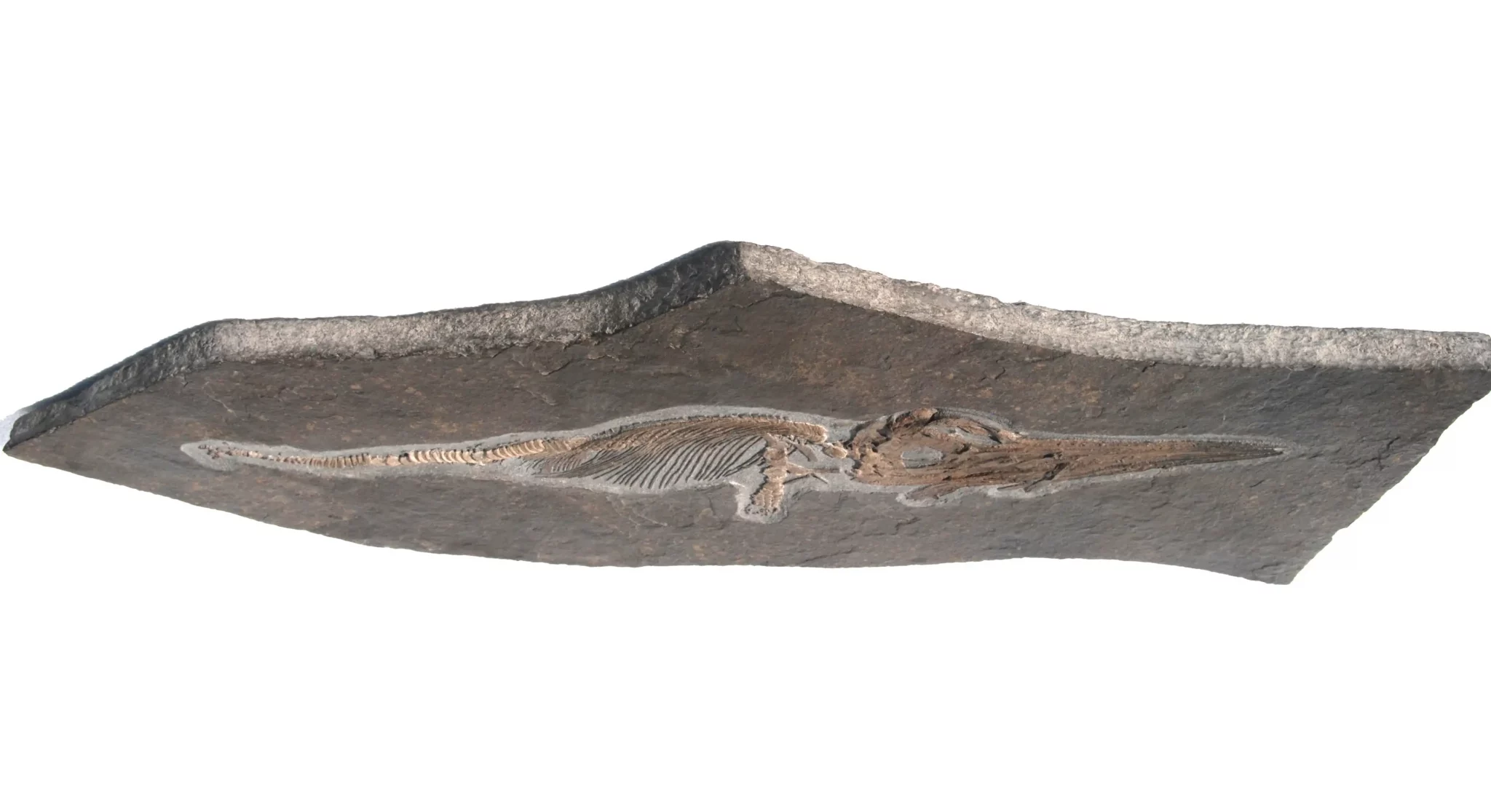
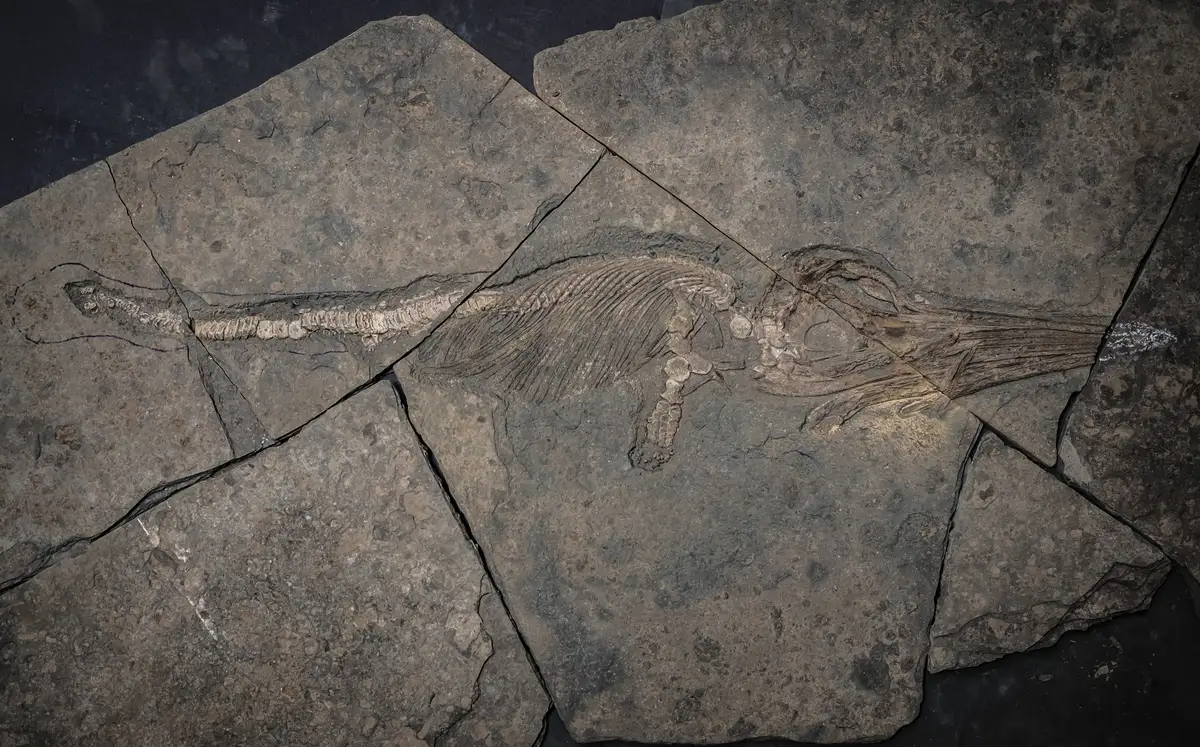
Ichthyosaur Stenopterygius quadriscissus
Place of discovery: Holzmadener Revier, Dotternhausen near Balingen, Germany
Lithostratigraphy: Lower Toarcian, Black Jurassic Group, Posidonia Shale Formation, Lower Shale Subformation (Fleins)
Biostratigraphy: Falciferum zone, exaratum subzone, elegantulum horizon
Age: approx. 182.0 – 183.0 million years +/- 0.5 million years
Plate size: 75 x 30 x 2 cm
Size of fossil: 57 cm (largest size), skull: 22 cm
Complete reptile, juvenile.
An authentic PREMIUM fossil with proof of provenance, directly from the finder, prepared by one of the best taxidermists, very decorative, stable in value.
Price on request. Offered on behalf of the customer. Sale in the name and for the account of the owner. Contact: info@fossiland.com
Authentic Holzmaden fossil – very rare baby reptile
Immerse yourself in the world of 182 million years ago. This extraordinary piece of geological evidence comes from the famous layers of the “Flein” (Lias epsilon) in Dotternhausen, near Holzmaden in southern Germany: a fully preserved juvenile of the reptile Stenopterygius quadriscissus. While adult specimens occasionally find their way into the trade, juvenile animals are an extreme rarity due to their fragile bone structure. This specimen impresses with the proportions typical of juveniles – especially the disproportionately large skull, which immediately catches the eye.
Scientific classification & rarity: The “neonate” stage
In the paleontological literature (Miedema & Maxwell 2022), ichthyosaurs of the genus Stenopterygius are classified into developmental stages based on their skull and body measurements. With a skull length of 22 cm and a total length of 57 cm, this specimen falls into the scientifically extremely rare “Postnatal 1” (neonatal) stage.
- Ontogenetic classification: Neonates are defined as free-swimming juveniles whose lower jaw length is less than 300 mm. These animals have just begun their lives in the open Jurassic Sea.
- Proportions: The ratio of skull length to body length is characteristic of this extremely early stage of life. In adult animals, the head accounts for about 15–18% of the body length—in this juvenile specimen, it is over 35%. This “infantile pattern” effect, with its disproportionately large scleral ring, is a diagnostic characteristic of neonatal individuals.
- Rarity: While adult Stenopterygius specimens(up to 4 meters in length) dominate the collections, articulated skeletons less than 60 cm in length are an absolute rarity. The delicate, not yet fully ossified skeletons of young animals were usually lost to decomposition or scavengers immediately after death.
This specimen thus bridges the gap between the known embryonic finds (within the mother) and the significantly more common subadult specimens. It serves as a reference specimen for the earliest ontogenetic stage of a marine reptile.
Highlights of conservation and anatomy
- Fantastic Skull: Measuring 22 cm in length, the skull features intricate details, including an impressively well-preserved scleral ring and fine dentition.
- Articulation: The skeleton is almost entirely intact in its anatomical configuration.
- Color & Substance: The deep brown color of the bone is a direct indication of the fossil’s excellent mineralization and high quality.
Maximum transparency and scientific integrity
In a market often dominated by composites (pieces made up of parts from multiple animals), this item sets the standard:
- Not a composite: This is a single individual.
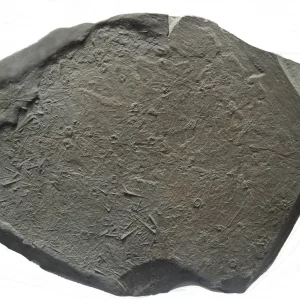
- Documented History: The find was recovered in person by the discoverer in 2012, and the entire preparation process—from its original state as four separate slabs to the finished exhibit—has been scientifically documented.
- Masterful taxidermy: The specimen was prepared by one of the world’s leading taxidermists.
- Legal Certainty: The fossil was recovered legally and does not violate the Archaeological Preservation Act.
Holzmaden Conservation Site: A window into prehistoric times
The detailed preservation of the Holzmaden fossils is due to the unique depositional environment in the Jurassic Sea: the extremely low-oxygen (anoxic) environment on the seabed. These conditions prevented scavengers and bacteria from decomposing the carcasses and enabled the formation of one of the most important fossil deposits in the world. A reptile from Holzmaden is therefore a fascinating scientific document that offers deep insights into the biology of a long-gone apex predator.
Acquire a piece of the earth’s history
This fossil is more than just a collector’s item; it is a timeless work of art from nature and a stable investment for those who value complete provenance and uncompromising authenticity.
Viewing & contact:
Come see the quality of this one-of-a-kind piece for yourself. Viewings are available at any time by appointment in Tübingen.
Secure shipping worldwide.
Reference: