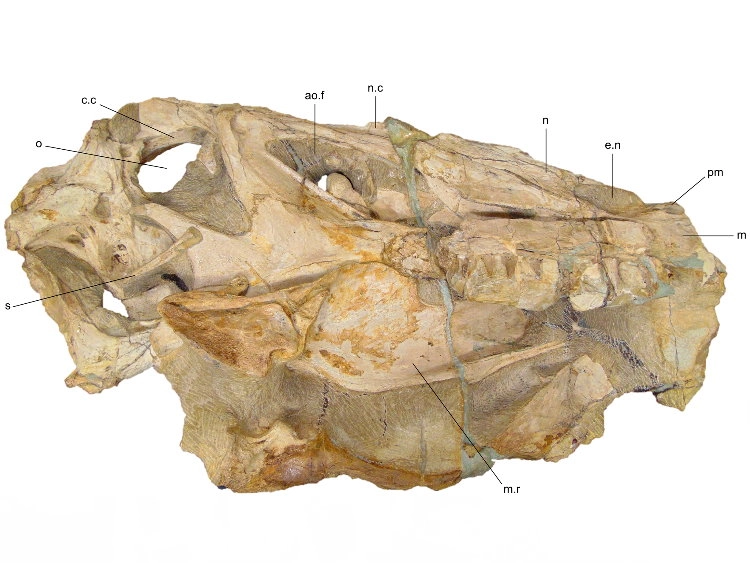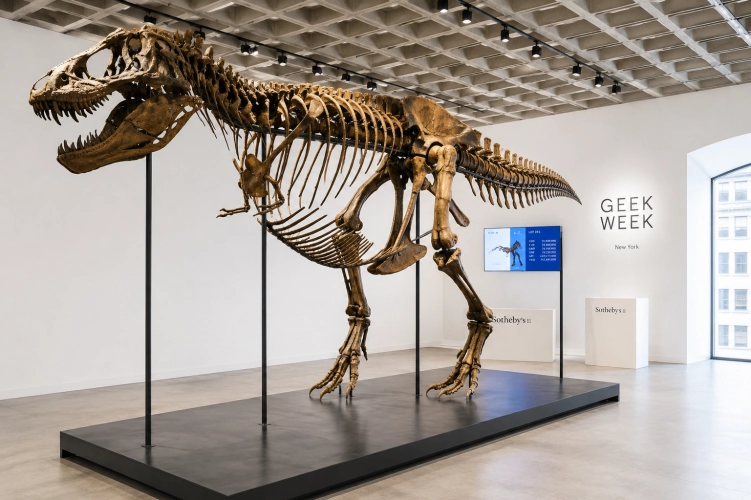
Since August 7, 26, the police have been searching for fossils stolen from the paleontological exhibition collection at the Goldfuß Museum in Bonn. The incident received widespread media coverage. “Fossils Stolen from the University of Bonn Museum,” “Miniature Dinosaur Stolen from University Museum”—Tagesschau, Deutschlandfunk, WDR, and RTL all reported on the story.
Keep your eyes open online and at collectors’ fairs
“Anyone who has seen any of the items pictured, has come across related offers—such as online, at flea markets, or in stores—or has made other relevant observations is asked to contact the Bonn Police immediately. The department in charge is Criminal Investigation Division 13, tel. 0228/15-0, email kk13.bonn@polizei.nrw.de. The public is expressly advised against contacting potential sellers of the stolen items on their own initiative.”
What was actually stolen?
The University of Bonn identified the haul as including a dwarf dinosaur of the genus Compsognathus and an Archaeopteryx protobird. The moment of shock was followed by analysis. Compsognathus, Archaeopteryx —the Goldfuß Museum doesn’t even have any originals of those. Take a deep breath: these can only be casts. Of the roughly twelve known Archaeopteryx specimens, none are in Bonn; worldwide, there are only a handful of original Compsognathus specimens, located in Munich and France. This puts the spectacular-sounding loss into perspective—at least from a scientific standpoint.
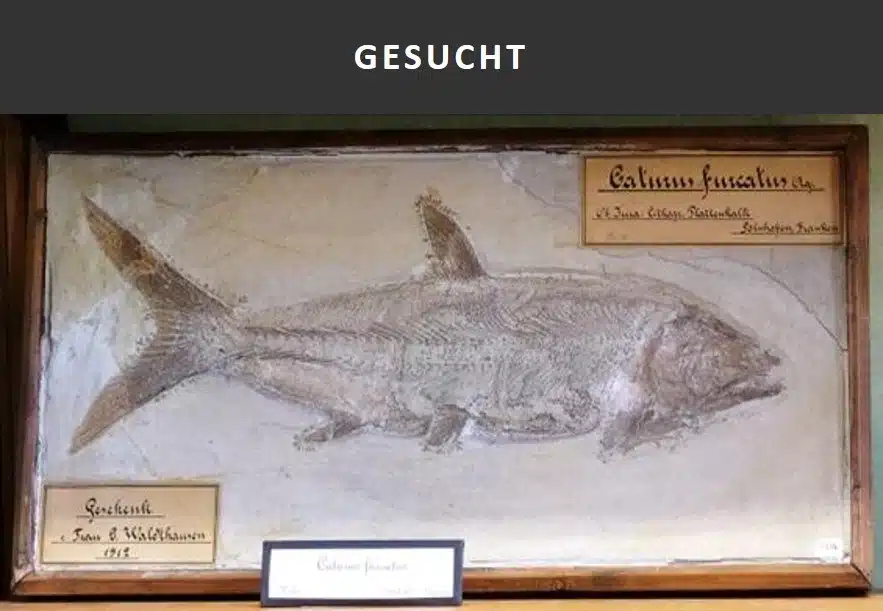
On its“Stolen Fossils”page, the university displays eleven selected objects. Among them are the suspected casts, but also genuine fossils, some of which are quite beautiful: the fish Caturus furcatus (Solnhofen, Jurassic, approx. 60 cm), the seed plant Alethopteris serlii (Carboniferous, Dudweiler/Saarland, approx. 45 cm), the sea scorpion Mixopterus kiaeri (Silurian, Norway), the net-winged insect Kalligramma haeckeli and the crayfish Pseudastacus from Solnhofen, the bony fish Dapedium from Holzmaden, and others.
And this is where the real problem begins. Twenty-five display cases were broken into—but only this small selection has been publicly documented and photographed. Moreover, many of the photos are not very informative; only a few are suitable for positive identification, and only two are suitable for the manhunt. Let’s be clear: Apparently, it is not even fully known what is missing.
How could this have gone unnoticed for over two and a half years?
When the renovation began on December 1, 2023, the display cases were encased in wooden panels. The damage was not noticed until these panels were removed on July 29, 2026. The perpetrators thus worked in secret, behind the wooden cladding—and had up to two and a half years to do so. No signs of forced entry were found on the entrance doors. How they gained access to the building remains a mystery to this day.
Opportunistic Thieves—and a Look at the Big Heists
Just imagine if the allegedly thieving “craftsmen” hadn’t fallen for the plaster casts and had proceeded in a more methodical way—just as they have elsewhere:
- Bode Museum, Berlin: During the night of March 27, 2017, the 100-kilogram “Big Maple Leaf” gold coin (with a material value of approximately 3.75 million euros) disappeared.
- Dresden’s Historic Green Vault: On November 25, 2019, the perpetrators stole 21 pieces of jewelry containing approximately 4,300 diamonds; the insured value was over 113 million euros. Most of the items were returned in late 2022, and five perpetrators were convicted in 2023. Both cases—Bode and Dresden—can be traced back to members of the same extended family in Berlin.
- Louvre, Paris: On October 19, 2025, perpetrators disguised as construction workers stole crown jewels worth approximately 88 million euros in a matter of minutes—the items were uninsured.
It’s unthinkable what kind of intangible damage would result from a premeditated break-in at a natural history museum containing scientifically valuable fossils. Whether outstanding specimens could even be sold on the fossil market is a secondary consideration. I have my own opinion on the matter—and it offers little cause for hope.
What can we learn from this theft of fossils?
My oft-repeated appeal to collectors—to pay closer attention to documentation and provenance, especially when it comes to fossils from Messel, China, or Brazil —applies even more so to the guardians of cultural heritage themselves: public collections and museums.
A comprehensive, publicly accessible inventory is still long overdue in many institutions. For decades, this has been excused by citing a lack of funds and resources. In my view, this blind spot is not sufficiently recognized by the public—there is no vocal lobby demanding that public authorities fulfill their corresponding obligations. The Paleontological Society and the Steinkern Forum would be suitable advocates.
Yet the benefits are obvious. Once scientifically valuable items have been cataloged and their photos made publicly available, a suspicious online listing can be checked against the database in a matter of minutes using a smartphone. Platforms for this have existed for a long time; it’s just that their interconnectivity is lagging behind:
- iDigBio (Integrated Digitized Biocollections): a large U.S. platform that brings together millions of digitized records from natural history collections—including numerous high-resolution photos of fossils.
- MorphoSource: a digital archive of 3D scans and CT images of paleontological objects, open to researchers and the public.
- GBIF, as well as online catalogs from major institutions (such as the Natural History Museum in Vienna or the Museum of Natural History in Berlin), which display parts of their collections and type specimens with photos.
And as bitter as it may be, museums housing fossils—whose market values are increasingly coming to the public’s attention due to spectacular auction results —will have no choice but to implement comprehensive video surveillance.
A Stress Test for Germany’s Collections
Even though, due to a lack of documentation, we don’t even know for sure what is actually missing from the Goldfuß Museum, the few photos suggest that this time, those responsible and the public got off lightly. This incident should serve as an opportunity to conduct a stress test for the most important paleontological museums and research collections—for example:
State Research Museums
- Museum of Natural History, Berlin
- Senckenberg Natural History Museum (Frankfurt am Main)
- State Museum of Natural History, Stuttgart (Museum am Löwentor)
- State Museum of Natural History in Karlsruhe (SMNK)
- Mainz Natural History Museum
University Collections
- Paleontological Museum, Munich
- Paleontological Collection of the University of Tübingen
- Geomuseum of the University of Münster / LWL Museum
- Geiseltal Museum (Halle an der Saale)
Specialized Museums
- Hauff Museum of Prehistory (Holzmaden) – privately owned
- Jura Museum (Eichstätt, Willibaldsburg)
- Altmühltal Dinosaur Museum (Denkendorf) – privately owned
Conclusion
The fossil theft in Bonn ended without serious consequences—mainly because the perpetrators made off with casts and fossils of only minor scientific value. Yet it exposes a gap that extends far beyond a single museum. Anyone who preserves Earth’s history must know what they have—and document it before it goes missing.
A special wake-up call for the Goldfuß Museum in Bonn: Christoph Bartels (1949–2024) has bequeathed his significant collection of Bundenbach fossils to the museum, which is set to be displayed in 2027 and includes scientifically unique specimens.
Sources
- Bonn Police / North Rhine-Westphalia Police: Press Release dated August 7, 2026 – “Burglary at the Goldfuß Museum” – Details of the incident, timeframe, and status of the investigation.
- University of Bonn: “Stolen Fossils” – List of Items and FAQs – the eleven items shown and tips for identification.
- Goldfuß Museum at the University of Bonn: Collection and History – Background on the Historical Collection (Georg August Goldfuß).
- Dresden Jewelry Heist (2019), Return in 2022, Conviction in 2023—including the connection to the Bode Museum heist (2017): Overview on Wikipedia.
- INTERPOL: “Louvre Museum theft” (Oct. 19, 2025) – The items were added to the database of stolen works of art.
- iDigBio – Integrated Digitized Biocollections – An aggregator of digitized collection data with photos.
- MorphoSource – A repository for 3D and CT data of paleontological objects.
- GBIF – Global Biodiversity Information Facility – global access to collection and locality data.
Photo Credit
© Photo: Goldfuß Museum/University of Bonn