For decades, spectacular artifacts from the Global South found their way into European display cases. Today, the countries of origin are reclaiming their cultural heritage. At the center of the debate: the Araripe Basin in Brazil and a famous carnivorous dinosaur skull at the Stuttgart Natural History Museum.
The Irritator Predator Dinosaur Skull Returns: The Confirmation from Stuttgart
In April 2026, the state of Baden-Württemberg officially agreed to return the skull of *Irritator challengeri* to Brazil. The announcement was made on the sidelines of the German-Brazilian intergovernmental consultations. The physical transport is still pending as part of a new research collaboration.
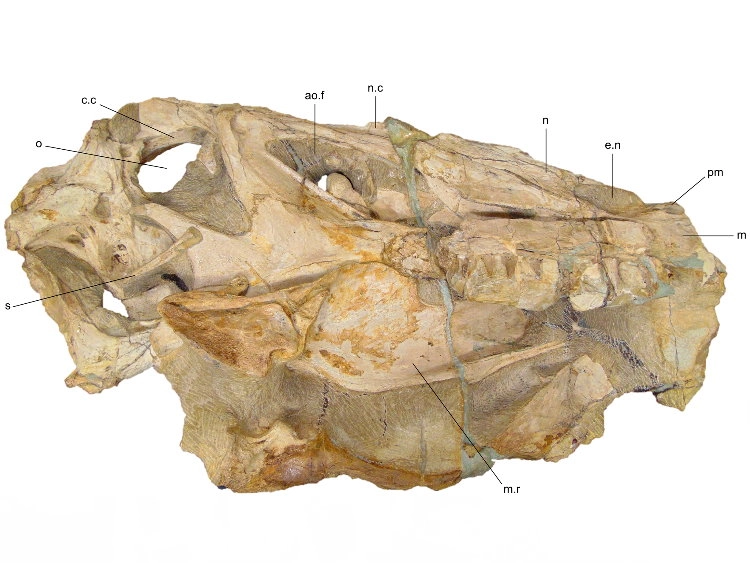
The fossil is about 113 million years old. The Stuttgart Natural History Museum acquired it in 1991. It is the only known specimen of its kind—a holotype. Even its name tells a little crime story. Commercial middlemen had artificially extended the snout of the skull with plaster, presumably to drive up the price. This annoyed the original describers—hence “Irritator” (from the English word “irritation”). The species name *challengeri* alludes to Professor Challenger from Arthur Conan Doyle’s novel *The Lost World*.
This case is part of a broader trend. The first domino fell in 2023: The Karlsruhe Natural History Museum named the small, feathered dinosaur Ubirajara jubatus to Brazil. Prior to that, a massive protest had formed on social media under the hashtag #UbirajaraBelongstoBR. For the Irritator, this was followed by #IrritatorBelongstoBR, along with an open letter to Science Minister Petra Olschowski bearing 268 signatures.
Important to note: Stuttgart is returning the items voluntarily. According to the museum, it does not consider itself legally obligated to do so. It’s worth taking a closer look at why that is.
What is the legal situation regarding Brazilian fossils?
The legal basis is clear. In Brazil, fossils have been state property since 1942. Since 1990, the export of certain fossils without government authorization has been prohibited, and type specimens must remain in the country in any case. Anyone who takes such specimens out of the country without permission is, from Brazil’s perspective, committing theft.
Internationally, the 1970 UNESCO Convention was intended to curb the trade in looted cultural property. However, it does not apply to the two German cases: Germany did not ratify it until 2007, and international treaties do not have retroactive effect. On this basis, Brazil cannot therefore reclaim the fossils.
Legal scholar Paul Philipp Stewens has shown that there is a second, often overlooked avenue: private law. His argument, in brief:
- Under its own laws, Brazil is the owner of the fossils. German courts generally recognize such national property laws.
- Acquisition in good faith is ruled out if an item has “been lost” by the owner (Section 935 of the German Civil Code (BGB))—and fossils dug up secretly are exactly that.
- Even acquisitive prescription (Section 937 of the German Civil Code) is of little help: Major natural history museums must carefully verify the provenance of such valuable items. Anyone who fails to do so is acting with gross negligence—and cannot acquire ownership through acquisitive prescription.
- A claim for restitution under Section 985 of the German Civil Code (BGB) would therefore have a good chance of success in a German court.
One subtle but crucial difference remains: the statute of limitations. In Germany, the claim for restitution based on ownership (Section 985 of the German Civil Code (BGB)) is subject to a 30-year statute of limitations (Section 197(1)(2) BGB).
Not to be confused with acquisitive prescription (Section 937 of the German Civil Code (BGB)): Anyone who has possessed an item as its owner for 10 years becomes the owner and is no longer required to surrender it. However, this applies only under one condition—continuous good faith (Section 937(2) of the German Civil Code (BGB)).
For Ubirajara, a lawsuit would therefore have had a good chance of success. For the “Irritator,” acquired in 1991, any claim would have been barred by the statute of limitations as of 2021. That is precisely why the return from Stuttgart is not a legal obligation, but rather a political and scholarly decision—an act of cooperation, not coercion.
Huge numbers of fish under protection—a contradiction?
A side note, explicitly intended as a personal reflection and not as a call to circumvent applicable law: The strict ban applies equally to every fossil—from the unique dinosaur holotype to the fish found in vast numbers in the Santana Formation. Thousands of such fish (such as Vinctifer or Notelops) are stored in collections and generally have no scientific value. One might ask whether an absolute export ban on such mass-produced items still serves the actual purpose of cultural property protection. However, as long as the legal situation is clear, it applies.
Fossil Repatriation—Not Just a German Problem
The trade took place through European networks. At the beginning of the chain were often low-paid quarry workers in northeastern Brazil; at the end were wealthy private collectors and museums in the Global North. The finds were often declared as “building material” or “quartz” and shipped via Atlantic ports. A highly publicized arrest of a German dealer in Brazil in 2002 brought to light a European dealer network that the press dubbed the “German Connection” at the time.
Other countries are also affected. In France, a court in Lyon recently ordered the return of 45 Araripe fossils and a largely complete pterosaur; later, French authorities intercepted over 1,000 additional fossils in a shipment declared as quartz. Brazil’s Federal Public Prosecutor’s Office (MPF) is now working with authorities in numerous countries on repatriation efforts.
Side Note: The Role of Science
Anyone discussing Germany’s involvement cannot avoid mentioning one name: Eberhard “Dino” Frey. The vertebrate paleontologist headed the geoscience department at the Karlsruhe Natural History Museum for decades and retired in 2022. As an expert on pterosaurs and fossil reptiles, he is highly regarded internationally.
Frey, together with the British paleontologist David Martill, was involved in the initial descriptions of both controversial fossils: Irritator (1996) and Ubirajara (2020). It was the 2020 publication that first set the global wave of repatriations in motion.
Today, the main focus of criticism is on how Frey publicly characterized the case. In an interview with a local newspaper, he described the Ubirajara fossil as “a poorly preserved animal that no one has been interested in so far”; he said it had been “a real slow seller even back then.” When asked later about the legal issues, he simply referred the matter to the responsible Ministry of Science.
Researchers—especially those from the Global South—view such statements as an expression of “scientific colonialism”: artifacts are exported, described in glamorous terms in Europe, and permanently removed from research in their country of origin. The old argument that fossils are “safer” in Europe is now considered outdated, both legally and morally.
To be fair: Frey always emphasized that he had no intention of retaining any unlawful material once the legal situation had been definitively clarified. Today, his name stands less for an individual than for the end of an entire era.
A Sign of Hope: The Museu Nacional Is Being Rebuilt
Rio de Janeiro is a testament to Brazil’s commitment to strengthening its research. In the devastating fire at the Museu Nacional in 2018, approximately 85 percent of the collection was destroyed. The museum is scheduled to reopen in 2026—and the collection is growing again.
One example of this is one of the largest private fossil donations in recent times: The Wyoming Dinosaur Center Foundation in Thermopolis, USA, donated approximately 1,104 fossils from Brazil to the Museu Nacional—including pterosaurs such as Tupandactylus imperator and the enigmatic reptile Tetrapodophis. The donation was organized in collaboration with the Instituto Inclusartiz by Frances Reynolds. These specimens are returning permanently and legally to their homeland. The donation is linked to a research partnership through which Brazilian students participate in excavations in the U.S.
What does this mean for fossil collectors and dealers?
The message is clear. Proof of origin is no longer just a nuisance—especially for vertebrate fossils from overseas—but a requirement. Anyone who collects and documents their specimens properly has nothing to fear.
Looking back on 40 years of market developments, the upheavals have been enormous. Gone are the days when attractive fish from Brazil were offered in abundance; they were followed by dinosaur eggs from Mongolia, feathered dinosaurs and ichthyosaurs from China, and Psittosaurus and Claudiosaurus from Madagascar—to name just a few highlights.
The organizers of the Mineral&Gem trade show in Sainte-Marie-aux-Mines have also recently tightened the reins; I reported on that.
As already noted in connection with the spectacular auction record set by the T. rex “Gus ”: The international fossil market is undergoing a paradigm shift. The postcolonial-style “collecting” of fossils from all “colonial” countries is a thing of the past. The trend is clearly shifting toward “brand-name” fossils with verifiable provenance. At this point, I’d like to take a moment to promote the classic fossil sites of Holzmaden, Solnhofen, Messel, and Bundenbach 😊
Sources
- Sales, M.A.F., Schultz, C.L. (2017): Spinosaur taxonomy and evolution of craniodental features: Updating and improving the statistical assessment. PLOS ONE 12(11): e0187070. doi.org
- CONTEXT: Weekly Newspaper: “Dinosaur from Brazil: Irritator Returns Home” (Luise Loges, May 20, 2026), kontextwochenzeitung.de
- Science / AAAS: “Famed Brazilian spinosaurus fossil finally heads home” – regarding the 2026 return agreement, science.org
- The Guardian: “Germany to Return Irritator Dinosaur Skull to Brazil” (May 2026), theguardian.com
- Eos (AGU): “Germany to Return Contested Dinosaur Fossil to Brazil,” eos.org
- Paul Philipp Stewens: “‘Ubirajara’ and Irritator Belong to Brazil: Achieving Fossil Returns Under German Private Law,” International Journal of Cultural Property (2023) – legal analysis (Laws of 1942/1990, UNESCO 1970, Sections 935/937/985 of the German Civil Code [BGB], statute of limitations), doi.org/10.1017/S0940739124000031
- Revista Pesquisa Fapesp: “In the Footprint of Smuggled Fossils” – Smuggling Networks, the France/Eldonia Case, MPF Investigations, revistapesquisa.fapesp.br
- Der Standard: “Fossil Smuggling via the ‘German Connection’” – Arrest in Brazil in 2002, derstandard.at
- Goethe-Institut, Zeitgeister: “Who Owns the Dinosaur?” – featuring, among other things, the controversial Frey quotes, goethe.de
- Badische Neueste Nachrichten: “Karlsruhe Dinosaur Researcher …” – Frey on the Ubirajara Fossil, bnn.de
- Science / AAAS: “Institutions in the Global North Hoard Fossils from Brazil, Study Says,” science.org
- The Art Newspaper: “Brazil’s National Museum Receives Donation of More Than 1,100 Fossils” (May 8, 2024), theartnewspaper.com
- Interprospekt Group: Announcement Regarding the Fossil Donation to the Museu Nacional, interpret.ch
Photo Credit
Holotype of Irritator challengeri (SMNS 58022) by Marcos A. F. Sales, Cesar L. Schultz / Wikimedia Commons / Licensed under CC BY 2.5