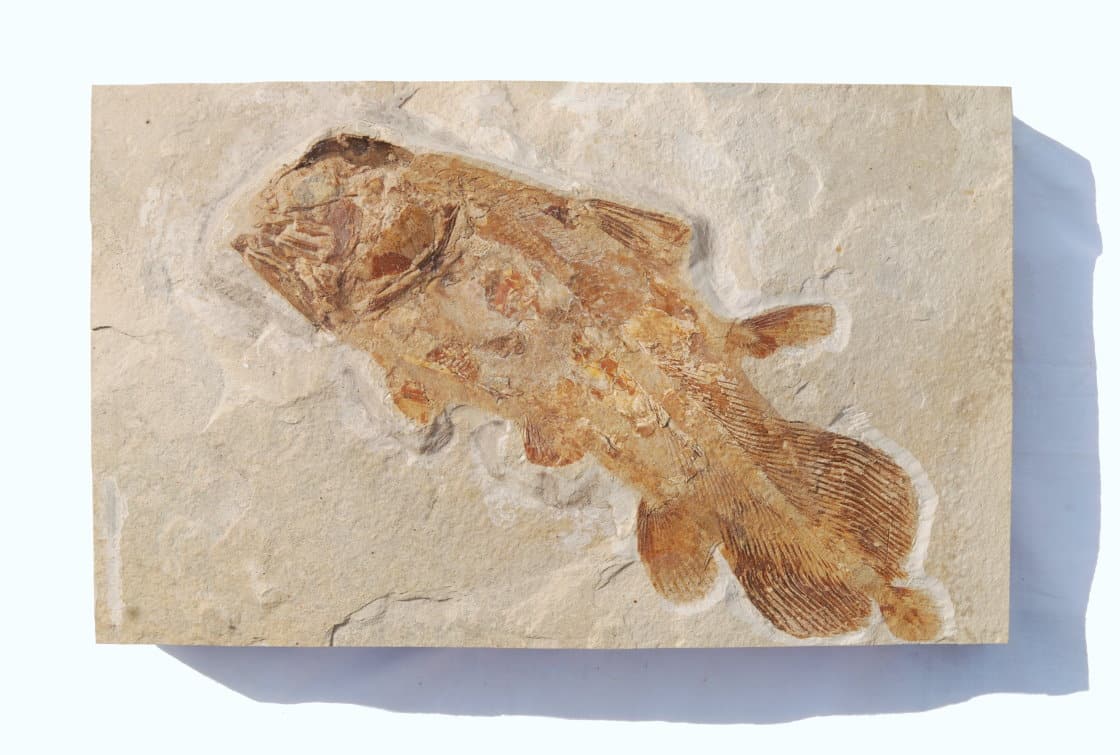
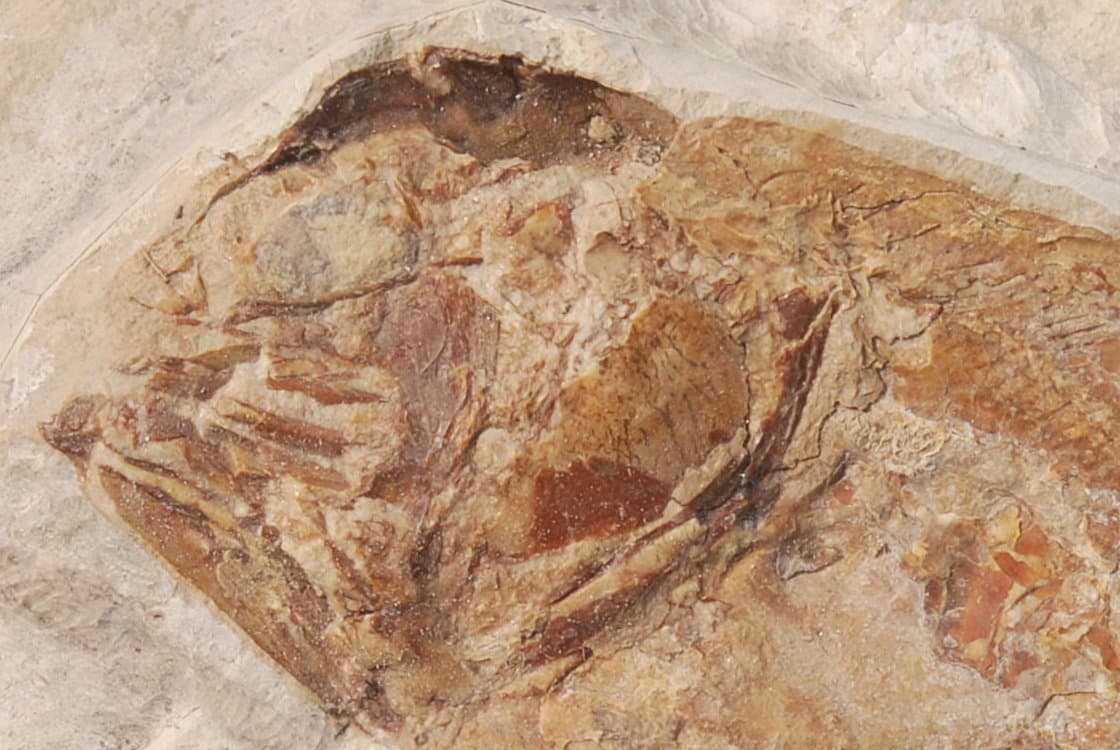
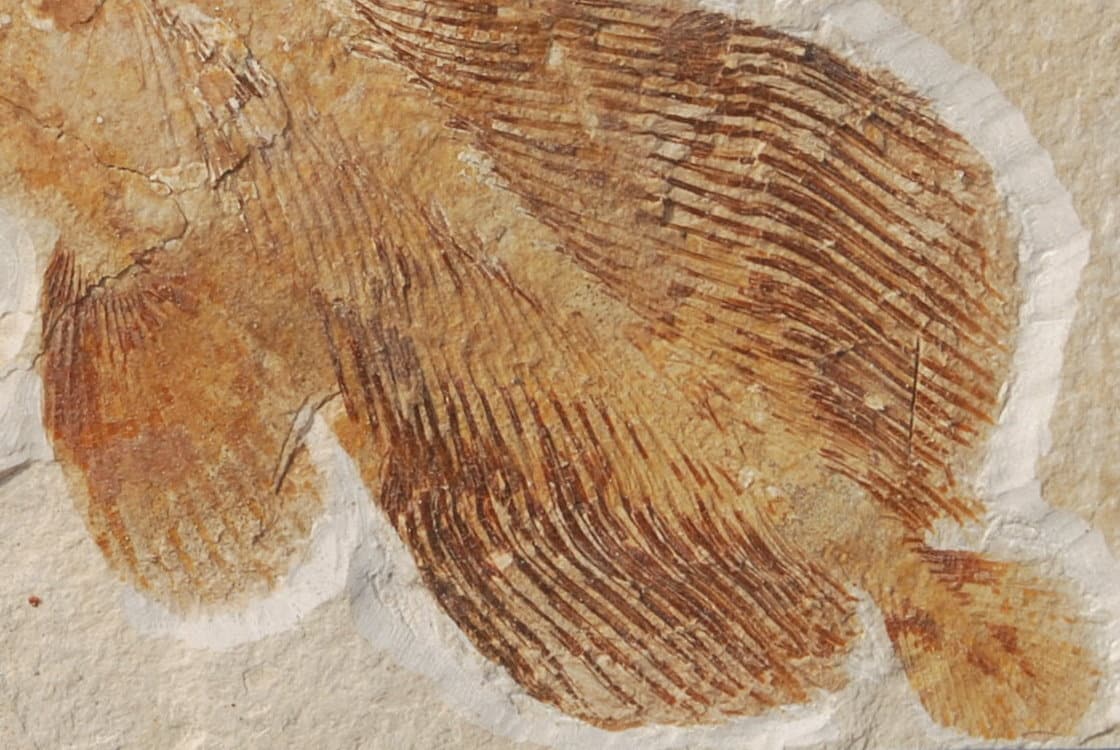
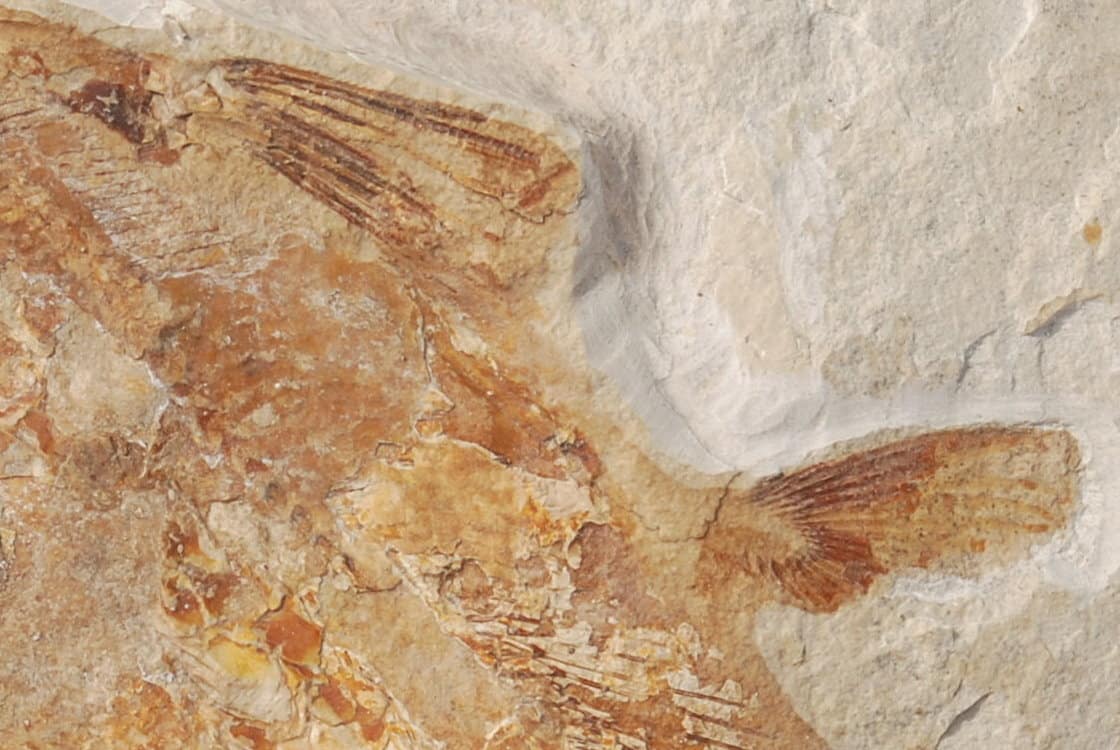
Solnhofen Holophagus penicillatus
41×25 cm (matrix), 23 kg
Solnhofener Revier, Plattenkalke, Bavaria, Germany (exact location will be communicated to buyer)
Historic collector’s item with a special excavation history. Found approx. 50 years ago, contemporary preparation with restorations, in original matrix, not reburied.
Offered on behalf of the customer.
no longer available – sold on a commission basis on behalf of and for the account of the owner.
Holophagus penicillatus – The Coelacanth of the Jurassic Period
Holophagus penicillatus occupies a special position within the fossil fish fauna of Solnhofen. As a representative of the Actinistia (coelacanths), it belongs to an evolutionary lineage that was once considered extinct until a “living fossil”, Latimeria, was discovered in 1938. Holophagus is a rare and scientifically highly significant find in the Upper Jurassic limestones of Bavaria.
Scientific classification and morphology
-
- Sarcopterygii heritage: As a carnivorous finfish, Holophagus is more closely related to terrestrial vertebrates than to most other fishes of the Solnhofen strata.
- Specific body structure: The body is stocky and strong. A striking feature is the complex skull with the intracranial joint typical of coelacanths, which enabled increased mobility of the upper jaw.
- The tripartite caudal fin: The most striking feature is the diphyseal caudal fin, in the middle of which a small additional terminal lobe protrudes – a key diagnostic element of this group.
The fine details – what collectors look out for:
- The fleshy lobes: In excellently preserved specimens, the fleshy stalks of the pectoral and pelvic fins are clearly recognizable. These leg structure-related fin attachments are the most striking feature of a coelacanth preparation.
- Ossified swim bladder: A remarkable detail is the often fossilized, ossified swim bladder. This is usually visible in the abdominal cavity as an oval, structured surface and is an important indication of the authenticity of the fossil.
A highlight for every Solnhofen collection
Holophagus is the ideal centerpiece for collectors who wish to illustrate the major evolutionary lines of vertebrate history. It represents one of the rarest and most mysterious groups of fish from the Jurassic seas. A specimen of this genus is far more than just a fossil; it is a biological monument that bridges the gap between the inhabitants of the deep and the ancestors of terrestrial vertebrates.