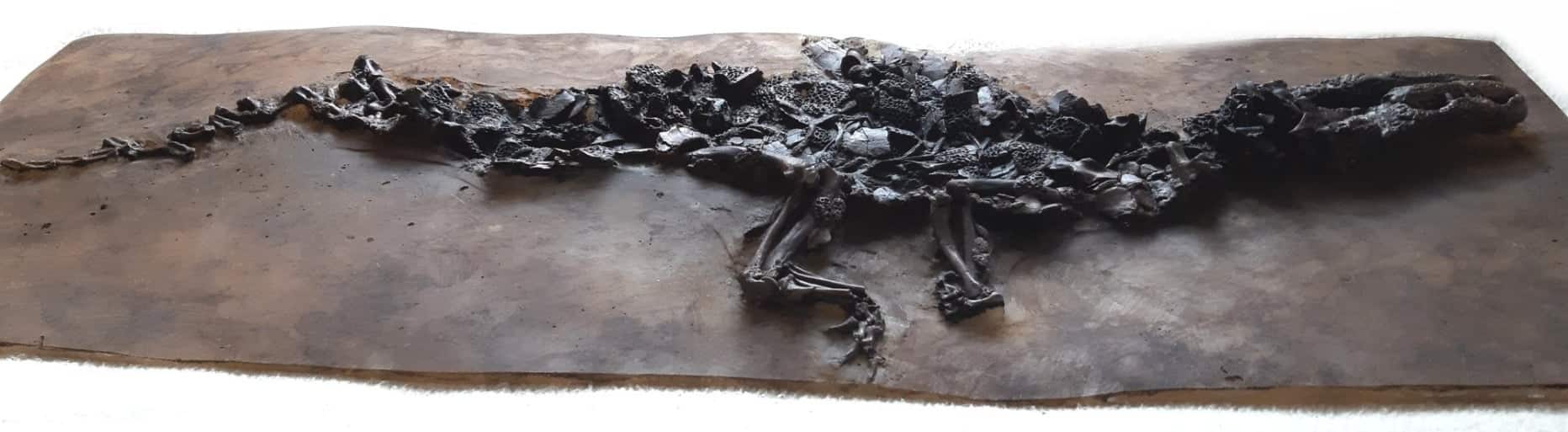
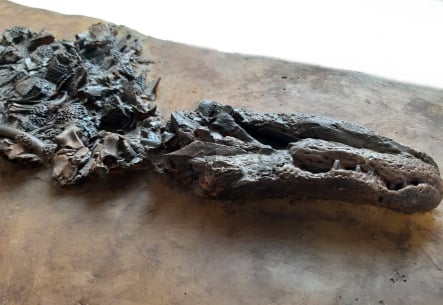
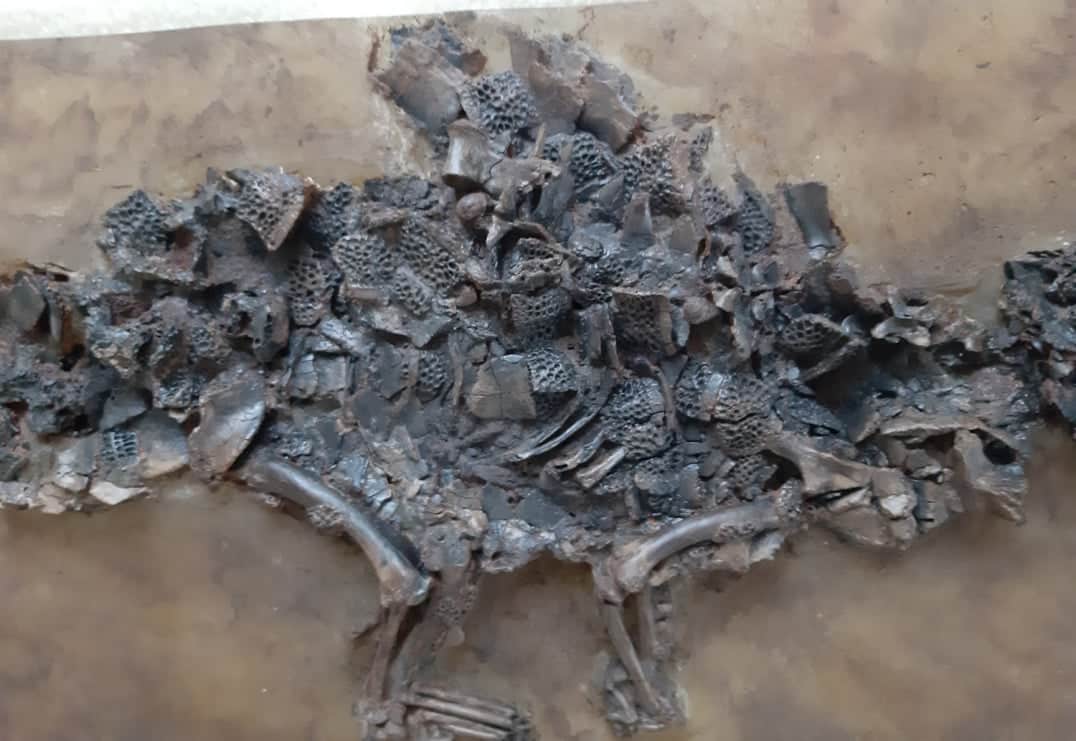
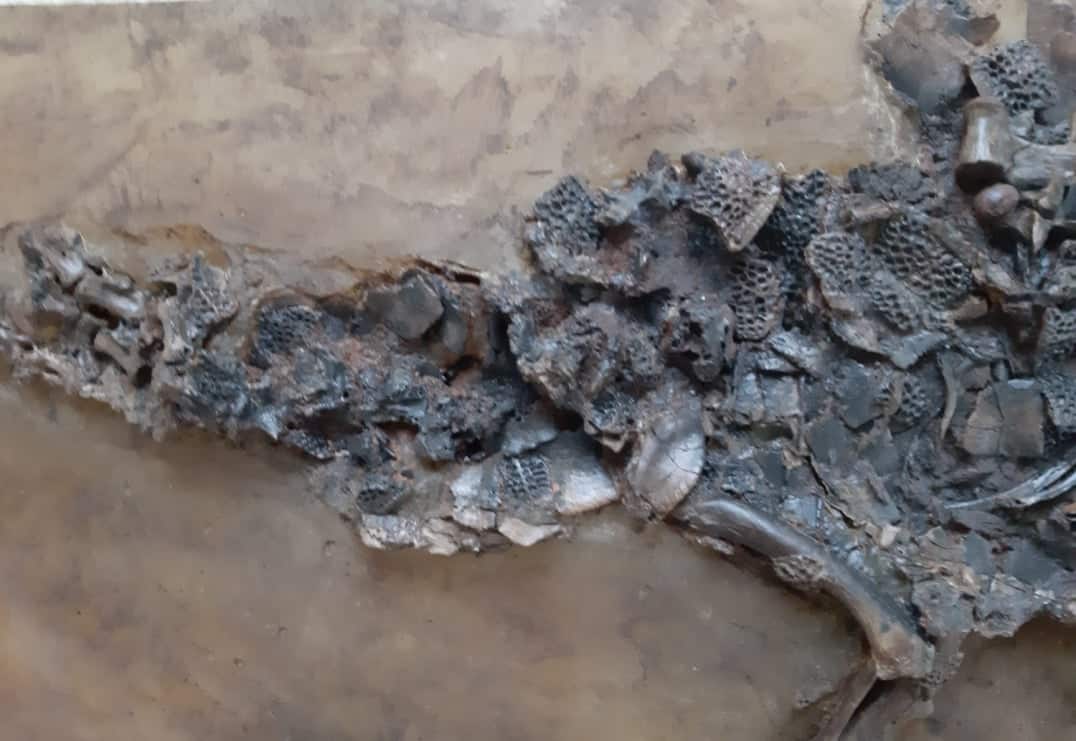
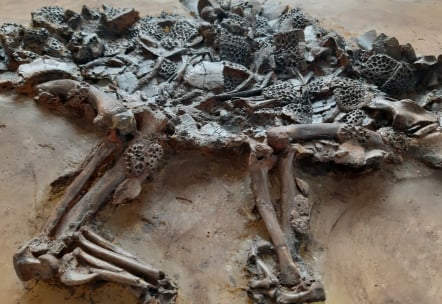
Messel Diplocynodon darwini
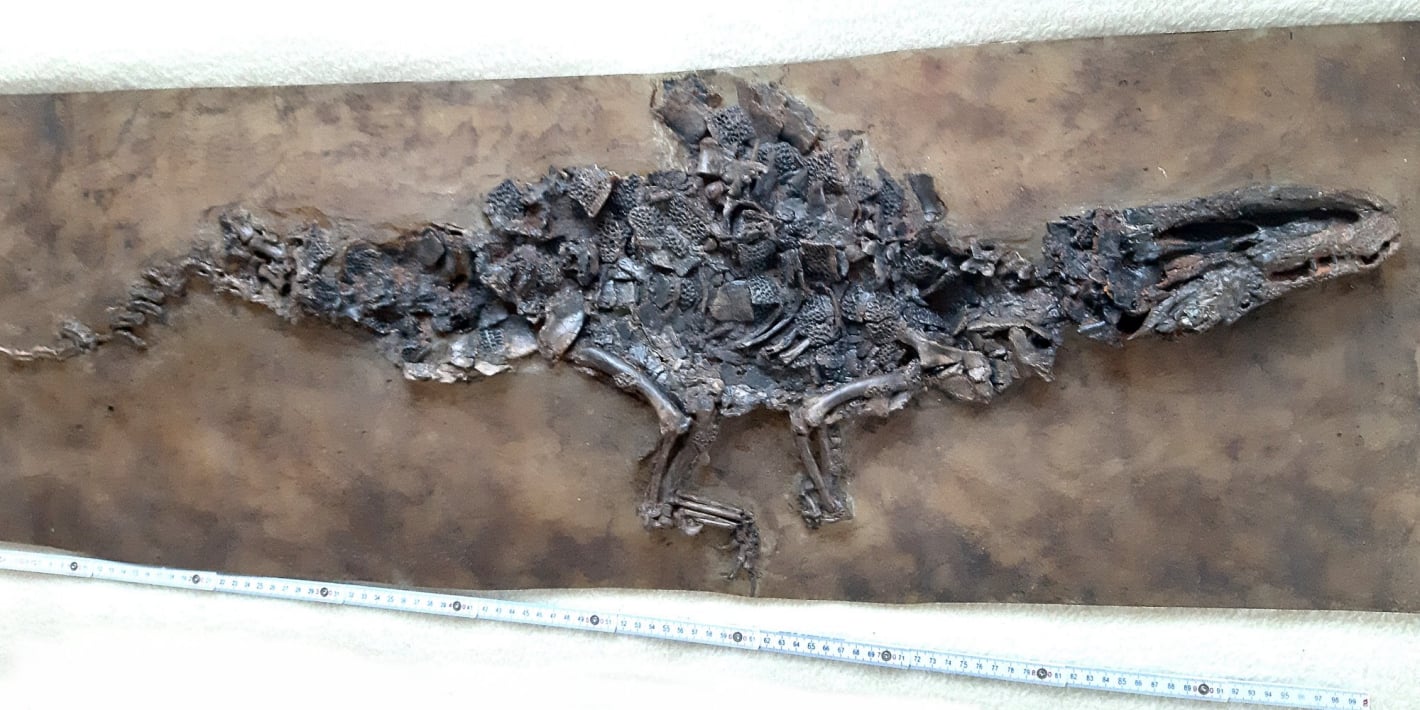
approx. 100 cm (fossil), 25×100 cm (matrix)
, Messel Pit, Darmstadt, Germany
Absolute rarity, one of a total of 50 crocodiles of the species Diplocynodon found
Darwini (many of which are incomplete). A complete specimen of impressive size. The fossil owes its unique “charm” to the dislocated arrangement of its bones. This is the second Messel crocodile that, to our knowledge, has been offered for sale in decades. A “perfect” specimen was most recently auctioned off for €200,000.
Offered on behalf of the customer.
no longer available
Diplocynodon darwini – The Armored Crocodile from Subtropical Messel
The Darwin’s double-toothed crocodile is arguably the most famous reptile find from the UNESCO World Heritage Site, the Messel Pit. While the primitive horses often dominate the headlines, it is these archaic armored lizards that complete the picture of the “Deadly Paradise” from 48 million years ago.
But don’t be fooled by its relative abundance: A really well-preserved specimen, in which the bone plates of the back are still connected, is a paleontological rarity.
More than an icon: the name says it all
-
- The distinctive “dog teeth”: Its name comes from a special pair of fangs in the upper and lower jaw that remain visible from the side when the mouth is closed – a feature that distinguishes it from most modern crocodiles.
- A bridge animal of evolution: Diplocynodon combines characteristics of alligators and caimans. It provides impressive evidence that these groups were once native to Europe before they retreated to their current distribution areas.
- Complete osteoderm armor: In contrast to many modern relatives, D. darwini had an extremely dense armor consisting of bony skin plates (osteoderms), which was even pronounced on the abdomen.
The fine details – what collectors look out for:
- Precision of the transfer method: Since Messel fossils must be embedded in synthetic resin, the quality of the preparation is crucial. Note the delicate finger and toe bones, which are often preserved right down to the tips of the claws.
- Skull details: The fine pores of the bone surface and the pointed, cone-shaped teeth are perfectly visible in the matrix of cranial specimens.
- Compact aesthetics: Young animals of around 15-30 cm in length are particularly sought after. They are ideal for displaying on aesthetic plates and often have an even more delicate skeletal structure than the adult animals, which can be up to one meter long.
The centerpiece for the reptile collection
A diplocynodon is far more than just a “by-catch” from mammal excavations. It is a symbol of the Eocene ecosystem and, as a “living fossil”, is in no way inferior to the large finds in terms of its scientific brilliance.