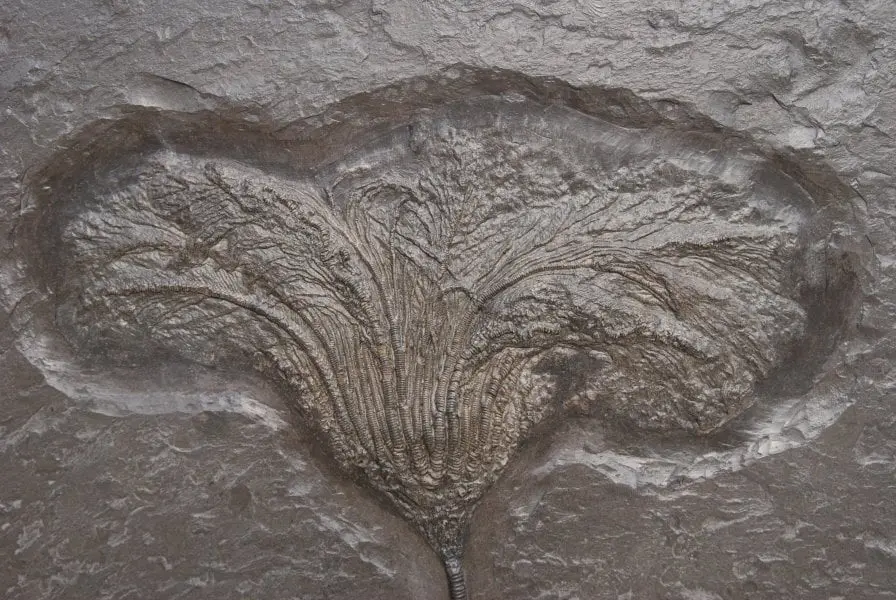
Seirocrinus subangularis XL
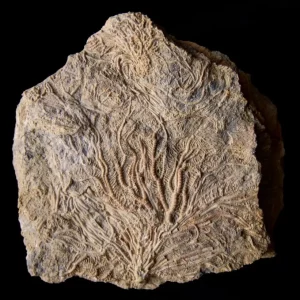
60x110x3 cm matrix, 97 cm fossil, 35 cm crown; 75 kg
Holzmaden, Lias Epsilon I/2
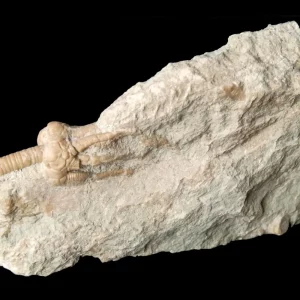
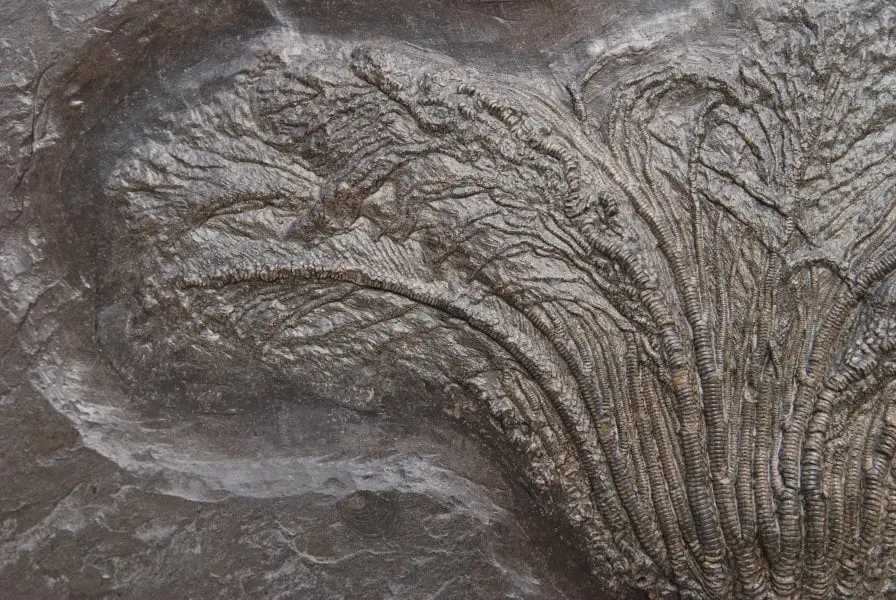
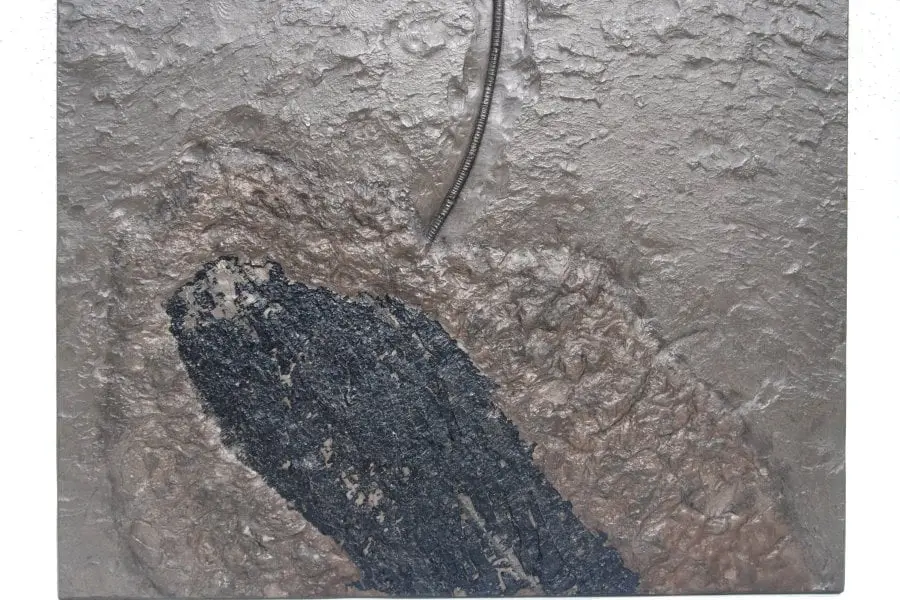
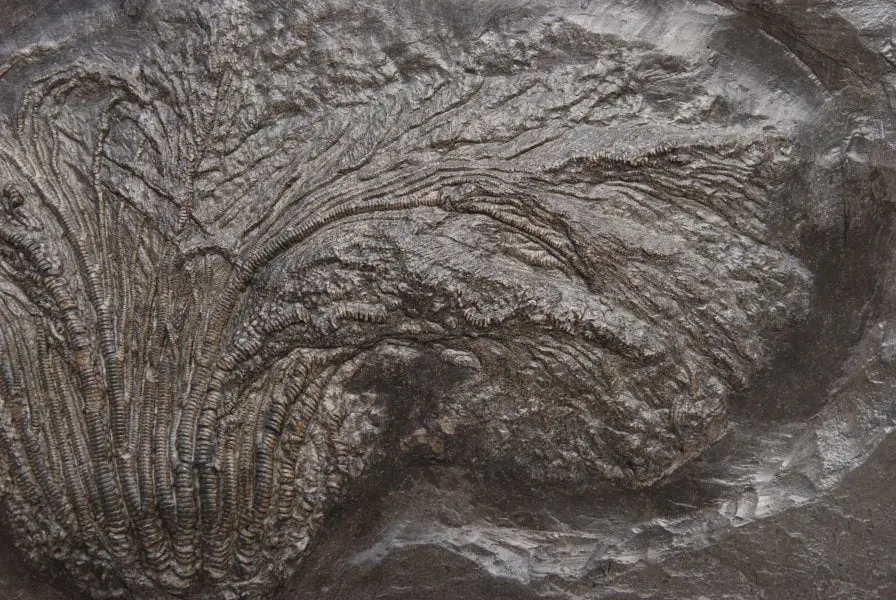
Complete sea lily, large fanned crown with excellent detail and long stem, grown on driftwood. Inserted into a stable slate plate (Fleins). Professional steel mounting, ready for hanging. A museum item from an old collection, offered on behalf of the owner. Very aesthetic, eyecatcher!
Sold on behalf of a customer.
The colony-forming driftwood sea lily: Seirocrinus subangularis from Holzmaden
The Seirocrinus subangularis is an absolute showpiece and one of the best-known fossils from the famous Posidonia Shale formation (Lower Jurassic, around 180 million years ago) of Holzmaden. Contrary to their name, crinoids are not plants, but fascinating sea creatures that are related to starfish and sea urchins. The finds from Holzmaden are of inestimable museum value, often in the form of huge slabs called the “Swabian Medusa Head”.
Biology and lifestyle
Seirocrinus has the typical structure of a sea lily: a stalk consisting of hundreds of small “poker chips” (stalk members) and a crown with acalyx (calyx) and numerous tentacles. The animals were passive filter feeders that used their fine, feather-like arms to filter tiny food particles from the ocean current.
The most remarkable feature of Seirocrinus was its pseudoplanktonic lifestyle. Unlike most sea lilies, which were rooted to the seafloor, Seirocrinus attached itself in large colonies to pieces of driftwood floating through the Jurassic Sea. This allowed them to take advantage of areas with stronger currents to efficiently filter food. Specimens have been found with stalk lengths exceeding 15 meters, while the crown itself measured “only” 20 to 30 centimeters.
The special feature of the Holzmaden finds
The fossils from the fine-grained, low-oxygen shale of Holzmaden are known worldwide for their spectacular preservation. In the case of Seirocrinus subangularis, not only the robust stem limbs but also the filigree, finely branched arms are often perfectly preserved. The unique taphonomic conditions prevented decomposition and made it possible to preserve them in detail, often together with the original driftwood on which they were hanging, which is extremely rare.
Finds of Seirocrinus slabs are captivating in their aesthetics and often show dozens of individuals whose arms remained parallel – an indication that the arms were held together by a kind of “Velcro mechanism” to prevent them from becoming entangled in the water. The fossils are also often partially transformed into gold-colored pyrite, which gives them a special aesthetic appeal.
Holzmaden Conservation Site: A window into prehistoric times
This high level of preservation is due to the unique depositional environment of the Jurassic Sea, which led to Seirocrinus being named “Fossil of the Year” (2018). A specimen from Holzmaden is therefore a striking testament to a unique, planktonic lifestyle and an exquisite addition to any discerning paleontological collection.