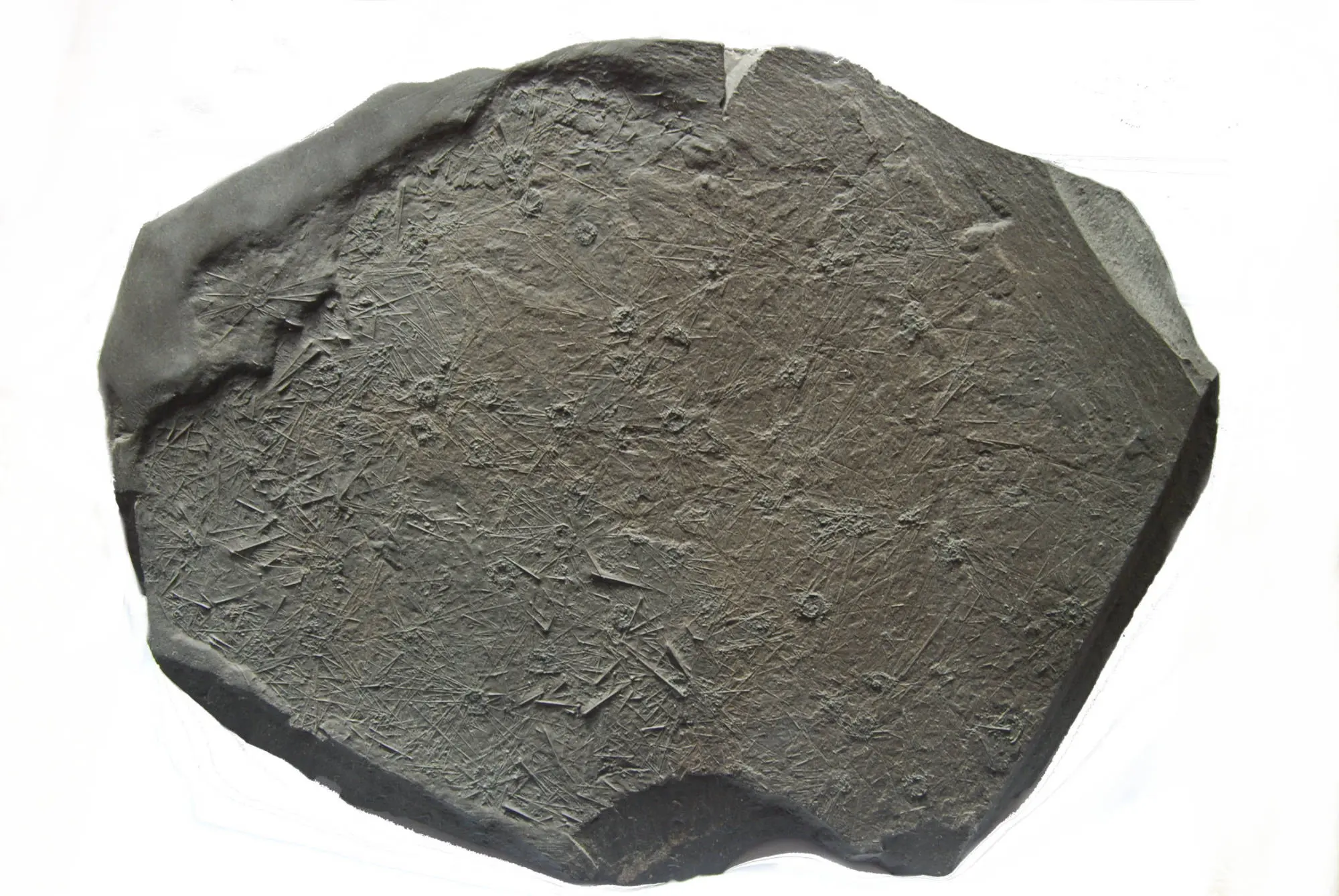
Diademopsis crinifera
29×22 cm
Holzmaden; Lias Epsilon I/2
(occurrence limited to a single horizon)
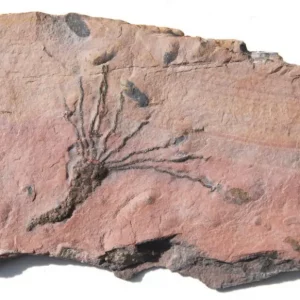
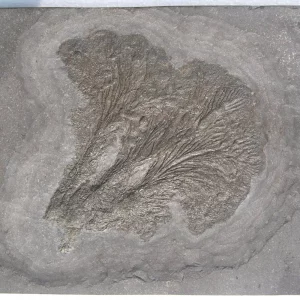
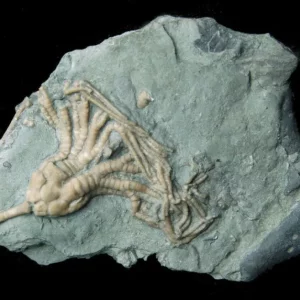
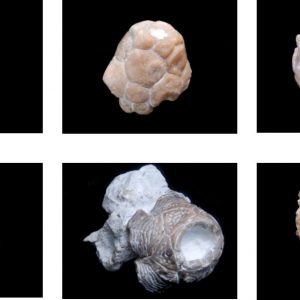
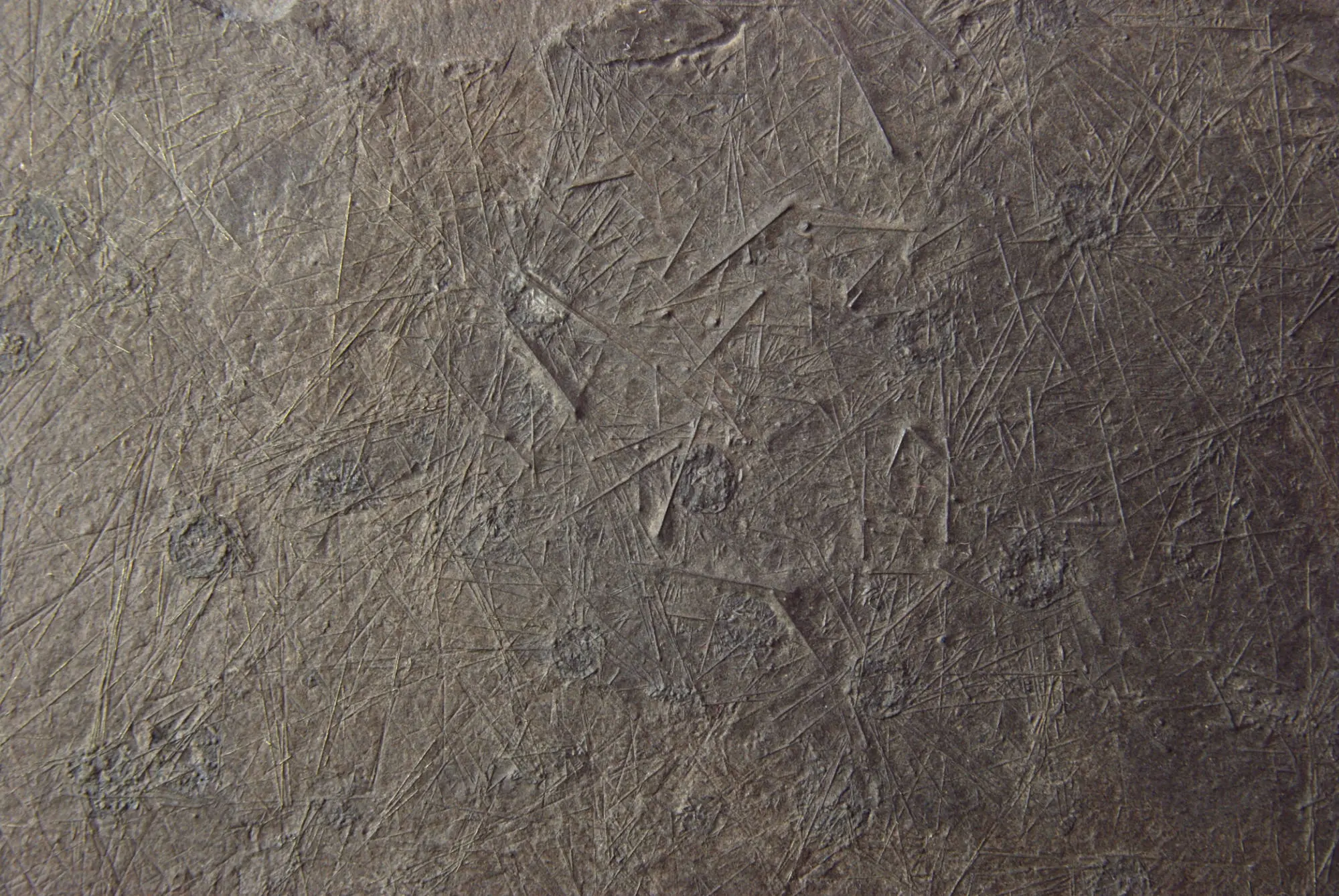
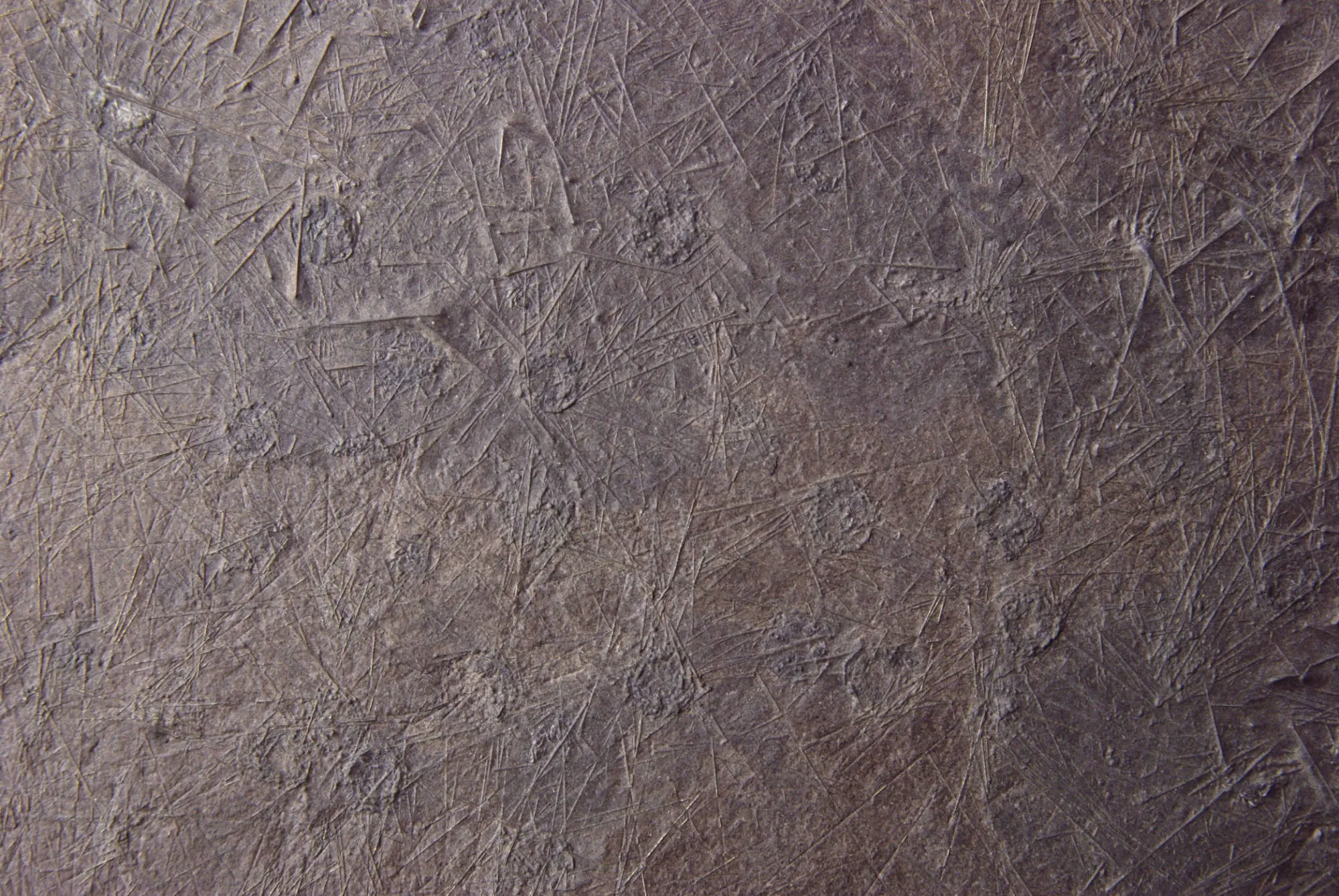
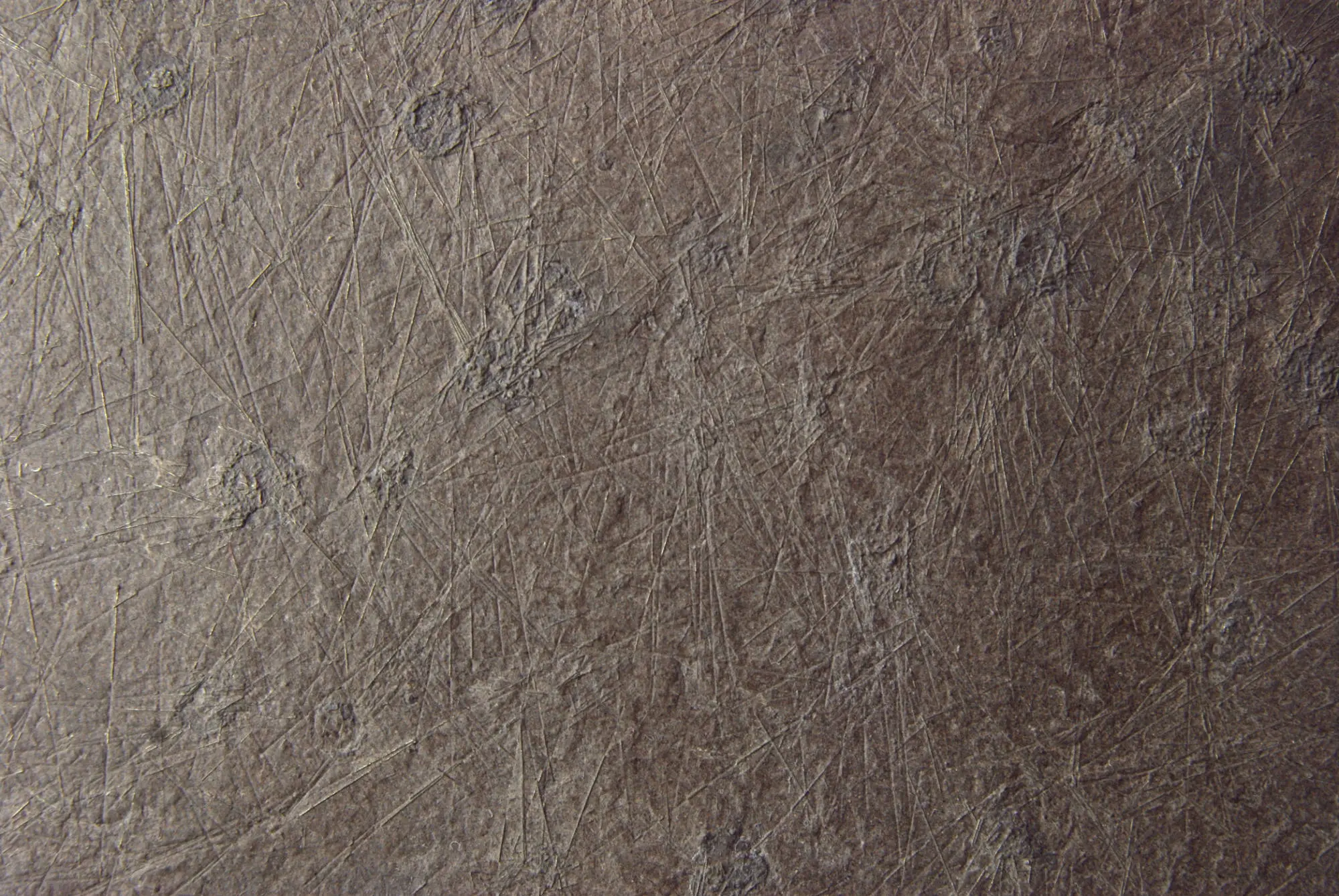
Delicate, unbroken plate, with a spectacular assemblage of approx. 50 sea urchins, completely preserved, with spiky trimmings – a unique piece of museum quality.
The spiny knight of the seabed: Diademopsis from Holzmaden
An elegant representative of the regular sea urchins that colonized the muddy bottoms of the Jurassic Sea around 180 million years ago. While the large vertebrates of Holzmaden often impress with their sheer size, this genus impresses with its geometric precision and the fine aesthetics of its skeletal structure. Due to the fragility of these organisms, finds from the Posidonia slate are particularly valuable evidence of the benthic (bottom-dwelling) fauna.
Biology and lifestyle
This rare sea urchin belongs to the Euechinoidea group and is characterized by a radially symmetrical shell. Its body consisted of a solid calcareous shell (corona) composed of five double rows of pore plates with interambulacral plates in between.
Like modern sea urchins, the animal moved over the substrate with the help of its movable spines and tiny suction feet. The spines sat on small tubercles and were used for locomotion as well as protection from predators such as the Dapedium. On the underside of the shell was the complex jaw apparatus, the so-called lantern of Aristotle, with which it grazed algae and organic particles from the seabed.
The special feature of the Holzmaden finds
Sea urchin fossils are a special feature of the Holzmaden shales. As the shell of a sea urchin usually disintegrates quickly into its individual plates after the death of the animal, coherent finds are extremely rare.
- Spine preservation: In particularly lucky finds, the spines are still lying directly on the shell, giving the fossil a radial, almost sun-like appearance.
- Pyritization: Often the calcareous shell has been replaced by the process of pyritization, making the sea urchin stand out like a golden jewel from the deep black slate.
Unique collector’s item
This aggregation of sea urchins uniquely documents life on the seabed under the difficult, often oxygen-poor conditions of the Jurassic Basin and is an exquisite detail in any collection that sharpens the eye for the filigree wonders of prehistoric times.