The MfN Berlin – A Mecca for Paleontologists
The scientific heart of German paleontology beats right in the middle of Berlin.
Shortly after the Chernobyl nuclear disaster, a school field trip for “political education” took me to divided Berlin. On Corpus Christi, May 29, 1986, we headed to the East, where it wasn’t a holiday. After the obligatory visit to the Palace of the Republic, I had only one destination in mind: the Archaeopteryx! But at the museum, I was in for a rude awakening. The guards smiled indulgently at me and set me straight: “The original? Come on, that’s in the vault—what do you think!” Today, 40 years later, the world is a different place.
The Museum für Naturkunde Berlin (MfN) looks back on over 200 years of history and houses more than 30 million objects. This makes it one of the world’s leading centers for research on evolution and biodiversity. It has fought its way back to the top of the global rankings. Since January 1, 2009, the MfN has been a legally independent foundation under public law and a member of the Leibniz Association.
Three museums merge to form a research center
Its roots date back to the early 19th century. With the founding of the University of Berlin (now Humboldt University) in 1810, three independent collections were established: the Anatomical-Zootomical Museum, the Zoological Museum, and the Mineralogical Museum. They grew so rapidly through worldwide expeditions and donations that the rooms in the university building soon became too small.
A new building was needed. Between 1883 and 1889, architect August Tiede constructed the monumental building on Invalidenstraße, which opened on December 2, 1889. This marked a groundbreaking development: for the first time in Germany, the collections were strictly separated—into a public exhibition collection and a primary scientific collection. This principle continues to shape museums to this day.
How does the MfN Berlin compare internationally?
Major institutions such as the Muséum national d’histoire naturelle in Paris (1793) or the Natural History Museum in London (which traces its roots back to the British Museum, founded in 1753) are significantly older. In Germany, the start of collection-building roughly coincides with that of the Senckenberg Museum in Frankfurt.
Museum | Founding | Focus |
Natural History Museum (London) | 1753 | Taxonomy & Type Specimens |
National History Museum (Paris) | 1793 | Global Biodiversity |
Museum of Natural History (Berlin) | 1810 | Mesozoic Era & Zoology |
Senckenberg Natural History Museum (Frankfurt) | 1817 | Evolution & Ecology |
Tübingen Paleontological Collection | 1830s | University Collection |
Smithsonian NMNH (Washington, D.C.) | 1846 | Global Anthropology & Paleobiology |
AMNH (New York) | 1869 | Vertebrate Paleontology |
Natural History Museum (Vienna) | 1889 | Habsburg Collections |
Field Museum (Chicago) | 1893 | Evolutionary Biology & Anthropology |
Of the institution’s more than 30 million objects, approximately 2.5 million belong to the paleontological collection, divided into invertebrates, vertebrates, and paleobotany. However, insects and zoological alcohol specimens make up the largest portion of the total collection. By comparison, the paleontological collection at the University of Tübingen comprises about 600,000 fossil specimens.
A quick note on the “wet collection”: Absolutely bizarre! Inside a high-tech refrigerator, a glass cube rotates, containing shelves lined with one million marine animal specimens in 276,000 (“preserving jars” jars, stored in 80 metric tons of ethanol. The collection is kept at a constant temperature below 18 degrees Celsius to avoid reaching the alcohol’s flash point—a perfect retreat for hot summer days. Jars marked with a red dot contain holotypes.
Giraffatitan brancai – World Record and Colonial Legacy
At 13.27 meters tall, it is the tallest mounted dinosaur skeleton in the world—and holds an entry in the Guinness Book of World Records. That wasn’t always the case. New biomechanical findings in paleontology corrected the misalignment of the original 1937 mounting. In the original version, the dinosaur’s legs were slightly angled outward and mounted in an “X-shaped” stance—similar to that of a modern lizard or crocodile. Today we know that sauropods did not support their massive weight of over 30 metric tons with splayed legs. Instead, they walked perfectly upright on column-like limbs positioned directly beneath their bodies (similar to modern elephants). As the legs were raised vertically, the entire torso—and with it the head—rose by just under one meter. The skeleton grew to its current record height of 13.27 meters.
Another correction was necessary: Until 2007, Giraffatitan’s long tail dragged flat across the museum floor like a heavy train. However, footprint analysis and bone studies from around the world showed that sauropods never dragged their tails behind them while walking. The tail served as a free-floating counterweight to the long neck. The result: During the renovation, the tail was lifted off the floor and has since been held horizontally in the air.
As with most skeletons of this size, it is a composite made up of different individuals. Most of the torso, the limbs, and the cervical vertebrae belong to a primary specimen (catalog number “SI”). Since its tail was incomplete, it was supplemented with the fossilized caudal vertebrae from a slightly smaller Giraffatitan specimen.
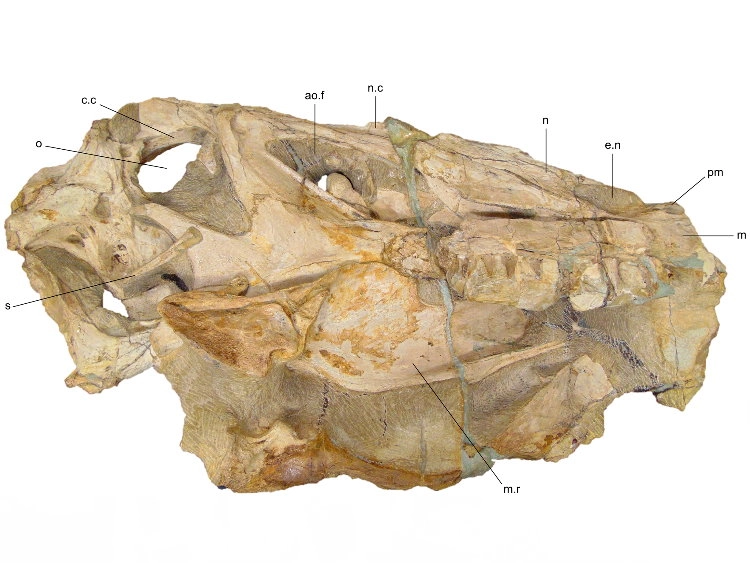
About 30 to 40 percent of the skeleton on display has been artificially reconstructed or supplemented. The skull is a 100% artificial replica. The original skull is kept separately in the museum’s scientific research collections.
The bones come from the Tendaguru expeditions in what is now Tanzania (1909–1913). These excavations are increasingly the subject of critical debate today. Under German colonial rule in German East Africa, hundreds of metric tons of fossils were shipped to Europe, in some cases under exploitative conditions for the local workforce. The debate over colonial looted art and potential restitution claims has long extended to natural history objects as well. Most recently, “postcolonial” acquisitions of scientifically valuable fossils from the Global South—with claims of ownership by the countries of origin—have also made headlines; key examples include Ubirajara and Irritator.
Tristan Otto – An Investment Banker’s Marketing Masterstroke?
The jet-black skeleton of the Tyrannosaurus rex “Tristan Otto” was excavated in Montana in the early 2010s and has been on display in Berlin since December 2015. Its skull is 98 percent intact—an exceptional find. However, the skeleton does not belong to the museum. It is on loan from a private collection. The fossil was jointly acquired by Niels Nielsen, a London-based investment banker and financial investor of Danish descent, and his business partner and friend, Jens Peter Jensen. They also arranged for the restoration to be carried out entirely according to their wishes: presented as perfectly and flawlessly as possible, without the added parts being recognizable.
The commitment to public research on the “Tristan Otto” T. rex skeleton is strictly tied to the term of the loan agreement with the private owners. Through scientific analysis and museum presentation, the object gains massive market value, as the research serves as a certificate of authenticity and establishes the fossil as a global brand.
The booming market for luxury fossils demonstrates that public museums can hardly afford such top-tier fossils on their own anymore. As recently as July 2026, the T. rex “Gus” fetched approximately $50.1 million at Sotheby’s in New York—a new auction record for a dinosaur skeleton. Scientists criticize this trend: Unique natural artifacts are thus disappearing into private living rooms, where they are usually lost to research.
In 2024, the FAZ reported that of the 33 dinosaur skeletons auctioned since 1997, only seven had ended up in public museums.
On July 15, 2026, SWR Kultur ran the headline: “Is the T-Rex Becoming a Billionaire’s Toy?” (Excerpt):
“Museums, too, find themselves in a dilemma because of this. One example is the Museum of Natural History in Berlin. Since 2015, it has been exhibiting the dinosaur ‘Tristan Otto,’ one of the best-preserved T. rex specimens in the world. The museum benefits from this attraction, which is on loan from a Danish collector. However, research is contingent on its ability to continue indefinitely. In Berlin, it was temporarily suspended. Museum director Johannes Vogel is now hoping for a long-term collaboration. But the private lender has the final say on the matter.”
Meanwhile, the MfN is working around the clock to digitize the material while the contract is in effect. The guiding principle is: Better temporary access for science than no access at all.
The Berlin Archaeopteryx—the “Mona Lisa of fossils”
The museum’s most valuable fossil is the Berlin specimen of *Archaeopteryx lithographica* from the Solnhofen limestone slabs—the quintessential fossil icon. The fact that we can still admire it today borders on a miracle.
During the air raids of World War II, the precious slab was buried deep beneath the floor of the museum’s own plaster workshop in a steel case and camouflaged with sand and floor tiles. When the Red Army organized the removal of cultural artifacts after Berlin’s surrender and tons of collection items were hauled away as looted art, the hiding place remained undiscovered. The primeval bird survived the war unscathed in the Berlin underground.
Archaeopteryx No. 1 – In the Beginning Was the Feather
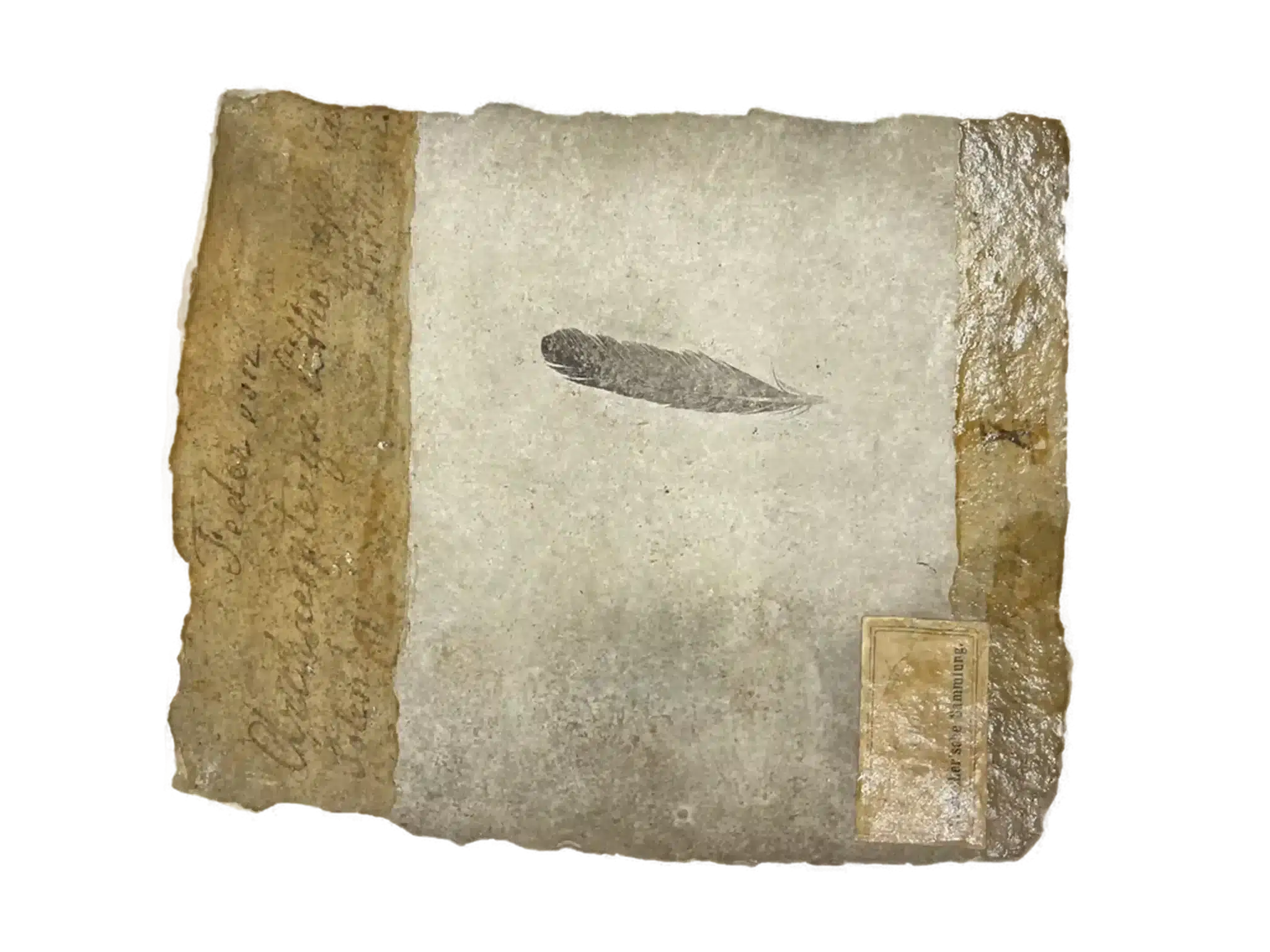
The magazine holds yet another treasure: an unassuming fossil measuring just a few centimeters (6.9 centimeters long and 1.2 centimeters wide)—the holotype, Archaeopterix #1. Extremely delicate and fragile, and sensitive to light, it is therefore carefully preserved in a small box.
When Hermann von Meyer coined the name Archaeopteryx lithographica (translated as “ancient feather from the lithograph”) in 1861, he was referring exclusively to this single, isolated feather, which was found near Solnhofen in 1860. This fossilized feather is a split fossil. The more detailed main plate is housed at the Berlin Museum of Natural History, while the counterpart plate is in the State Paleontological Collections in Munich.
A side note for evolution enthusiasts: The museum’s current director, Prof. Johannes Vogel, is married to Sarah Darwin—a great-great-granddaughter of Charles Darwin.
What is the Leibniz Association?
The Leibniz Association is a consortium of nearly 100 independent research institutions. Its scope ranges from the natural and engineering sciences to the economic, social, and humanities disciplines.
What makes this network unique can be summarized in three key points:
- The “Königstein” funding model: Leibniz Institutes are not funded by a single federal state. They are financed according to a special formula, with half of the funding coming from the federal government and half from the states (pursuant to Article 91b of the Basic Law). This ensures them solid, supraregional core funding.
- The “TÜV” of science: However, these funds are not provided unconditionally. Every Leibniz Institute must undergo a rigorous, independent evaluation every seven years. Any institute that fails this quality review and no longer meets the high scientific standards risks losing its funding in the worst-case scenario. This constant pressure to perform keeps research at a world-class level.
- “Theoria cum praxi”: True to the motto of its namesake, Gottfried Wilhelm Leibniz, the community combines knowledge with practical application. It is not about ivory-tower research, but about science that is socially relevant and seeks dialogue with the public.
Within the Leibniz Association, the MfN plays a special role as one of eight Leibniz research museums. The exhibition is inextricably linked to cutting-edge research taking place behind the scenes. Behind the scenes, hundreds of scientists are working on global issues such as species extinction, climate change, and the digitization of natural heritage dating back millions of years. The research is broadly divided into three fields:
- Discovering and cataloging biodiversity. Describing new species and reconstructing the tree of life—using modern genetic analyses and CT scans.
- The origin and evolution of Earth and life. This is where the heart of paleontology and impact research beats. Research focuses on how cosmic impacts and extreme climate events have influenced mass extinctions and speciation.
- Collections and the digital world. How can millions of physical objects worldwide be made accessible digitally? To this end, the MfN is developing AI-supported high-speed scanning methods.
Where is the institute headed?
The MfN strikes a balance between science communication and entertainment like almost no other research museum. Visitor numbers remain stable, ranging from 700,000 to over 800,000 guests per year; in 2023, a record was set with approximately 882,000 visitors. When podcasts and digital formats are included, the museum reaches well over one million people.
The museum is currently in the midst of a historic transformation. Two-thirds of the building remains structurally in its 1945 condition. Through the “Future Plan” funded by the federal government and the State of Berlin, approximately 660 million euros are being allocated for renovation, expansion, and the complete digitization of the collections. Plans include a new collection building in Berlin-Adlershof; the winner of the international architecture competition will be announced at the end of 2024. After the renovation, the museum is expected to be able to welcome more than one million visitors per year.
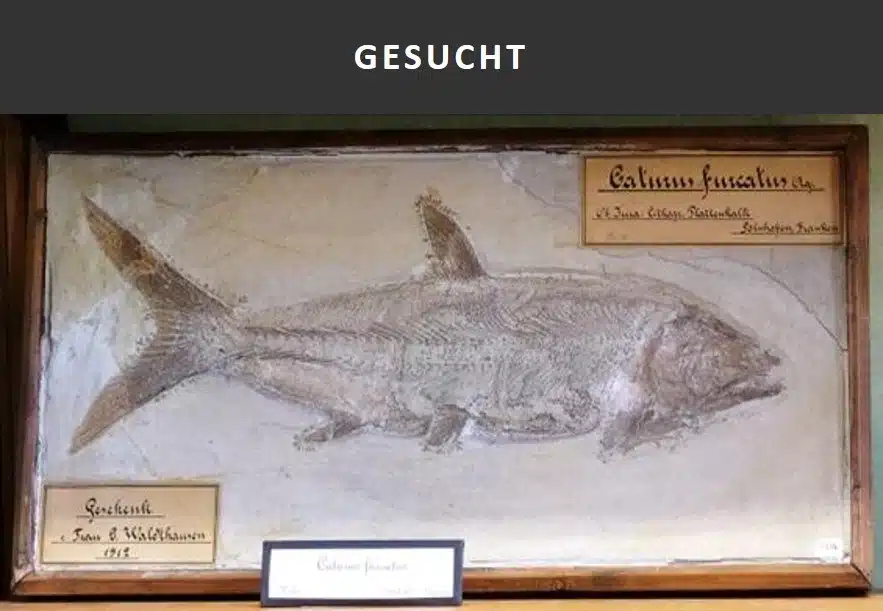
Then perhaps a gap in the Paleozoic era will also be filled. Visitors to the current exhibition will see primarily fossils from the Mesozoic Era, the Upper Jurassic (Kimmeridgian to Tithonian, approx. 154 to 145 million years ago) from the Solnhofen limestone slabs and the Tendaguru Formation, as well as the aforementioned Tristan Otto from the Late Cretaceous (Hell Creek Formation, Montana (USA), approx. 66 million years ago). The Paleozoic is scarcely represented in the public collection. For anyone fascinated by the Cambrian Explosion or Devonian armored fish, this part of Earth’s history remains hidden away in the storage rooms.
Sources
- Berlin Museum of Natural History: museumfuernaturkunde.berlin
- Berlin Museum of Natural History: Record Attendance in 2023—Approximately 882,000 Visitors, Press Release
- Berlin Museum of Natural History: Future Plan – Renovation, Digitization, New Collection Building, Exhibition Page
- Berlin Museum of Natural History: €660 million from the federal and state governments for the Future Plan, press release
- Giraffatitan brancai, Guinness World Record, Tendaguru, artsandculture.google.com
- A Dinosaur for the Living Room: DieZeit
- Will the T-Rex Become a Billionaire’s Toy? SWR TischlingerArchaeopteryx UV
- Tischlinger, H. (2005): New Information on the Berlin Specimen of Archaeopteryx lithographica: ResearchGate
- Tischlinger, H. & Unwin, D. (2020): UV Analyses of the Berlin Specimen of Archaeopteryx lithographica: ResearchGate
- Tischlinger, H. (2021): Archaeopteryx: In the Beginning Was the Feather: ResearchGate