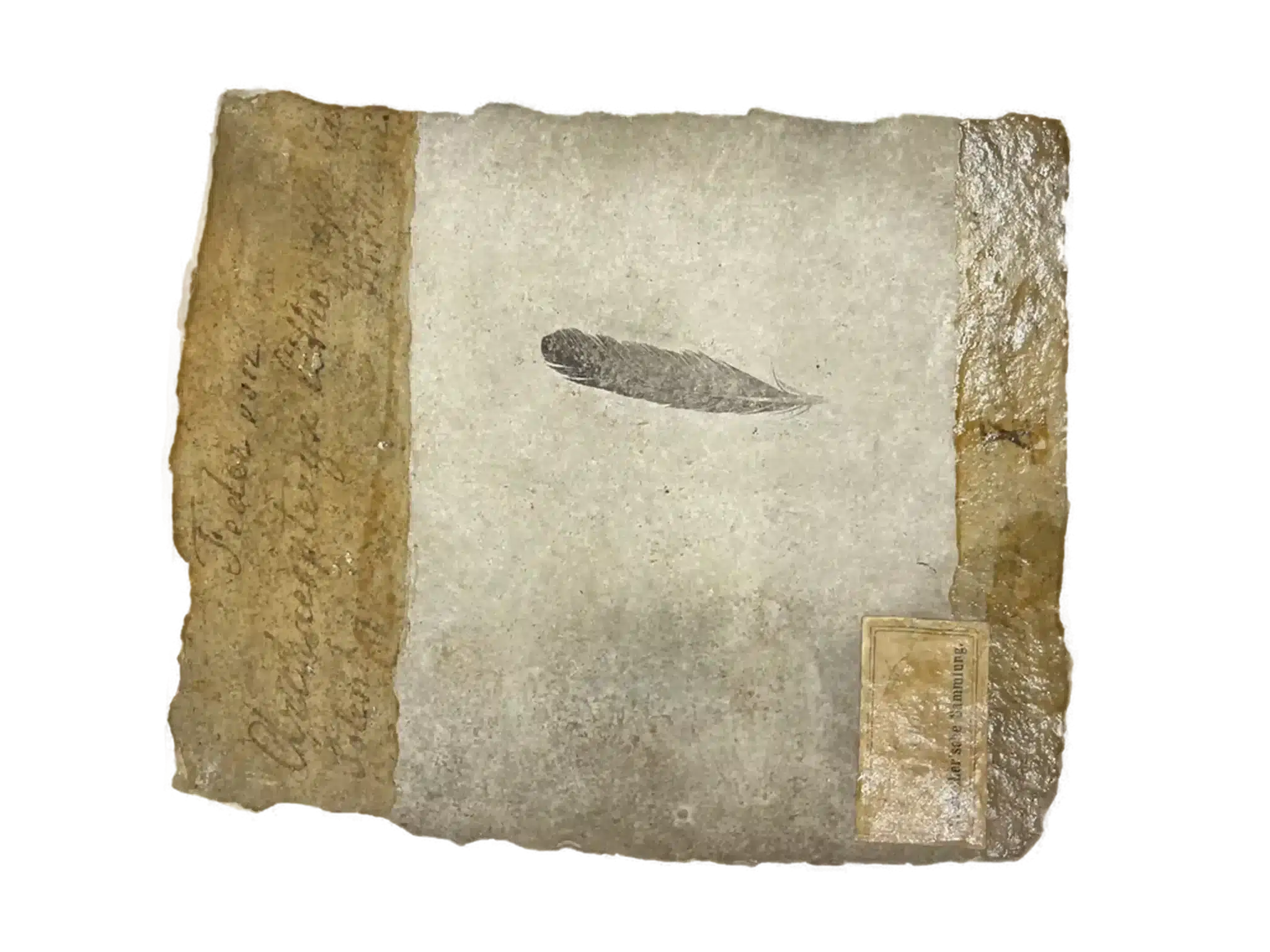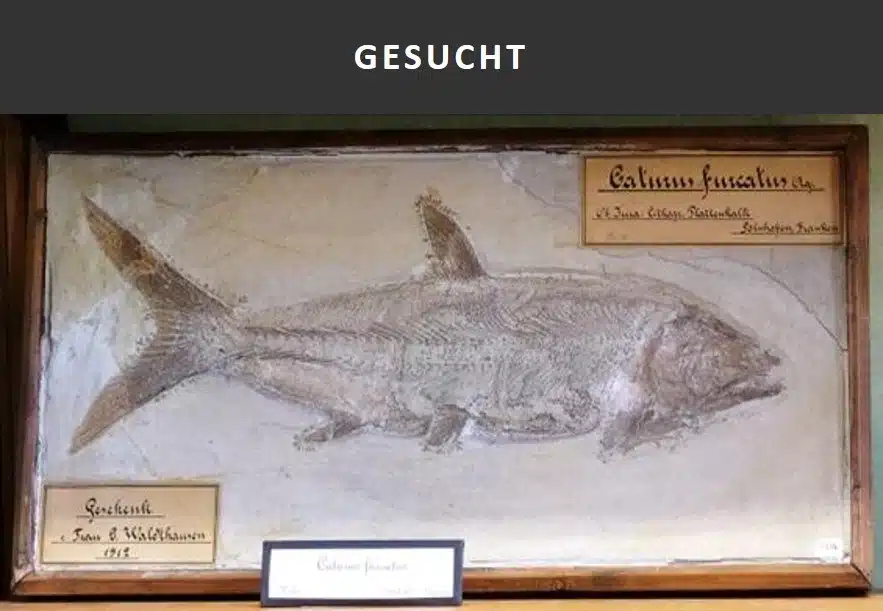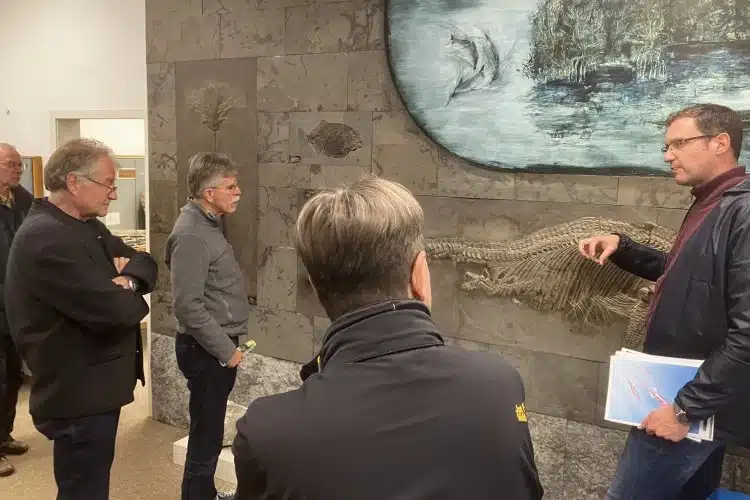
A recent article in the local newspaper stated that the Natural History Museum in Göppingen “probably has no future.” That sentence caught my attention—not only because Göppingen is just a stone’s throw from Tübingen, but because it’s part of a recurring pattern. In 2025, state lawmakers in Rhineland-Palatinate had rejected plans for a new fossil museum in Bundenbach —arguably the most significant Devonian fossil site. Now Göppingen, one of the classic cradles of Swabian paleontology, is following suit.
The Swabian Alb and Its Foothills—The Cradle of Paleontology
For about 400 years, the Swabian Alb and its foothills have been among the most fossil-rich landscapes in Europe. The Lower Jurassic Posidonia Shale—made famous by Holzmaden—and just a few kilometers away lies Pliensbach, the type locality of a geological stage known as the Pliensbachian. Spectacular fossils from this area are now on display in nearly every major natural history museum in the world.
First and foremost, at the neighboring Hauff Museum of Prehistory and the Stuttgart Natural History Museum. Standing out against the backdrop of their spectacular exhibits is a particular challenge for a local natural history museum. This requires a museum concept that is both well-thought-out and elaborate, ideally complemented by special exhibitions. The Reutlingen Natural History Museum has discovered such a niche and is delighted with the influx of visitors—though it is also generously funded by the city.
Theodor Engel, “Theologian and Geologist”
The Göppingen Collection is named after a man who liked to describe himself as a “theologian and geologist”: Theodor Engel (1842–1933). Even as a child, he was interested in fossils. Starting in 1860, he studied theology and philosophy in Tübingen, but also took courses in geology—and thus came under the influence of Friedrich August Quenstedt, the inventor of the “Jurassic Alphabet,” which is still in use among collectors today. This Tübingen circle gave rise to an entire generation of Swabian collectors and researchers, among whom was Oskar Fraas.
Engel became a pastor while remaining a tireless naturalist. His *Geognostic Guide to Württemberg* served as a bible for Swabian collectors for decades; he was a co-founder of the Swabian Alb Association and also helped develop the region for tourism. A noteworthy side note: Engel is the great-grandfather of the politician Rezzo Schlauch. Over the course of his long life, he amassed a collection of nearly 100,000 fossils—from the Swabian and Swiss Jurassic periods—all meticulously documented.
A treasure—and a promise
In 1924, Engel—then 82 years old—sold his collection to the city of Göppingen at a bargain price; the city paid 6,000 gold marks shortly after the years of inflation. They were well aware of its value. Engel had a clause inserted into the contract that sounds like a warning today: The city undertook to keep the collection intact “for all time,” to house it properly, to care for it conscientiously, and to make it accessible to the public and the academic community.
After all, its scientific value is by no means fully recognized. Experts consider the collection to be exceptional because it provides a nearly complete picture of the entire Jurassic period—a rarity. Many specimens, including holotypes, come from classic sites that have long since been built over or filled in and from which it will never again be possible to collect specimens. “According to Prof. Dr. Rainer Schoch (State Museum of Natural History in Stuttgart, Commissioner for Monument Protection in Baden-Württemberg), the collection would even be considered a historic monument today if it had not already been purchased before the Schatzregal (Baden-Württemberg Monument Protection Act, 1971) had come into effect.”
Uncertain Future
The museum in the Alte Badherberge in Jebenhausen—housed in one of the city’s oldest secular buildings—has been closed since late 2022. The building and the adjacent bathhouse must undergo extensive renovation before a modern exhibition can even be considered.
And yet, so much of it started out promisingly. At the end of 2020, Dr. Christian Kolb, a renowned paleontologist and ichthyosaur specialist, took over as museum director; In 2021, the “FöNaMu” support association was founded, the inventory process began, and a feasibility study showed how historic buildings and the collection could be combined to create a modern natural history hub.
In the spring of 2026, the city council made it clear that a modern natural history museum was financially out of reach. At least the district advisory board spoke out against selling the collection, and the mayor assured everyone that the city would fulfill its moral responsibility. Across party lines, there was a mix of frustration and hope for better times. For now, only one thing is certain: the Engel Collection will at least be inventoried.
Precisely because many of the Engel specimens come from sites that no longer exist, their true value lies in their documentation—not in the visual appeal of the individual fossils. By current scientific standards, the Engel Collection has hardly been cataloged to date. Therefore, cataloging and publishing it in an online archive presents an opportunity.
Conclusion
A general trend is continuing. In an age of visual overload, the visual appeal of museum exhibits is losing its allure; the spirit of optimism that characterized the educated middle class—which founded small natural history museums everywhere in the late 19th century—has long since faded.
Experience shows that when funds are tight, budget cuts are made where the lobbying is weakest and the outcry is quietest—in culture and museums. This isn’t a conspiracy, but simple budgetary logic, and it’s unlikely to be stopped. But it’s worth naming the cost. In Göppingen, it is not merely “a pile of stones” that is at stake, as the researcher in charge summarizes the common objection, but one of Germany’s most historically significant private collections from the Jurassic period—and a century-old promise the city made to a pastor.
Sources
- Anton Hegele: “The countless army of fossils lay scattered about, just waiting to be collected.” On the “handling” of fossils in the vicinity of the Boll/Göppingen Geopark Information Center. – Proceedings of the Federal Geological Survey, Vol. 60, pp. 77–84, Vienna 2007.
- Hegele, Lang & Rockenbauch: Dr. Engel’s Jurassic Collection. Geological History and Landscape in Swabia. Korb, 1991.
- City of Göppingen, Natural History Museum: goeppingen.de
- Friends of the Göppingen Natural History Museum (FöNaMu): foenamu-goeppingen.de
- Stuttgarter Zeitung: “A Treasure Trove of Earth’s History” – How Göppingen Came to Possess Rare Fossils (Article from August 12, 2025)
- SWP: The Natural History Museum in Göppingen Likely Has No Future (Article dated March 7, 2026)
- Filstalexpress: Göppingen Natural History Museum: 100 Years of the Dr. Engel Collection (Article from January 22, 2025)