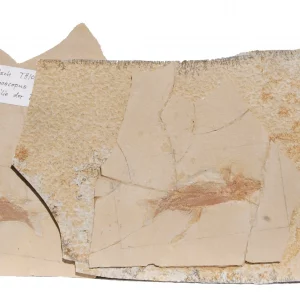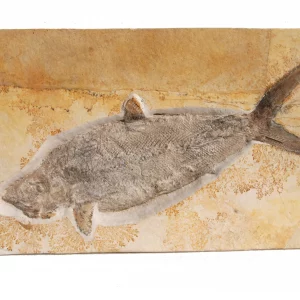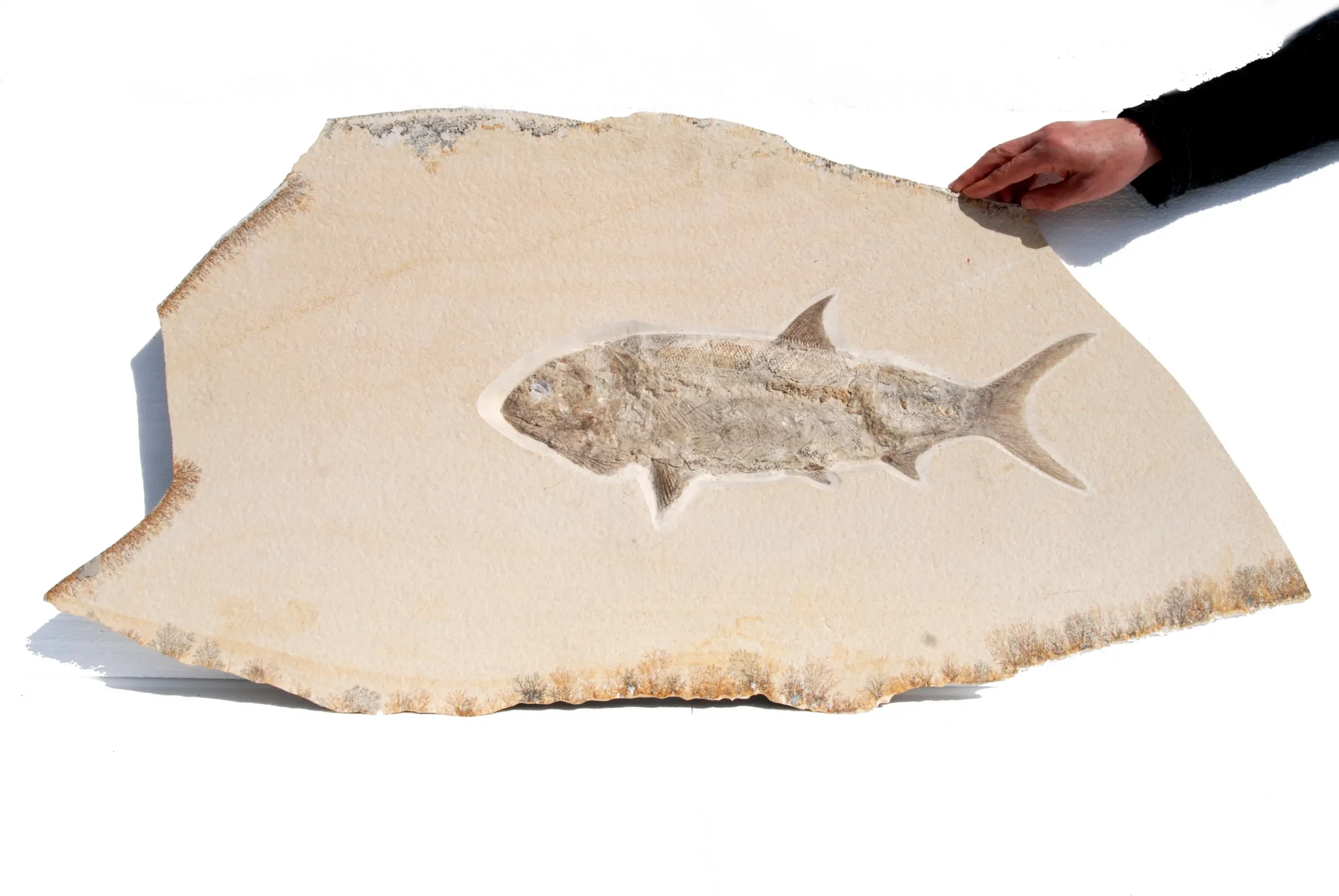
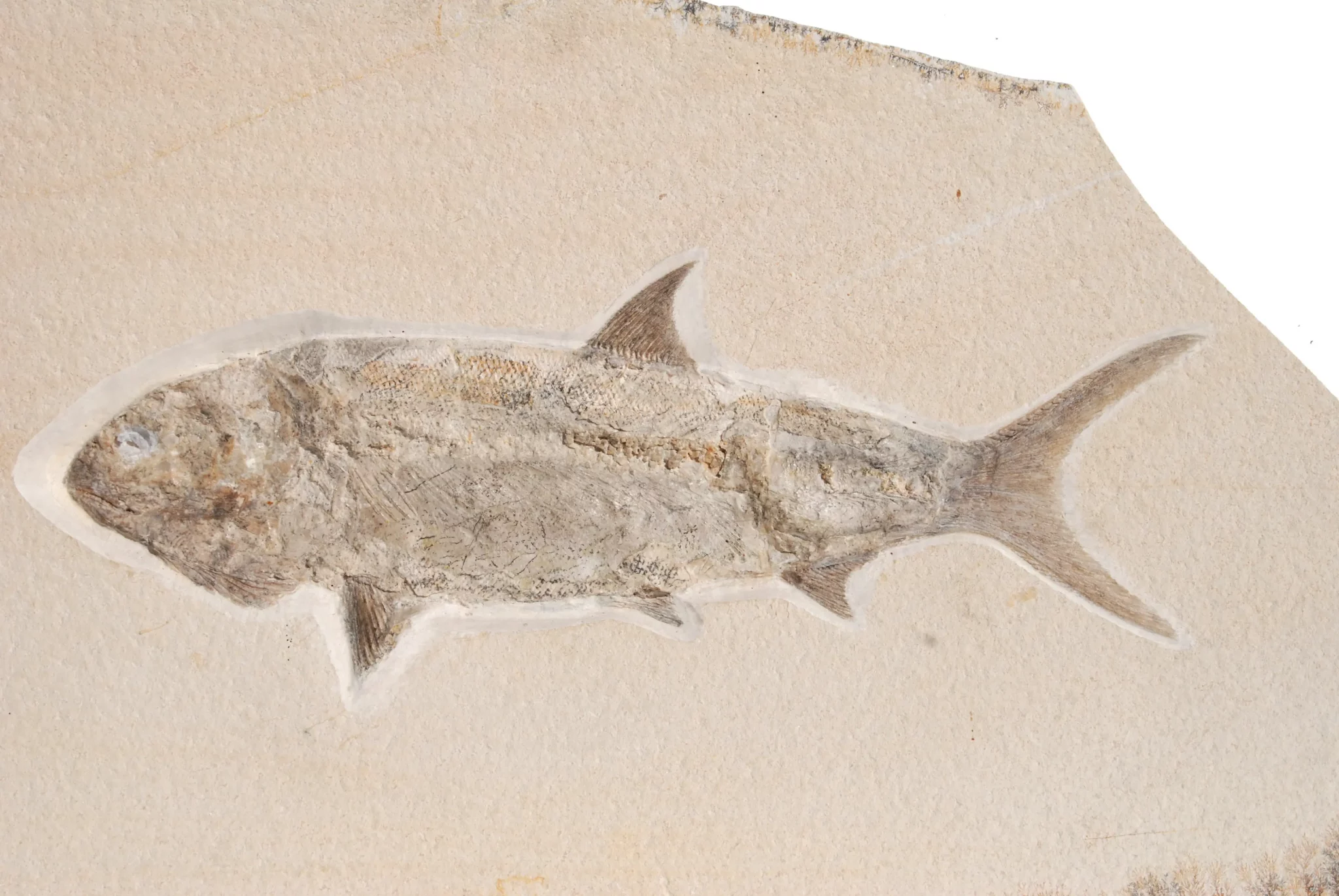
Solnhofen Caturus sp.
Place of discovery: Langenaltheim, Langenaltheimer Haardt; Solnhofener Revier/ Germany
Lithostratigraphy: Lower Tithonian, White Jurassic Group, Altmühltal Formation, Upper Solnhofen Subformation
Biostratigraphy: Hybonotum zone, rueppelianus subzone, rueppelianus horizon
Age: approx. 150.8 – 152 million years +/- 2 million years
Plate size: approx. 105 x 51 cm
Size of fossil: approx. 50 cm (largest size)
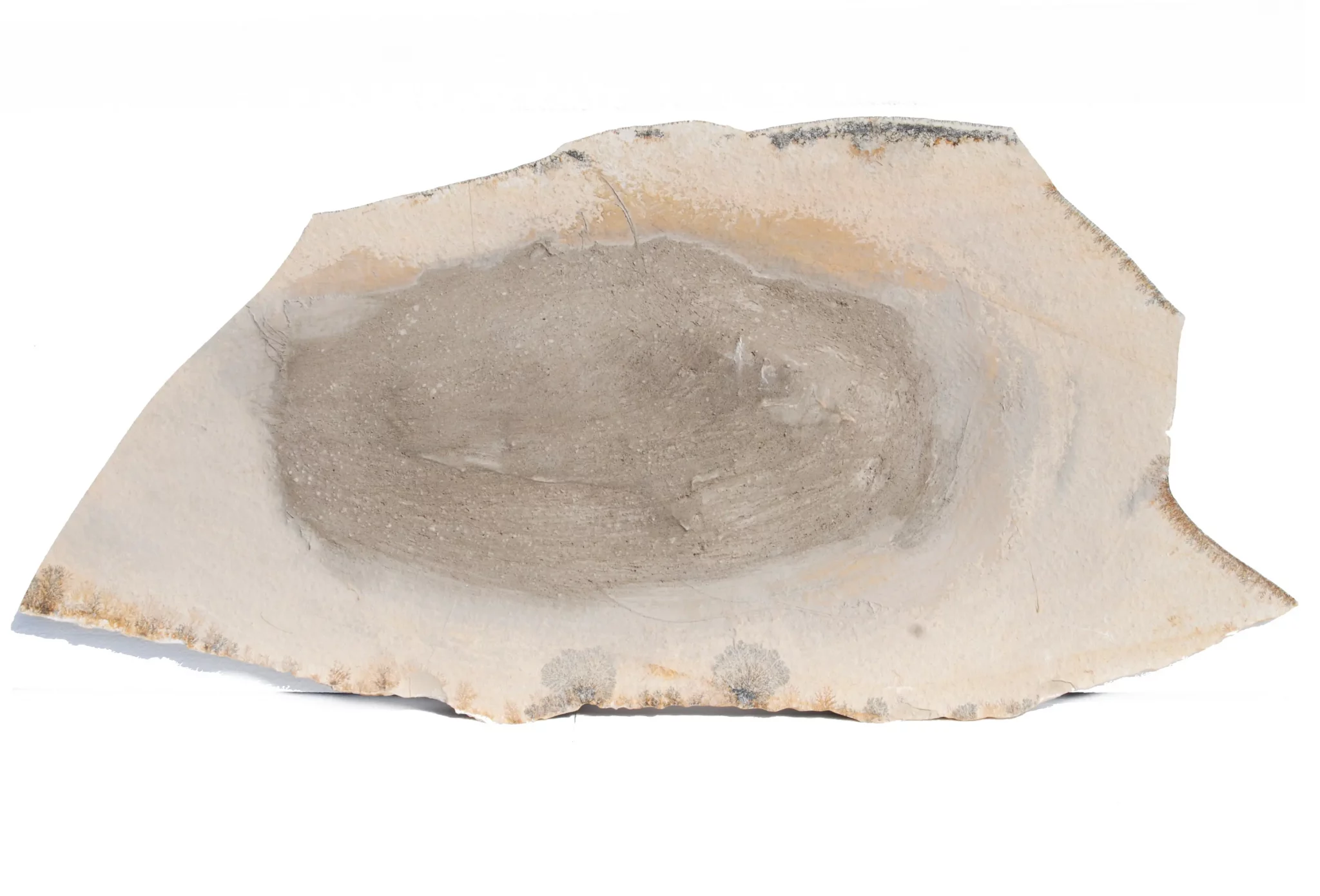
Back stabilization (“bump”) still needs to be removed, therefore offered at a low price.
Classic “predatory fish” of good size and quality.
Centered on a stable support plate. With proof of provenance.
Offered on behalf of the customer. Please do not make a payment in the store. Sale in the name and for the account of the owner.
Caturus sp. – The swift hunter of the Jurassic Sea
This fossil represents one of the most dominant predatory fish of the Solnhofen Archipelago from the Upper Jurassic (approx. 150 million years ago). As an ancestor of today’s garfish, Caturus is characterized by its streamlined body and predatory lifestyle.
Scientific Classification and Morphology
-
- Evolutionary Elegance: As a distant relative of today’s baldhead (Amia calva), Caturus had an anatomy perfectly adapted for hunting in open water. It is the prime example of a holostean that dominated the lagoons of the Solnhofen Archipelago.
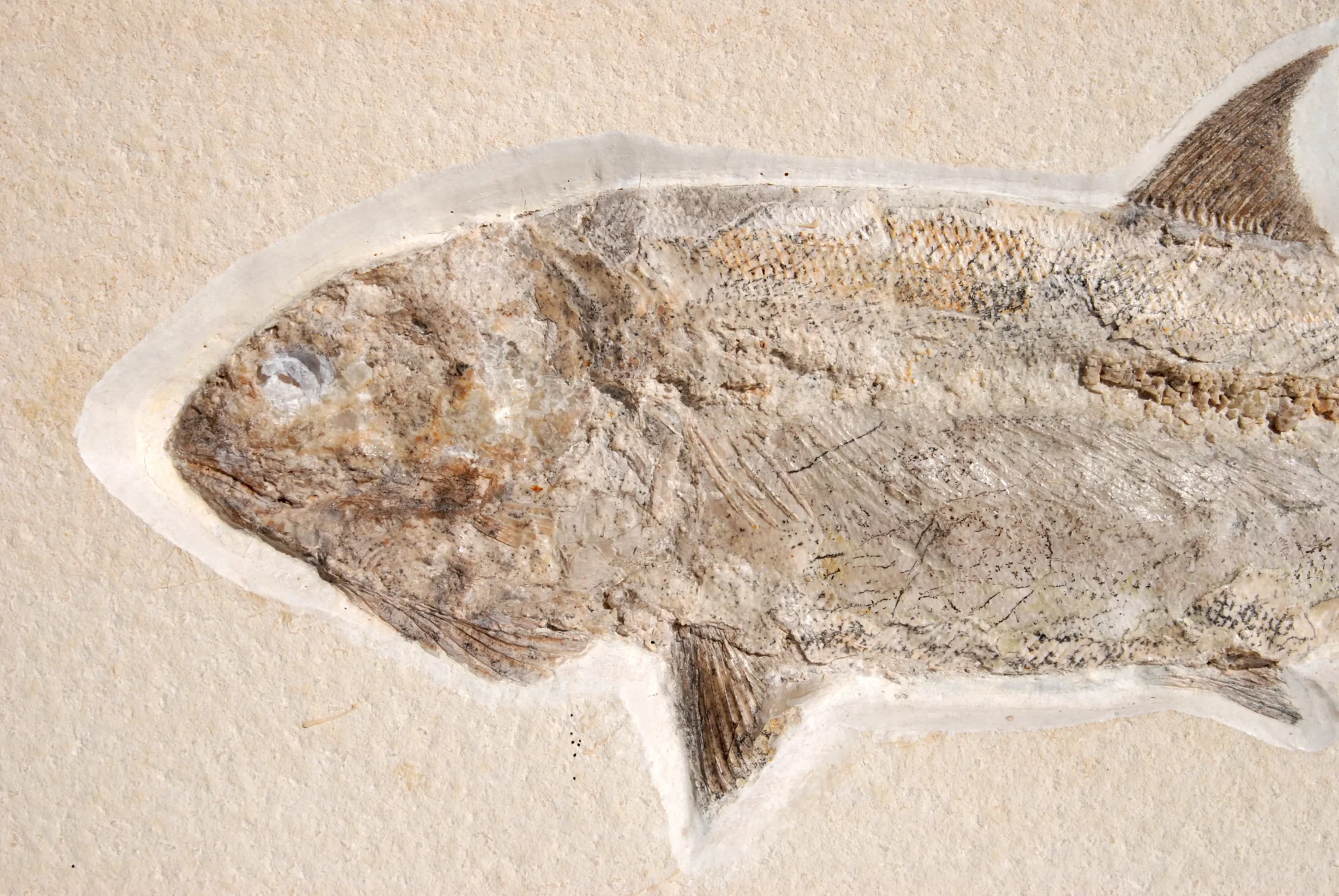
- The “Killer Instinct” in Stone: In contrast to peaceful small fish like Leptolepides, Caturus is often found in the most spectacular states of preservation: Occasionally, even the last meals in the stomach area or prey fish directly in the wide-open mouth have been documented.
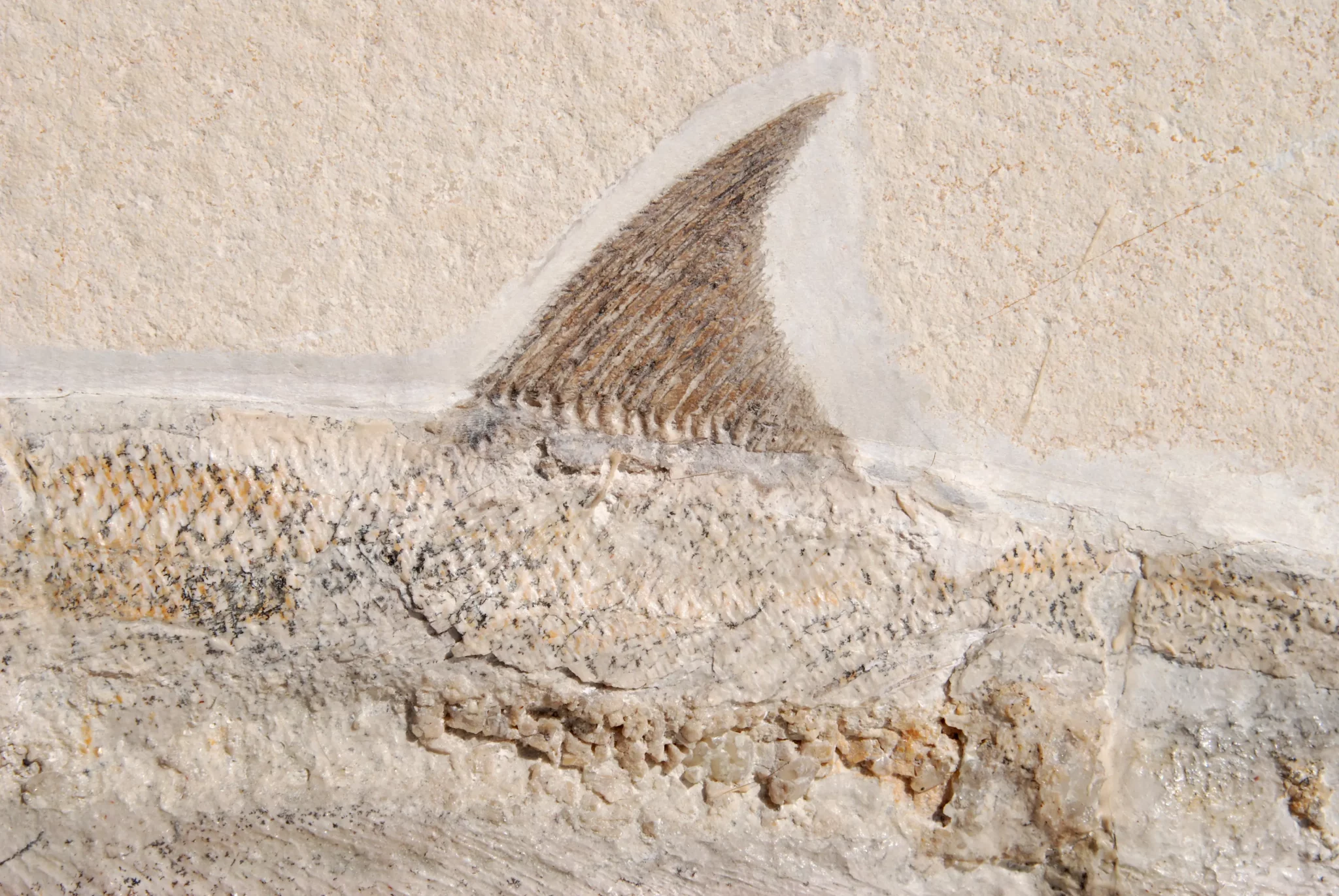
- The Aesthetics of Contrast: The dark bony structures and the delicate fin rays usually stand out magnificently against the cream-colored or pale yellow Solnhofen limestone—a visual masterpiece of nature.
The fine details – what collectors look out for:
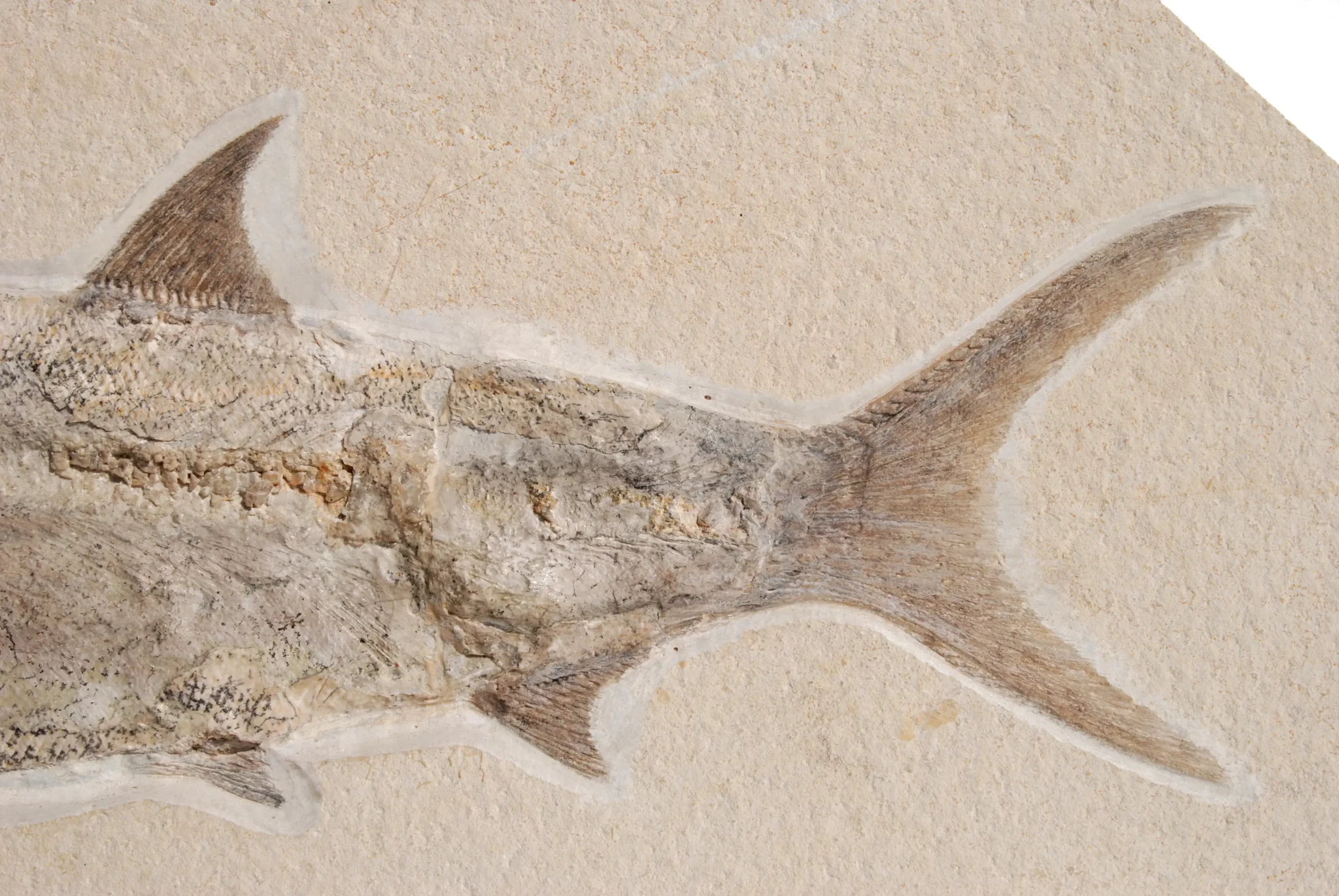
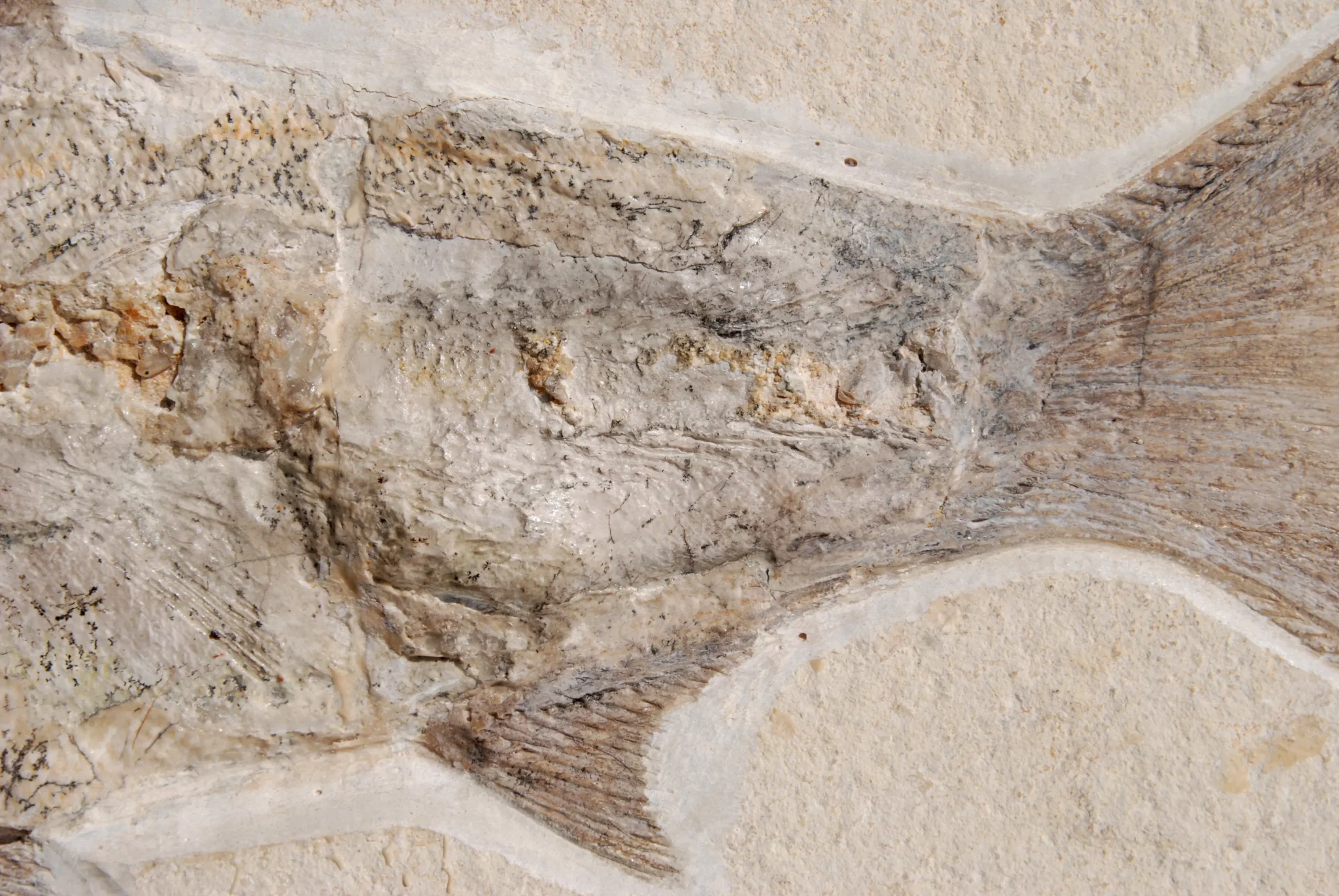
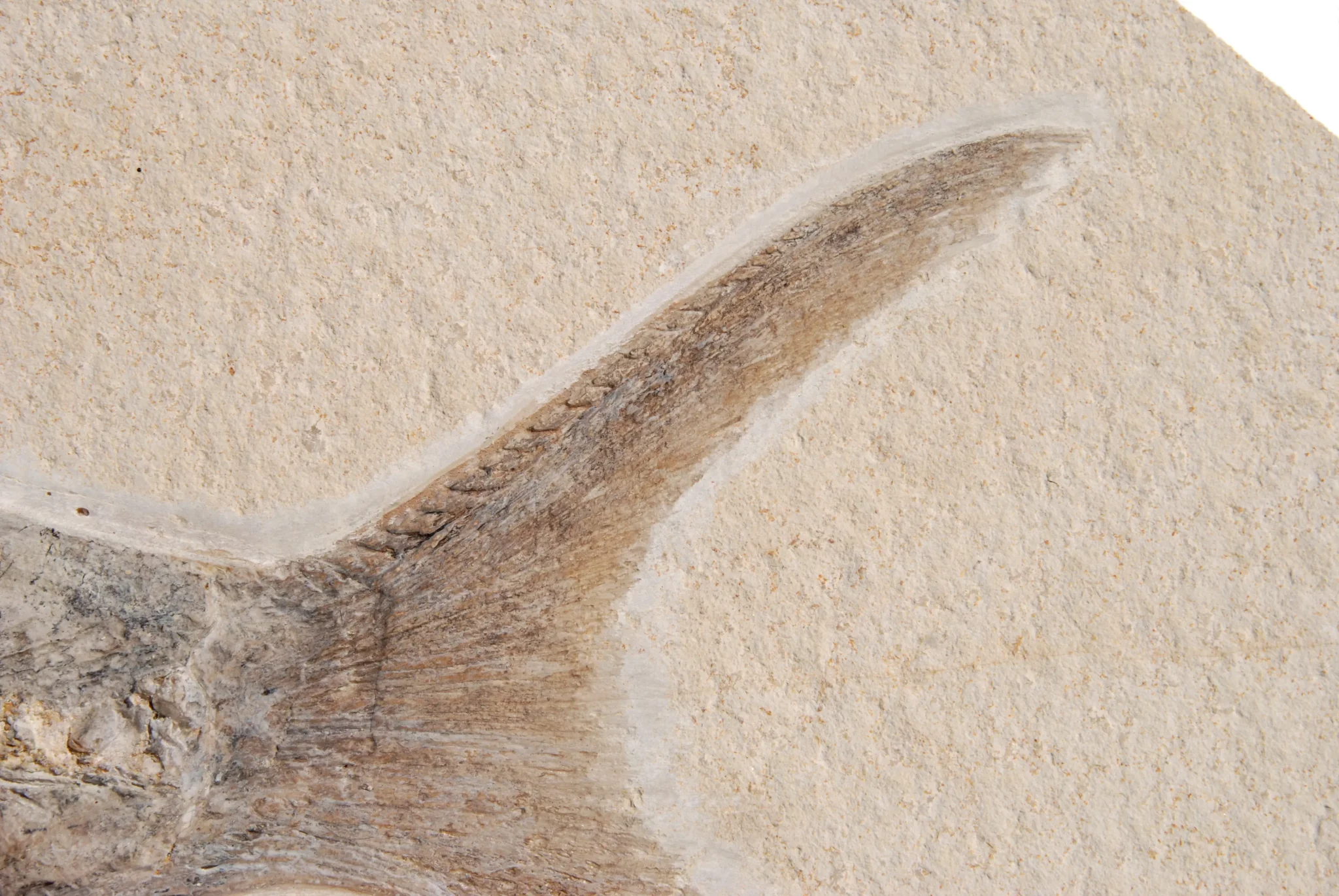
- The Distinctive Caudal Fin (Homocerkia): Its hallmark is the large, deeply forked caudal fin. In top-quality specimens, the individual fin rays are delicately preserved right down to their tips and still convey a sense of power and propulsion today.
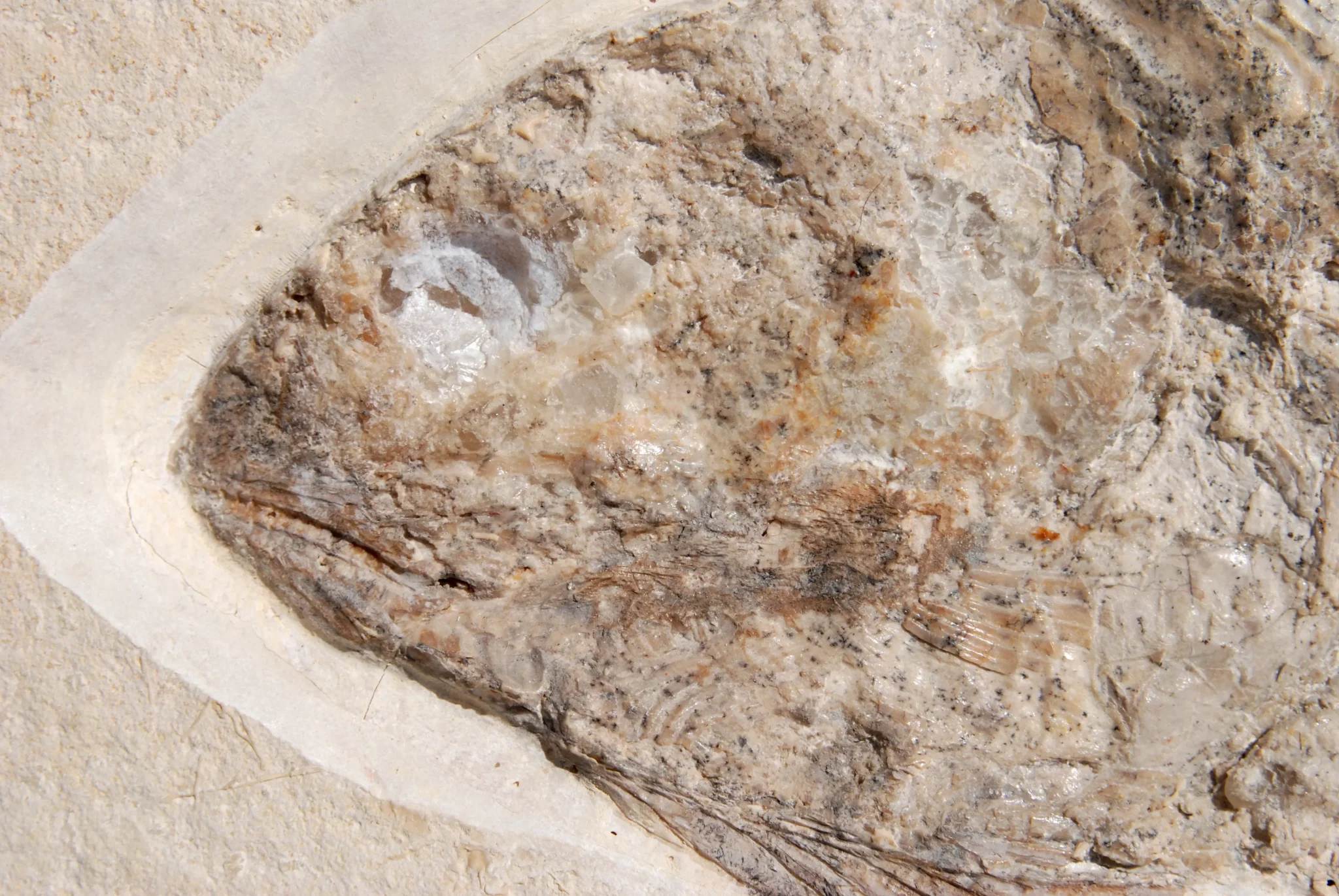
- The fearsome set of teeth: Take a close look at the skull! A true collector’s item reveals the sharp, needle-like fangs in its powerful jaws. The preservation of the skull in its original depth is a crucial indicator of quality.
- The delicate scaling: While other fish have coarse armor, this one has finer scales that often leave a silky sheen on the rock’s surface. Ideally, the scale covering is complete and without any misalignment.
A highlight for every Solnhofen collection
Caturus is the classic predatory fish from Solnhofen par excellence. It represents the top of the food chain in an ecosystem that was shared 150 million years ago by pterosaurs and prehistoric birds such as Archaeopteryx. A fossil of this quality is not just an investment, but a window into a time when Bavaria was still a subtropical island paradise.