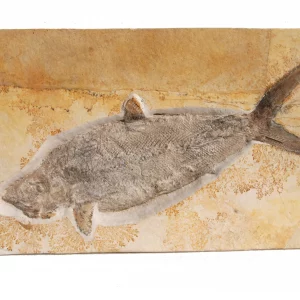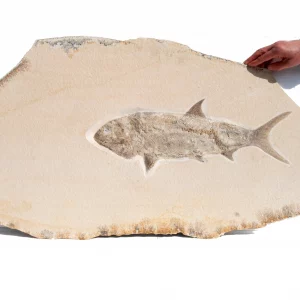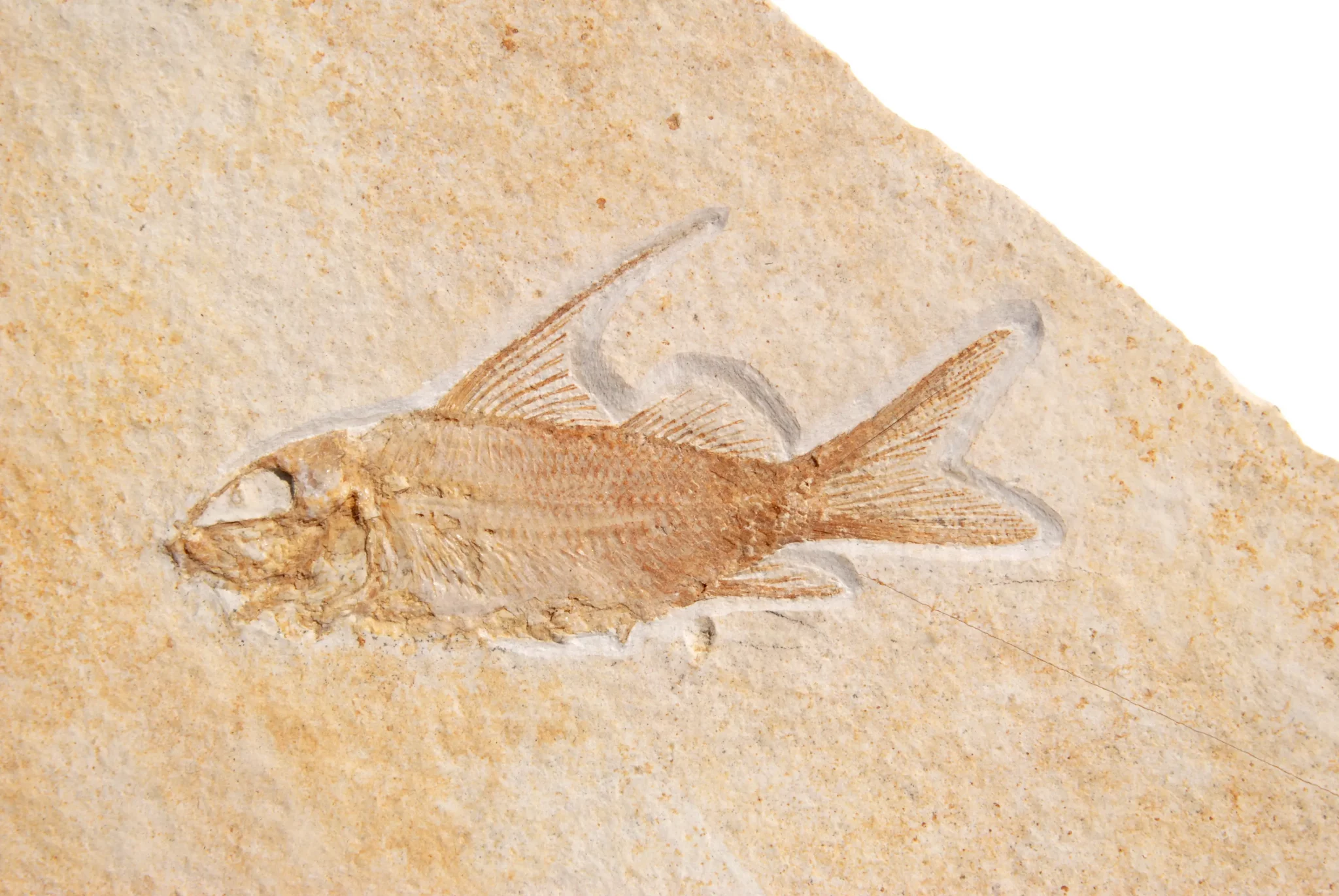
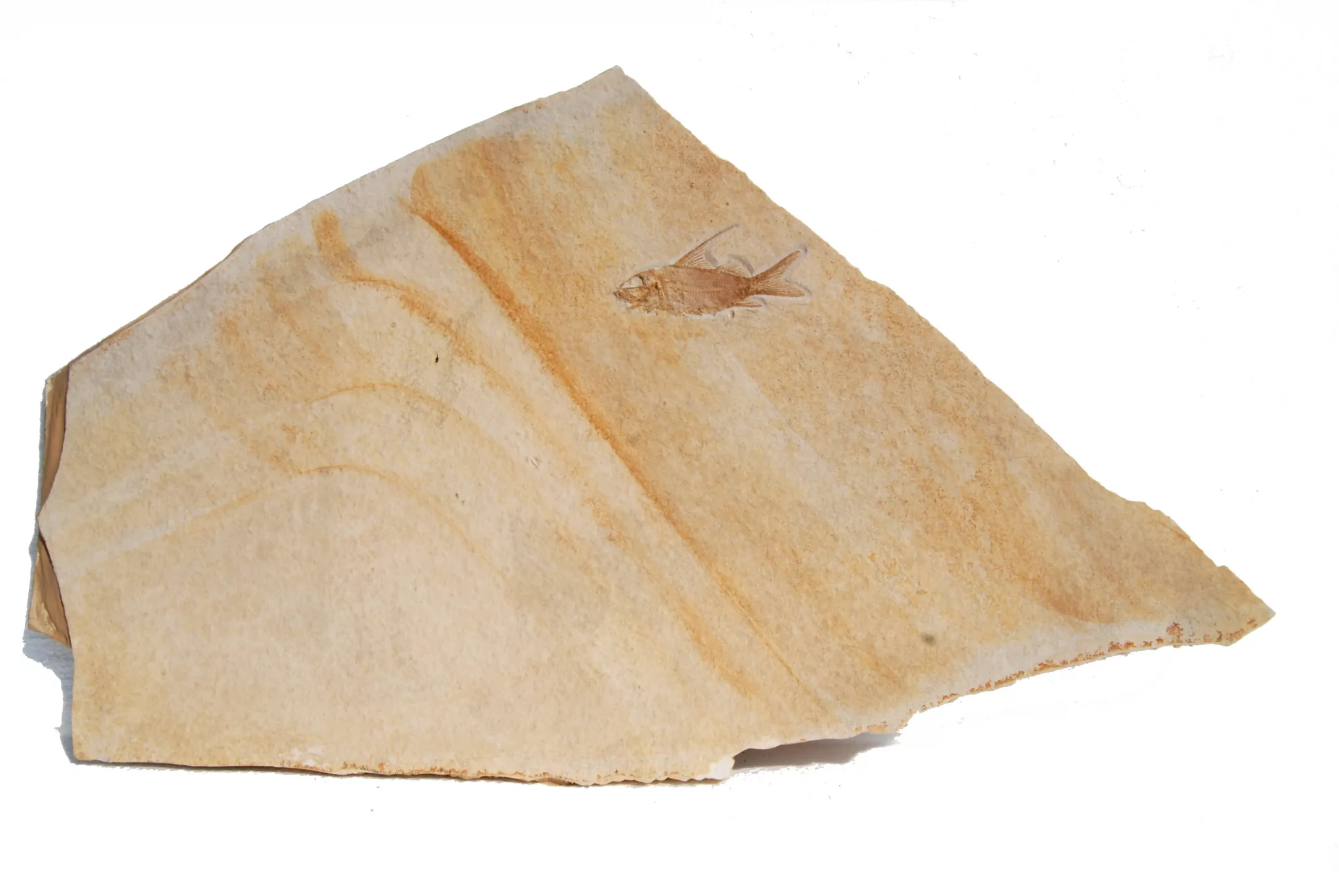
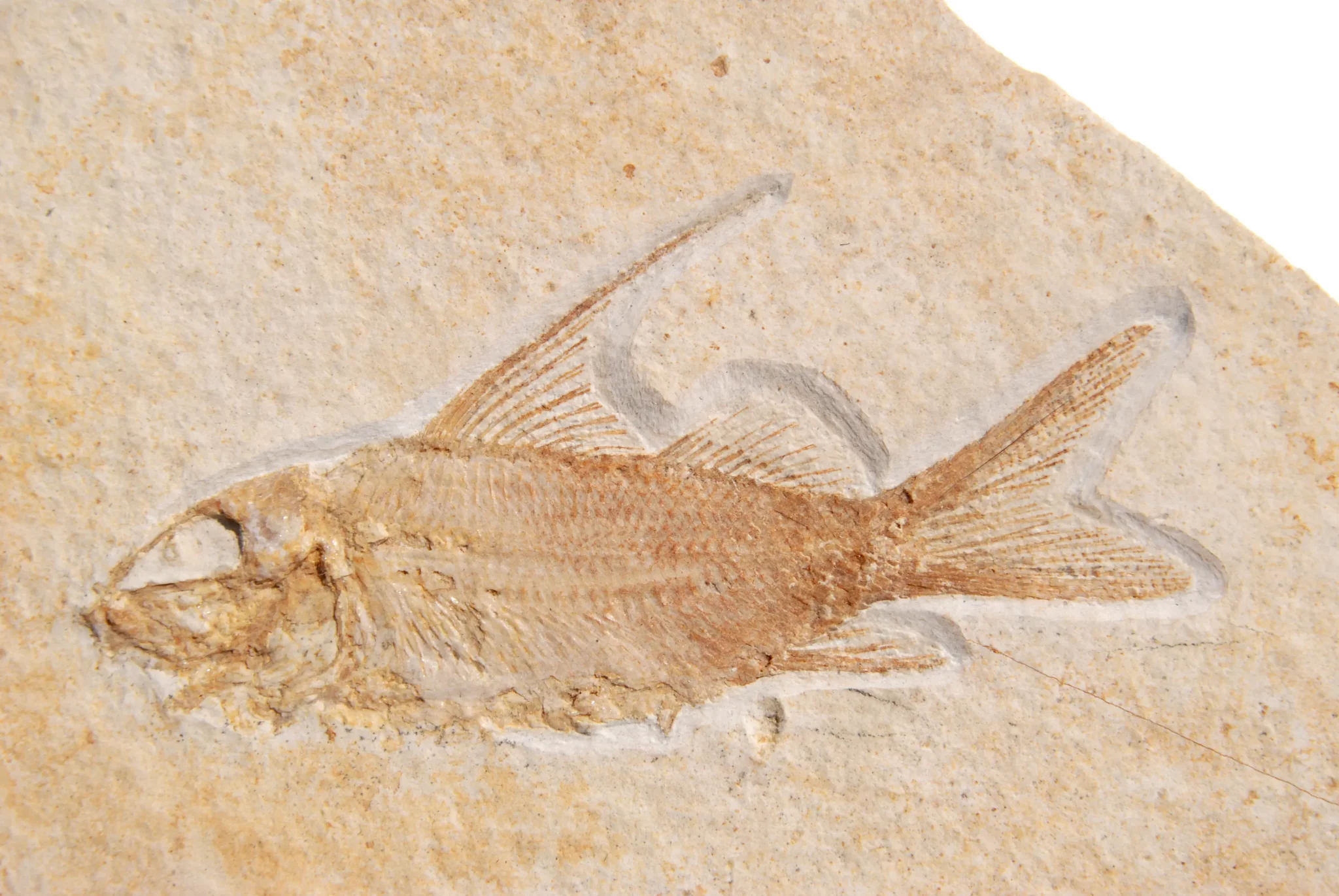
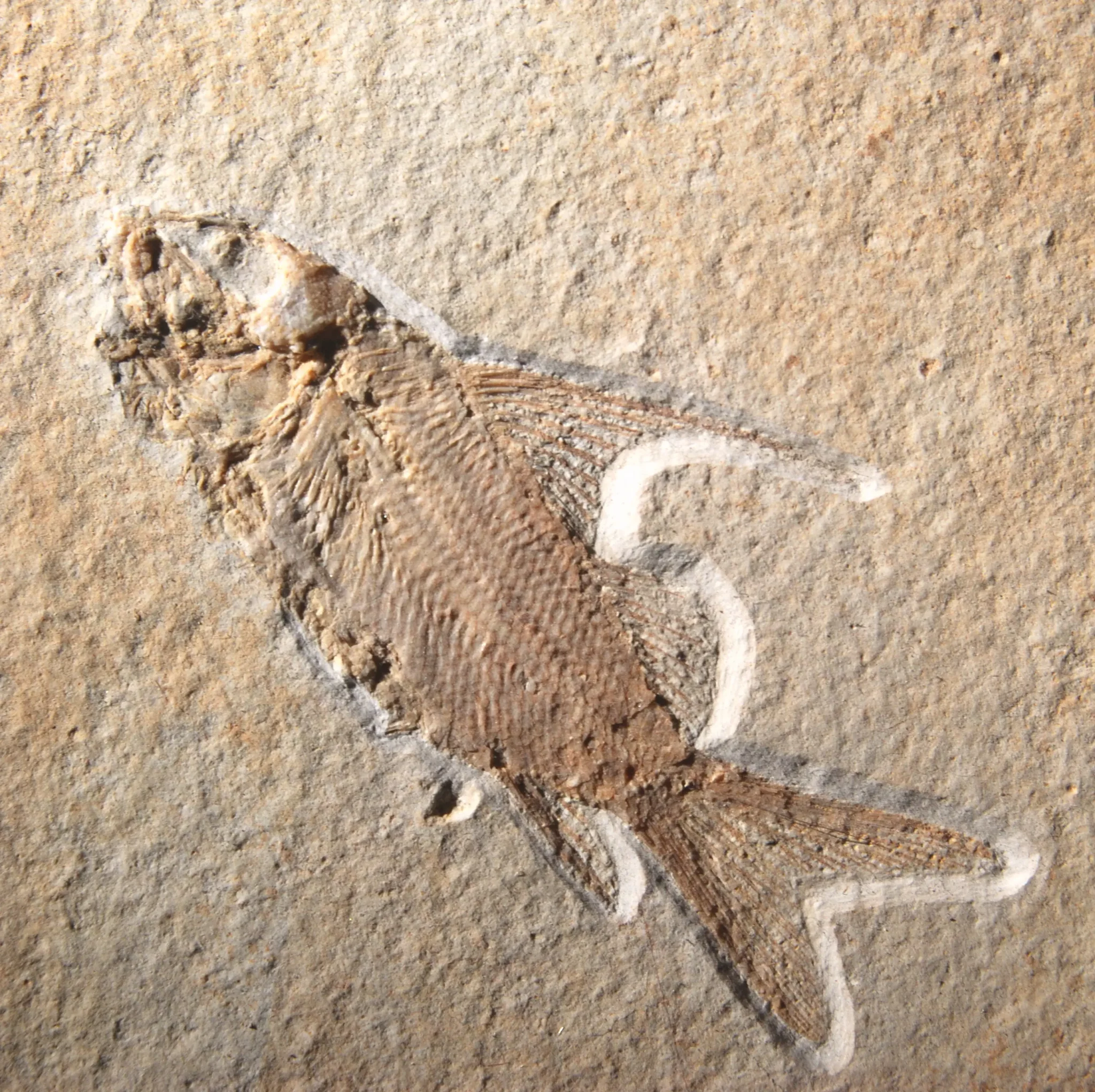
Solnhofen Propterus microstomus
Place of discovery: Langenaltheim, Langenaltheimer Haardt; Solnhofener Revier/ Germany
Lithostratigraphy: Lower Tithonian, White Jurassic Group, Altmühltal Formation, Upper Solnhofen Subformation
Biostratigraphy: Hybonotum zone, rueppelianus subzone, rueppelianus horizon
Age: approx. 150.8 – 152 million years +/- 2 million years
Plate size: approx. 36 x 34 cm
Size of fossil: 9.5 cm (largest size)
Rare “Langfahner” on unbroken plate. Very delicate.
Authentic fossil in original matrix, not reburied. With proof of provenance.
Offered on behalf of the customer. Please do not make a payment in the store. Sale in the name and for the account of the owner.
Propterus microstomus – The sailfin of the coral sea
The genus Propterus belongs to the family Archaeomaenidae (or, depending on the systematic classification, to groups close to Pycnodontiformes) and is one of the most visually striking small fishes of the Solnhofen limestones. Its characteristic fin morphology and high-backed body structure clearly distinguish it from the spindle-shaped predators of the open water zone.
Scientific classification and morphology
- Sail-shaped dorsal fin: The most striking feature of Propterus is its extremely enlarged, sail-like dorsal fin. This gave the fish exceptional stability and agility during slow maneuvers in complex structures.
- Body shape: The body is high-backed and strongly compressed laterally. This discus shape is a typical adaptation to life in reefs or overgrown zones, where precision was more important than pure flight speed.
- Jaw apparatus: As the species name microstomus (small-mouthed) suggests, this fish had a relatively small mouth opening. This indicates that it was a specialist that picked the smallest creatures from substrates or from the open water.
The fine details – what collectors look out for:
- Presentation of the dorsal fin: The main criterion for the quality of a Propterus is the completeness of the high dorsal fin rays. As these are often very delicate, they require masterly mechanical exposure from the calcareous matrix.
- Scales: The body is covered with firm, shiny scales, which often create an excellent relief effect. In well-preserved specimens, the vertical arrangement of the rows of scales in the front part of the body is an aesthetic highlight.
- Symmetry of the unpaired fins: In addition to the dorsal fin, the anal fin is usually also strongly developed, which gives the fossil an almost symmetrical, graphically very appealing shape when viewed from the side.
A highlight for every Solnhofen collection
Propterus is the ideal centrepiece for collectors who want to document the morphological specialization and ecological niche occupation in the Jurassic Sea. It represents the filigree elegance of reef dwellers in an ecosystem that was characterized by extreme biological diversity. Such a fossil is not only a valuable investment, but also a window into a time when Bavaria was still a subtropical island paradise.