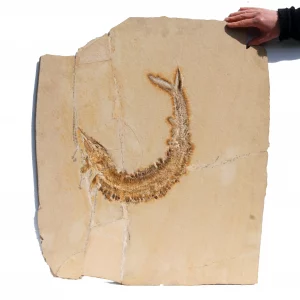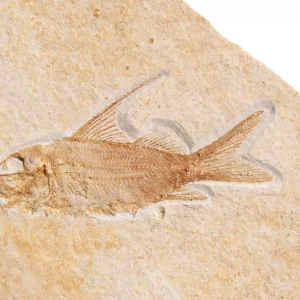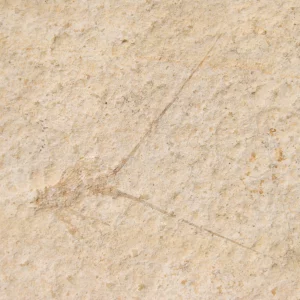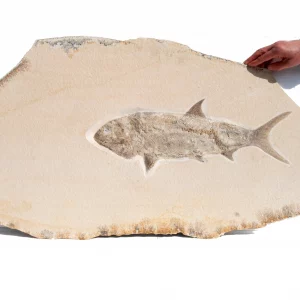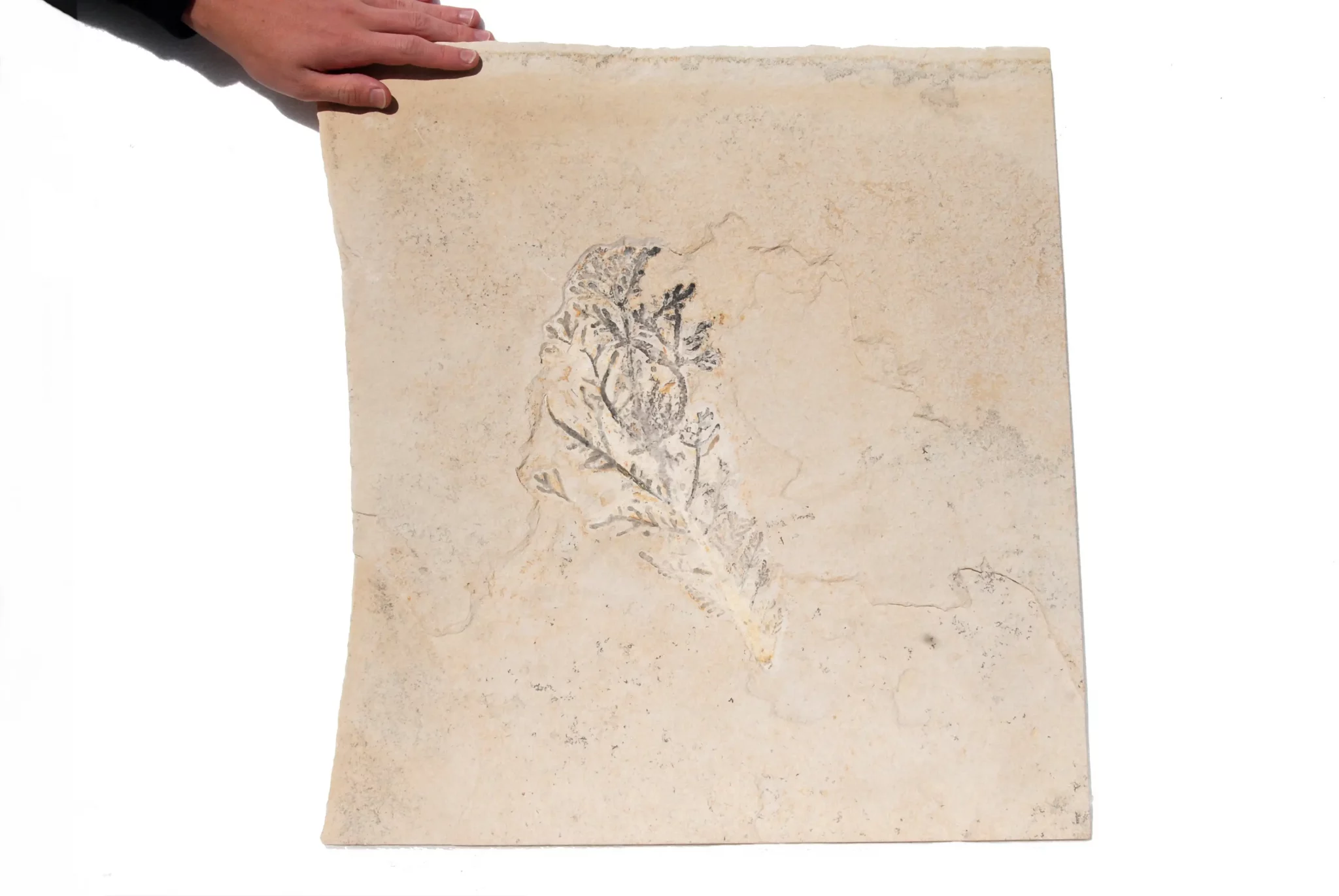
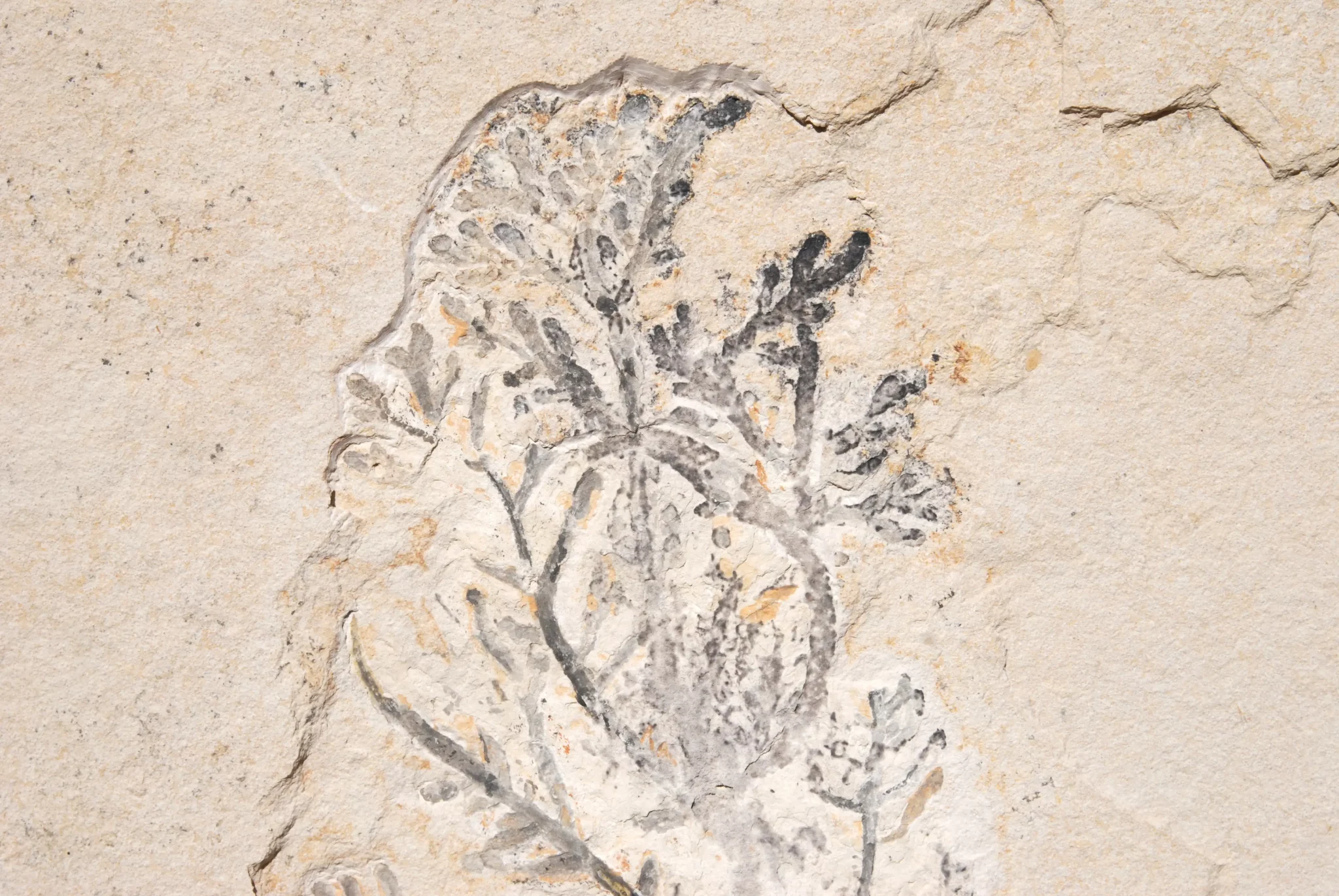
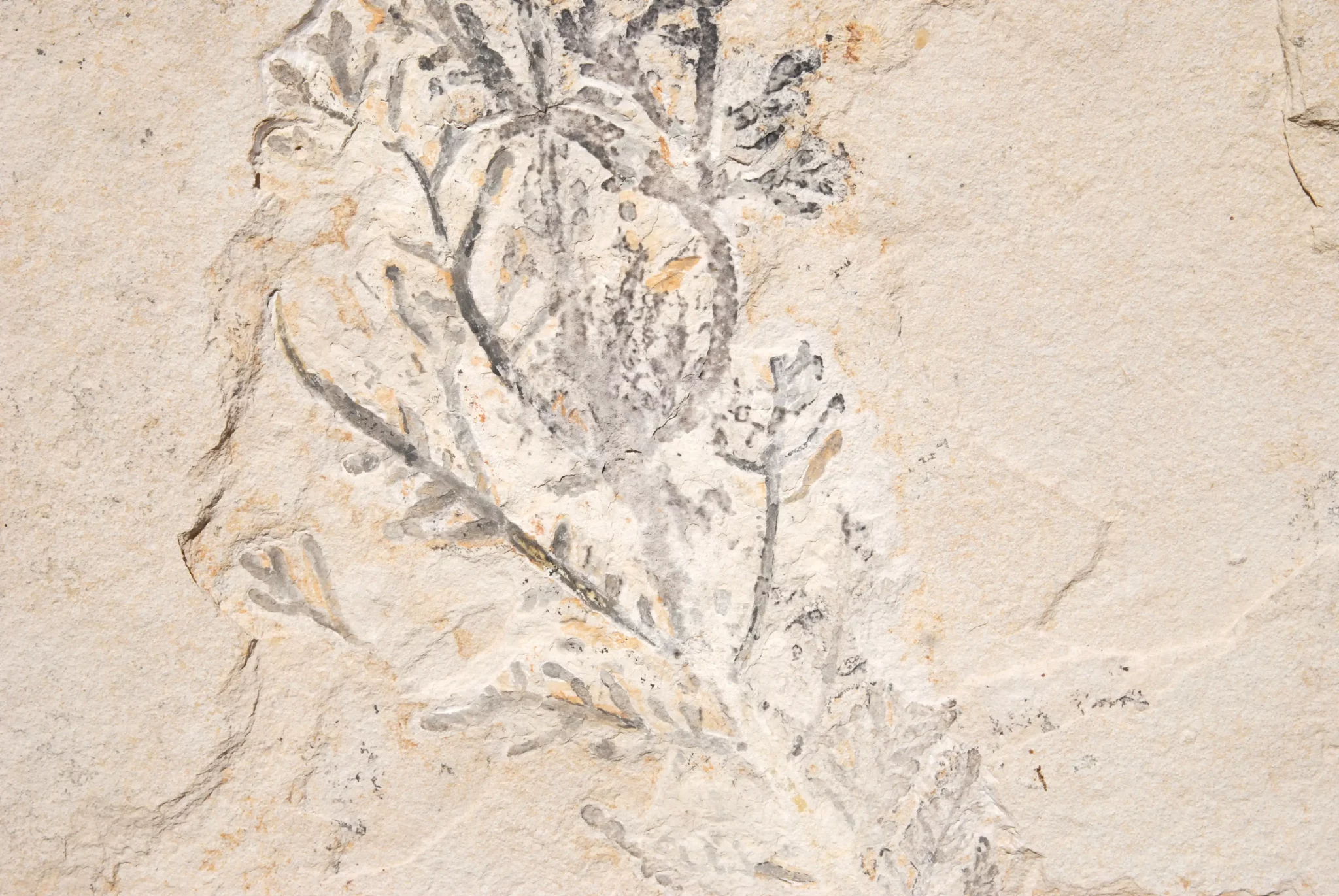
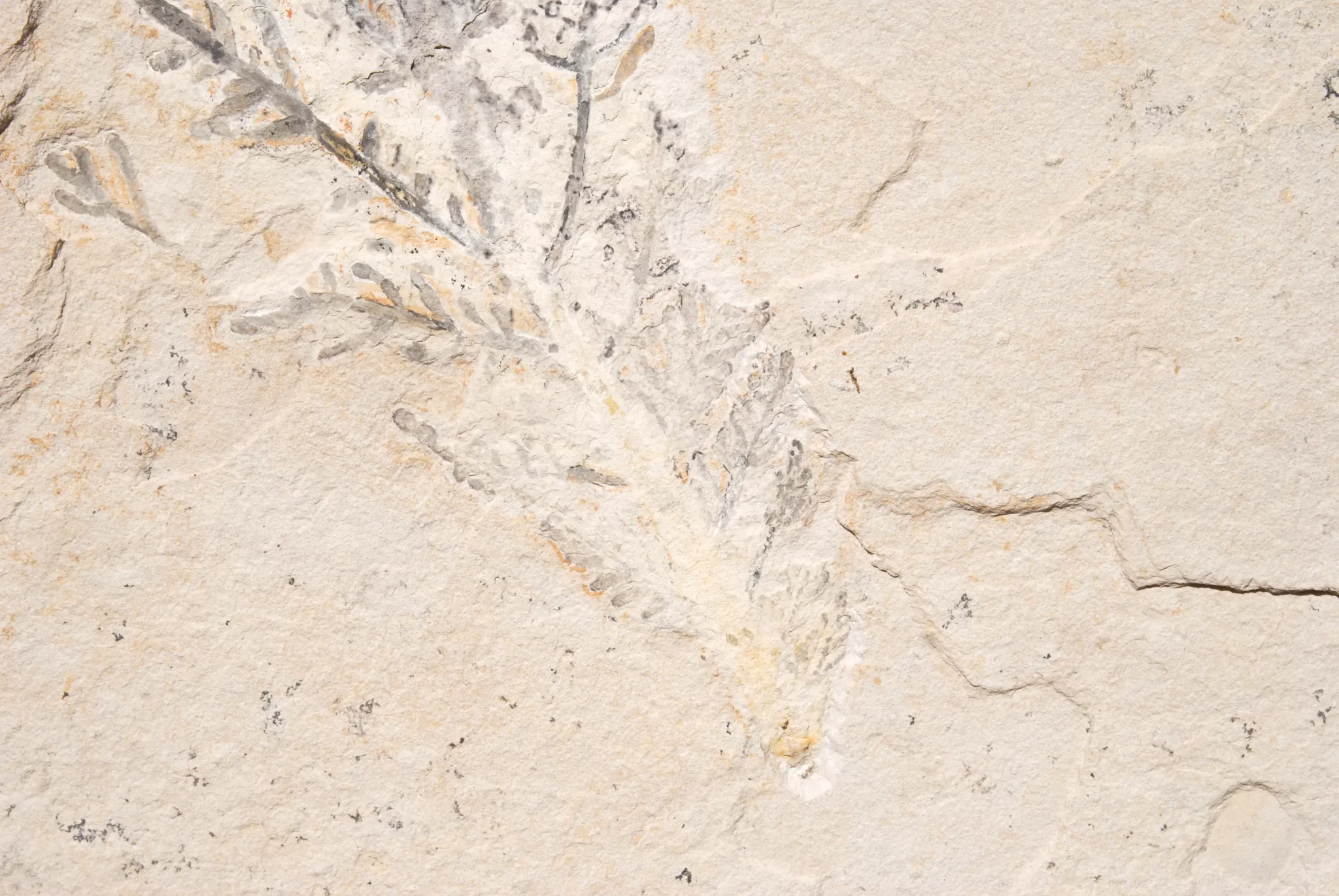
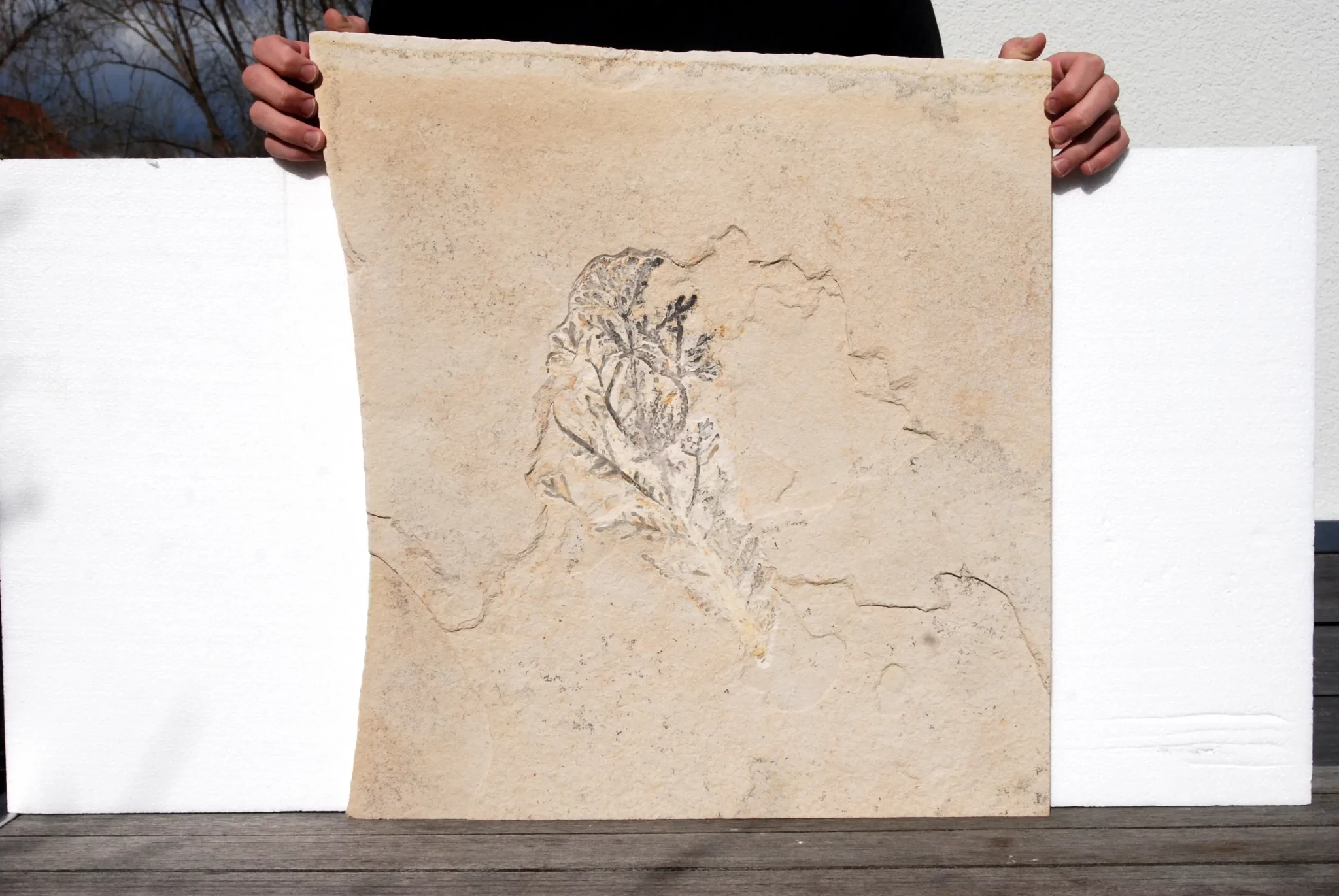
Solnhofen Palaeocyparis princeps
Place of discovery: Langenaltheim, Langenaltheimer Haardt; Solnhofener Revier/ Germany
Lithostratigraphy: Lower Tithonian, White Jurassic Group, Altmühltal Formation, Upper Solnhofen Subformation
Biostratigraphy: Hybonotum zone, rueppelianus subzone, rueppelianus horizon
Age: approx. 150.8 – 152 million years +/- 2 million years
Plate size: 58 x 55 cm
Size of fossil: 33 cm (largest size).
Impressive “original cypress” – showpiece!
Authentic fossil in original matrix, not reburied, unbroken slab. With proof of provenance.
Offered on behalf of the customer. Please do not make a payment in the store. Sale in the name and for the account of the owner. Contact: info@fossiland.com
Palaeocyparis princeps – The fossilized primeval forest of the Solnhofen Islands
While most Solnhofen fossils show the marine world, Palaeocyparis princeps is a rare and precious greeting from the mainland. This fossil conifer (approx. 150 million years old) grew on the islands of the Solnhofen archipelago and was probably washed into the lagoons by storms. It represents the flora of a world in which pterosaurs and early birds such as Archaeopteryx lived in the treetops.
Scientific classification and morphology
- The ancestors of cypresses: Palaeocyparis belongs to the group of conifers (Coniferopsida) and bears striking similarities to modern cypresses. The scale-like leaves and the strictly geometric branching are adaptations to a rather dry, subtropical climate on the calcareous islands.
- Botanical precision: the extremely fine-grained slab limestone often preserves the smallest structure of needles and twigs. Sometimes even small cones can be found at the ends of the branches – a scientific sensation that documents the reproductive biology of the Jurassic period.
- Contrast of worlds: As a land plant in a marine sediment, Palaeocyparis is an “allochthon” – a foreign body that builds a bridge between life on land and death in the sea.
The fine details – what collectors look out for:
- The scale-like texture: The decisive feature is the detailed preservation of the needles. On top specimens, every single, roof tile-like scale on the branch can be seen under a magnifying glass. A “washed out” texture reduces the value as a botanical specimen.
- The branching aesthetic: pay attention to the growth pattern! A coveted collector’s item shows not just a single stem, but multiple, natural branching. When the branch lies on the plate like a small tree or an elaborate fan, the visual effect is at its strongest.
- Color preservation: The organic substance of plant fossils is often traced as a dark carbon film or by manganese dendrites. A deep, dark contrast to the light cream shade of the limestone turns the fossil into a graphic work of art.
A highlight for every Solnhofen collection
Palaeocyparis princeps is the ideal exhibit for collectors who want to understand the Solnhofen ecosystem in its entirety. Without the flora of the islands, the picture of the Jurassic period would be incomplete. A must for lovers of palaeobotany and discerning systematists.