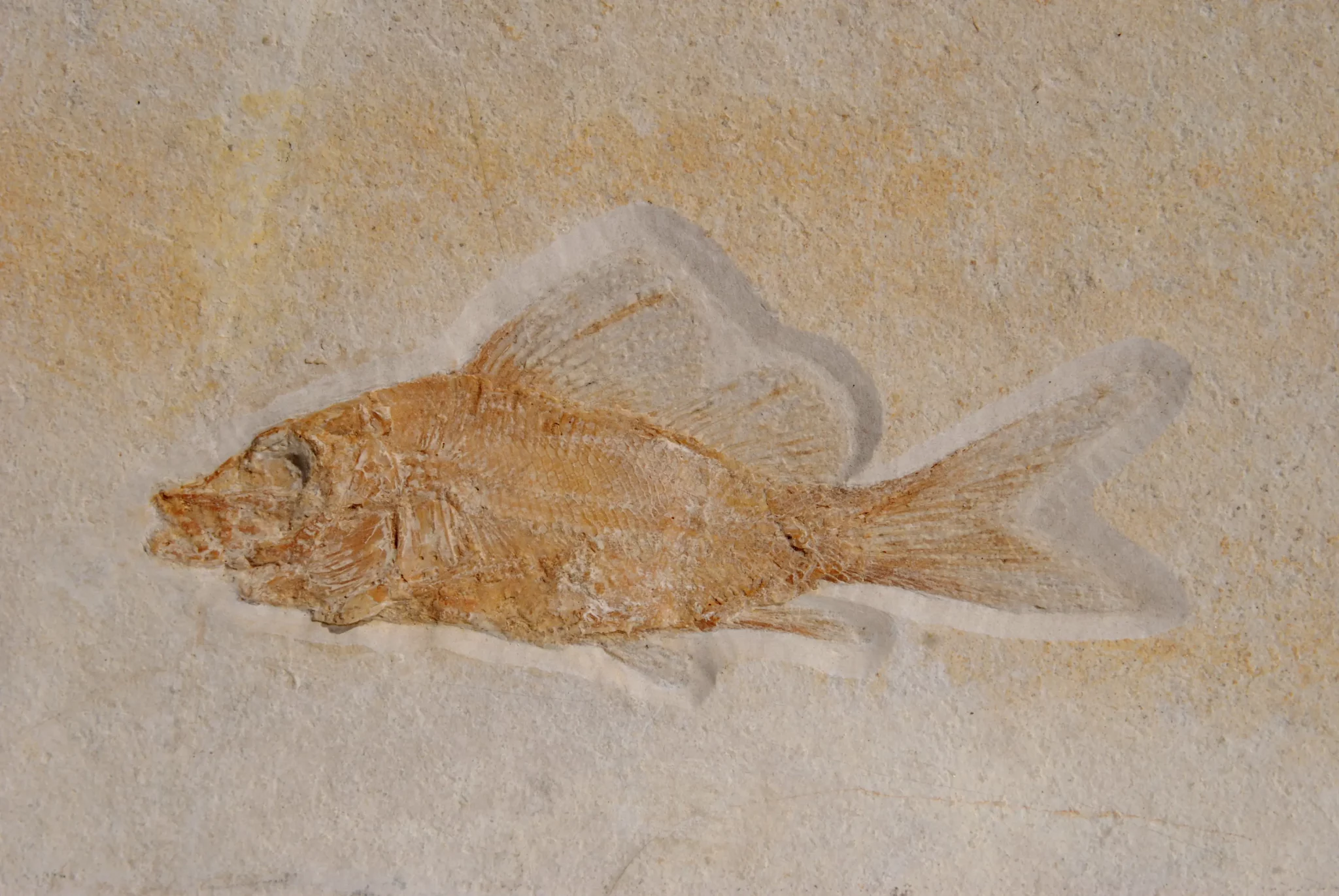
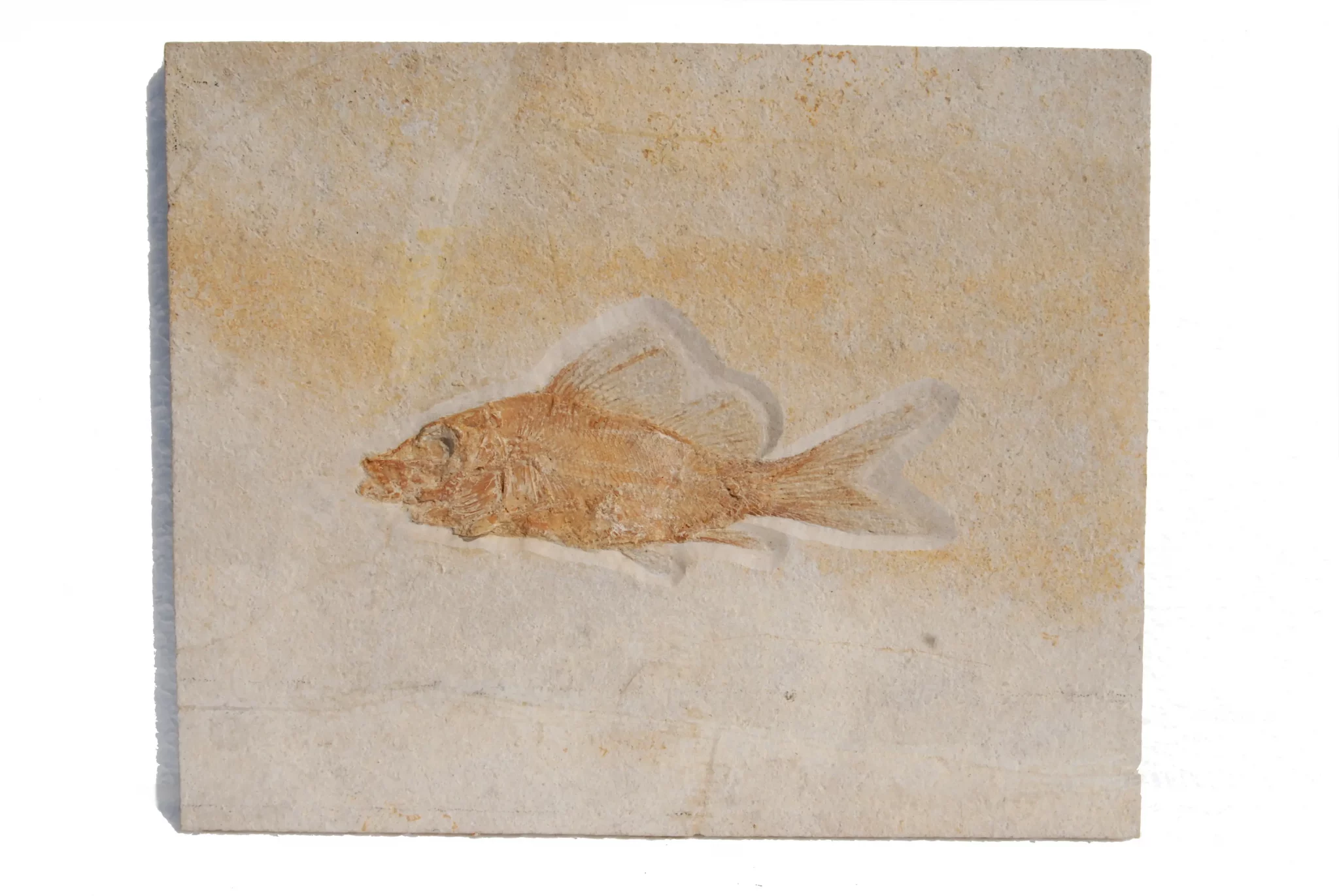
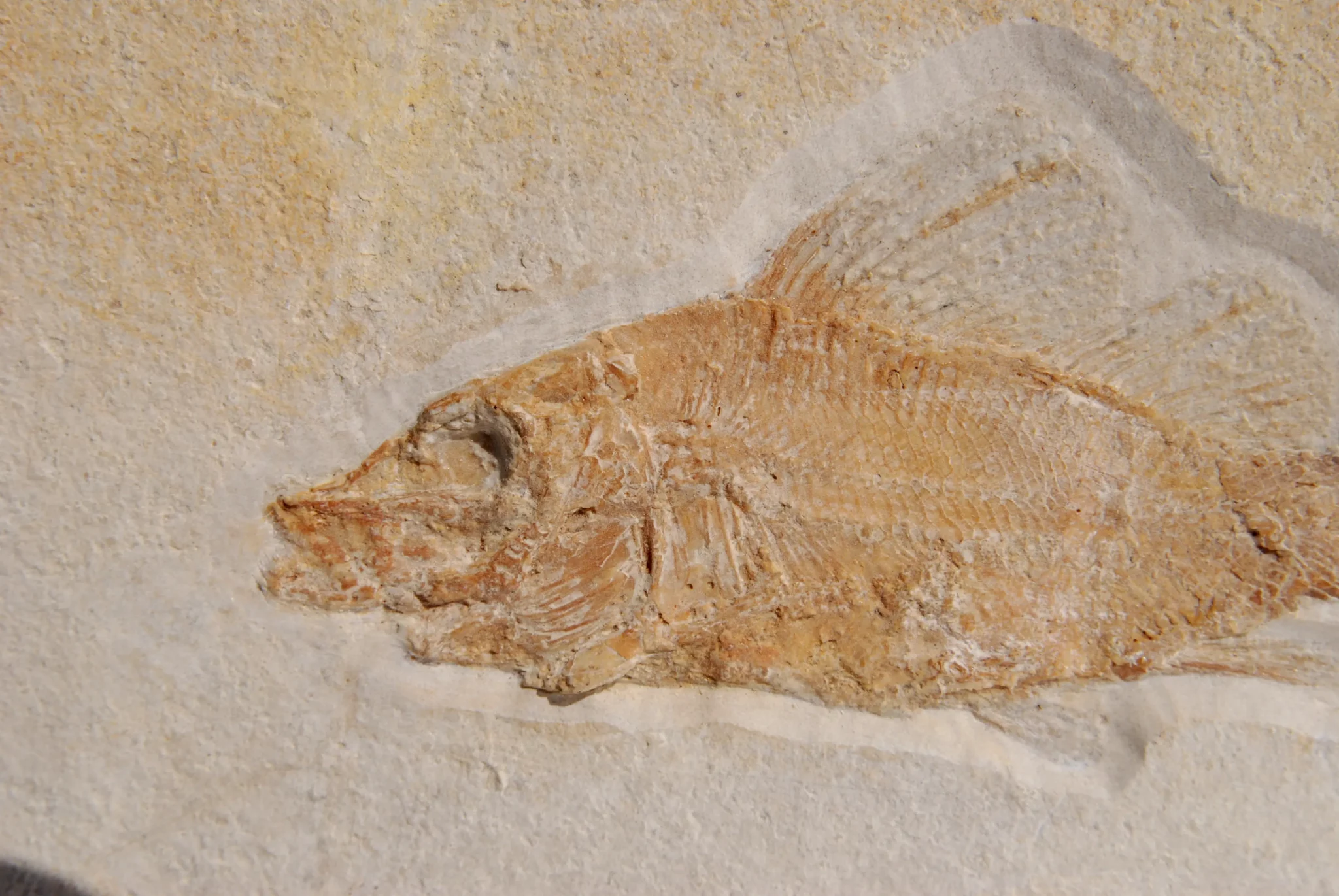
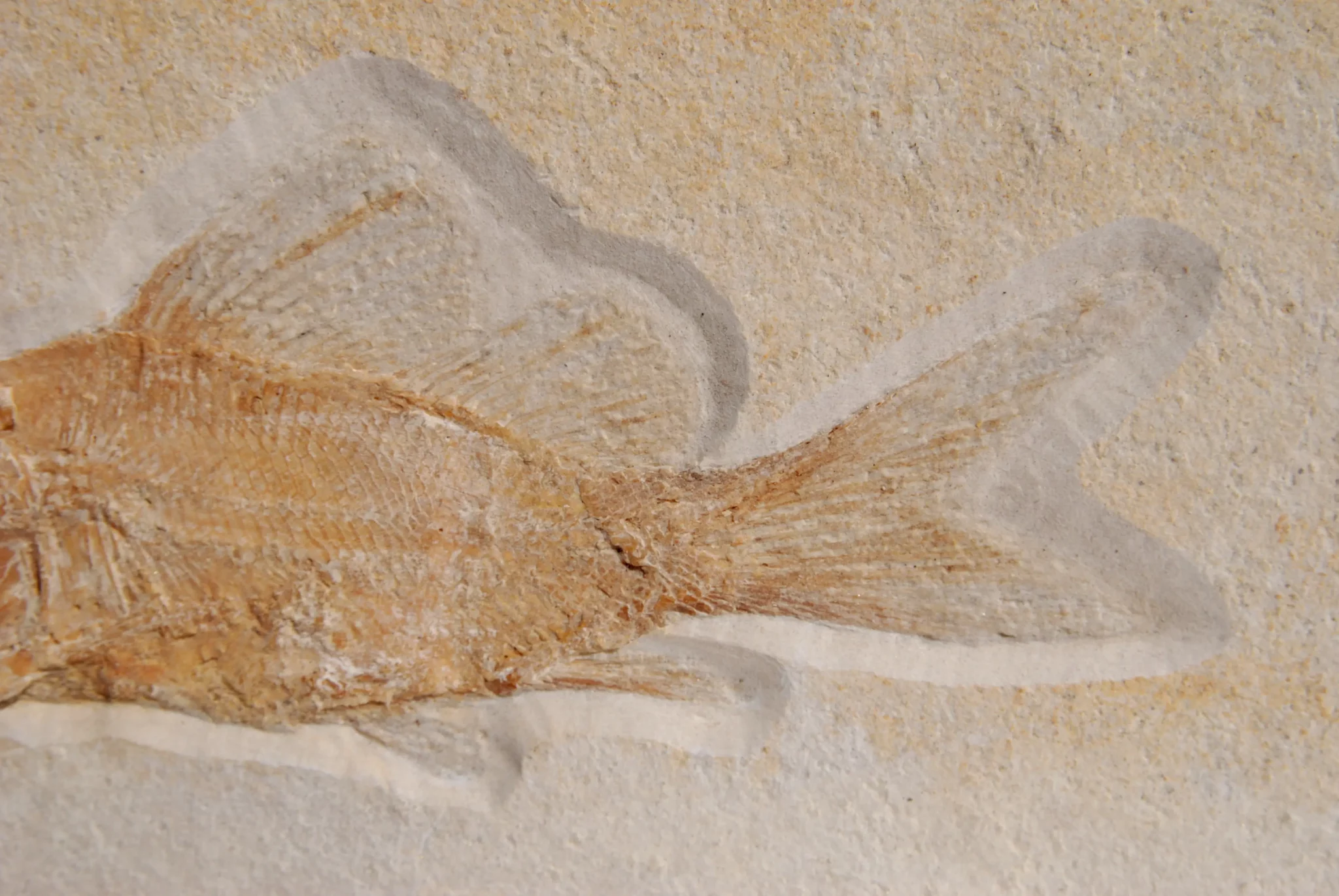
Solnhofen Histionotus oberndorfer
Place of discovery: Langenaltheim, Langenaltheimer Haardt; Solnhofener Revier/ Germany
Lithostratigraphy: Lower Tithonian, White Jurassic Group, Altmühltal Formation, Upper Solnhofen Subformation
Biostratigraphy: Hybonotum zone, rueppelianus subzone, rueppelianus horizon
Age: approx. 150.8 – 152 million years +/- 2 million years
Plate size: 22 x 18 cm
Size of fossil: 13 cm (largest size)
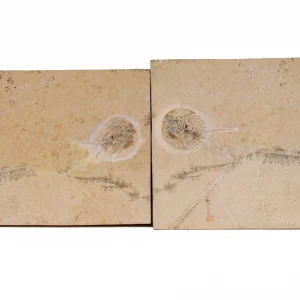
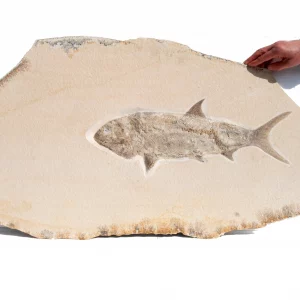
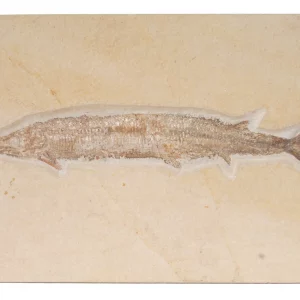
Rare, large “schooling fish” in original matrix. Rarity.
Authentic fossil in original matrix, not reburied. With proof of provenance.
Offered on behalf of the customer. Please do not make a payment in the store. Sale in the name and for the account of the owner.
SOLD.
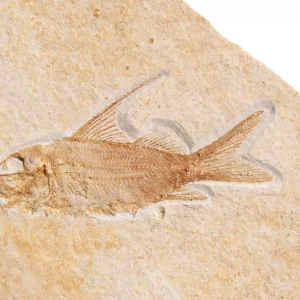
Histionotus oberndorferi – The sailfish of the Coral Sea
This fossil represents one of the rarest and most aesthetic small fishes from the Solnhofen Archipelago of the Upper Jurassic (approx. 150 million years ago). As a representative of the macrosemiids, Histionotus impresses with its unusual fin morphology and its specialized way of life in the shallow, protected lagoons of Bavaria.
Scientific classification and morphology
- Evolutionary elegance: Histionotus is a prime example of adaptation to near-bottom habitats. As a distant relative of today’s bony pike species, it displays an anatomy that was perfectly adapted to maneuvering in near-bottom algae meadows and coral reefs. It is the “fine spirit” among the bony enamel scales.
- The “sailor instinct” in the stone: The most striking feature of this fish is its extremely elongated dorsal fin, which covers almost the entire length of its back. In the fossil record, Histionotus often looks like a magnificent sailor whose silhouette clearly stands out from the usual schooling fish such as Leptolepides.
- Aesthetics of filigree: The extremely fine fin rays and the often honey-coloured to dark brown mineralized scales form a visual masterpiece on the cream-coloured Solnhofen limestone. A Histionotus often looks like a fine ink drawing of nature in the rock.
The fine details – what collectors look out for:
- The majestic dorsal fin: The absolutely unique feature of Histionotus oberndorferi is the sail-like, long dorsal fin. In top specimens, the numerous, wafer-thin fin rays are preserved in their entire length up to the base of the caudal peduncle – a decisive quality feature for museum specimens.
- The distinctive head profile: Pay attention to the snout! Histionotus has a slightly downward-pointing mouth, which was ideal for tracking down small invertebrates on the seabed. A real collector’s item reveals the fine bone plates of the skull and the often roundish eye sockets in vivid condition.
- The characteristic scales: The scales of this genus are often particularly pronounced and feature fine ornamentation. If the scales are present without offset and with the typical matt sheen of macrosemiids, it is a museum-quality specimen with a high rarity value.
A highlight for every Solnhofen collection
Histionotus is the ideal centrepiece for collectors seeking the rarer and more specialized forms of Jurassic marine fauna. It represents the delicate beauty of an ecosystem that is often only known for its large predators.