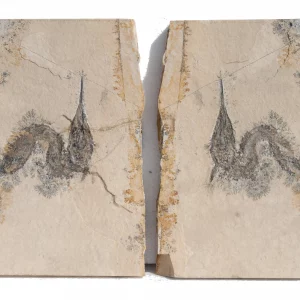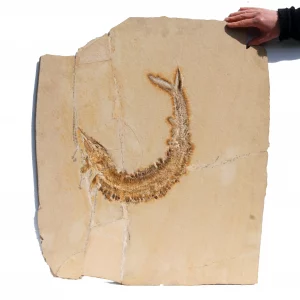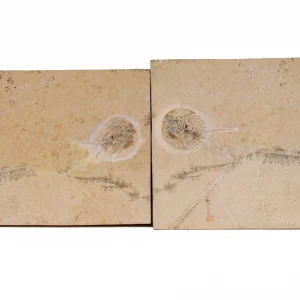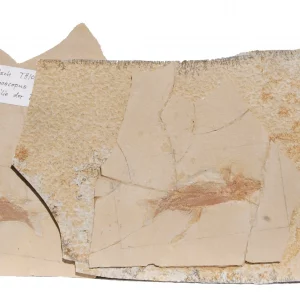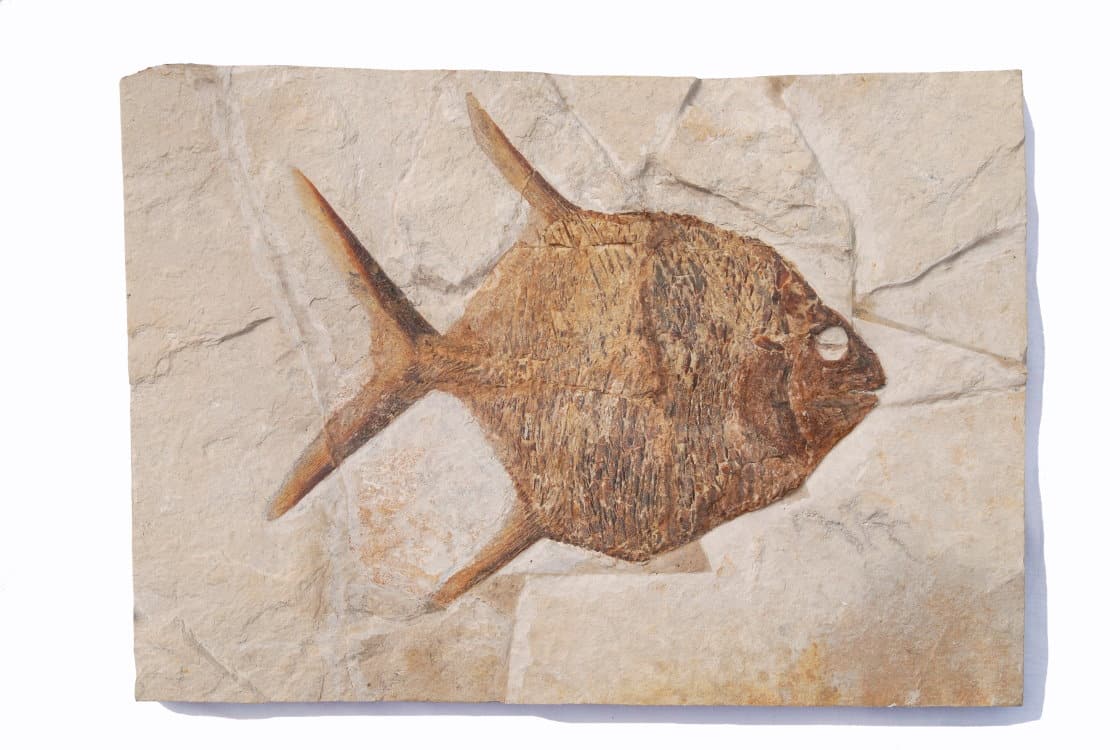
Solnhofen Gyrodus sp.
48x34x3 cm (matrix), 9 kg
Solnhofener Revier, Plattenkalke, Bavaria, Germany (exact location will be communicated to buyer)
Historic collector’s item with a special excavation history. Found approx. 50 years ago, contemporary preparation with restorations, in original matrix, not reburied.
Offered on behalf of the customer.
no longer available – sold on a commission basis on behalf of and for the account of the owner.
Gyrodus – The specialized hard parts specialist of the Solnhofen archipelago
The genus Gyrodus belongs to the order Pycnodontiformes and is a striking representative of the specialized fish fauna of the Solnhofen limestones. Its high-backed, almost circular body shape clearly distinguishes it from the spindle-shaped predatory fish of the open water. Gyrodus occupied the ecological niche of a “durophagous” consumer that specialized in cracking hard-shelled food.
Scientific classification and morphology
-
- Adaptation to the reef biotope: The laterally strongly flattened, disc-shaped form enabled a high degree of maneuverability in the complex structures of the sponge and coral reefs that bordered the lagoons.
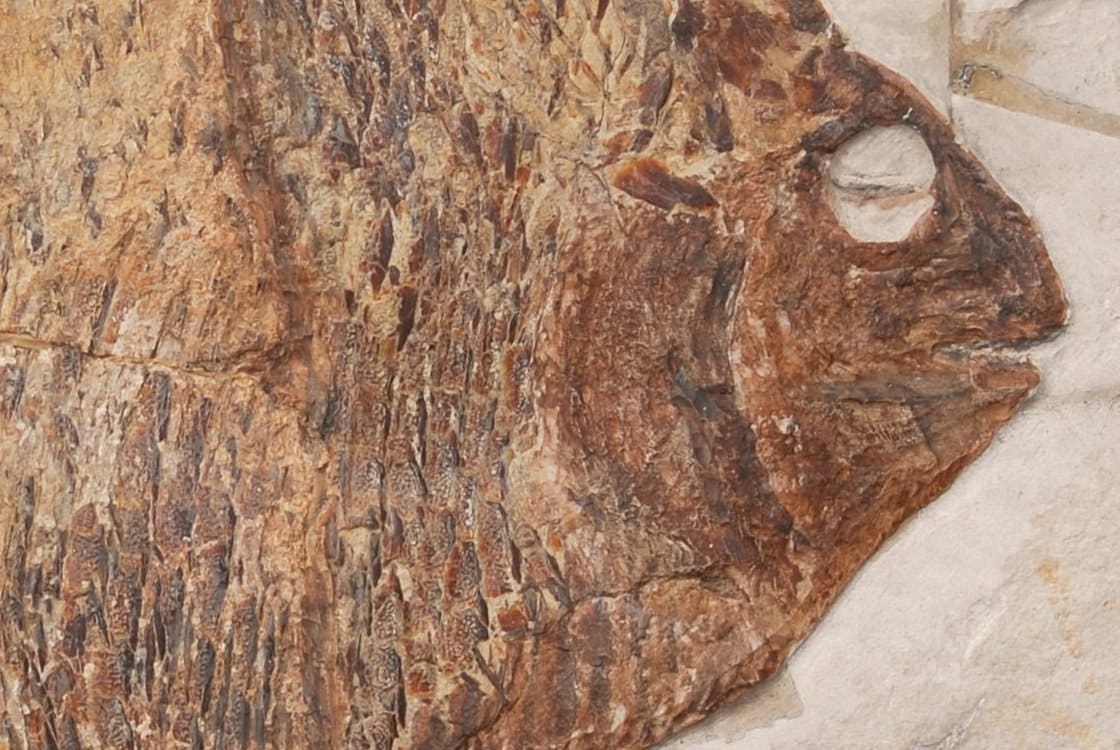
- Plaster tooth dentition: The most striking feature of Gyrodus is its specialized dentition. It consists of several rows of roundish, flat cobblestone teeth on the vomer (plowshare bone) and the prearticulars (lower jaw bones), which functioned like a grinder for breaking up shells, corals or crustaceans.
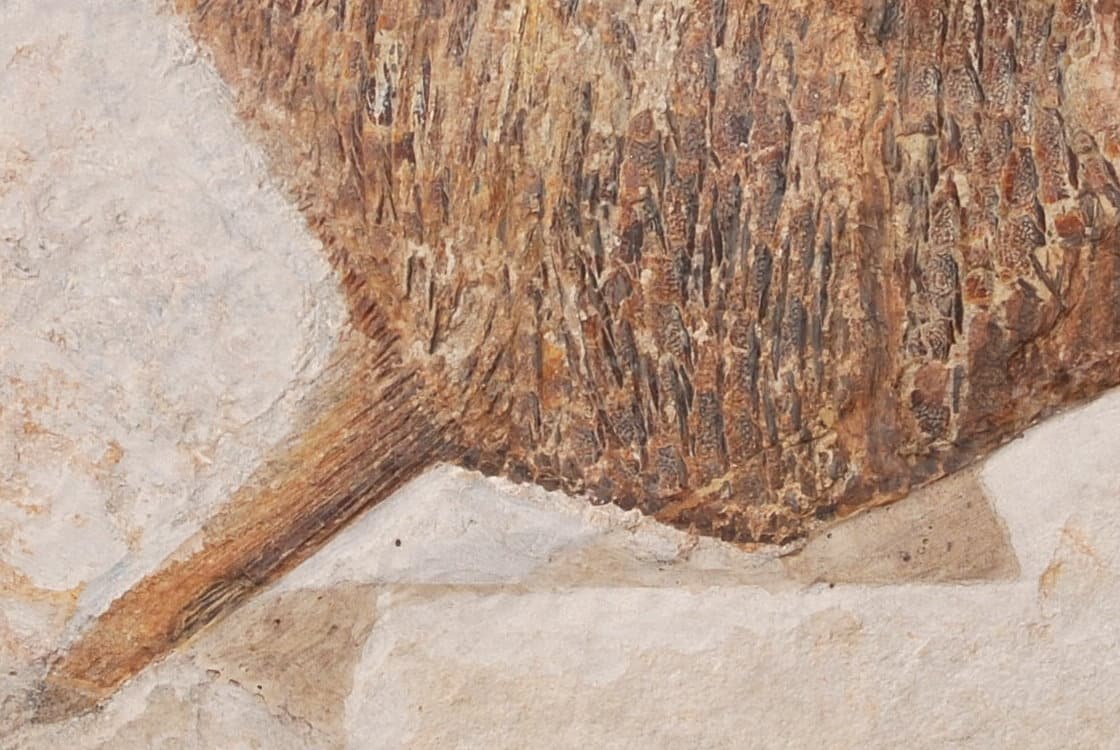
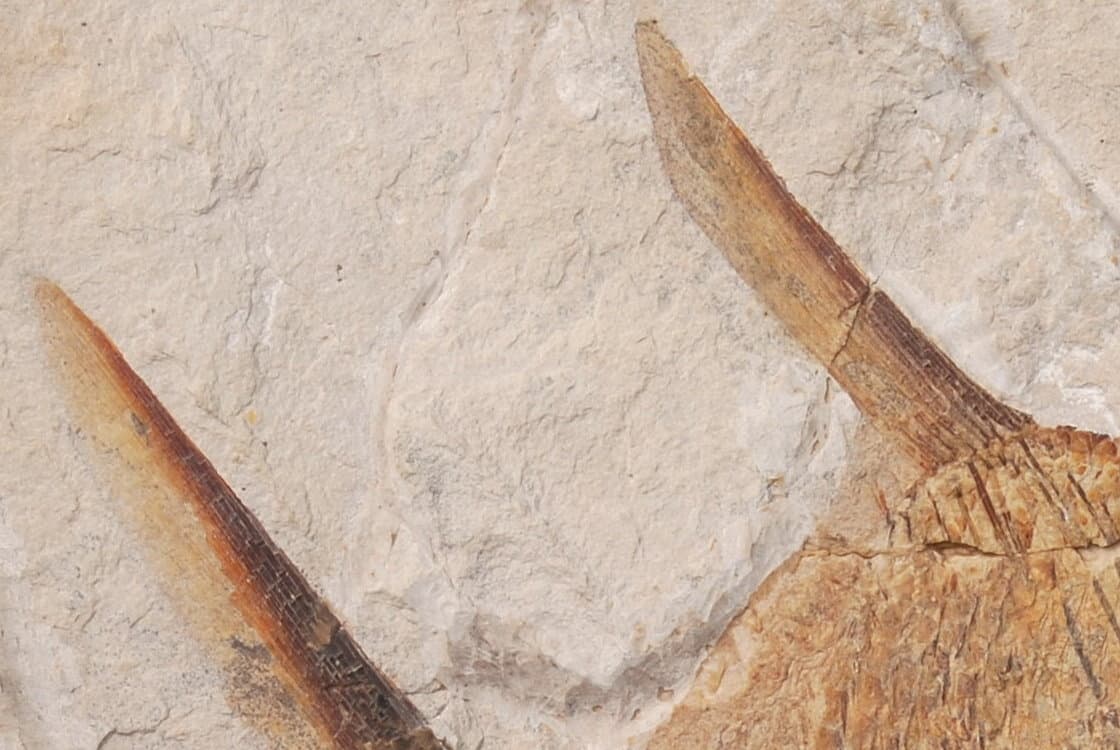
- Fin fringe: The dorsal and anal fins are elongated and form an almost symmetrical fringe on the posterior third of the body, which is typical of this evolutionary line.
The fine details – what collectors look out for:
- Plaster tooth batteries: In high-quality finds, the shiny tooth batteries in the skull area are often visible as a composite. The preservation of these hard tooth structures is considered an important diagnostic feature.
- Partial armor: In contrast to the fully armored Dapedium species, in Gyrodus often only the front part of the torso is covered with massive scale bars, while the rear part was unscaled. As a result, the bone structure is preserved in the anterior part and the impression of the soft parts in the posterior part.
- Caudal fin: The strong, sickle-shaped caudal fin is often very strikingly developed in Gyrodus and forms an aesthetic end to the body contour in well-preserved specimens.
A highlight for every Solnhofen collection
Gyrodus is the ideal centerpiece for collectors who want to document the ecological differentiation of the Jurassic Sea. It represents the co-evolution of fish and hard-shelled invertebrates in an ecosystem that was characterized by the highest biological complexity. Such a fossil is not only a valuable investment, but also a window into a time when Bavaria was still a subtropical island paradise.