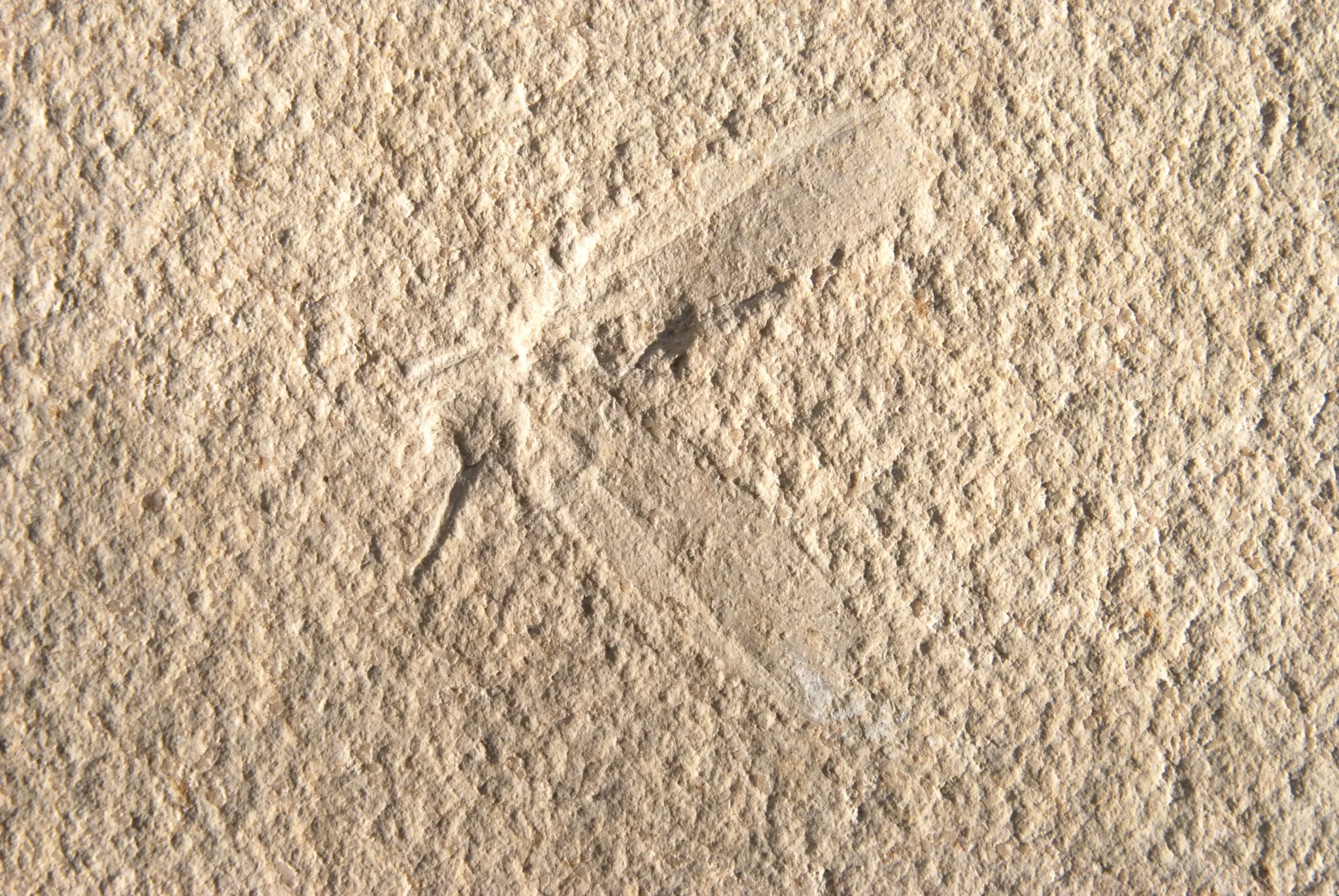
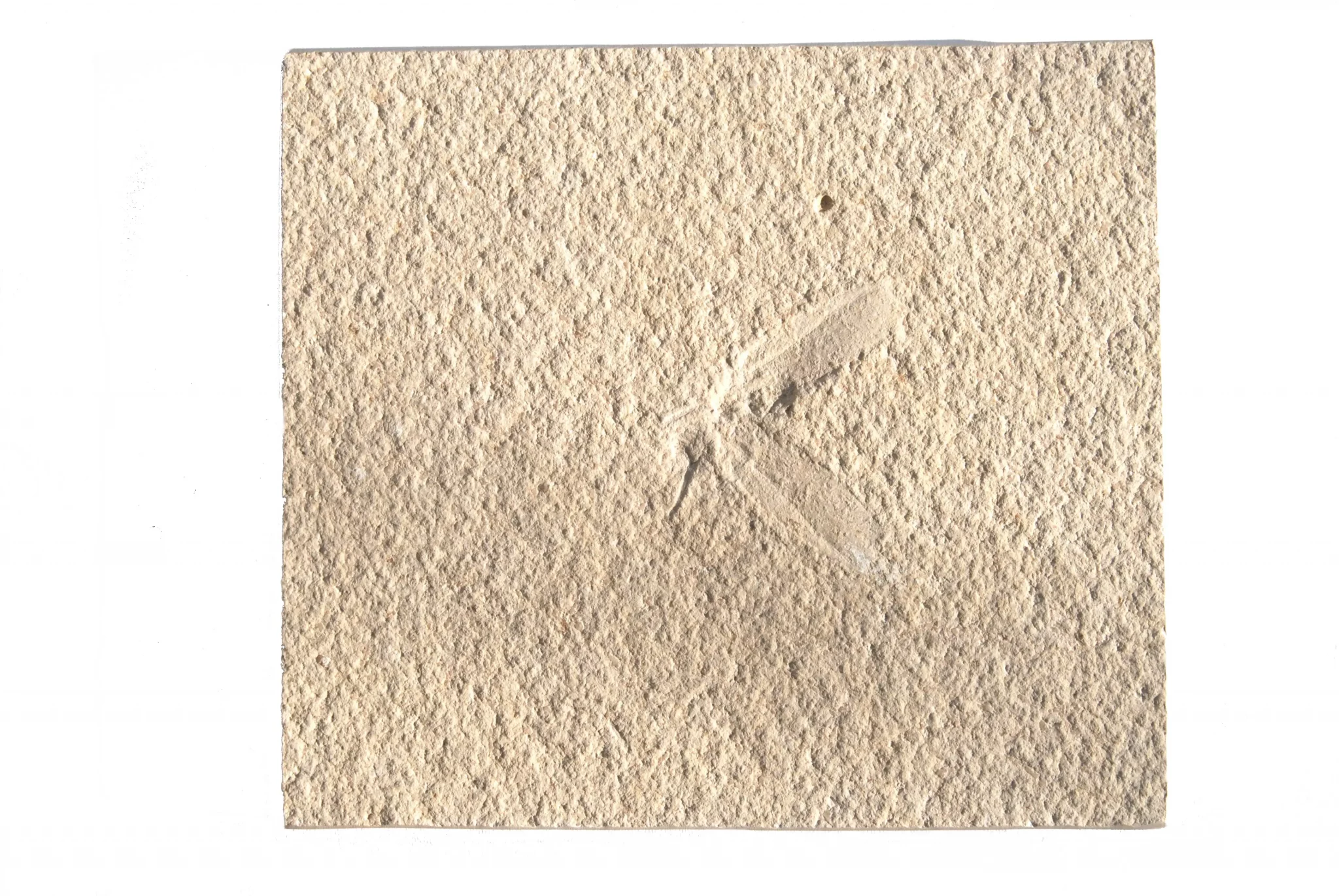
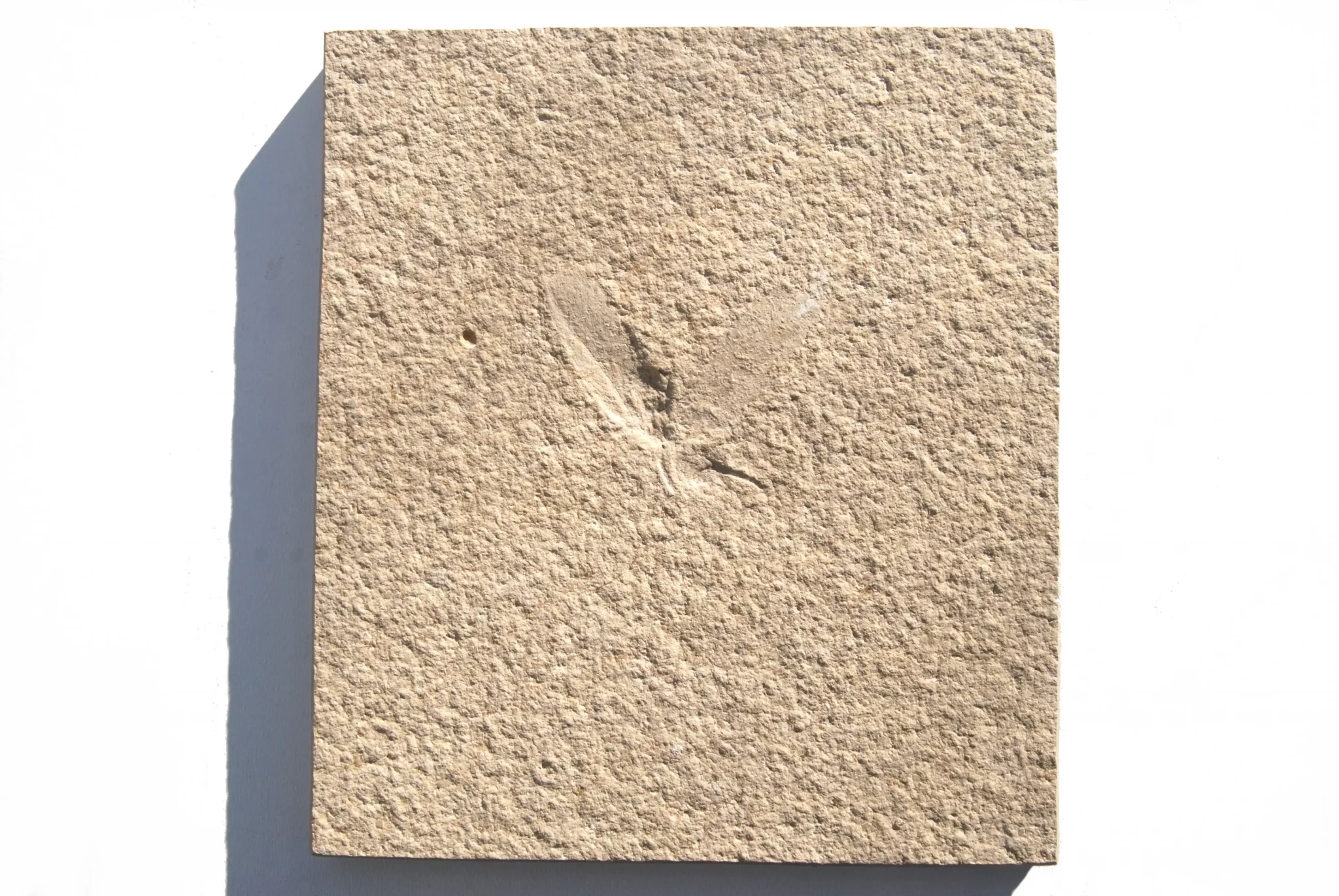
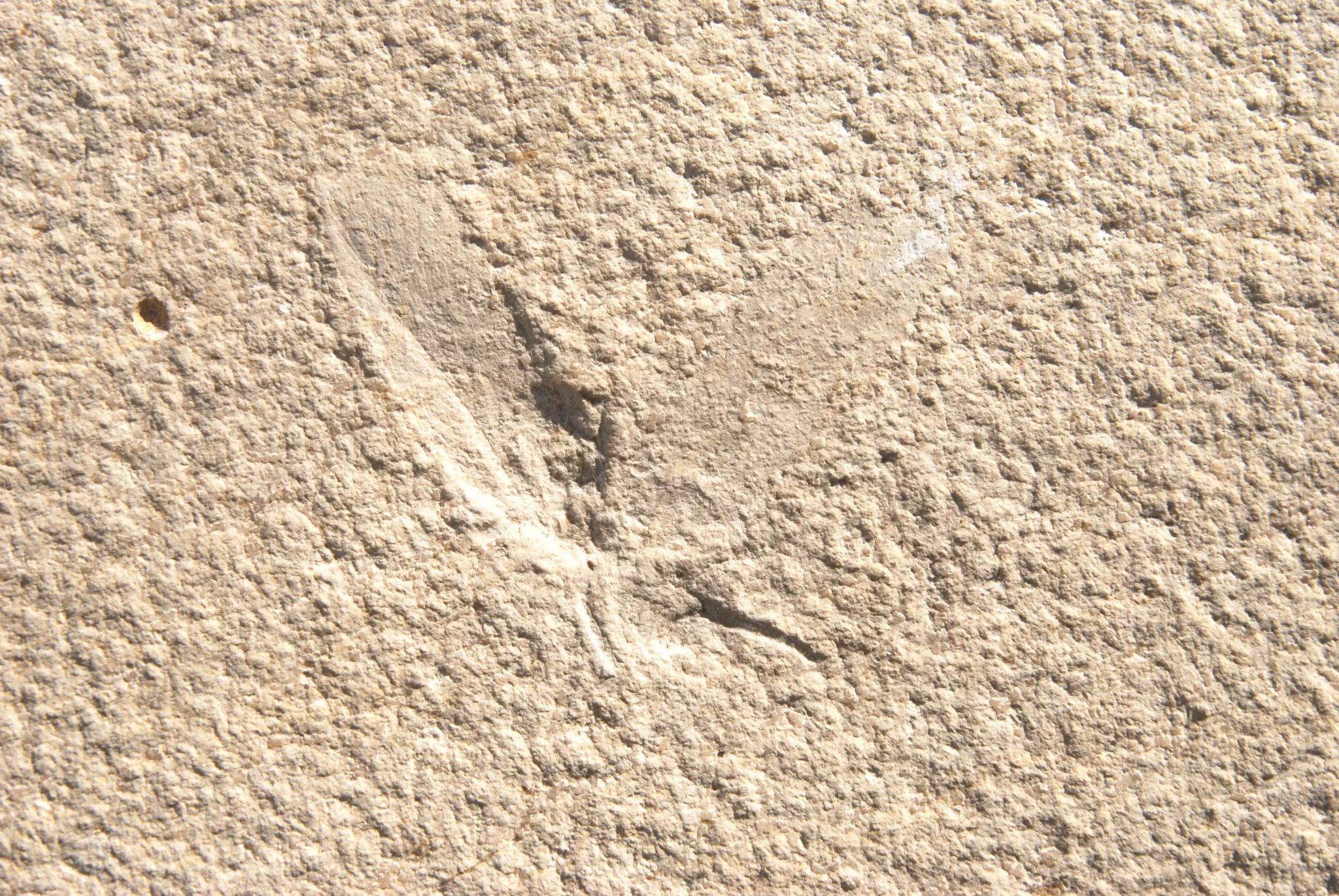
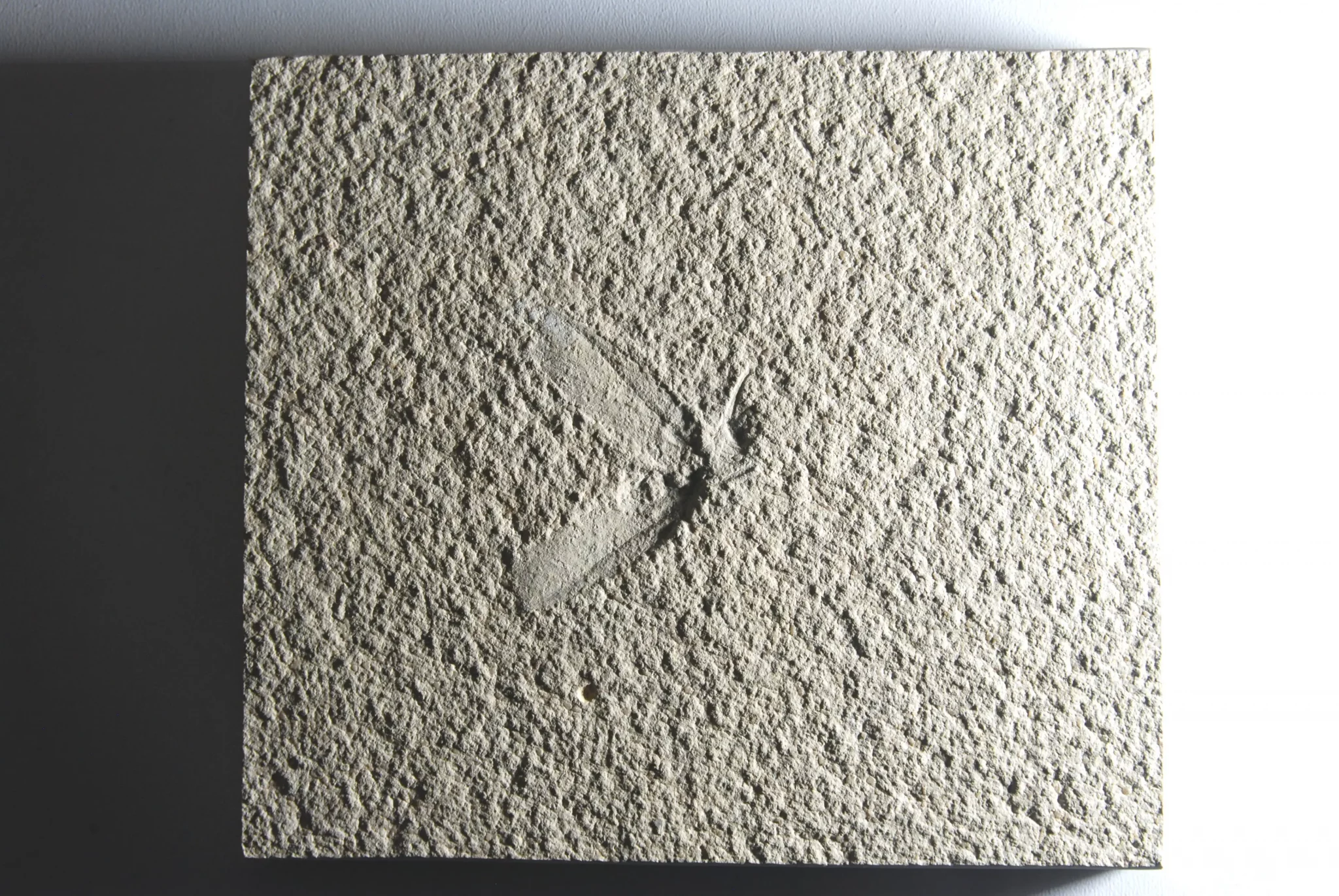
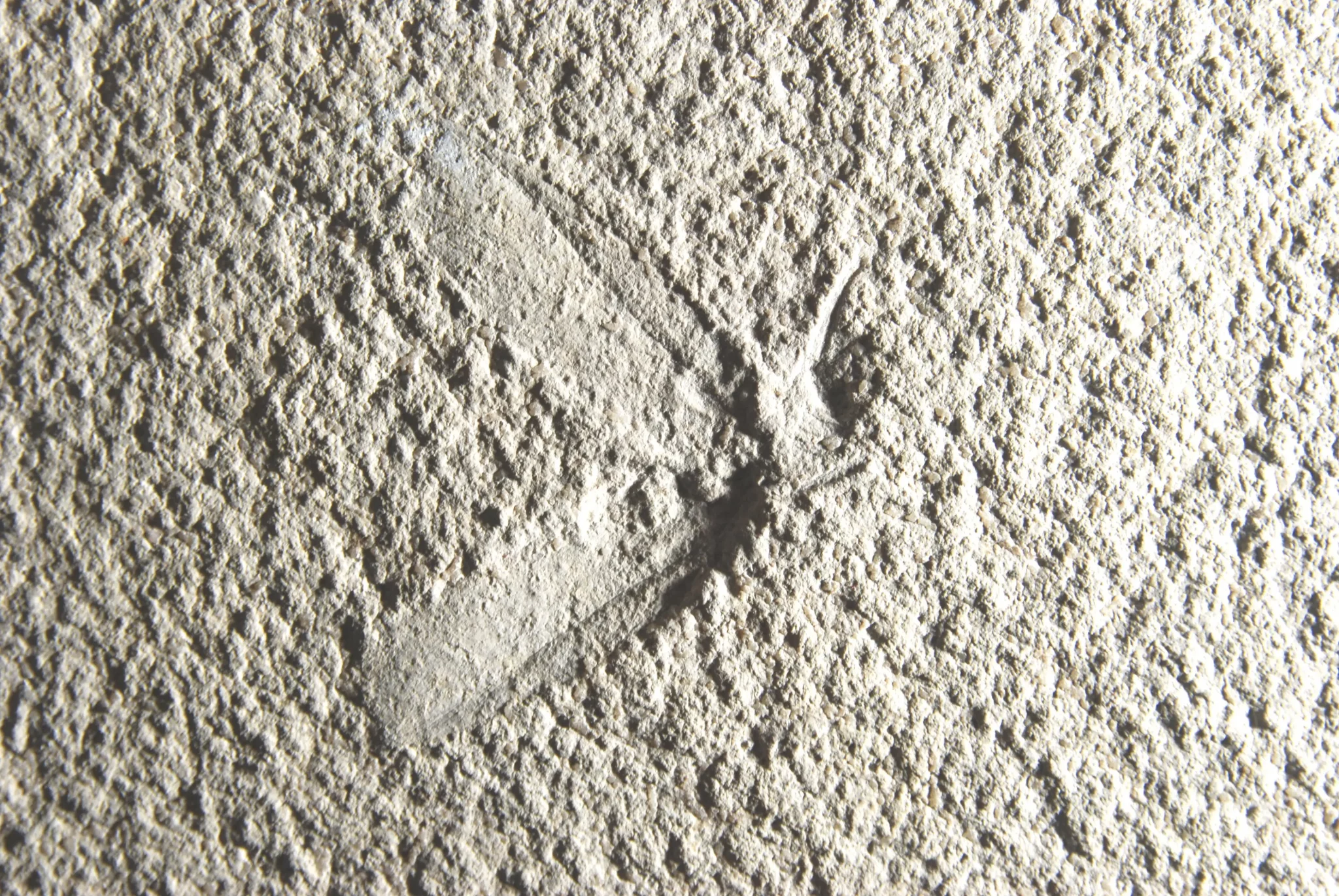
Solnhofen Diptera sp.
Place of discovery: Langenaltheim, Langenaltheimer Haardt; Solnhofener Revier/ Germany
Lithostratigraphy: Lower Tithonian, White Jurassic Group, Altmühltal Formation, Upper Solnhofen Subformation
Biostratigraphy: Hybonotum zone, rueppelianus subzone, rueppelianus horizon
Age: approx. 150.8 – 152 million years +/- 2 million years
Plate size: 19 x 16.5 cm
Size of fossil: 7 cm (largest size)
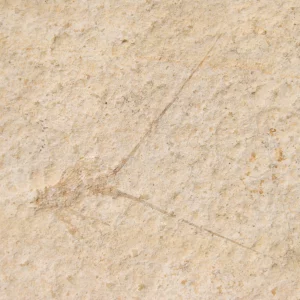
Spectacular “two-winged bird” – not colored.
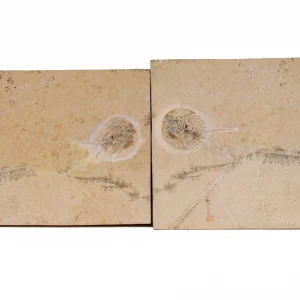
Authentic fossil in original matrix, unbroken slab. Negative (“dent”) = underside of the (upper) hanging plate = main plate with predominant fossil substance.
Offered on behalf of the customer. Please do not make a payment in the store. Sale in the name and for the account of the owner. Contact: info@fossiland.com
Diptera sp. – The filigree pioneer of the air from Solnhofen
This fossil represents a dipteran from the Solnhofen archipelago. While the seas were dominated by predatory fish and ammonites, these graceful insects conquered the air spaces above the Jurassic islands. Dipteran fossils are among the most delicate finds in the history of the earth; they are proof of the extraordinary preservative power of the Bavarian plate limestone, which has preserved even the most delicate wing membranes for eternity.
Scientific classification and morphology
- Two wings for maximum freedom: The defining characteristic of the Diptera is the possession of only one pair of front wings. The hind wings have been transformed into tiny wing pads that serve as stabilizers during flight. This evolutionary specialization made them the most agile fliers of their time 150 million years ago.
- Prehistoric diversity: In Solnhofen we find ancestors of mosquitoes (Nematocera) with their long, fine legs as well as early forms of flies (Brachycera). They document a time when insects began to establish complex ecological relationships with the first flowering plants and vertebrates.
- A rare “breath of air” in the stone: as these insects are extremely light and fragile, their survival in marine sediment is a statistical miracle. Each dipteran fossil is unique, capturing the moment when a tiny flying artist was pushed by the wind onto the still surface of the lagoon.
The fine details – what collectors look out for:
- The wing veining (venation): The heart of every diptera is the wing. The arrangement of the veins is the most important identifying feature. In top specimens, the veins are visible under the microscope like a fine map. An undamaged wing edge massively increases the value for scientifically oriented collectors.
- The delicate extremities: Pay attention to the legs! Particularly in mosquito-like forms, these are often many times longer than the body. If these legs are not “entangled” but lie naturally spread out on the rock slab, they are said to be of top aesthetic quality.
- Head and trunk: In some finds, even the large compound eyes or the specialized mouthparts (piercing or sucking spines) are visible. Such details are extremely rare and make the piece a museum highlight that brings the biology of the animal to life.
A highlight for every Solnhofen collection
A representative of the Diptera is the perfect choice for collectors looking for the delicate and rare. It is a fossil of “quiet tones” that only reveals its full splendor on closer inspection – preferably under a magnifying glass.
Reference -> here