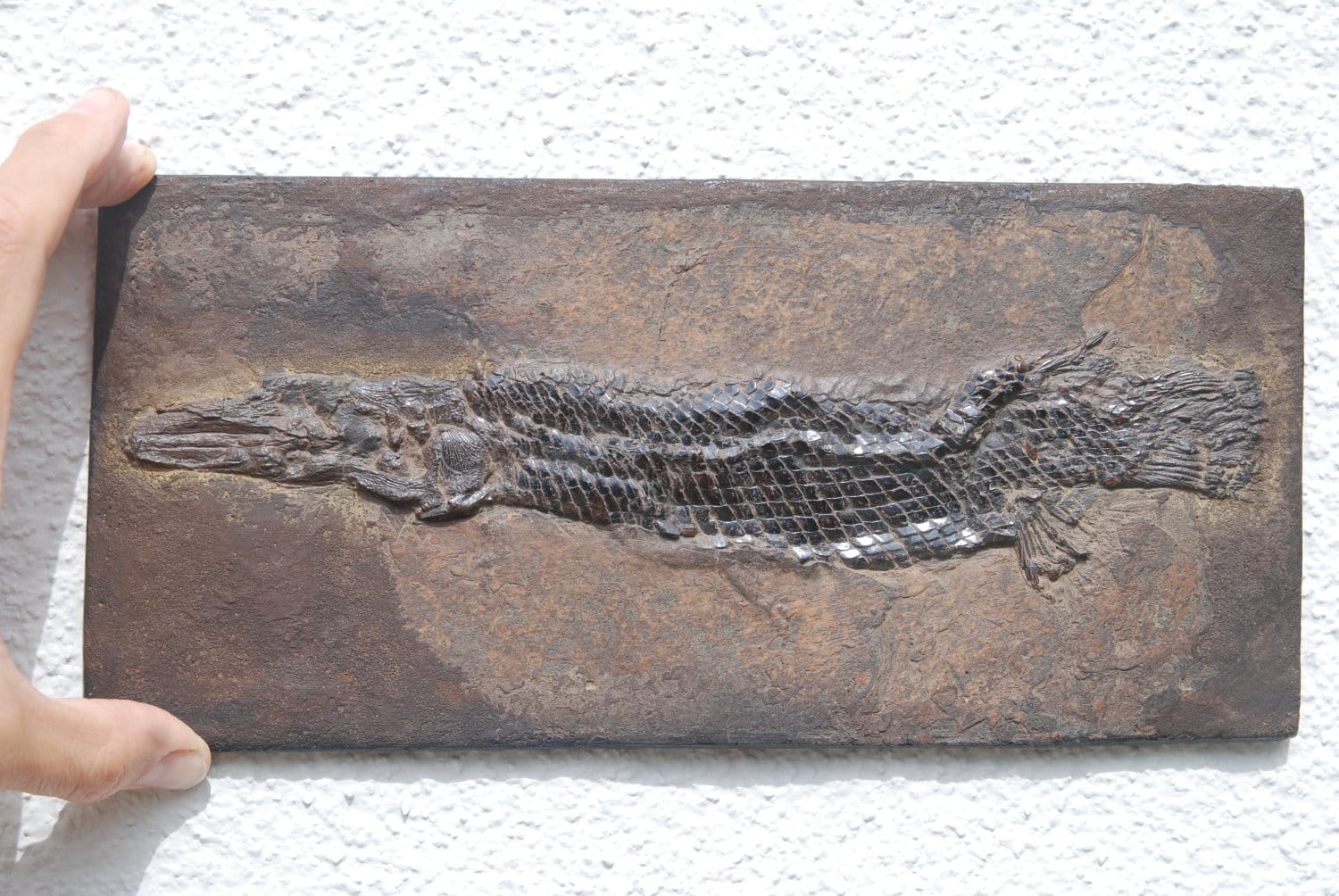
Messel Atractosteus strausi
28 cm (fossil), 40 x 30 cm (matrix)
Messel Pit, Darmstadt, Germany
An aesthetic fossil at an attractive, affordable price
Atractosteus strausi – The armored hunter from the oil shale
An icon from the Hunsrück slate.
Probably the most characteristic predatory fish from the UNESCO World Heritage Messel Pit. While the diversity of the Messel fauna is often dominated by mammals, this fish embodies the archaic power of the Eocene waters like no other. As a “living fossil”, it still gives us an insight into a world 47 million years ago.
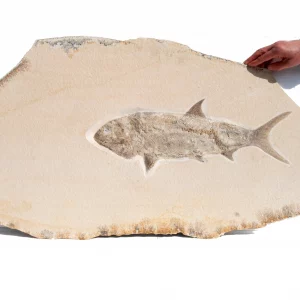
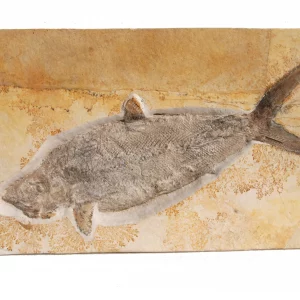
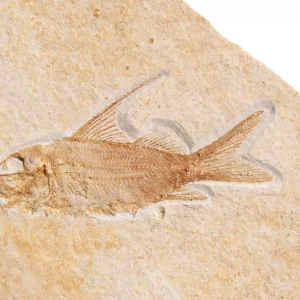
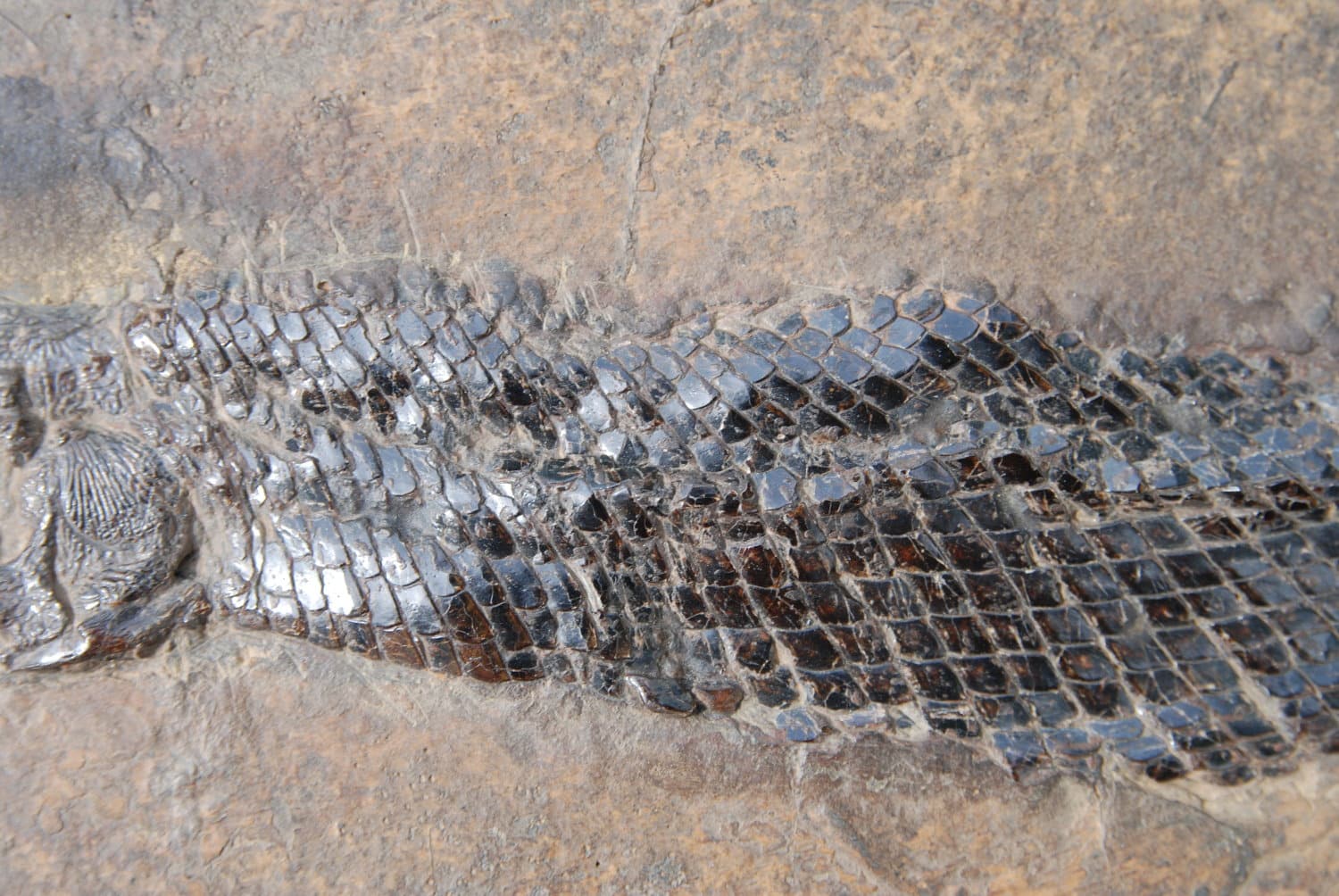
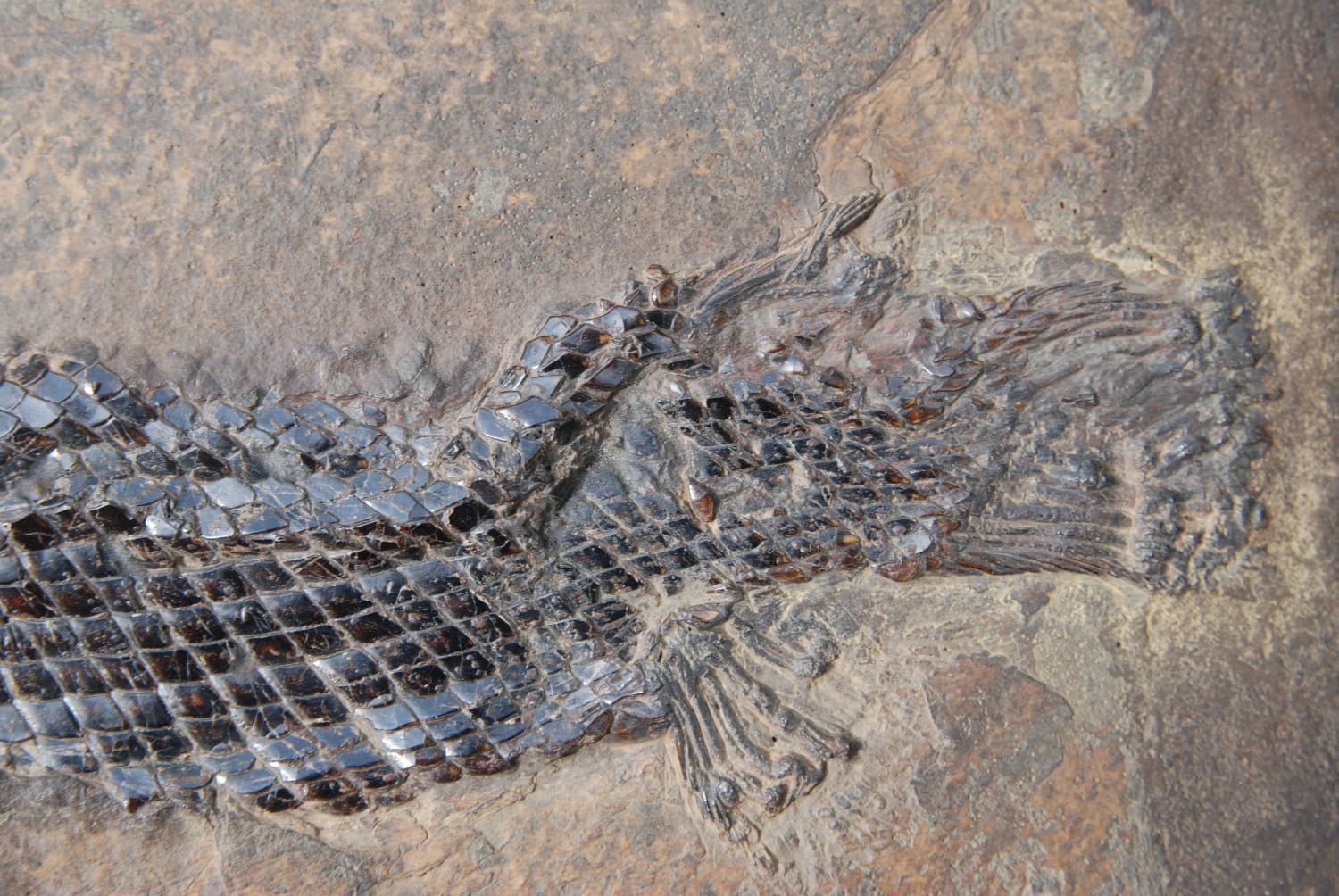
An excellent specimen of a bony pike from the oil shale deposits of the Messel Pit. The genus still exists today; a typical example is the alligator pike from the southern United States, whose morphology is very similar to this fossil. With a length of 28 cm, this specimen is one of the largest found to date. Note the diamond-shaped, armor-like scales. They are covered with ganoin, which gives them a shiny appearance. Today’s alligator pike is said to have been able to fend off small-caliber bullets fired by hunters.
Scientifically interesting: A survivor from prehistoric times
- Ganoid scale carapace: Unlike modern fish, Atractosteus is covered with a dense carapace of rhomboid, shiny scales. These gave it protection and make it one of the most aesthetically pleasing fossils at the site today.
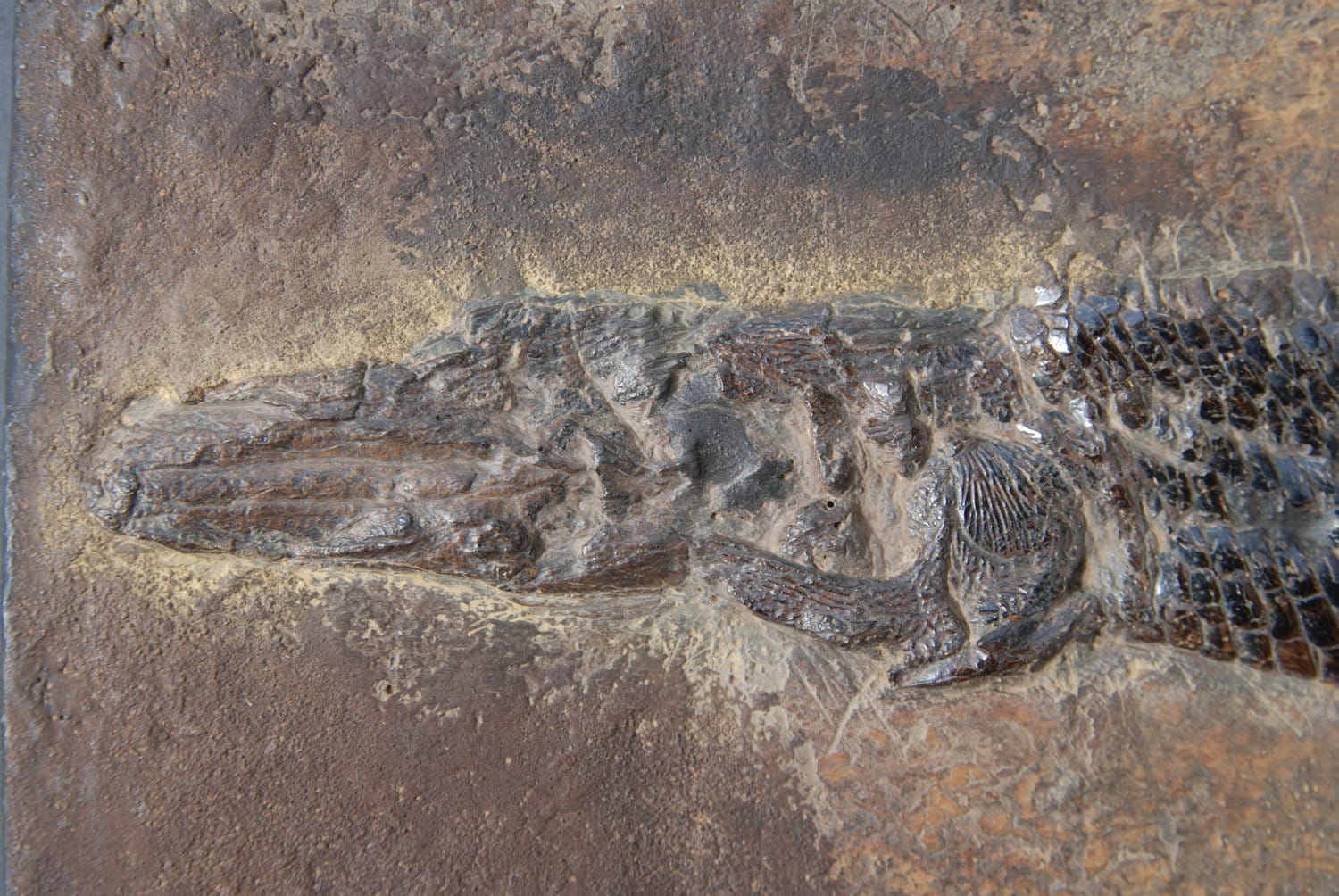
- Specialized lurking hunter: Its elongated jaws, studded with needle-sharp teeth, are evidence of a highly specialized way of life. It is the direct ancestor of today’s bony pike and has hardly changed its design over millions of years.
- A masterpiece of preparation: Messel fossils have to be embedded using the complex transfer method (epoxy resin) due to the water-containing oil shale. An Atractosteus that has survived this procedure perfectly is a testimony to the highest level of preparation craftsmanship.
The fine details – what collectors look out for:
- The “shiny effect”: The most striking feature is the shiny surfaces of the scales (ganoin). On top specimens, this enamel-like sheen is as fresh as if the animal had been fossilized only yesterday.
- Complete dentition: A special quality feature is the preservation of the fine canine teeth in the pointed snout area. These are often the first parts to be lost during salvage.
- Dynamic posture: While stretched animals look classic, a slight curvature of the body gives the fossil an almost lively dynamic that captures the moment of embedding in the primeval mud.
A centerpiece for every Messel collection
Atractosteus strausi is the ultimate symbol of the subtropical lake landscape of the Eocene. It combines scientific relevance with an incomparable, almost sculptural aesthetic – an indispensable specimen for lovers of the local Tertiary fauna.