Bundenbach Zaphrentis primaera
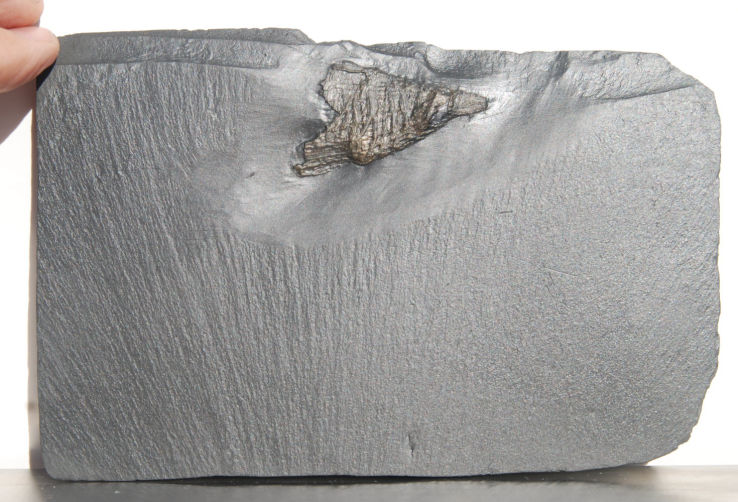
4.5 cm (fossil), 11×17 cm (matrix)
Bundenbach; Obereschenbach pit
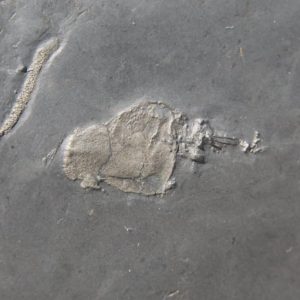
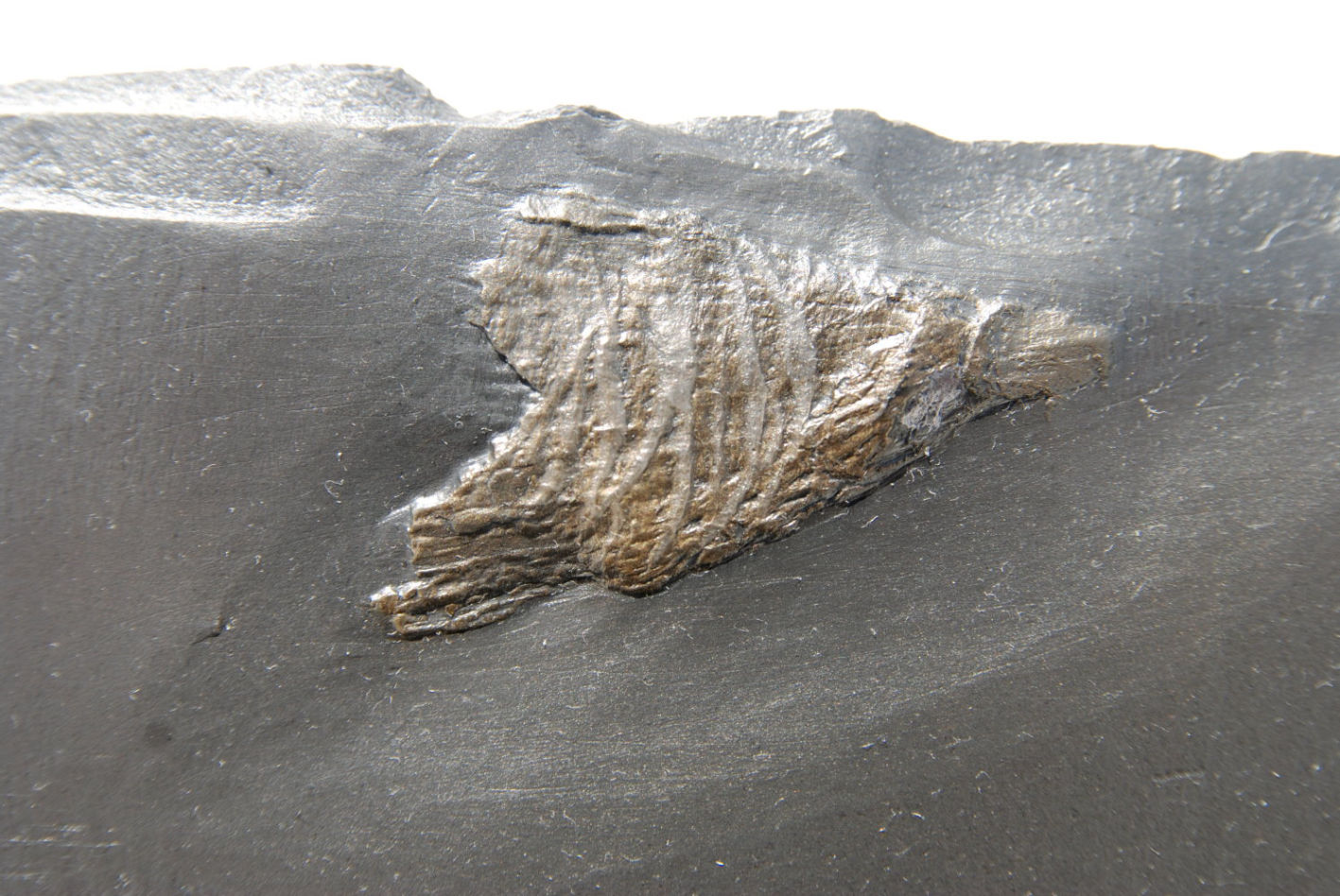
Horn coral with style on an unbroken plate. with excellent details.
Zaphrentis primaeva – The lonely “horn coral” of the Hunsrück slate
A magnificent solitaire with fine lines.
Forget the dense network of colony corals. Zaphrentis primaeva is an individualist. This coral, which belongs to the Rugosa family, grew as a single polyp, creating one of the most iconic skeletons in the history of the earth: the “stone horn”. A fossil that plays a dominant role in every display case thanks to its sheer plasticity and organic aesthetics.
The distinctive features – what makes Zaphrentis primaeva so special:
- The striking horn shape: The skeleton (Corallum) grows in a cone or horn shape. This curvature gives the fossil an elegant directional dynamic, which often looks like a frozen moment of movement in the shale.
- The filigree star pattern (septa): A look inside the calyx reveals its true beauty: numerous radial partitions (septa) run in a star shape towards the center. In Zaphrentis, these septa are particularly pronounced and lend the fossil an almost architectural depth of detail.
- Wrinkled outer wall: The name of the group “Rugosa” is derived from the Latin rugosus (wrinkled). The outside of Zaphrentis shows characteristic growth rings and wrinkles, which document the age and living conditions of the polyp like a biological archive.
- Plastic preservation: Zaphrentis is often preserved three-dimensionally in Hunsrück slate. When the calyx is lined with light-colored calcite or shiny pyrite, a spectacular contrast to the dark matrix is created, making the inner structure of the coral literally glow.
An extinct branch of the earth’s history from Bundenbach
The rugose corals such as Zaphrentis are a completely extinct group that disappeared from the earth at the end of the Permian. A specimen of the species primaeva from the Lower Devonian is thus a contemporary witness of a lost world, whose construction plan differs radically from today’s stony corals.