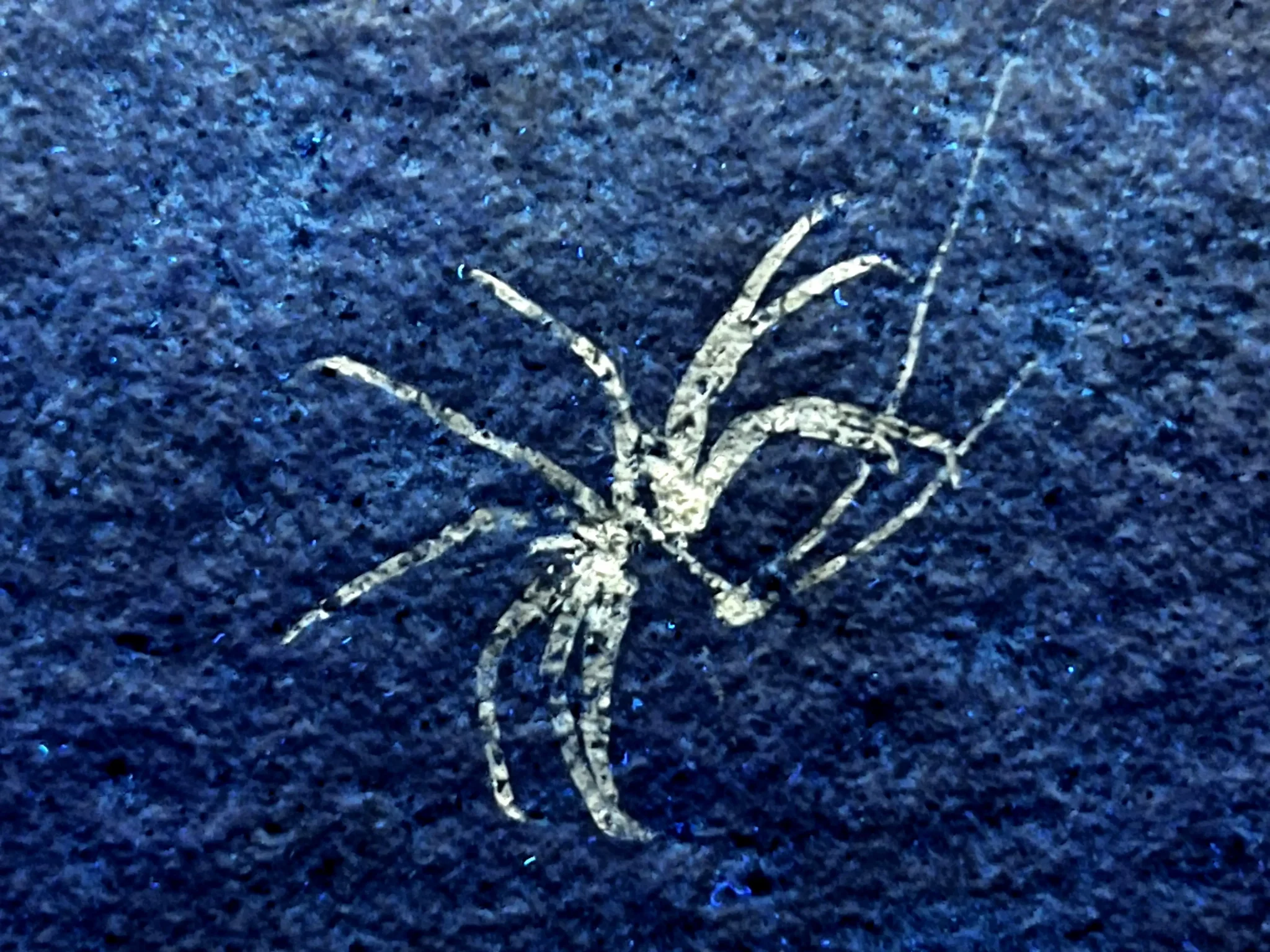
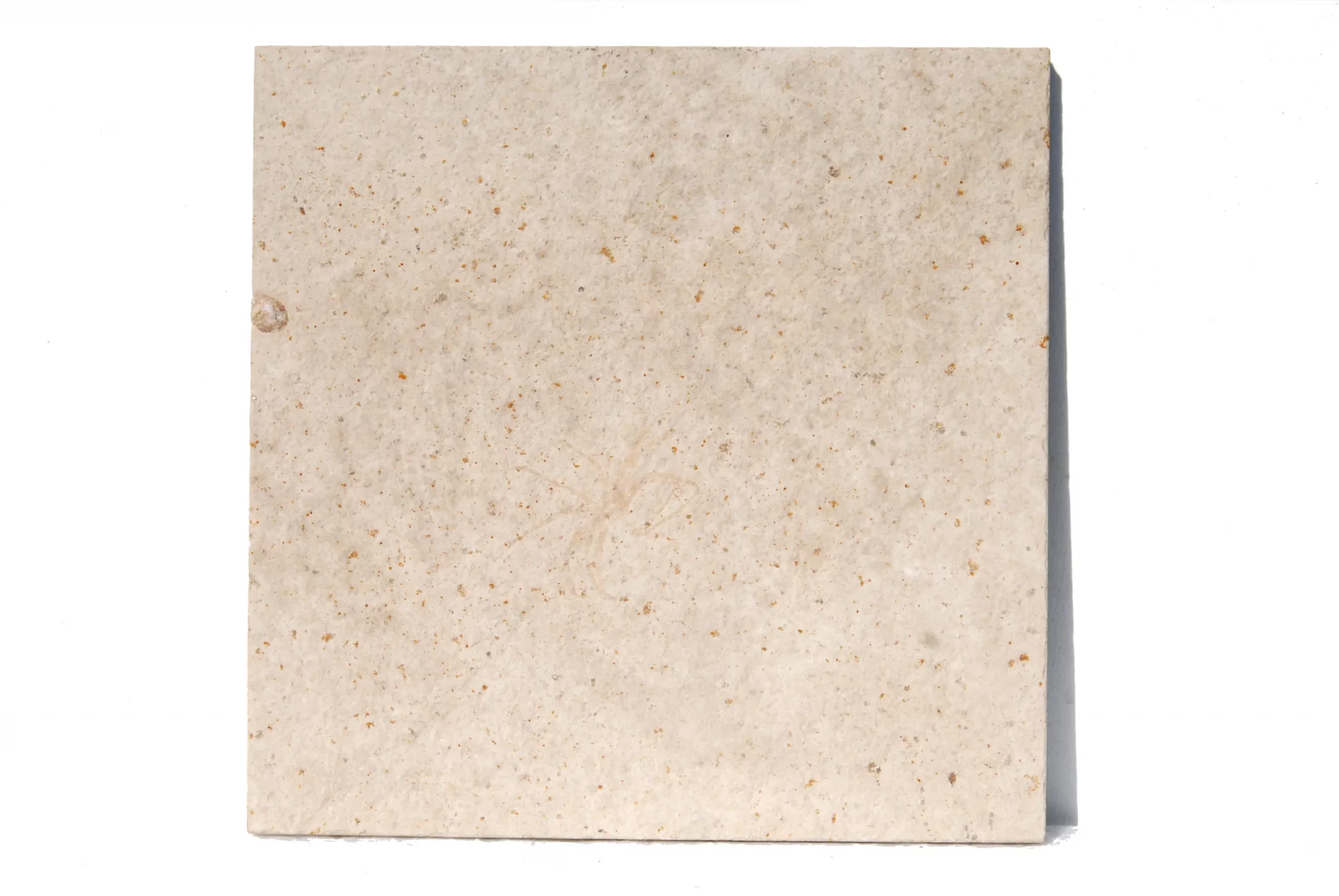
Solnhofen Phalangites priscus
Place of discovery: Langenaltheim, Langenaltheimer Haardt; Solnhofener Revier/ Germany
Lithostratigraphy: Lower Tithonian, White Jurassic Group, Altmühltal Formation, Upper Solnhofen Subformation
Biostratigraphy: Hybonotum zone, rueppelianus subzone, rueppelianus horizon
Age: approx. 150.8 – 152 million years +/- 2 million years
Plate size: 12.5 x 12.5 cm
Size of fossil: 4 cm (largest size)
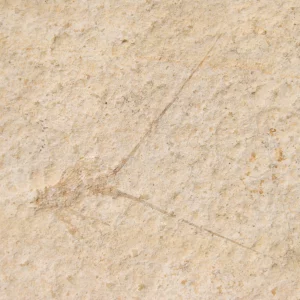
“Crab larva” with spectacular details – not colored.
Authentic fossil in original matrix, unbroken slab.
Offered on behalf of the customer. Please do not make a payment in the store. Sale in the name and for the account of the owner. Contact: info@fossiland.com
Phalangites priscus – The graceful crab larva of the Jurassic archipelago
Phalangites priscus is one of the most enigmatic fossils from the Solnhofen limestones (approx. 150 million years old). With its extremely elongated body and wafer-thin, stilt-like legs, at first glance this fossil looks like a modern stick insect. But appearances are deceptive: modern palaeontology clearly identifies this graceful creature as a highly specialized crustacean larva (Decapoda).
Scientific classification and morphology
- Optical illusion (convergence): The striking resemblance to land-dwelling ghost insects is a prime example of evolutionary shape affinity. While insects imitate twigs on land, Phalangites used this filigree structure in the open sea.
- Floating artists in the plankton: The extremely long, hair-thin legs were not used for walking, but to increase body resistance in the water. This allowed the larva to float in the primeval plankton with minimal energy expenditure without sinking.
- Rarity of preservation: As a delicate plankton creature only a few millimeters in size, the preservation of Phalangites is a paleontological stroke of luck and documents the complex larval stages of Jurassic crustaceans.
The fine details – what collectors look out for:
- The leg completeness: Due to their extreme filigree nature, complete specimens are an absolute rarity. A piece in which the long extremities protrude symmetrically from the body is considered a top find by connoisseurs.
- Graphic contrasts: Pay attention to the dark mineralization of the fossil on the light limestone. This gives the tiny animal (body often only approx. 5-8 mm) an impressive depth effect and graphic elegance.
- Preparation detail: As the legs can be thinner than a hair, pristine preservation (without scratch marks) is the decisive quality feature for a high-quality Solnhofen collection.
A highlight for every Solnhofen collection
Phalangites priscus is the perfect exhibit for lovers of evolution and its curiosities. As a rare ambassador of Jurassic marine biology, this fossil is an exclusive highlight for any systematic collection.