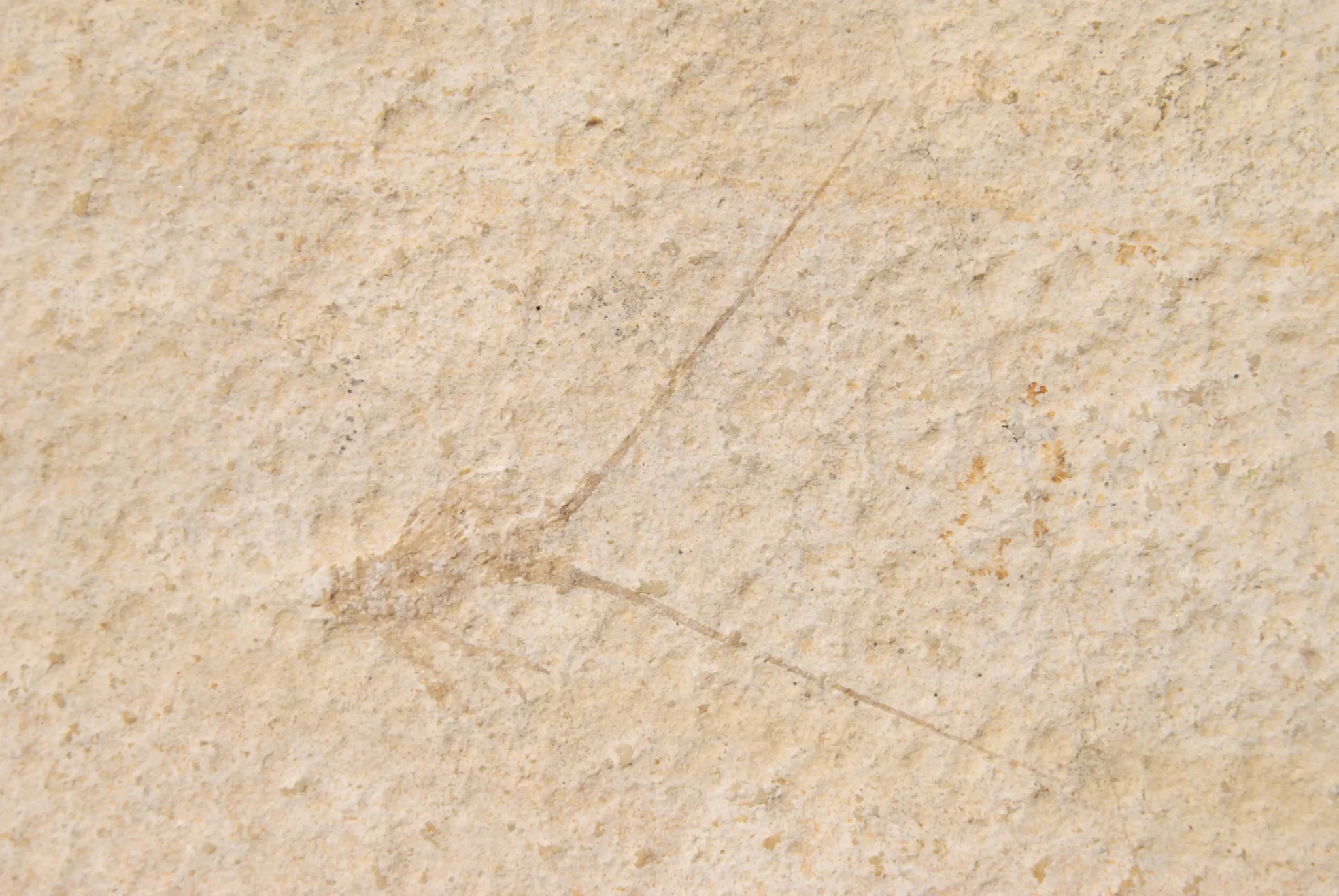
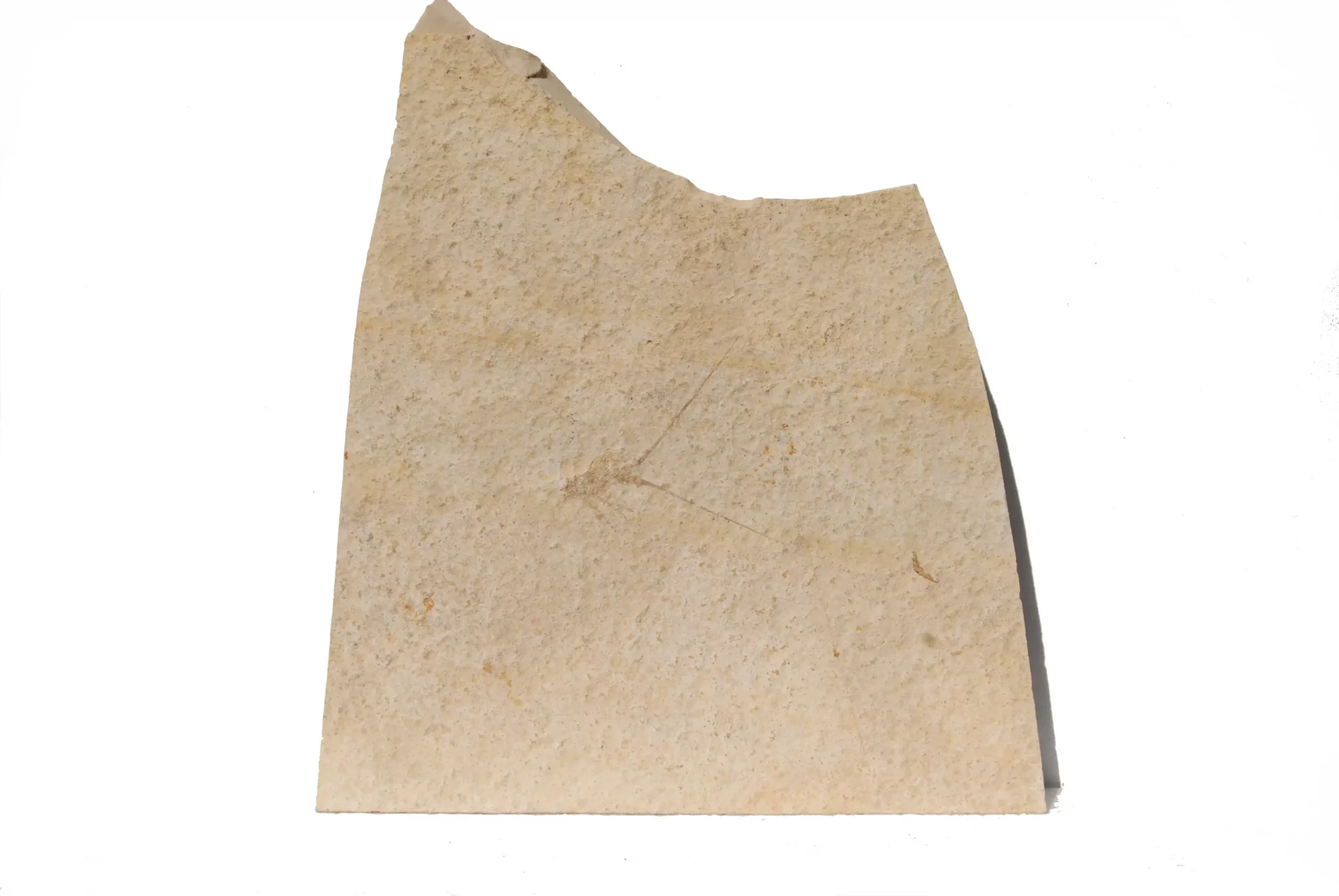
Solnhofen Palinurina longipe
Place of discovery: Langenaltheim, Langenaltheimer Haardt; Solnhofener Revier/ Germany
Lithostratigraphy: Lower Tithonian, White Jurassic Group, Altmühltal Formation, Upper Solnhofen Subformation
Biostratigraphy: Hybonotum zone, rueppelianus subzone, rueppelianus horizon
Age: approx. 150.8 – 152 million years +/- 2 million years
Plate size: 24 x 22 cm
Size of fossil: 8 cm (largest size)
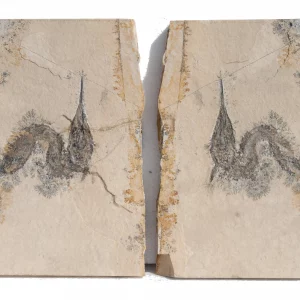
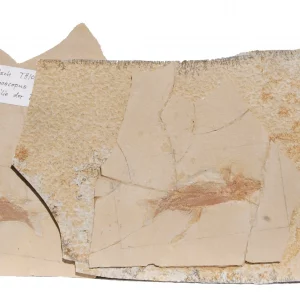
Well preserved “Ur-Languste” – not colored.
Authentic fossil in original matrix, not reburied. With proof of provenance.
Authentic fossil in original matrix, unbroken slab. Negative (“dent”) = underside of the (upper) hanging slab = main slab with predominant fossil substance.
Offered on behalf of the customer. Please do not make a payment in the store. Sale in the name and for the account of the owner. Contact: info@fossiland.com
Palinurina longipes – The filigree primordial lobster of the Solnhofen archipelago
This exquisite fossil shows one of the most elegant representatives of the Jurassic crustaceans. Palinurina longipes is a direct ancestor of our modern-day crayfish and lived around 150 million years ago in the shallow, tropical lagoons of Bavaria. While many prehistoric crustaceans appear massive and stocky, Palinurina impresses with its almost fragile, delicate appearance.
Scientific classification and morphology
- The ancestral line of armored crustaceans: As an early representative of the Palinuridae (lobsters), this fossil provides valuable insights into the development of decapod crustaceans (Decapoda). In contrast to lobsters, they do not have large claws, but rely on specialized, long walking legs and antennae.
- Anatomical finesse: The name longipes (long-footed) says it all. The extremely elongated, graceful extremities and the often fan-shaped antennae are adaptations to a habitat in which tactile and movement sensors determine survival and death.
- Graphic perfection: A well-preserved specimen looks like a fine ink drawing on the light-colored limestone. The symmetry of the carapace (carapace) and the rhythmic sequence of the abdominal segments (pleon) make Palinurina one of the most decorative fossils in the world.
The fine details – what collectors look out for:
- The antennal splendor: The most valuable feature is the thread-like antennae. As these were extremely thin and limp, they are only preserved under perfect conditions. A specimen in which the antennae extend their full length away from the head without interruption is considered a top find.
- Preservation of the walking legs: Pay attention to the completeness of the filigree legs. In fossils, these often lie on top of each other or are incomplete. If all pairs of legs are articulated and clearly separated from the body, this is referred to as “showpiece quality”.
- The tail fan (telson & uropods): A critical detail is the end of the body. In Palinurina, the tail fan should ideally be spread out flat so that the individual lamellae are visible. This gives the fossil a dynamic depth and shows the animal in a natural “swimming position”.
A highlight for every Solnhofen collection
Palinurina longipes is the perfect addition for collectors specializing in the diversity of Jurassic marine fauna. A fossil that captivates with its delicacy and impressively demonstrates the incredible attention to detail of the Solnhofen fossilization.