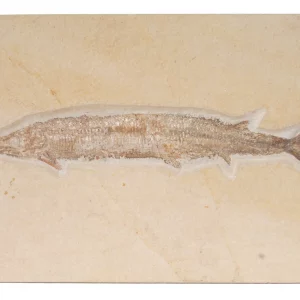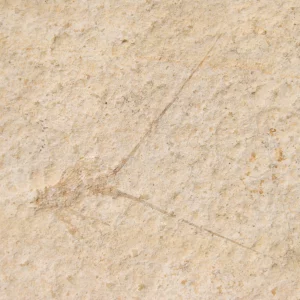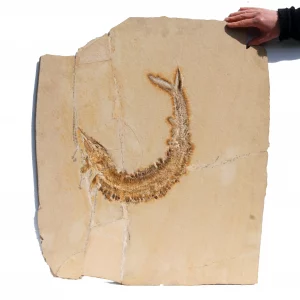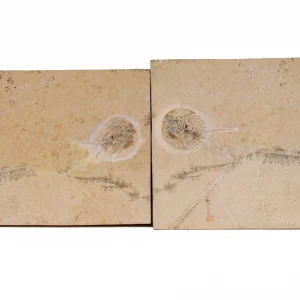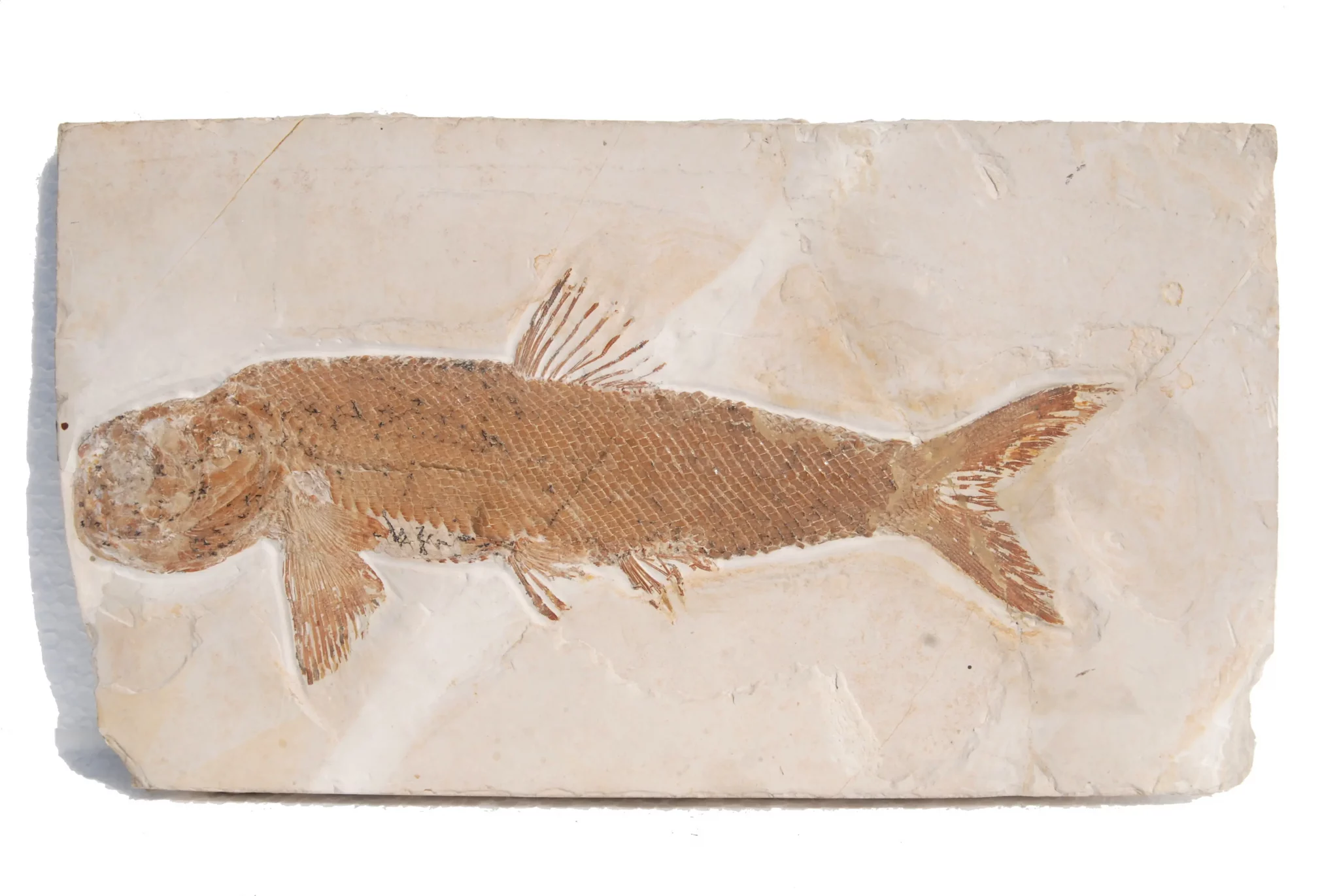
Solnhofen Ophiopsis sp.
Place of discovery: Langenaltheim, Langenaltheimer Haardt; Solnhofener Revier/ Germany
Lithostratigraphy: Lower Tithonian, White Jurassic Group, Altmühltal Formation, Upper Solnhofen Subformation
Biostratigraphy: Hybonotum zone, rueppelianus subzone, rueppelianus horizon
Age: approx. 150.8 – 152 million years +/- 2 million years
Plate size: approx. 30 x 15 cm
Size of fossil: approx. 25 cm (largest size)
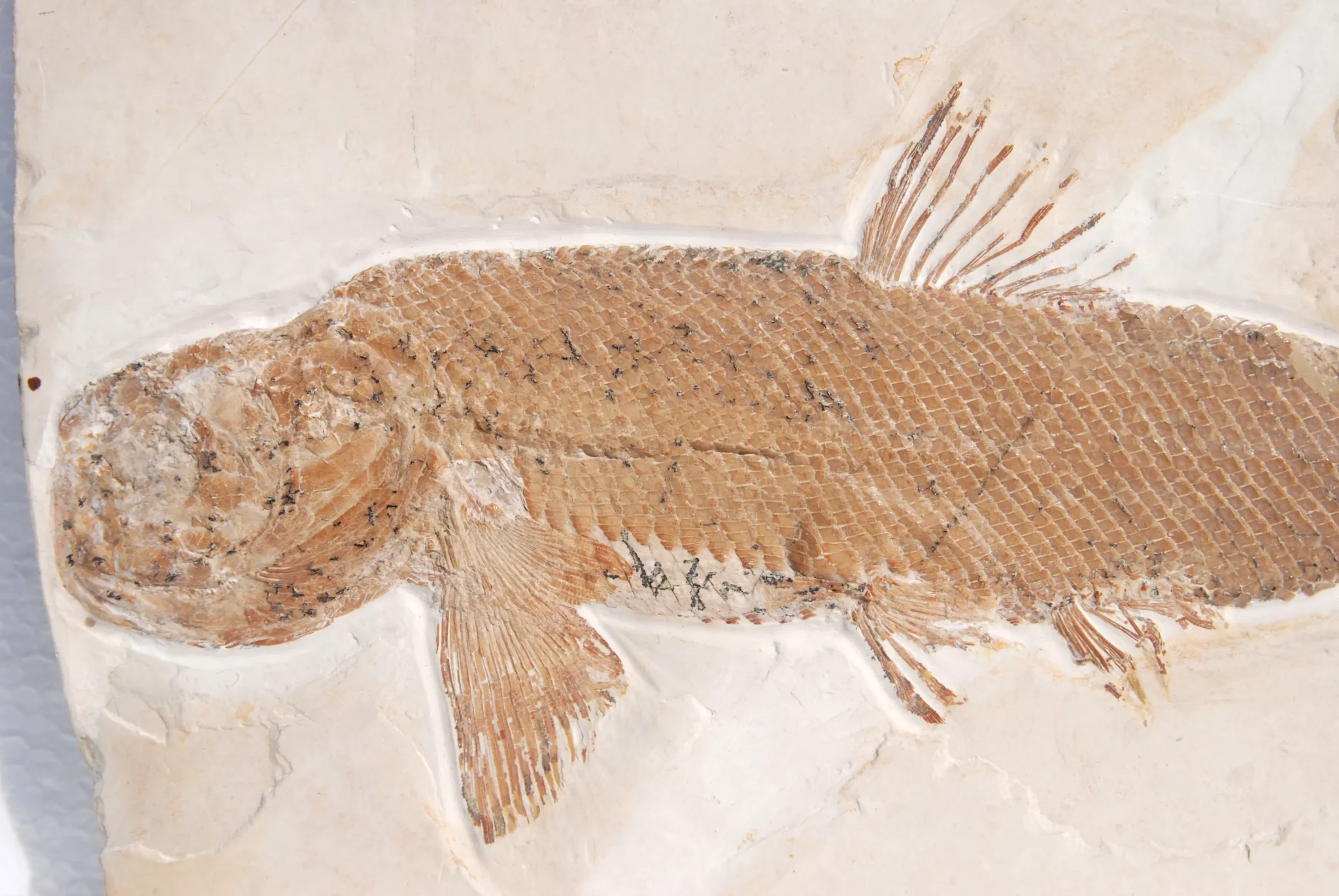
Rare “Schmelzschupper” with shiny scales.
Authentic fossil in original matrix, not reburied. With proof of provenance.
Offered on behalf of the customer. Please do not make a payment in the store. Sale in the name and for the account of the owner.
Ophiopsis sp. – The graceful hunter with the distinctive fins
The genus Ophiopsis belongs to the family Ophiopsidae and is a characteristic predatory fish of the Upper Jurassic lagoon landscape, although it is rarer than Caturus. It is characterized by particularly harmonious body proportions and a specialized fin morphology that makes it an agile swimmer.
Scientific classification and morphology
-
- Body shape: Ophiopsis has a moderately elongated, laterally slightly flattened body. The silhouette is less massive than that of Ionoscopus, which indicates a high degree of maneuverability in structured habitats.
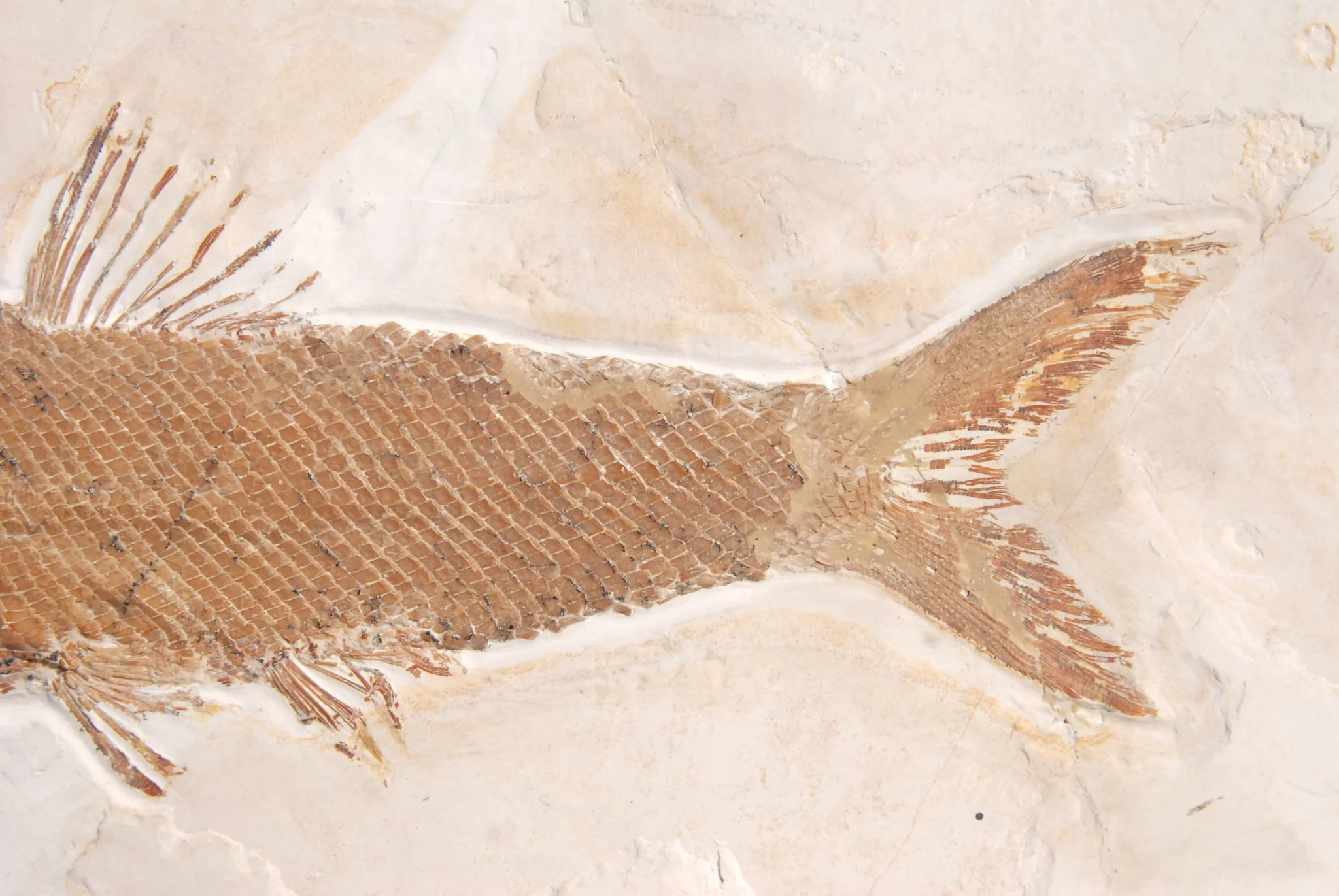
- Fin characteristics: A key diagnostic feature is the long, seam-like dorsal fin, which occupies a considerable baseline in many species of the genus. The caudal fin is clearly forked and shows a progressive symmetry (homocerk), which indicates efficient locomotion in open water.
- Teeth: The jaw is covered with pointed fangs, which show Ophiopsis to be an active predator that primarily fed on smaller fish and crustaceans.
The fine details – what collectors look out for:
- The dorsal fin: The most important quality feature of Ophiopsis is the completeness of the long dorsal fin. In excellently preserved specimens, the fine fin rays can be traced along their entire length to the rear third of the body.
- Scale structure: The scales are covered with a shiny ganoin layer. In fossil preservation, they often form a very regular, diamond-shaped pattern that emphasizes the body contour.
- Head region: The cap bones of the skull are usually very compact in this genus. The large eye sockets and the fine ornamentation of the head bones in particular are an aesthetic focus in high-quality specimens.
A highlight for every Solnhofen collection
Ophiopsis is the perfect object for collectors who want to document the aesthetic diversity and specialized swimming forms of the Jurassic fish fauna. It represents an elegant lineage of predatory fish in an ecosystem that was characterized by a high degree of ecological differentiation. A fossil of this quality is not only an investment, but a window into a time when Bavaria was still a subtropical island paradise.