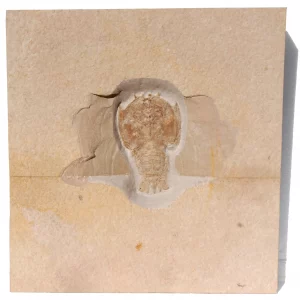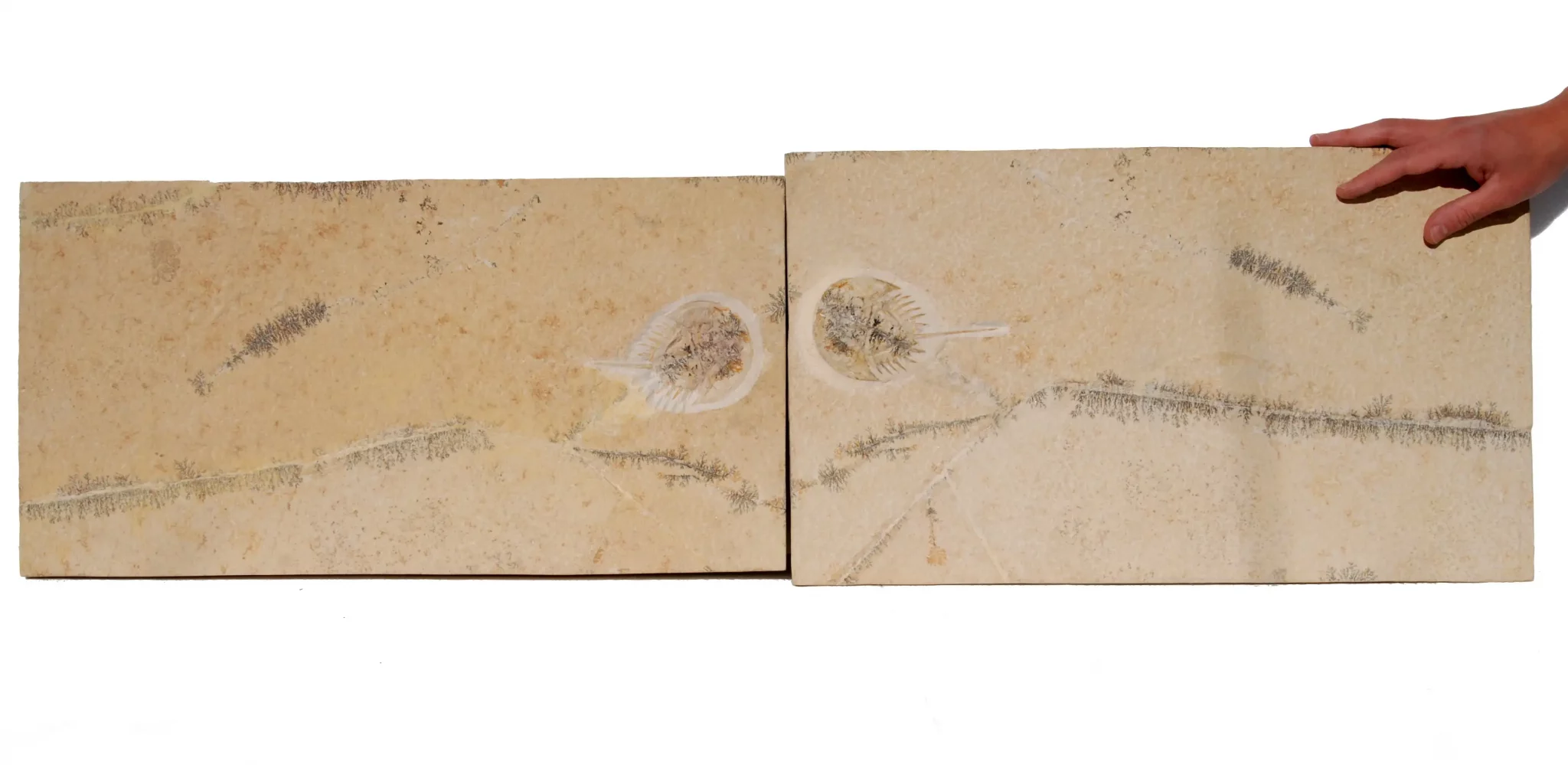
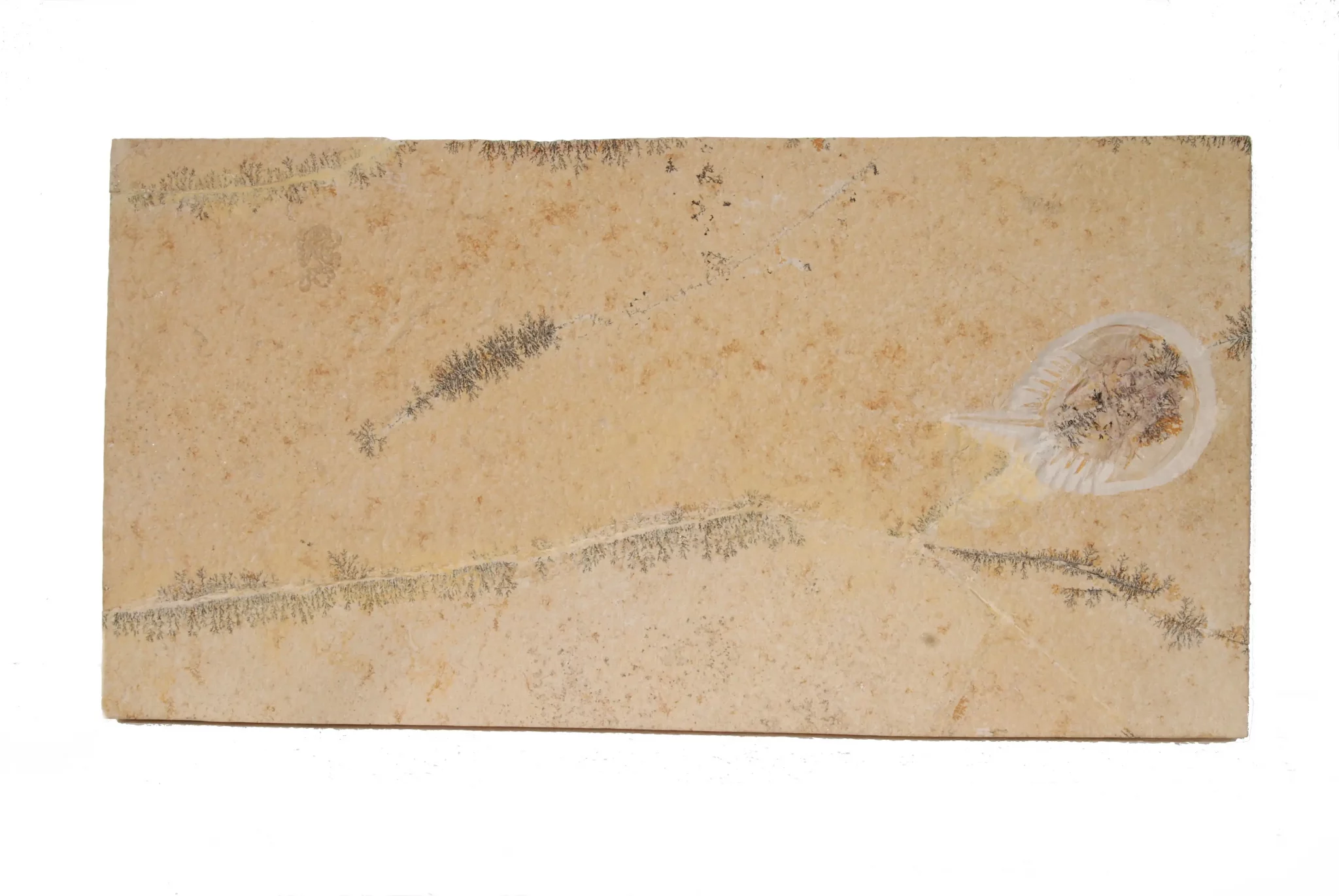
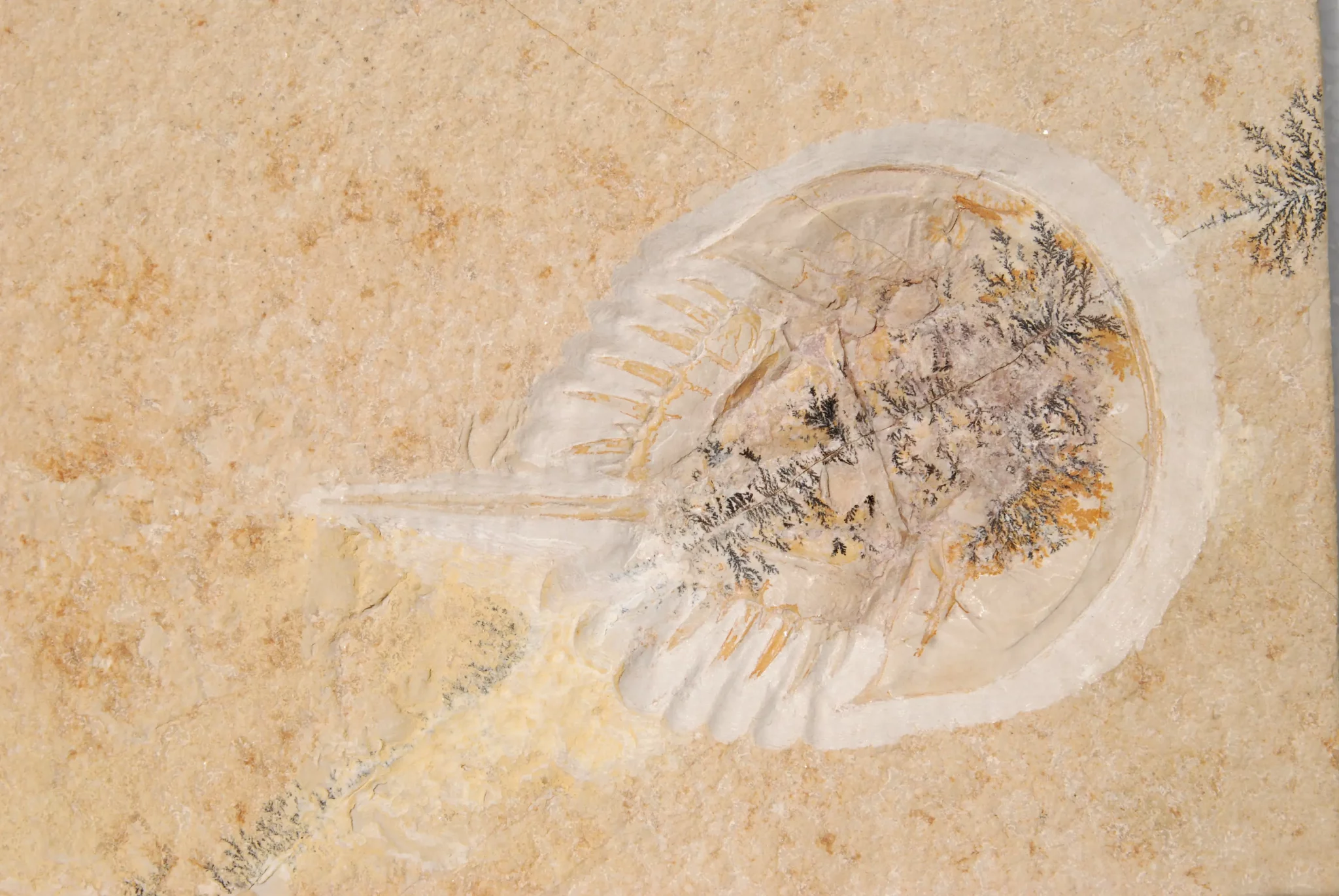
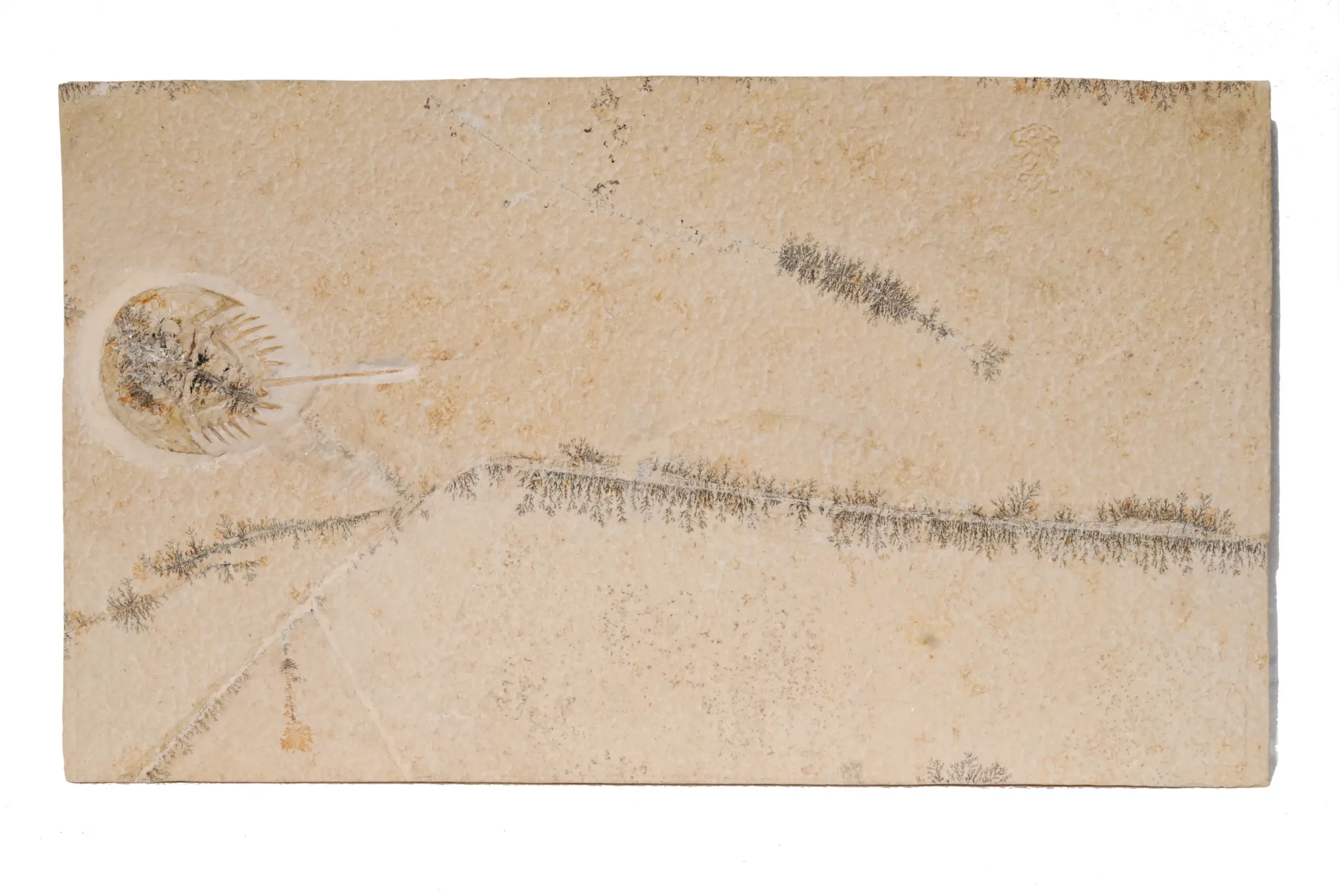
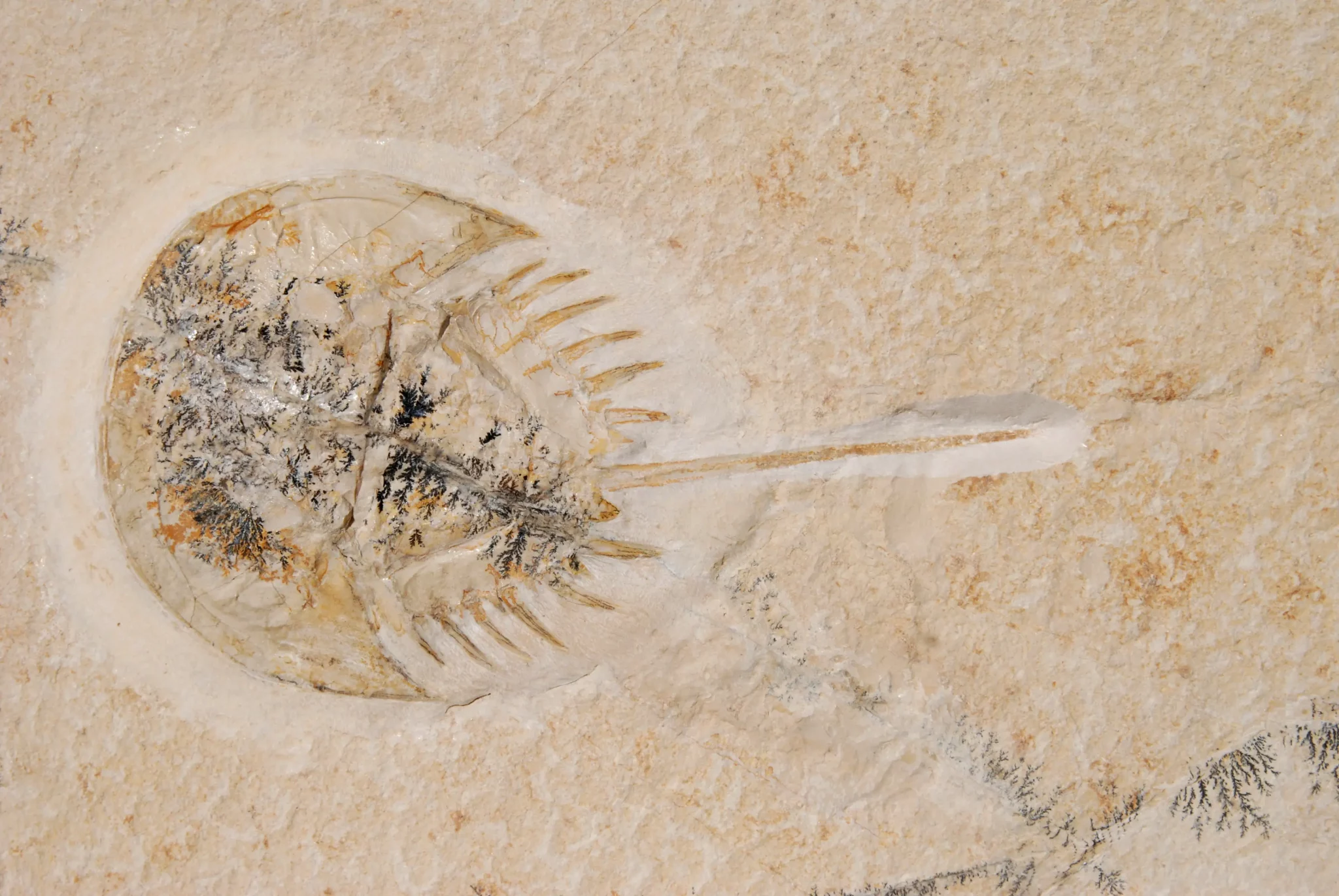
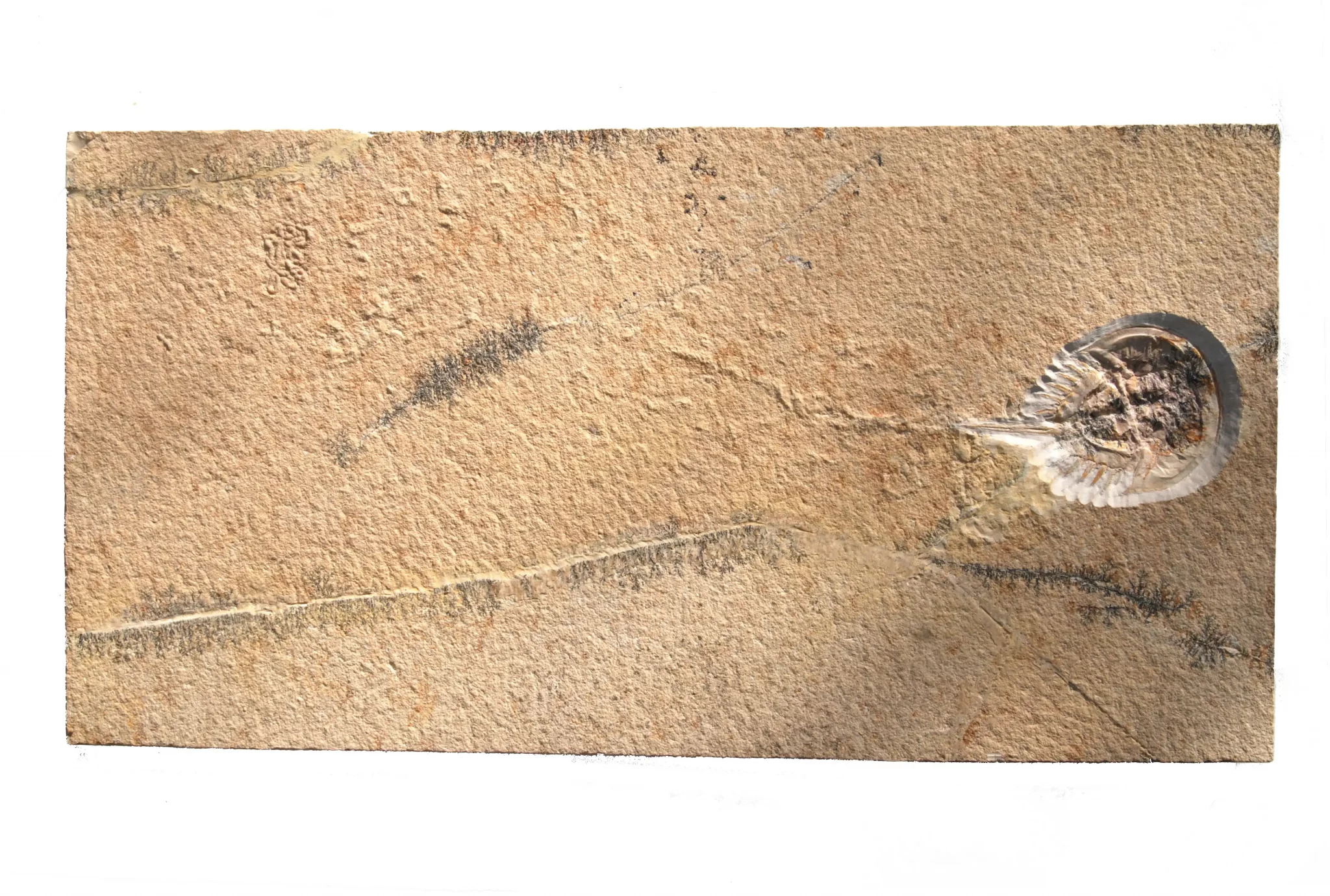
Solnhofen Mesolimulus walchi with running track
Place of discovery: Langenaltheim, Langenaltheimer Haardt; Solnhofener Revier/ Germany
Lithostratigraphy: Lower Tithonian, White Jurassic Group, Altmühltal Formation, Upper Solnhofen Subformation
Biostratigraphy: Hybonotum zone, rueppelianus subzone, rueppelianus horizon
Age: approx. 150.8 – 152 million years +/- 2 million years
Size plate/counter plate: 57 x 34 cm
Size of fossil: 14 cm (largest size)
Large, very well preserved “arrow-tailed crab” with running track!
Plate and counter plate. Authentic fossil in original matrix, fractures expertly glued, not reburied. With proof of provenance.
Usually the (main) plate (negative) and counter plate (positive) are sold separately. Here is a rarely offered pair.
Offered on behalf of the customer. Please do not make a payment in the store. Sale in the name and for the account of the owner. Contact: info@fossiland.com
Mesolimulus walchi – A living fossil in its death throes
This extraordinary fossil ensemble shows the most famous survivor in the history of the earth: the horseshoe crab Mesolimulus. Finds from the Solnhofen limestones (approx. 150 million years old) are world-famous, but this piece is a rarity: a double plate (positive & negative) that has immortalized not only the animal, but also its last footprint(kouphichnium) in the fine limestone mud.
Scientific classification and morphology
- Evolutionary immutability: Mesolimulus is a prime example of morphological stability. Its blueprint has hardly changed over hundreds of millions of years. As a close relative of today’s Limulus species, it is a biological marvel that has defied mass extinctions and continental drift.
- The “death track” phenomenon: The highlight of this exhibit is the fossilized footprint. It documents the animal’s last movements on the oxygen-depleted bottom of the lagoon. This combination of body fossil and trace fossil (ichnofossil) makes the piece a dynamic snapshot of prehistoric times – a biological drama frozen in stone.
- Geometry of prehistoric times: the horseshoe-shaped head shield (prosoma) and the long, pointed tail spine (telson) create an iconic silhouette. This shape is perfectly reflected on the double plate – a fascinating interplay of light and shadow, relief and impression.
The fine details – what collectors look out for:
- The tread mark: The decisive quality feature is the clarity of the tread marks. On top specimens, the fine imprints of the scissor feet and the drag mark of the tail spine are recognizable as a razor-sharp relief. A clear trail leading directly to the fossil is considered the “Holy Grail” of Solnhofen collectors.
- Preservation of the telson: The long tail spine is extremely fragile. Pay attention to complete preservation up to the needle-tipped end. Breaks or additions in the area of the spine are common in inferior specimens; here the art of preparation can be seen in the exposure of the fine tip.
- Articulation of the segments: A museum specimen shows a perfect separation between the anterior shield and the articulated abdomen (opisthosoma). If, in addition, the tiny lateral spines on the abdomen are preserved symmetrically and without offset, it is a cabinet specimen of the highest rank.
A highlight for every Solnhofen collection
A mesolimulus on a double plate with running track is far more than a fossil – it is a narrative sculpture. For collectors who value aesthetics and scientific context, this ensemble offers a rare opportunity. A “prehistoric wanderer” captured on its last decimeters in stone.