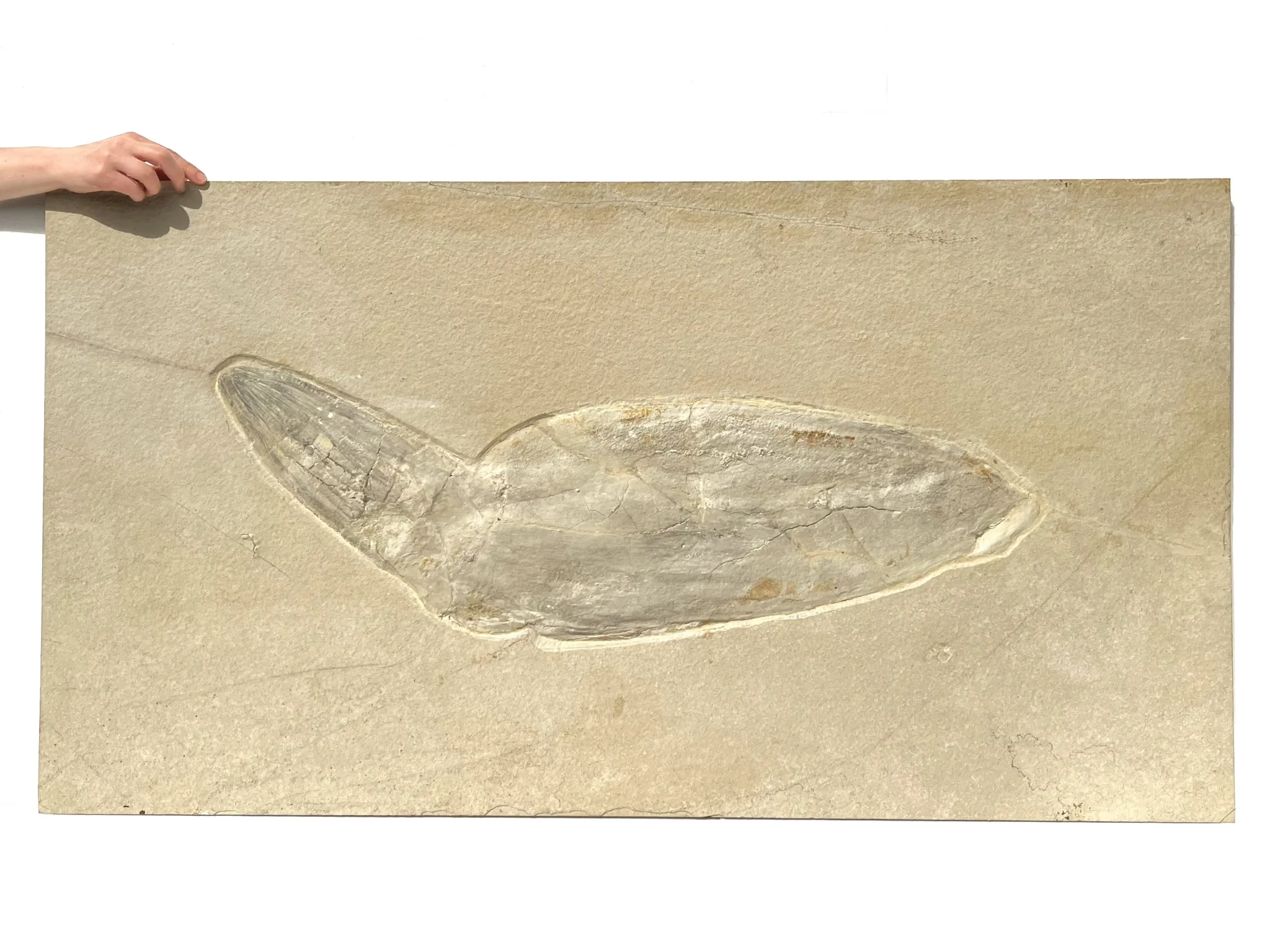
Solnhofen Leptoteuthis giga
Place of discovery: Langenaltheim, Langenaltheimer Haardt; Solnhofener Revier/ Germany
Lithostratigraphy: Lower Tithonian, White Jurassic Group, Altmühltal Formation, Upper Solnhofen Subformation
Biostratigraphy: Hybonotum zone, rueppelianus subzone, rueppelianus horizon
Age: approx. 150.8 – 152 million years +/- 2 million years
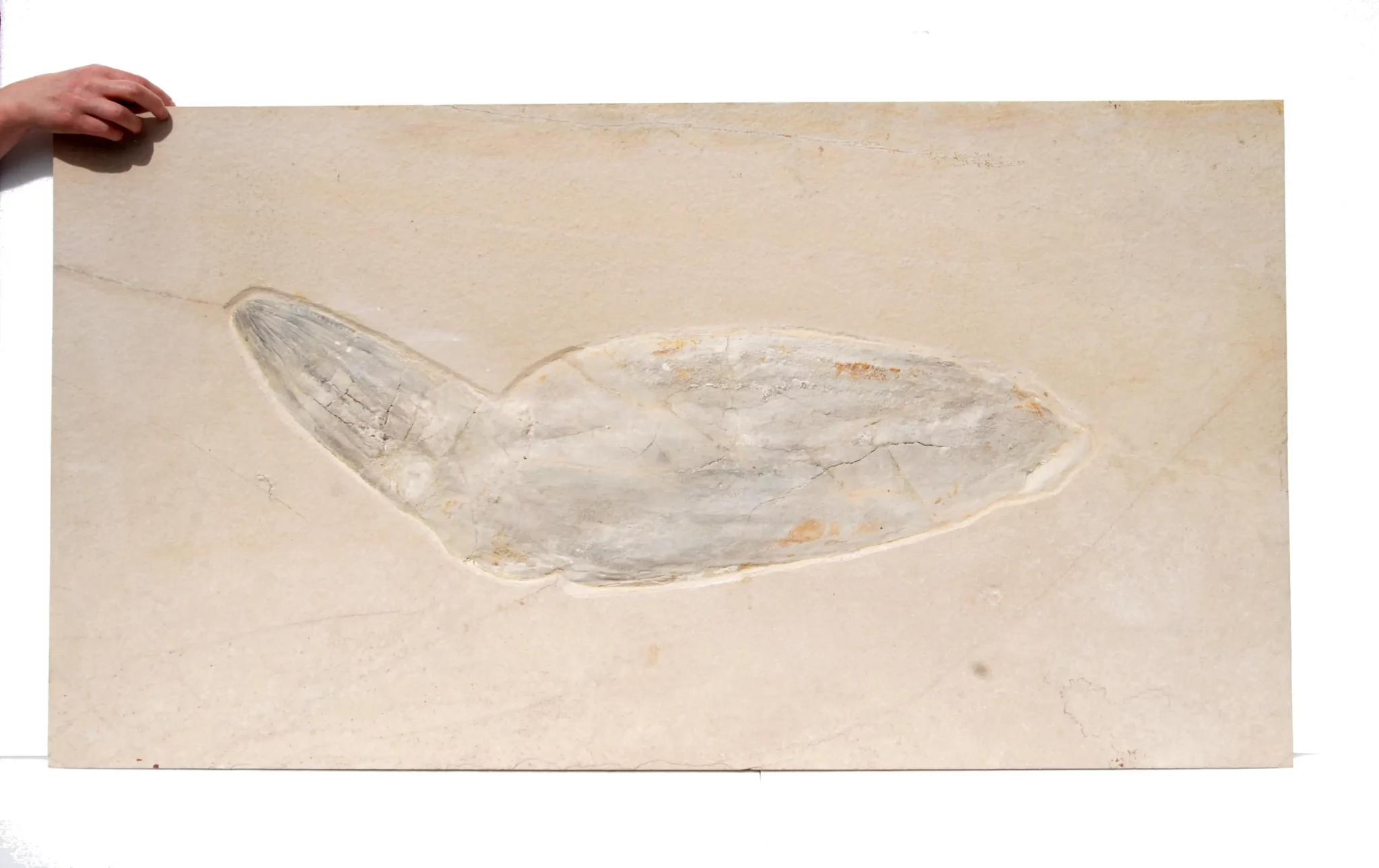
Panel size: 130 x 70 cm
Fossil size: 90 cm (largest size)
Giant squid – not colored, natural.
Authentic fossil. With proof of provenance.
Offered on behalf of the customer. Please do not make a payment in the store. Sale in the name and for the account of the owner. Contact: info@fossiland.com
Leptoteuthis gigas – The giant squid of the Jurassic Sea
The genus Leptoteuthis belongs to the group of Teuthida (true cuttlefish) and represents one of the largest and most impressive cephalopods of the Solnhofen limestones. While ammonites are dominated by their calcareous shells, Leptoteuthis represents that line of cephalopods in which the shell has been reduced to an internal support rod. Finds of this genus are very rare.
Scientific classification and morphology
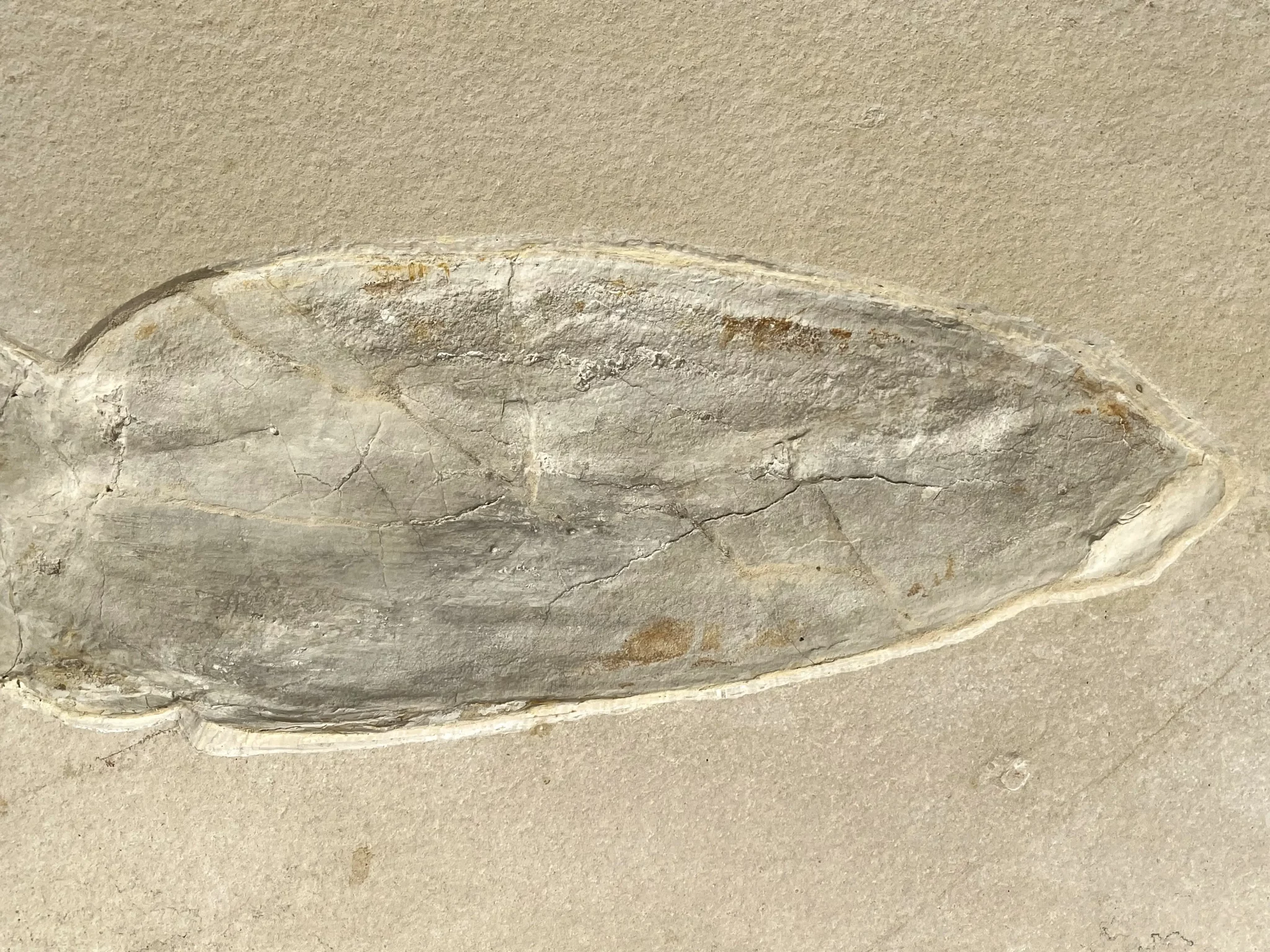
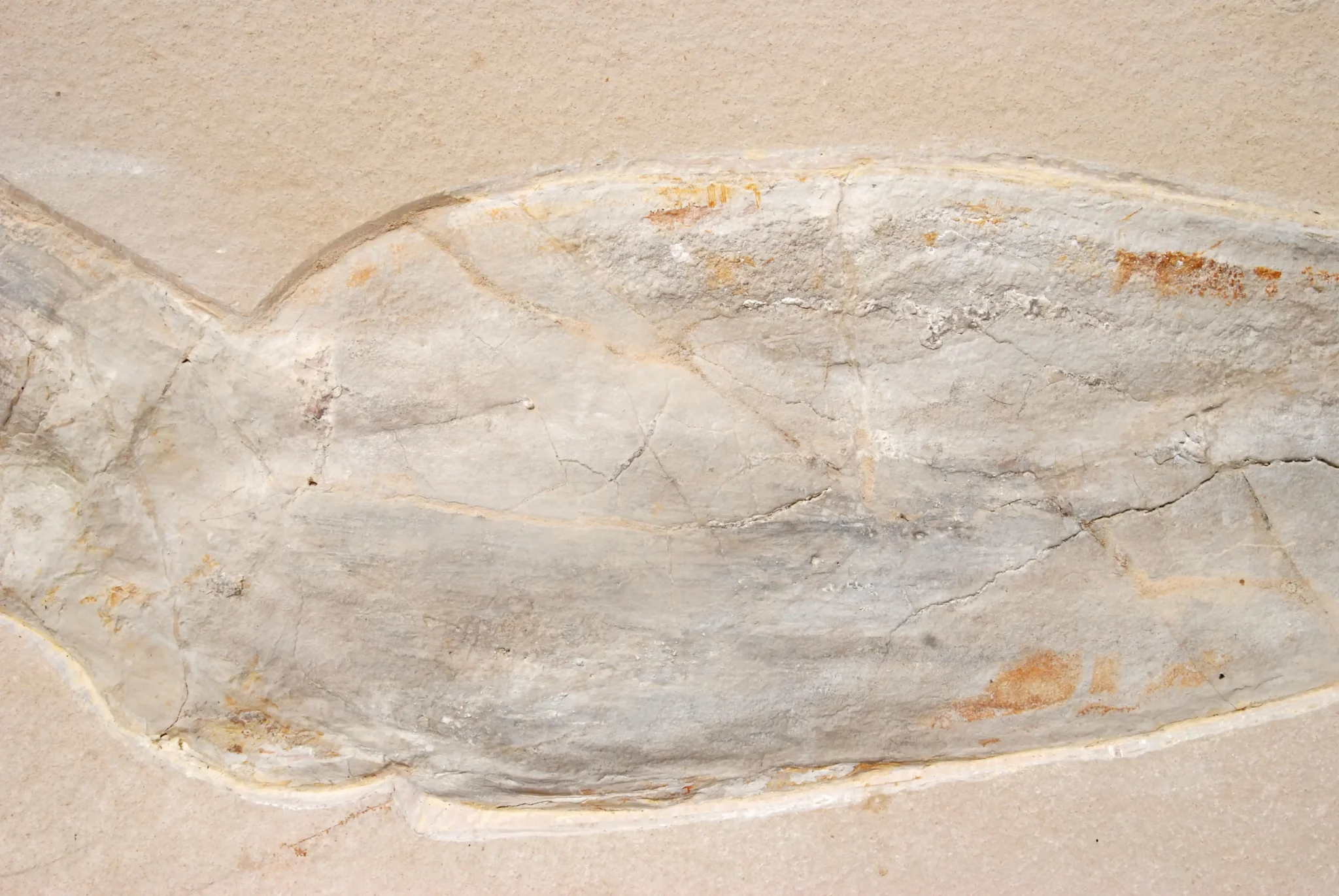
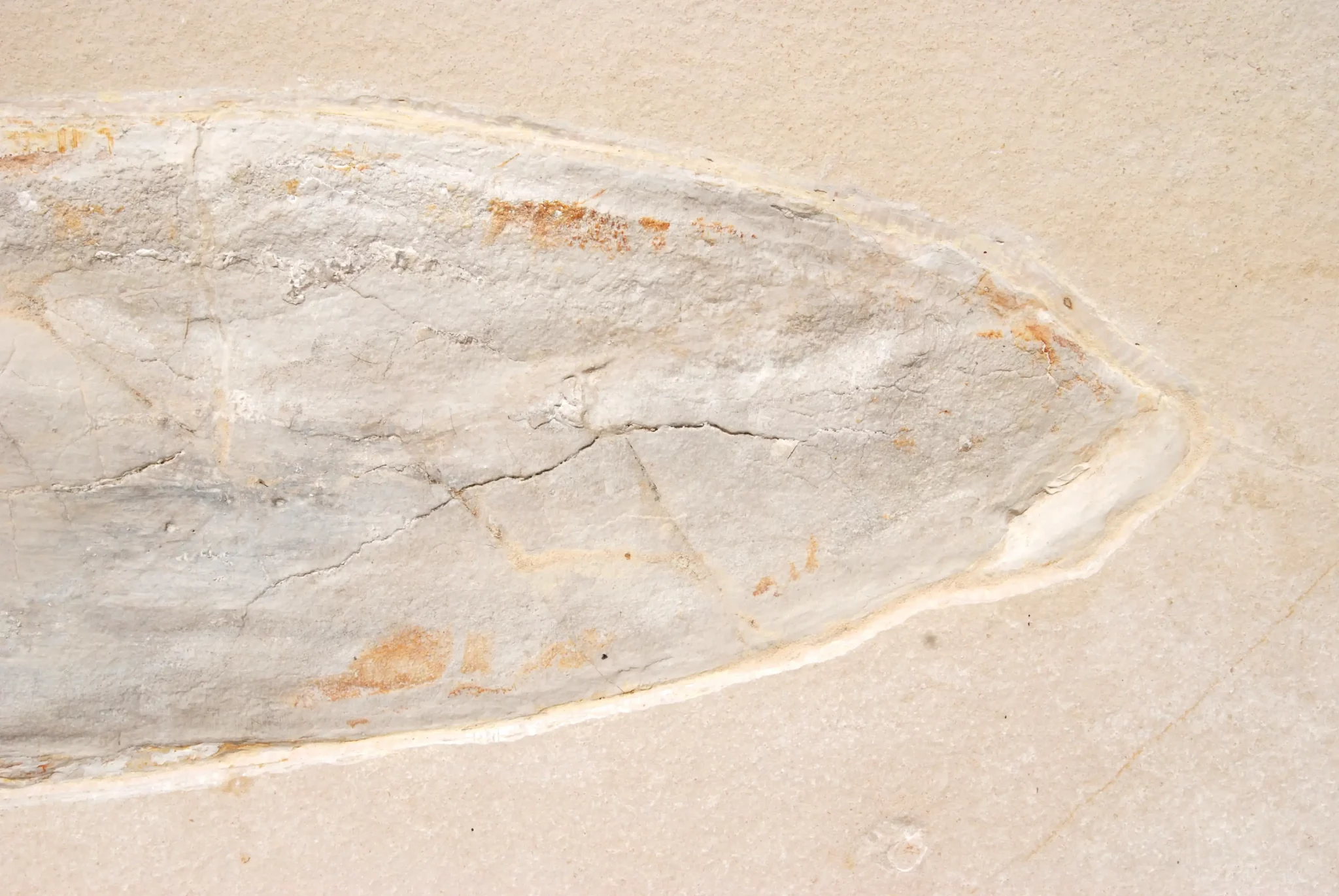
- The gladius: The most striking feature of this find is the massive, shield-shaped gladius (Schulp). This inner support rod gave the strong mantle the necessary stability for an active, predatory lifestyle in open water.
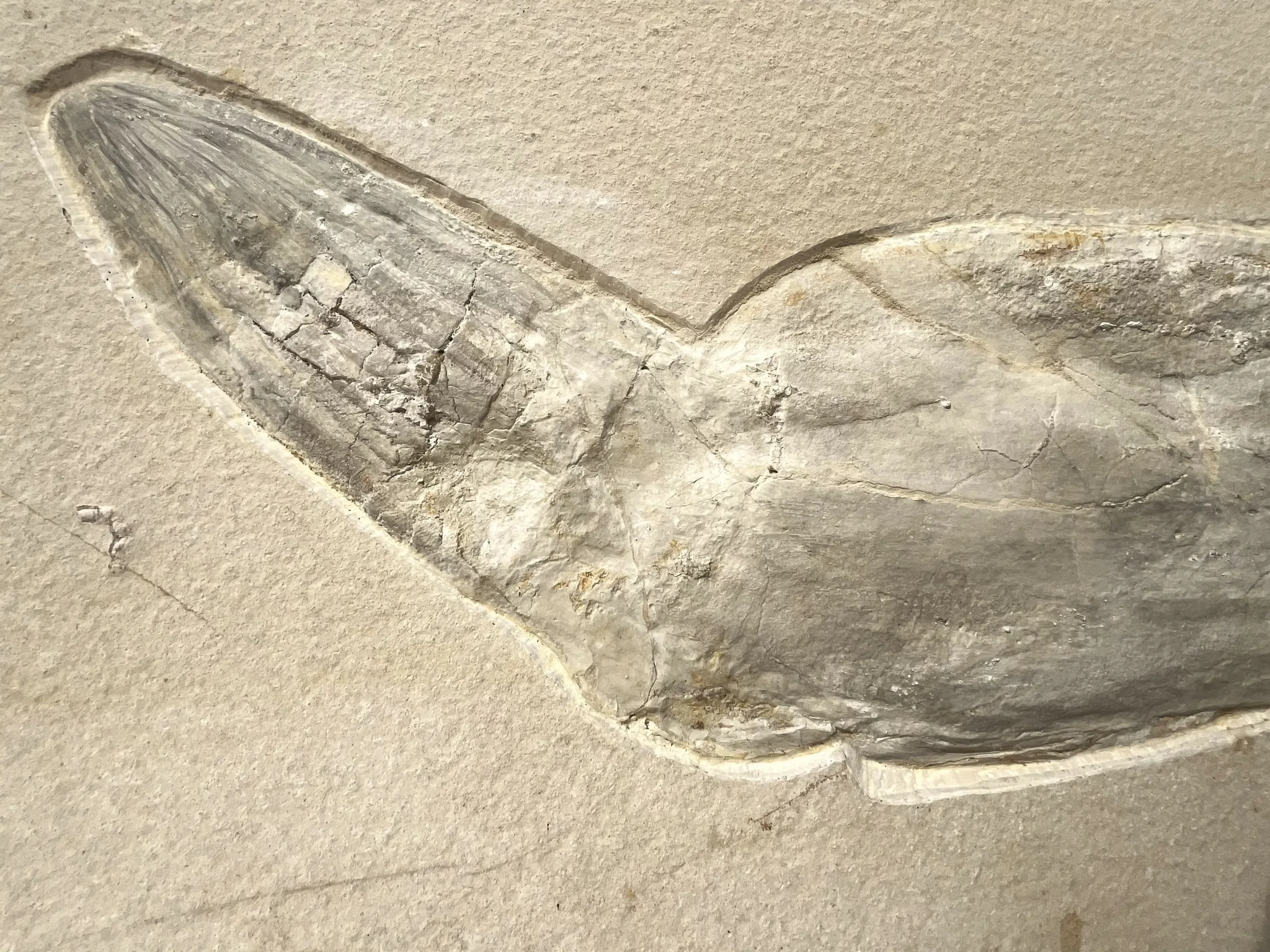
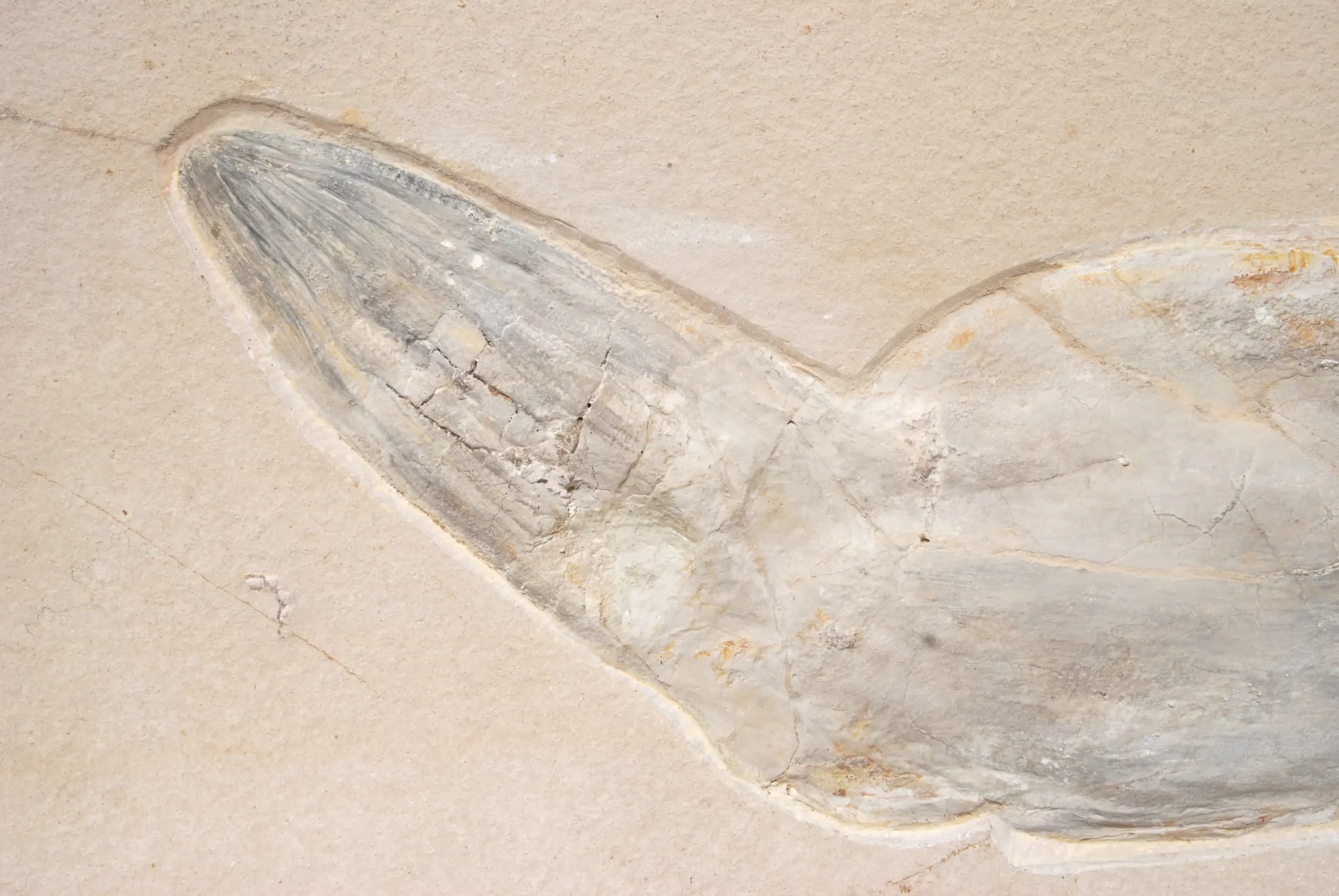
- Anatomy and head area: In this unusual piece, much more than just the middle section is preserved. At the front end (left in the picture), the head area with the beginnings of the arm crest can be seen. These anatomical details show the animal to be a highly developed, visually oriented hunter.
- Dimensions: With an impressive total length of 90 cm, well above average, this specimen was a top predator among the invertebrates of the Jurassic archipelago.
The fine details – what collectors look out for:
- Excellent soft tissue preservation: The present fossil impresses with the preservation of the muscular mantle outline, which extends far beyond the central shoulder. Particularly noteworthy is the presence of the anterior structures (head and arm attachments), which are usually missing in common finds.
- Structure of the Schulp: The gladius shows a fine preservation of the surface structure.
- Contrast and aesthetics: the imposing size of the fossil makes it a museum exhibit.
A highlight for every Solnhofen collection
This specimen of Leptoteuthis gigas is an impressive collector’s item. It represents the dominance of squid-like hunters in an ecosystem of the highest biological complexity. A fossil like this is a window into a time when Bavaria was still a subtropical island paradise.