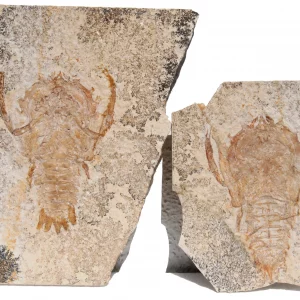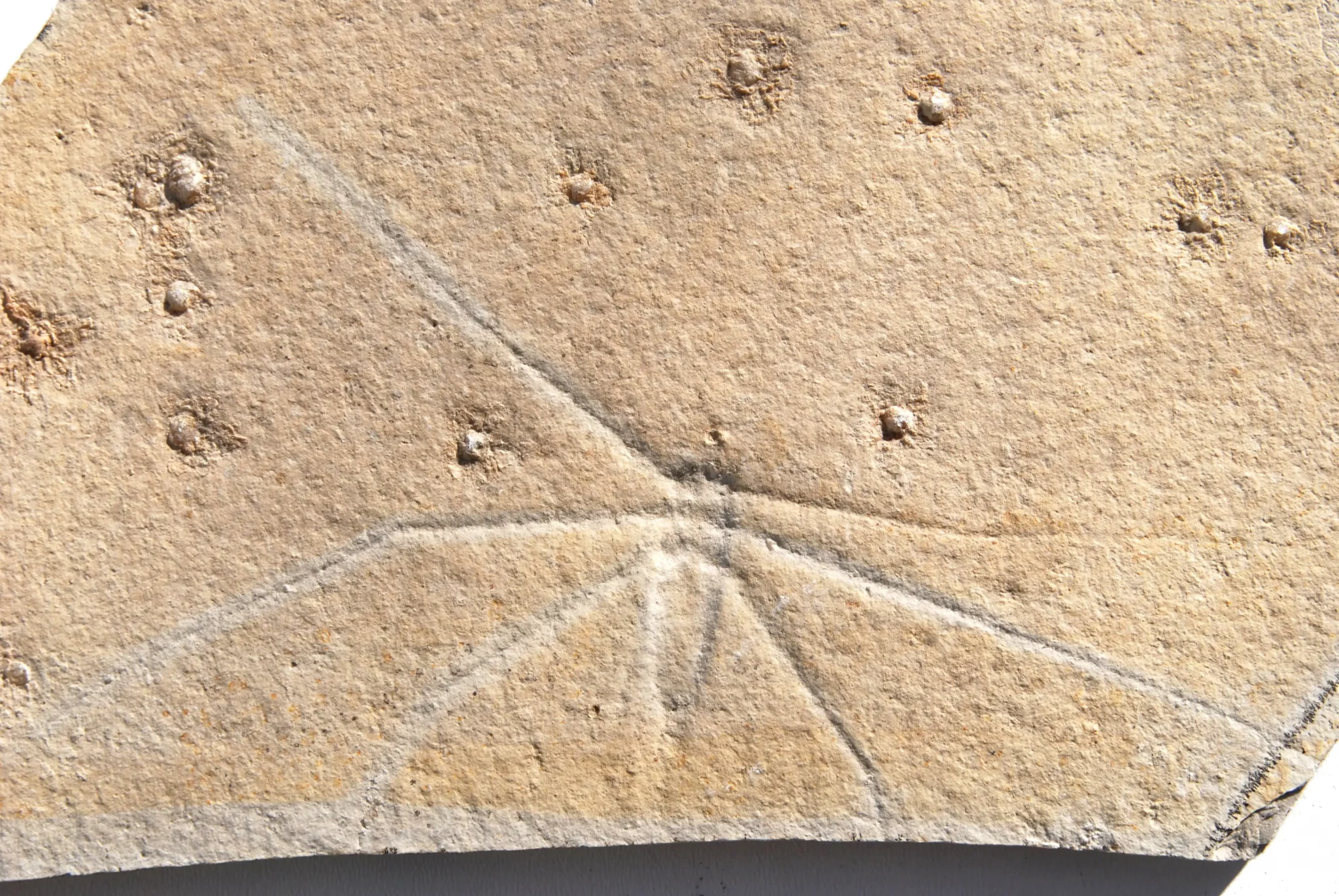
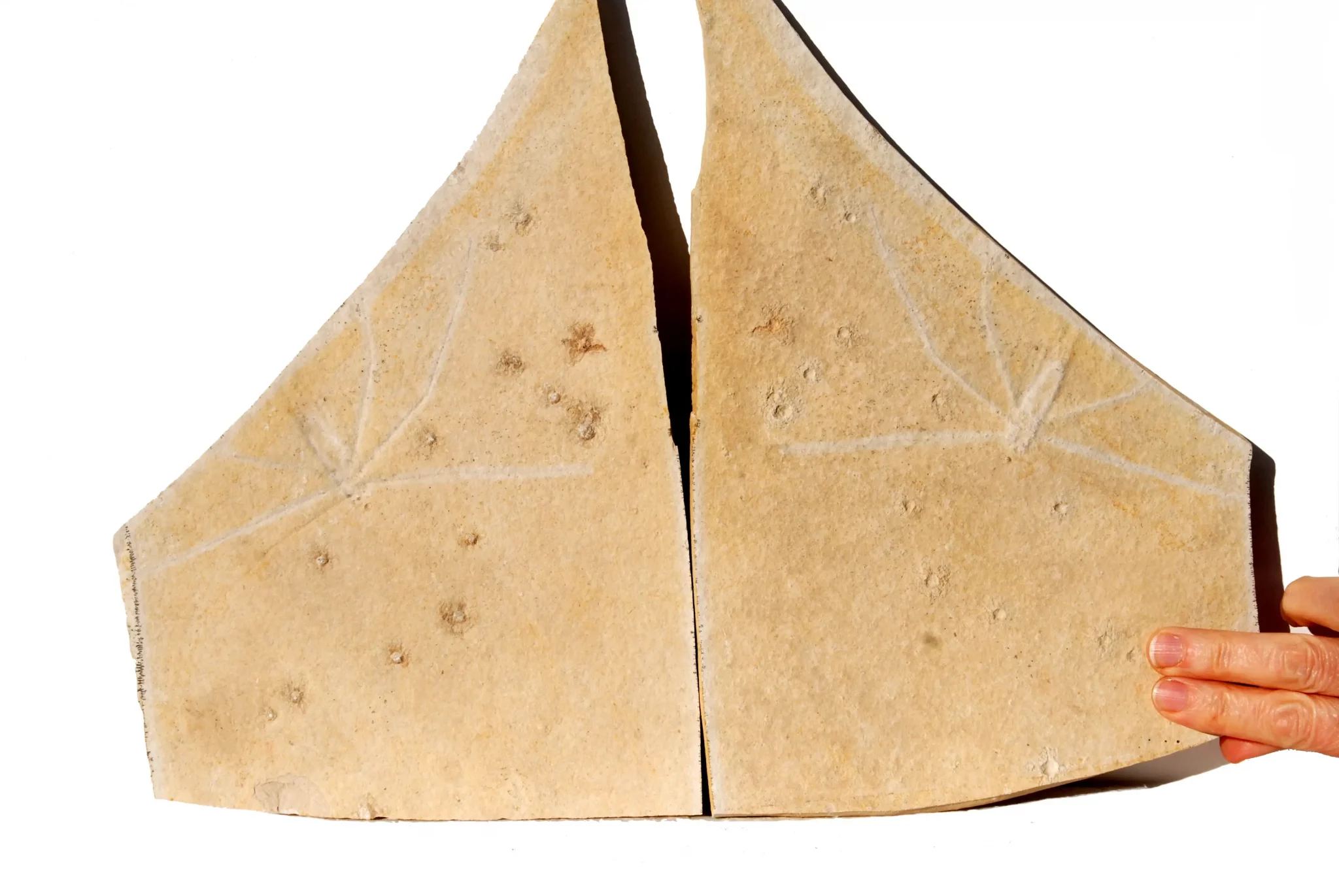
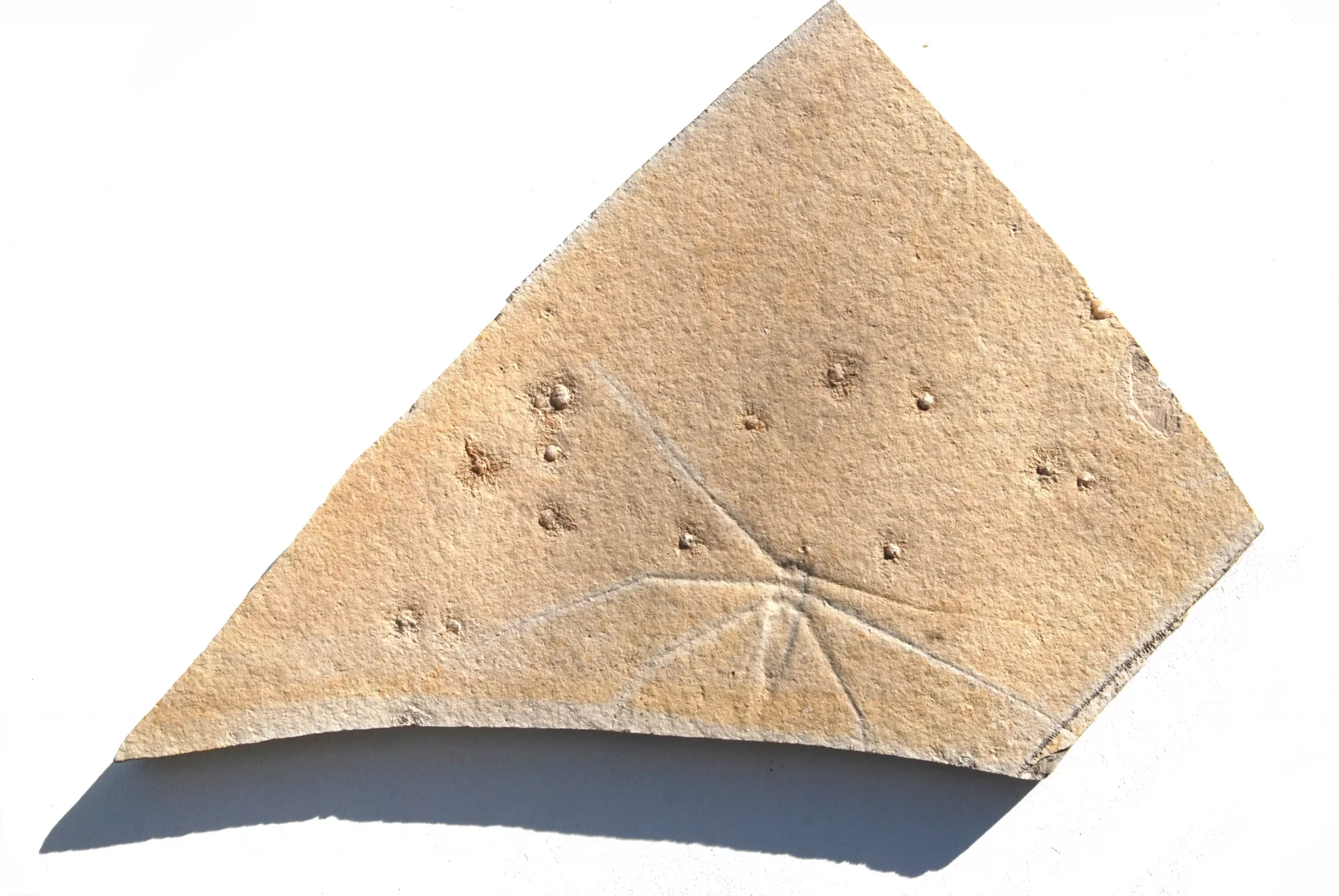
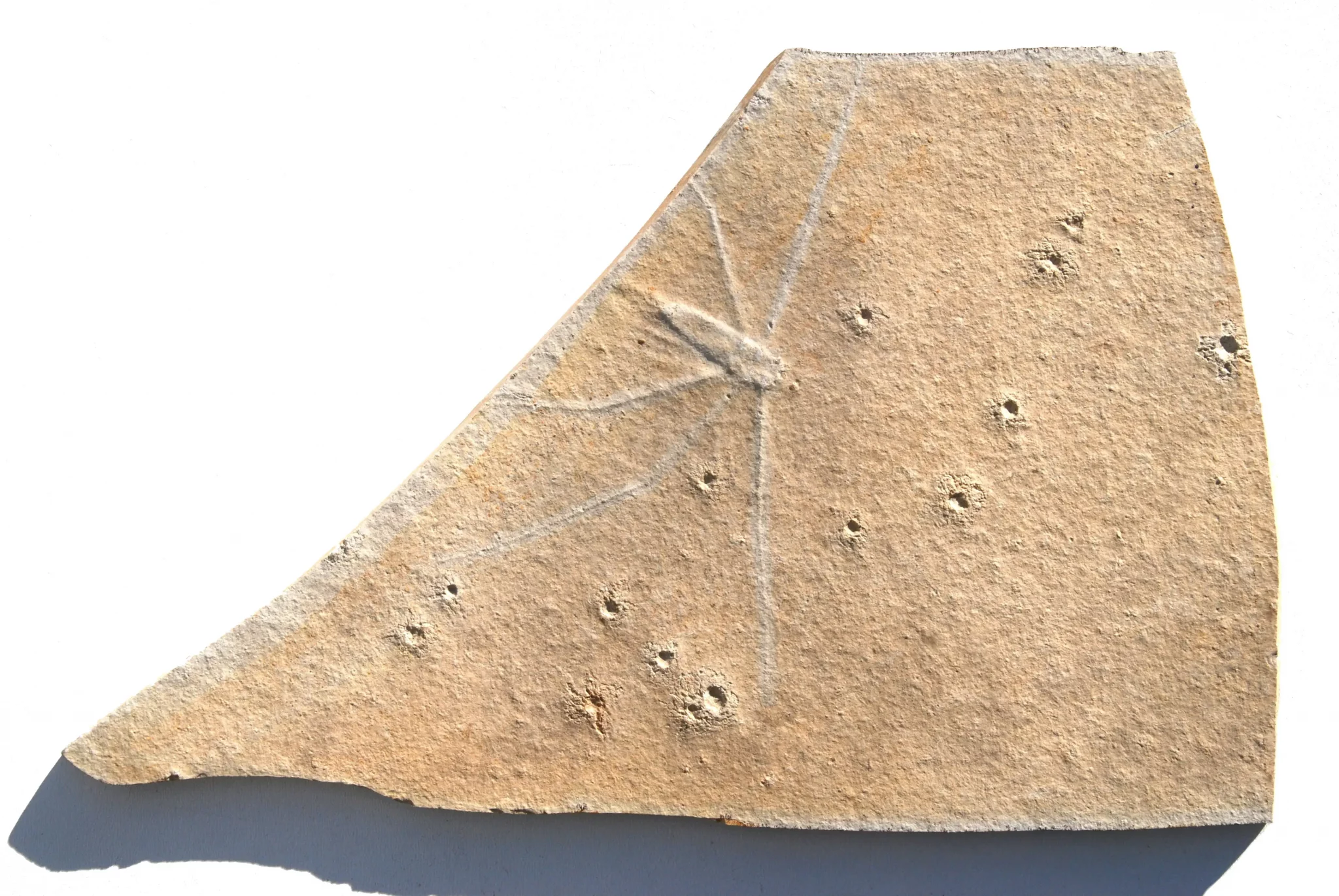
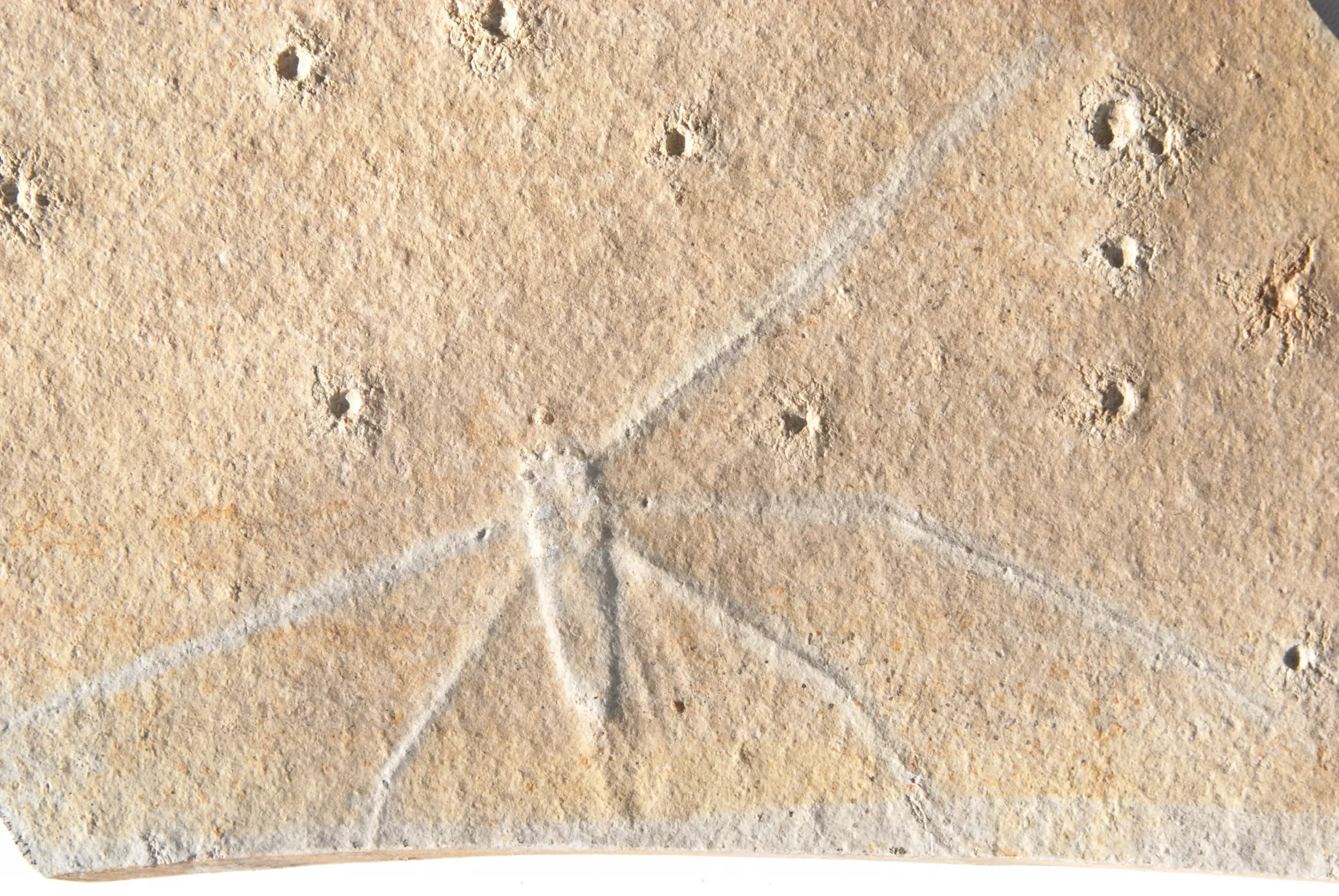
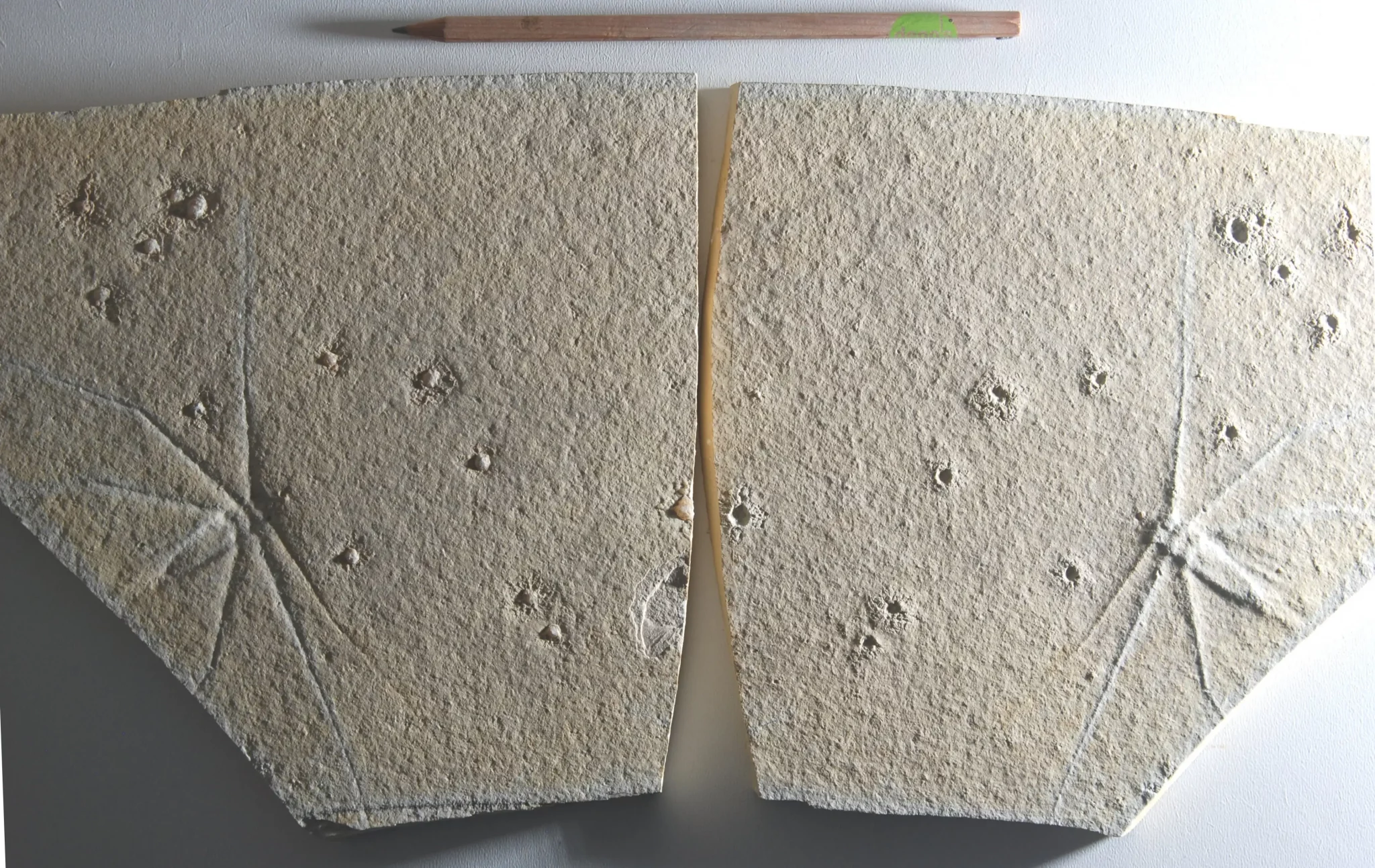
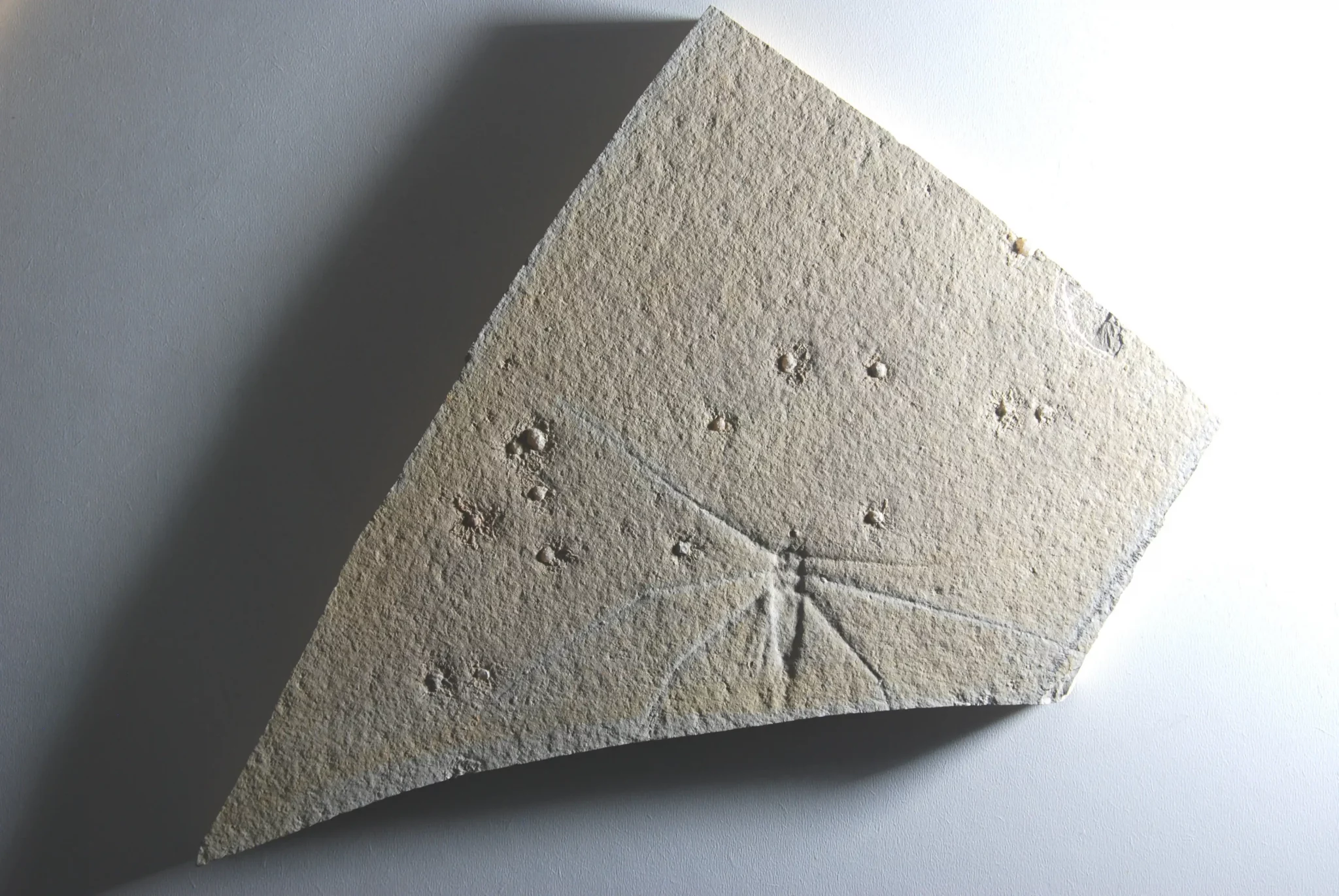
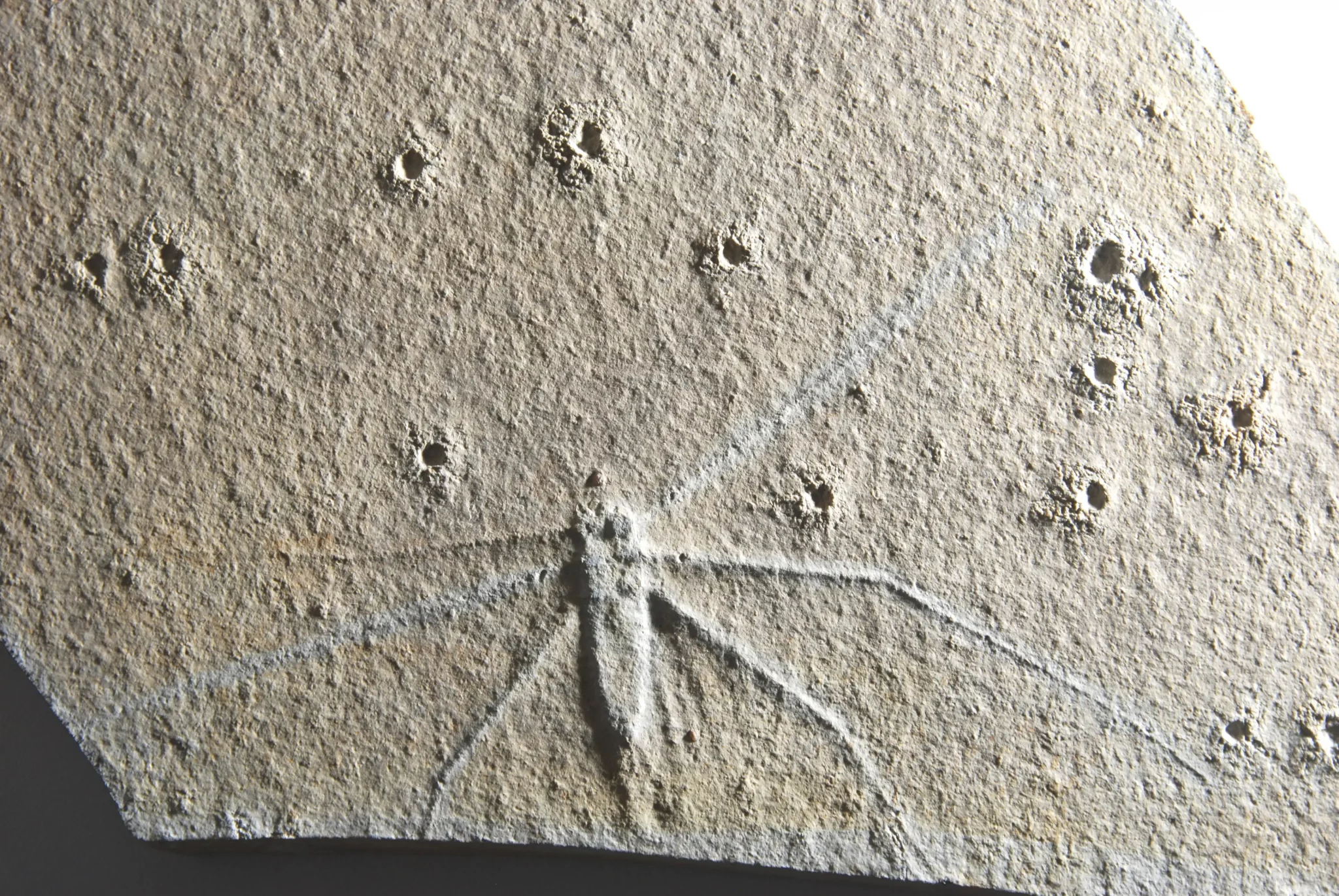
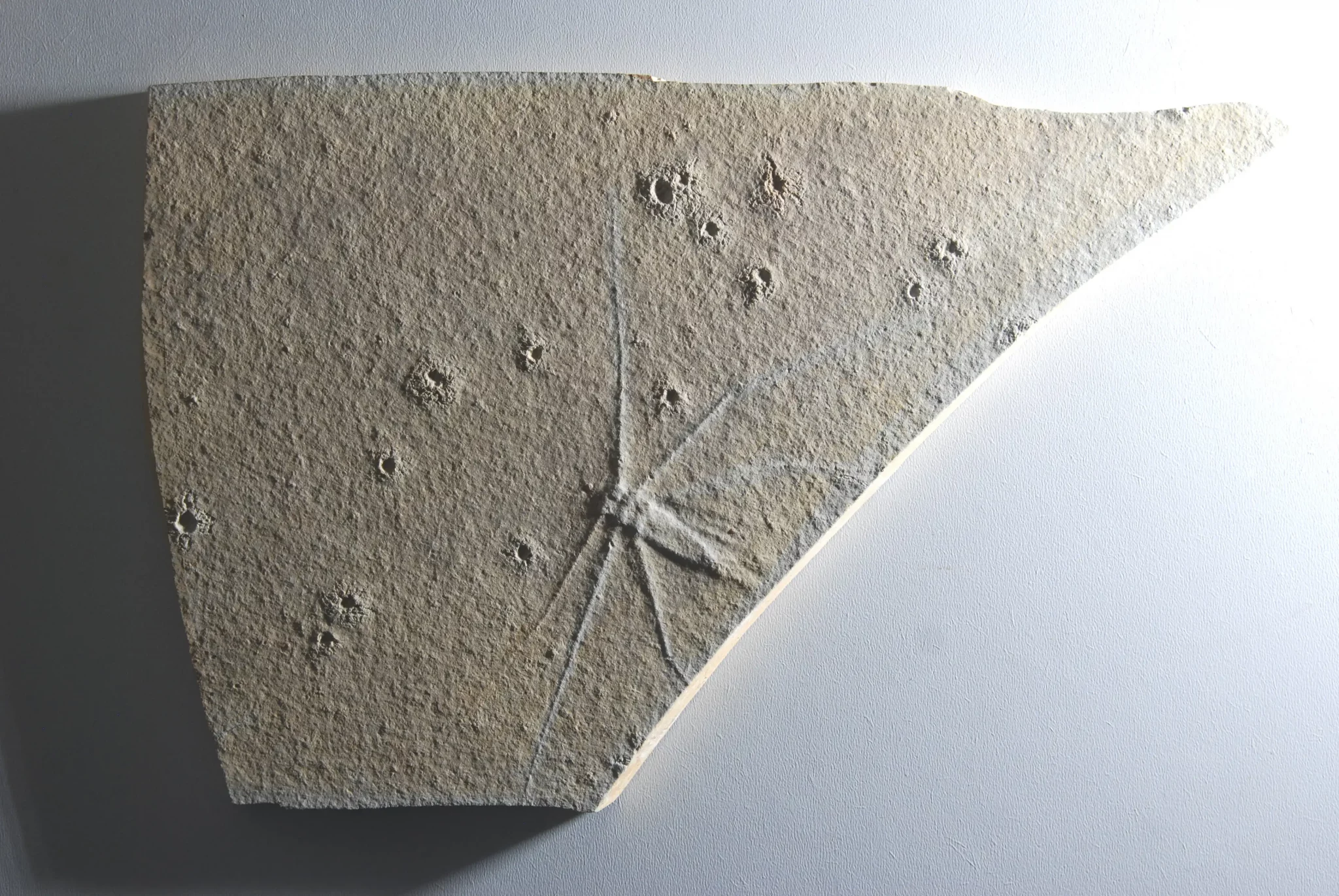
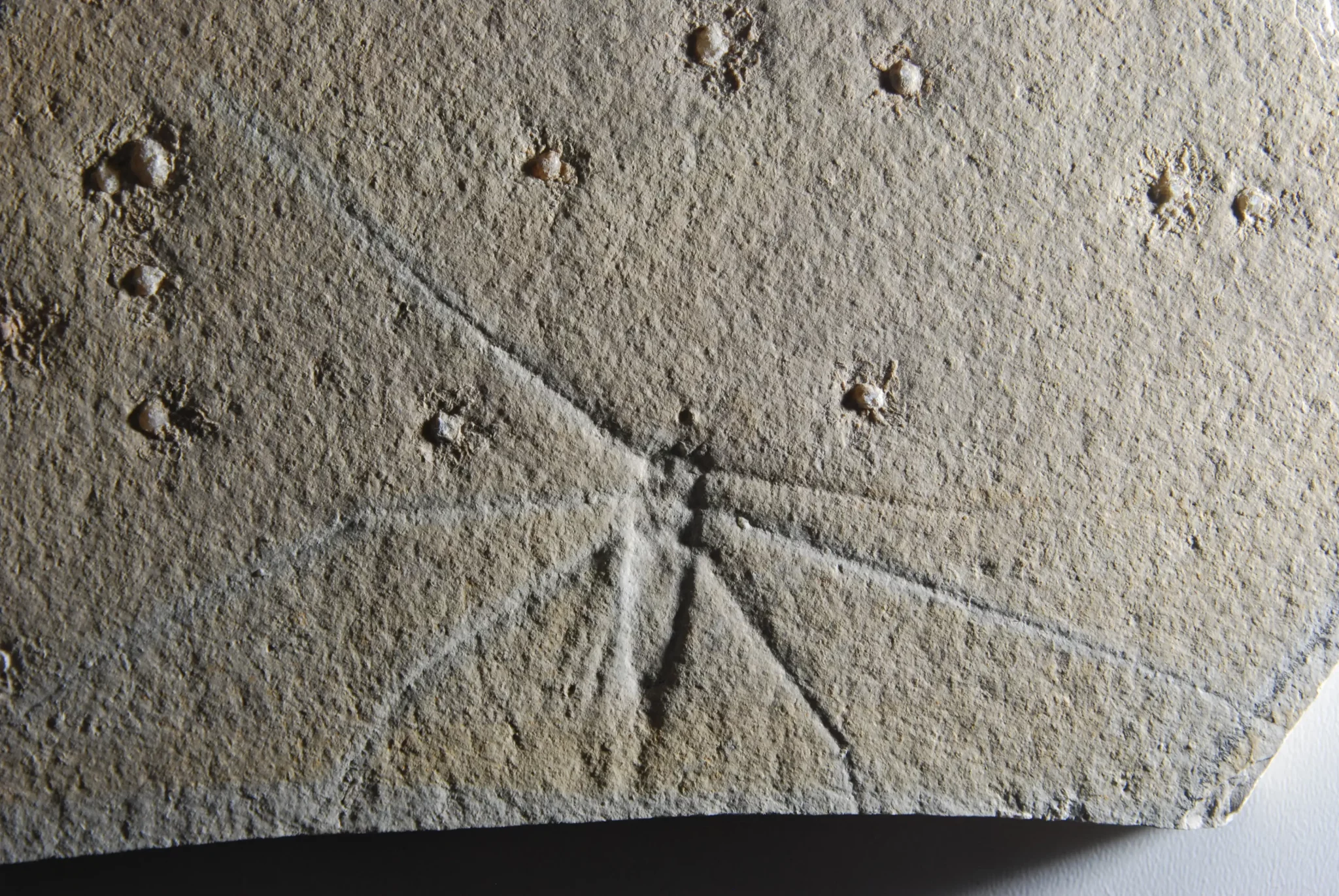
Solnhofen Chresmoda obscura XXL
Place of discovery: Langenaltheim, Langenaltheimer Haardt; Solnhofener Revier/ Germany
Lithostratigraphy: Lower Tithonian, White Jurassic Group, Altmühltal Formation, Upper Solnhofen Subformation
Biostratigraphy: Hybonotum zone, rueppelianus subzone, rueppelianus horizon
Age: approx. 150.8 – 152 million years +/- 2 million years
Size plate/counter plate: 30 x 19 cm
Size of fossil: 17 cm (largest size).
Magnificent pair of “Water striders” – not colored.
Authentic fossil in original matrix, not reburied, unbroken slab. With proof of provenance.
Offered on behalf of the customer. Please do not make a payment in the store. Sale in the name and for the account of the owner. Contact: info@fossiland.com
Chresmoda obscura – The graceful water strider of the Jurassic Sea
Chresmoda obscura (often still known under the outdated synonym Propygolampis ) is one of the most iconic and enigmatic insects of the Solnhofen limestones. With its impressive leg span and specialized way of life, this fossil represents the fascinating world of the Jurassic water surface.
Scientific classification and morphology
- The “water strider” of prehistoric times: Chresmoda had extremely elongated legs, which enabled it to use the surface tension of the water in a similar way to today’s water striders. It was a highly specialized inhabitant of the edges of lagoons, presumably feeding on small organisms floating in the water.
- Enigmatic relationship: The systematic classification of Chresmoda was long disputed – it was sometimes interpreted as a bug, sometimes as a relative of the ghost insects. Today it forms its own extinct group (Chresmodidae), which is known for its unique anatomy and the “ultra-articulated” tarsi (foot limbs).
- Anatomical elegance: The filigree structure of the long walking legs in combination with the slender body makes Chresmoda one of the most aesthetically pleasing insect fossils ever. It is a prime example of the perfection of evolution in an ecological niche.
The fine details – what collectors look out for:
- The leg span: The decisive quality feature is the complete and symmetrical preservation of the six legs. In top specimens, the legs are spread wide apart (“show position”), which really brings out the impressive size of the insect.
- The preservation of the wings: While nymphs were wingless, adult females had wings. A fossil that shows not only the legs but also the delicate, veined wings (often lying close to the body) is a rare treasure and considerably increases the collector’s value.
- The fine segmentation: Pay attention to the tarsi (phalanges) at the ends of the legs. If these many-limbed, almost hair-thin structures are clearly recognizable, this is evidence of exceptional preservation quality and masterful preparation.
A highlight for every Solnhofen collection
Chresmoda obscura is the must-have exhibit for collectors who are enthusiastic about the insect world of the Jurassic period. Its unusual shape and aesthetics are fascinating.