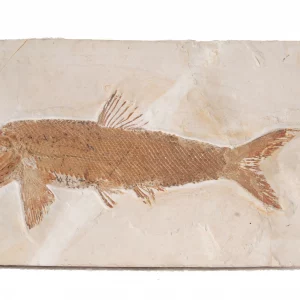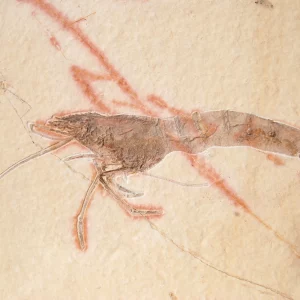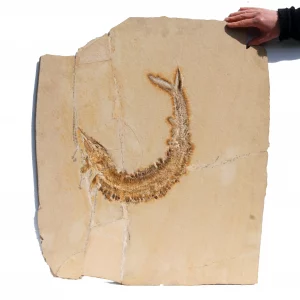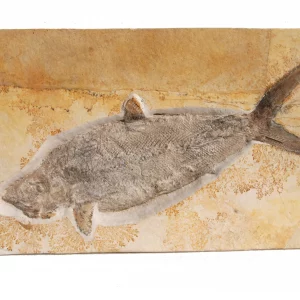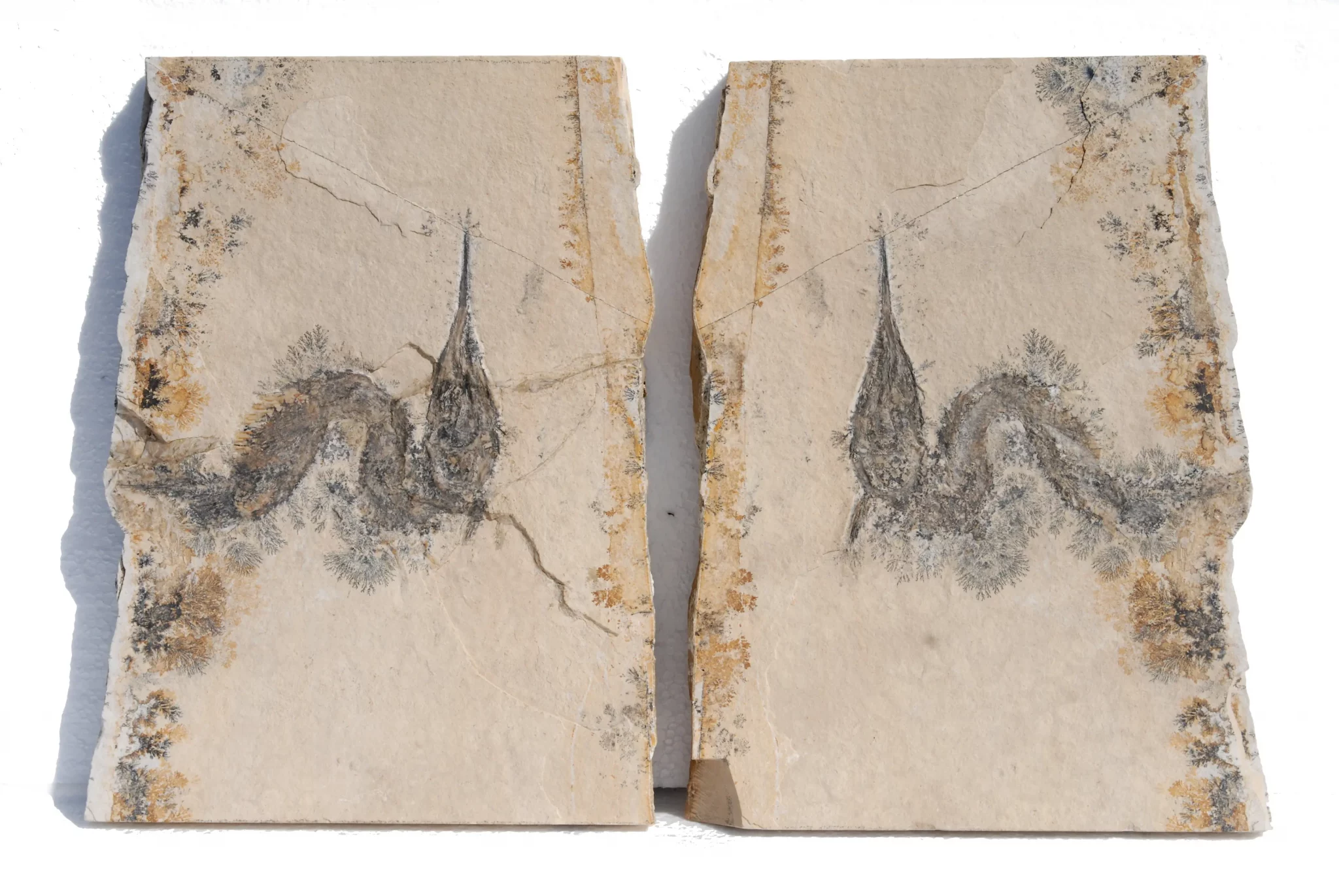
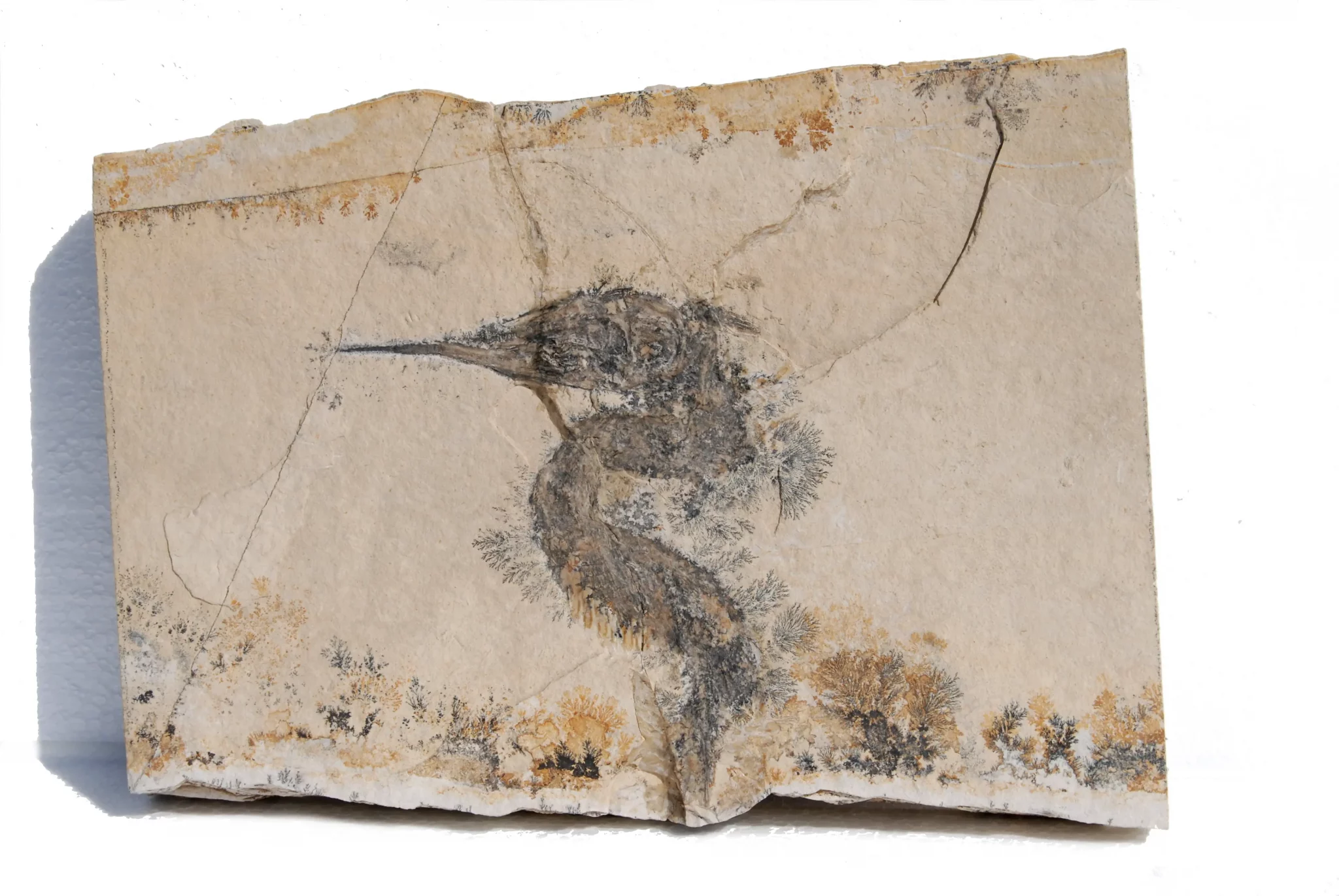
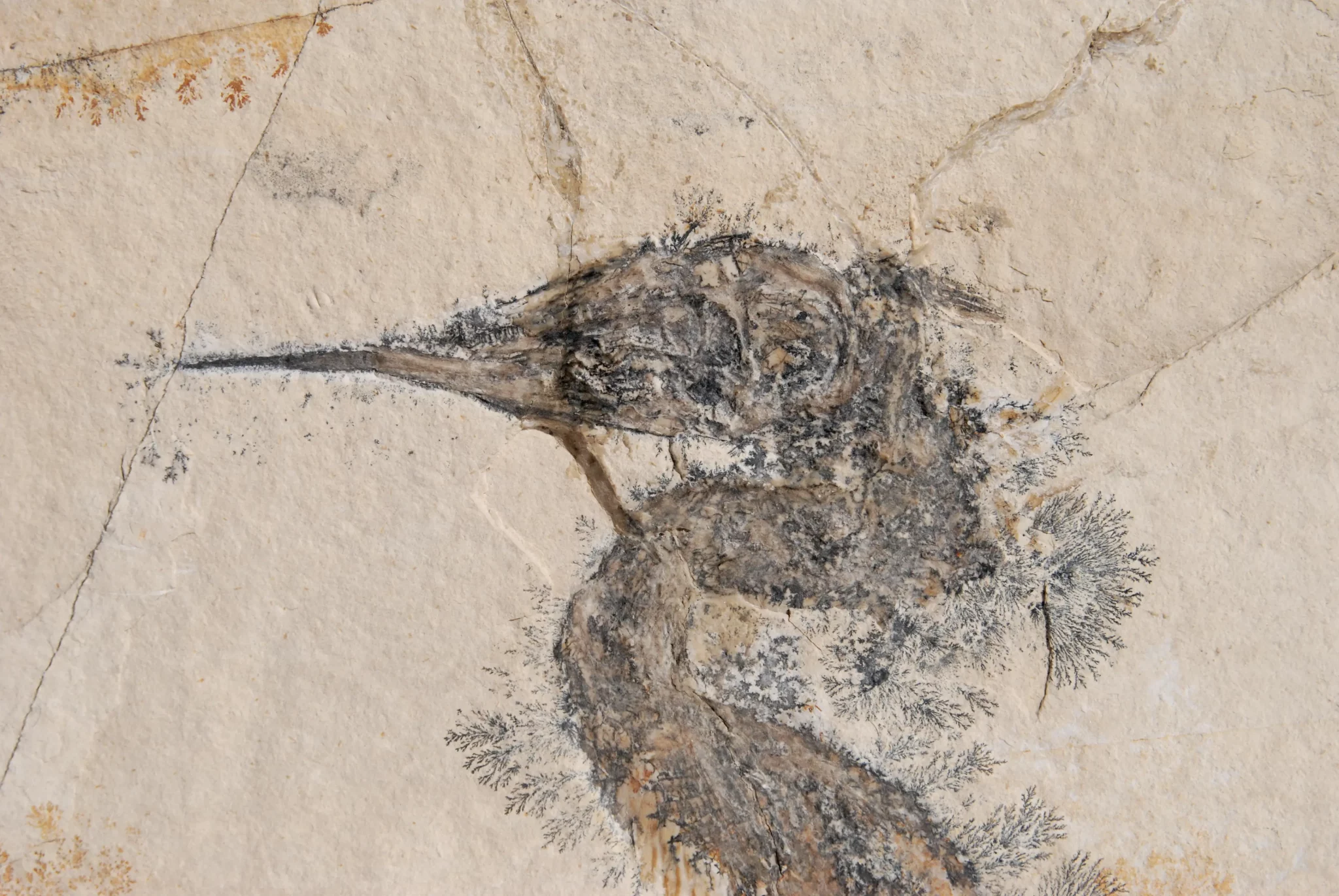
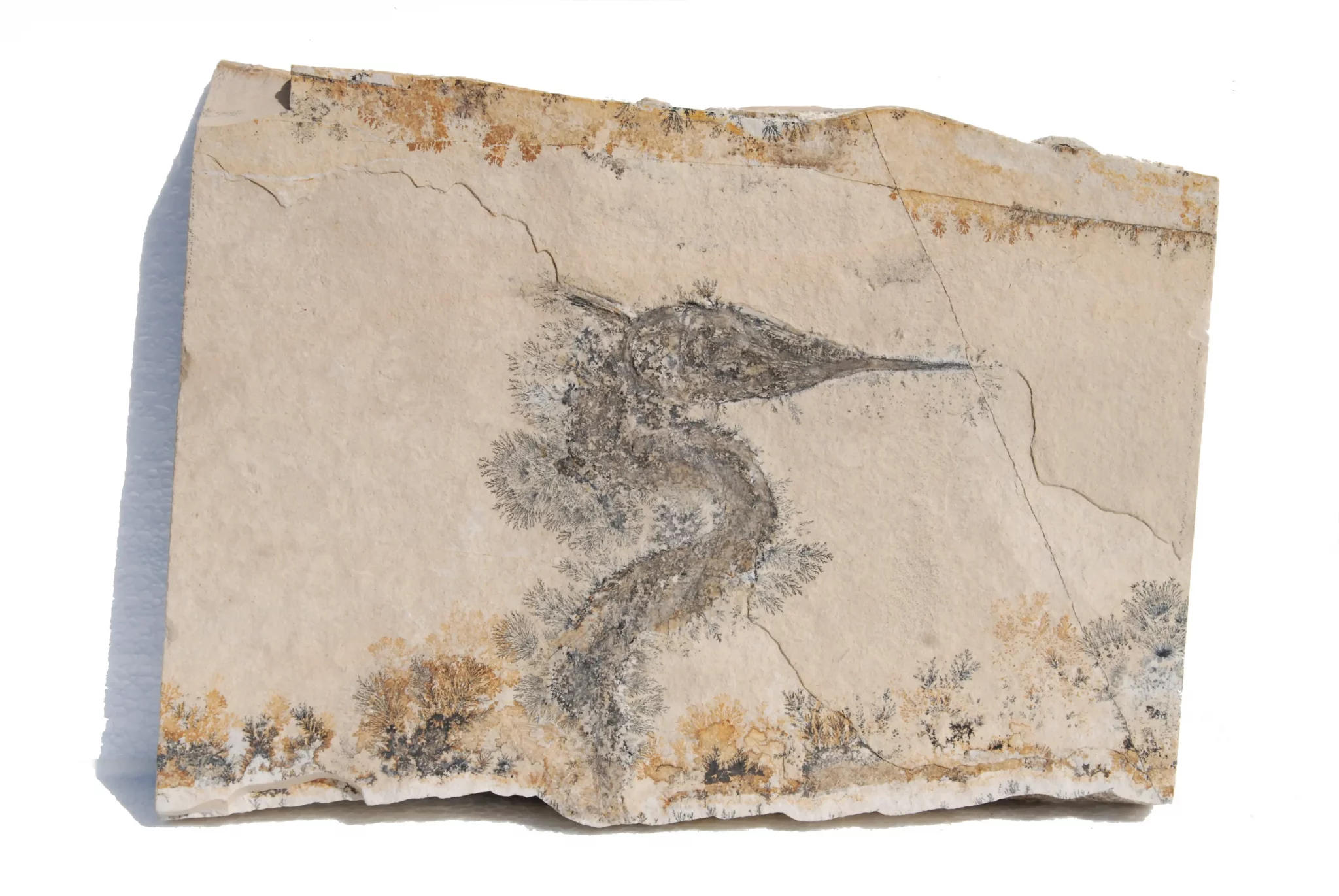
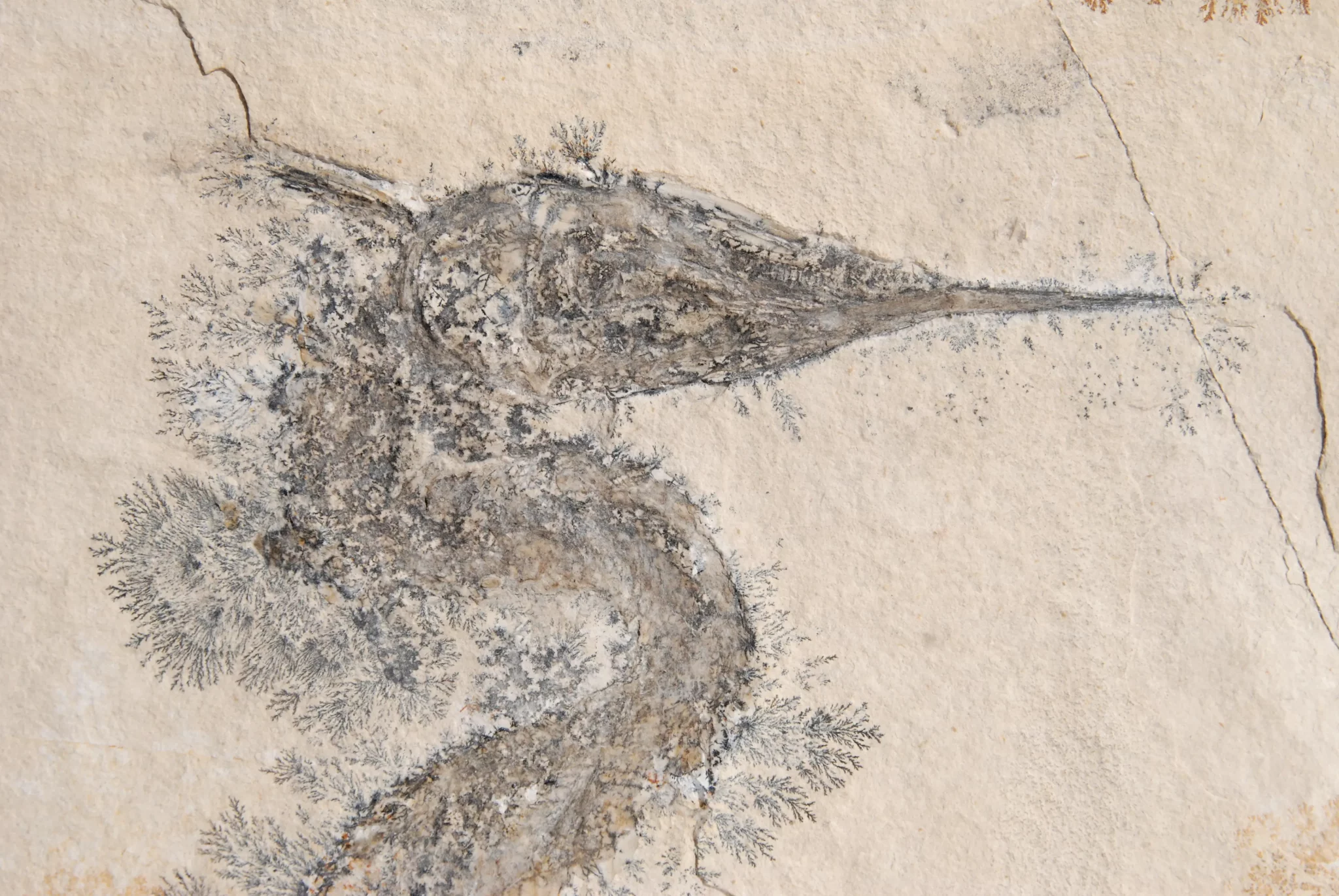
Solnhofen Belonostomus sp.
Place of discovery: Langenaltheim, Langenaltheimer Haardt; Solnhofener Revier/ Germany
Lithostratigraphy: Lower Tithonian, White Jurassic Group, Altmühltal Formation, Upper Solnhofen Subformation
Biostratigraphy: Hybonotum zone, rueppelianus subzone, rueppelianus horizon
Age: approx. 150.8 – 152 million years +/- 2 million years
Size of plate and counter plate: 28 x 20 cm
Size of fossil: 14 cm (largest size)
Beautiful pair of “beak fish” – aesthetic plate and counter plate.
Centered on a stable support plate. With proof of provenance
Offered on behalf of the customer. Please do not make a payment in the store. Sale in the name and for the account of the owner.
Belonostomus sp. – The spear hunter of the Jurassic Sea
This fossil represents one of the most specialized predatory fish of the Solnhofen Archipelago from the Upper Jurassic (approx. 150 million years ago). As a distant relative of today’s garfish, Belonostomus impresses with its extremely elongated, needle-like silhouette and its highly efficient hunting strategy at the water surface.
Scientific classification and morphology
- Evolutionary elegance: Belonostomus belongs to the Aspidorhynchiformes group. Its anatomy is a prime example of extreme specialization: an armour-like scaly shell combined with a fast-as-an-arrow physique that was perfectly designed to use the refraction of light on the water surface for surprise attacks.
- The “sniper instinct” in the stone: The most striking feature is the extremely elongated rostrum (snout), in which the lower jaw often protrudes beyond the upper jaw. In the fossil record, Belonostomus is occasionally found in spectacular “feeding scenes”, which underlines its role as a highly specialized hunter of smaller fish and crustaceans.
- Aesthetics of the line: the graphic effect of a Belonostomus is incomparable. The long, narrow shape often runs like a dark line through the light-colored Solnhofen limestone – a visual highlight that combines modernity and prehistory in a unique way.
The fine details – what collectors look out for:
- The needle-tipped rostrum: The decisive feature is the integrity of the snout. In top specimens, the fragile, bony “sword” is preserved right up to the very tip. Fractures or missing parts in the jaw area considerably reduce the value of this “spearfish”.
- The distinctive flank scales: Pay attention to the center of the body! Belonostomus has characteristic, high and narrow scale plates on its flanks. If these rows of scales are articulated like seamless armor and show their typical molten sheen, it is a museum-quality specimen.
- The symmetrical forked tail: Despite its long body, Belonostomus has a strong, deeply forked caudal fin. The preservation of the fine fin rays at the end of the body is an important quality feature, as it forms the end of the elegant lines.
A highlight for every Solnhofen collection
Belonostomus is the ideal exhibit for collectors who appreciate the bizarre and highly specialized life forms of the Jurassic period. It represents the technical perfection of evolution in an ecosystem that was characterized by extreme competition. A fossil of this species is an excellent eye-catcher that immediately attracts attention in any display case thanks to its unusual shape.