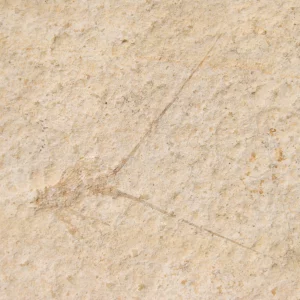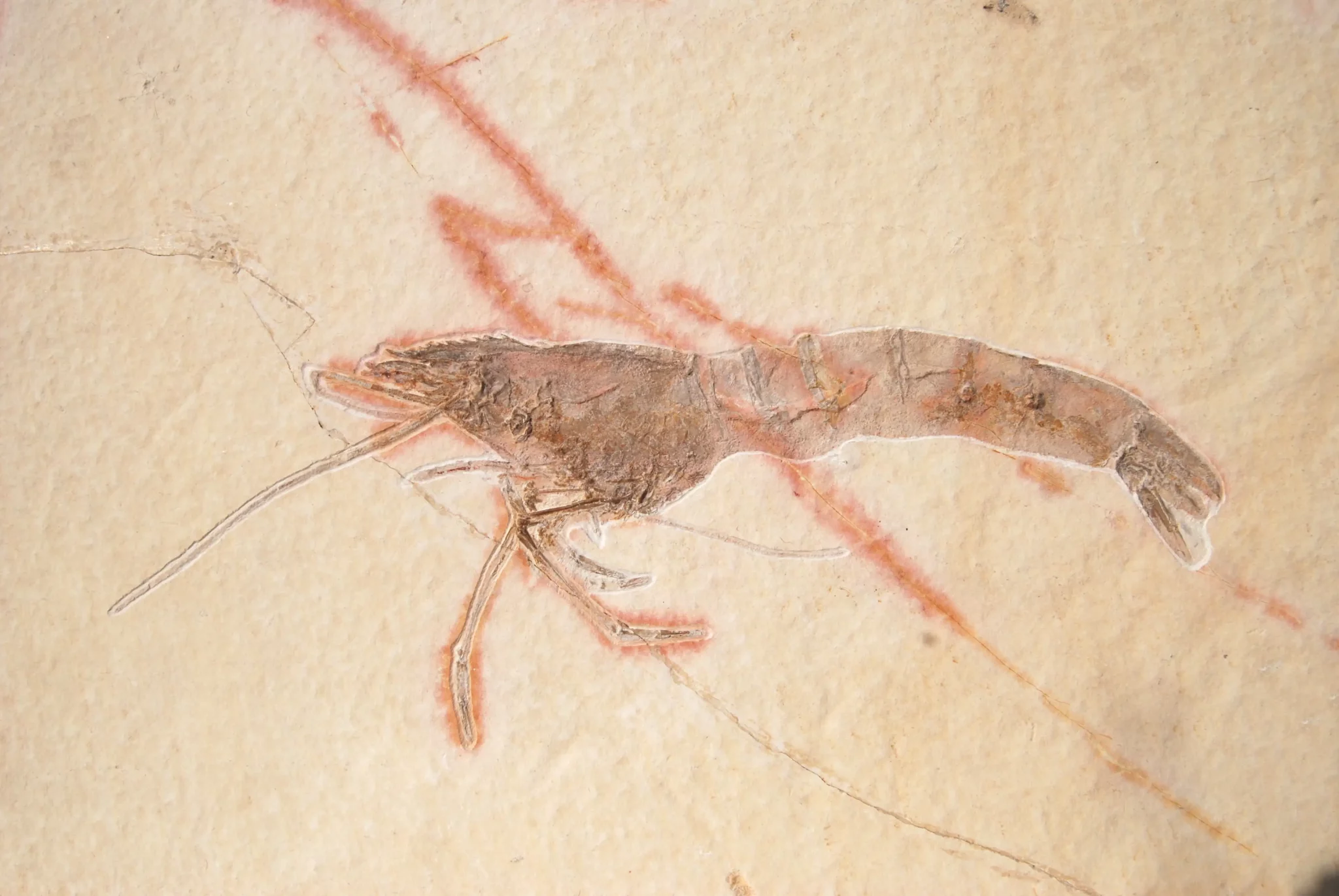
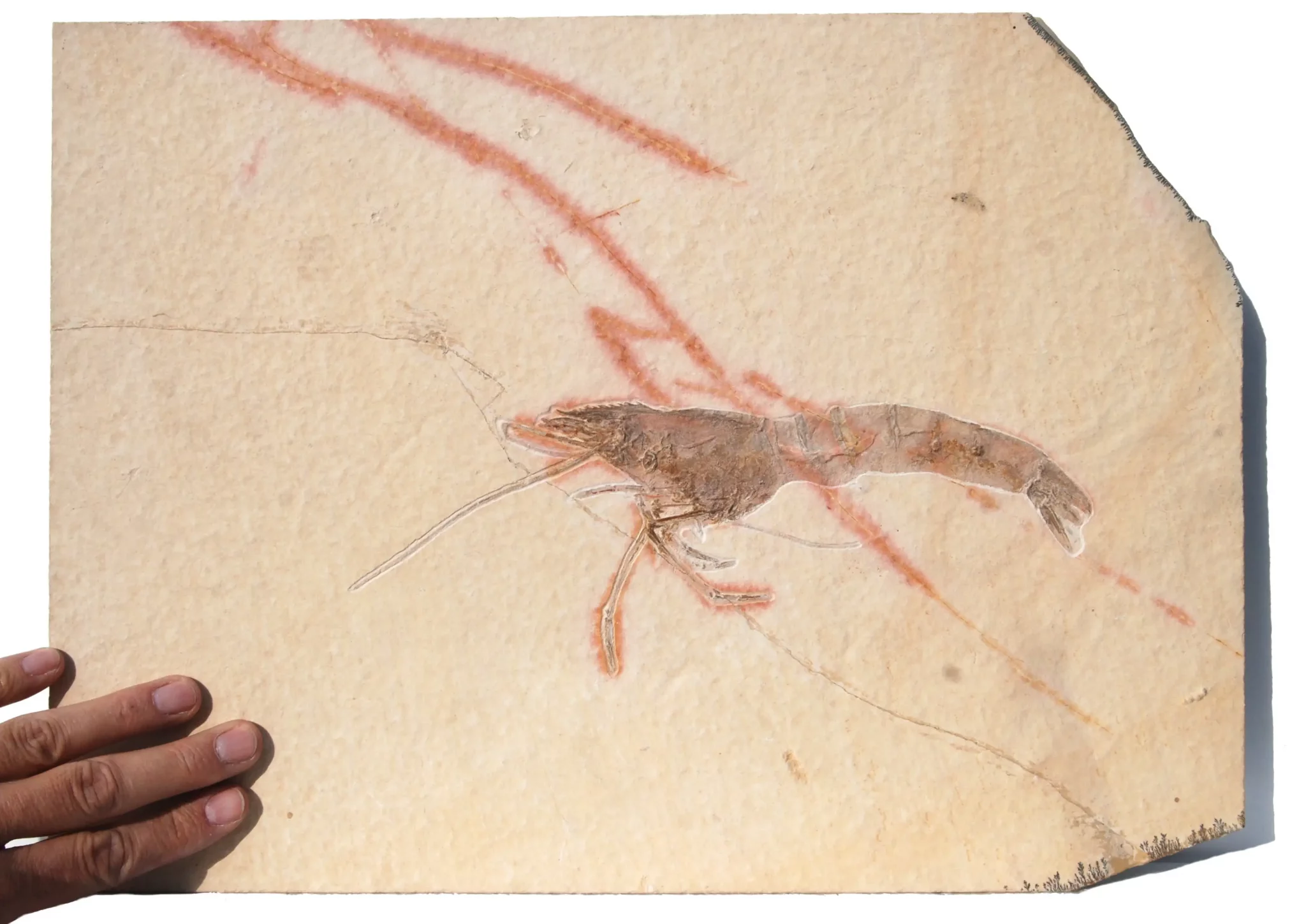
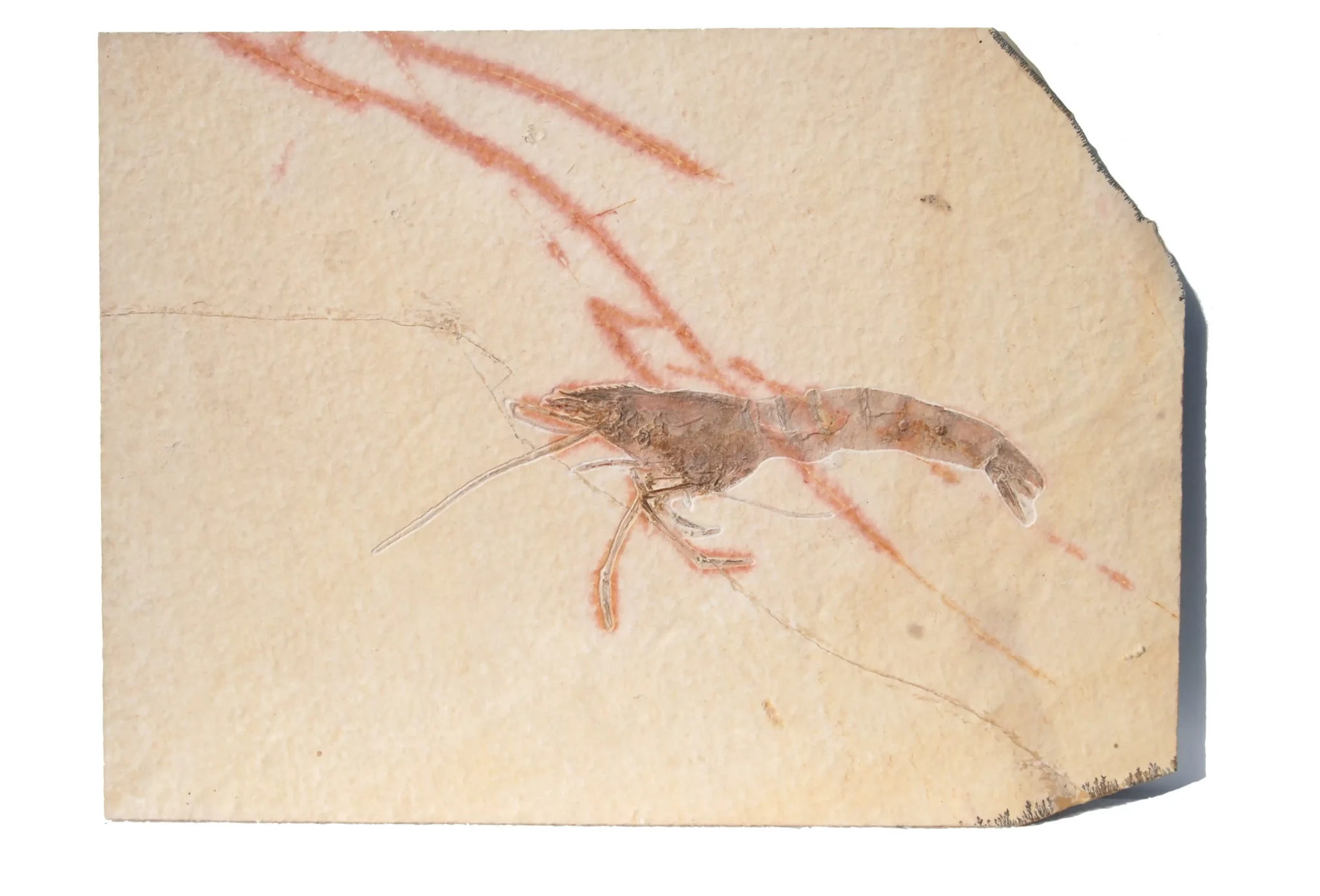
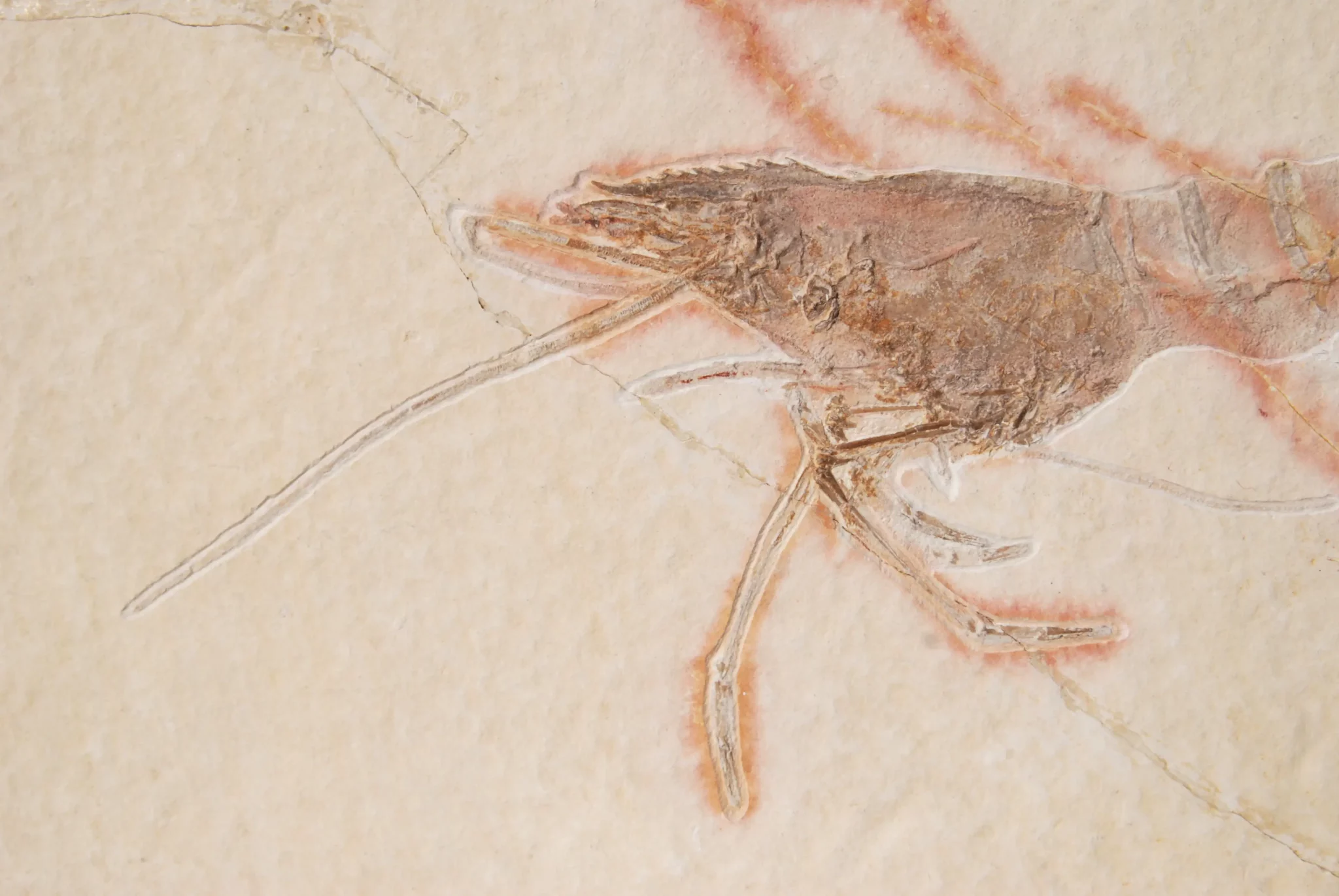
Solnhofen Antrimpos speciosus XL
Place of discovery: Langenaltheim, Langenaltheimer Haardt; Solnhofener Revier/ Germany
Lithostratigraphy: Lower Tithonian, White Jurassic Group, Altmühltal Formation, Upper Solnhofen Subformation
Biostratigraphy: Hybonotum zone, rueppelianus subzone, rueppelianus horizon
Age: approx. 150.8 – 152 million years +/- 2 million years
Plate size: 45 x 33 cm
Size of fossil: 8 cm (largest size)
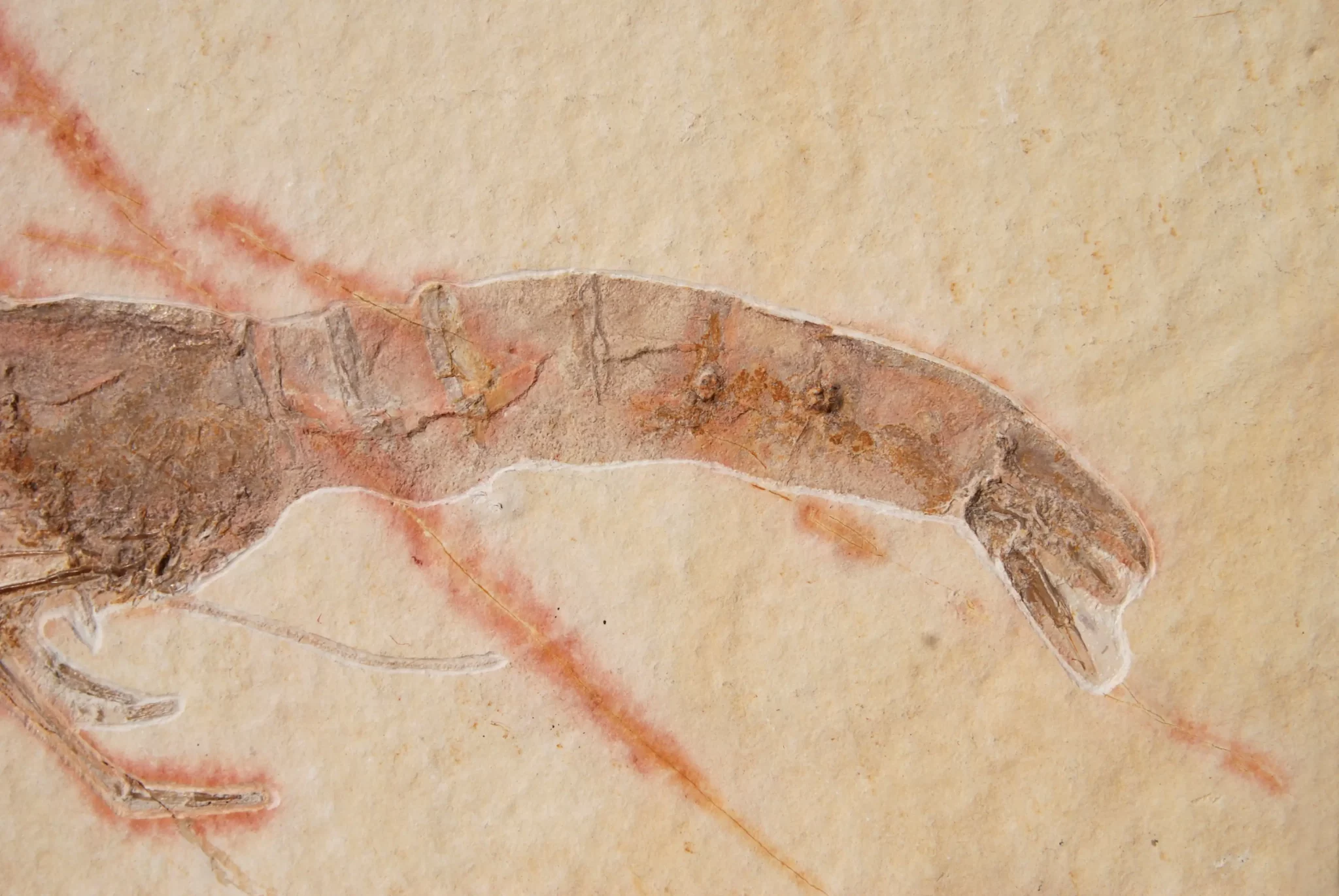
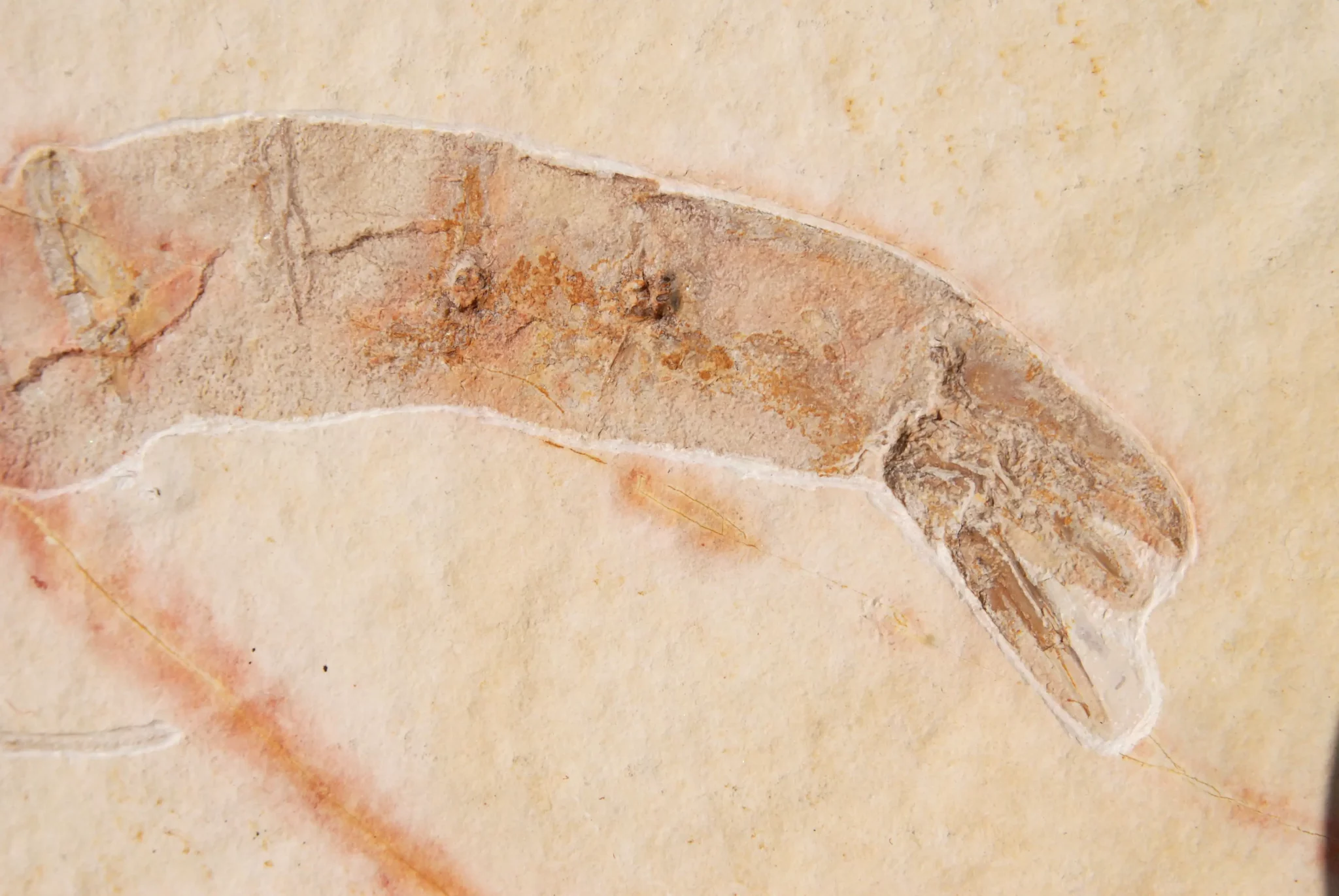
Very well preserved “Ur-Languste” – not colored.
Authentic fossil in original matrix, not reburied. With proof of provenance.
Offered on behalf of the customer. Please do not make a payment in the store. Sale in the name and for the account of the owner. Contact: info@fossiland.com
Antrimpos speciosus – The majestic giant Jurassic shrimp
Antrimpos speciosus occupies a special position among the crustaceans of the Solnhofen Archipelago. As the largest known genus of prehistoric shrimp from the Upper Jurassic (approx. 150 million years ago), this fossil is an impressive testimony to the diversity of decapod crustaceans (Decapoda). It represents the powerful, swimming fauna of the subtropical lagoons.
Scientific classification and morphology
- Dimensions of prehistoric times: While many fossil shrimps are small and inconspicuous, Antrimpos speciosus often reaches considerable body lengths. Its robust stature clearly distinguishes it from its graceful lobster relatives and marks it out as a successful inhabitant of the open water column (pelagic).
- Perfect hydrodynamics: The body structure of Antrimpos is a masterpiece of nature. Its laterally flattened carapace (head shield) and strong, muscular abdomen enable lightning-fast retreat movements – a survival strategy that shrimps have perfected to this day.
- Evolutionary continuity: As a representative of the Penaeidea (flagellate shrimps), Antrimpos already shows all the characteristics of modern relatives. It is living proof that the “shrimp” design was already complete 150 million years ago.
The fine details – what collectors look out for:
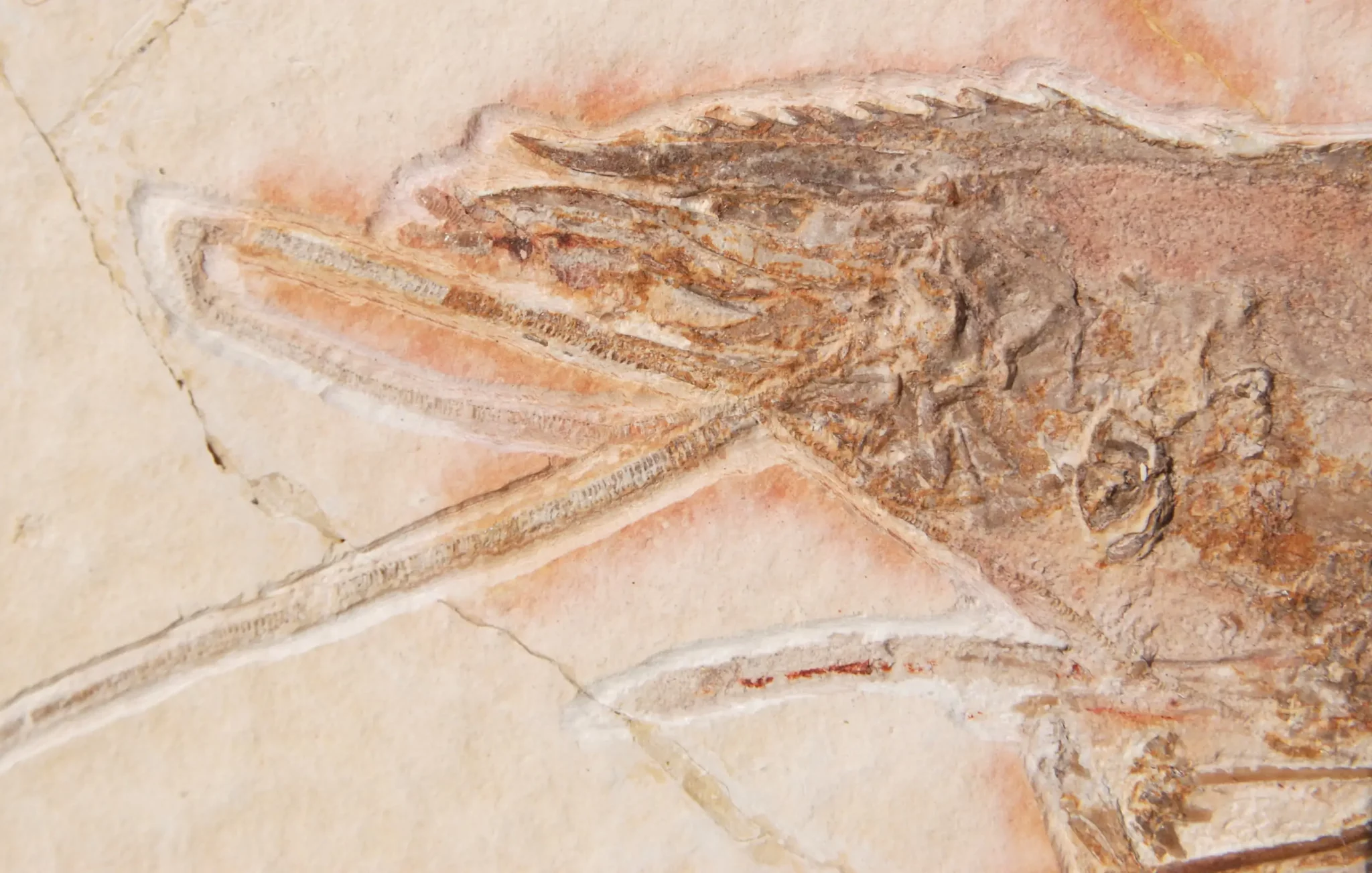
- The serrated rostrum: The most striking feature of Antrimpos is the strong, serrated rostrum (the “spine” on the head). In top specimens, the fine serrated structure of the upper and lower sides of the rostrum is clearly visible under a microscope or magnifying glass. An undamaged rostrum is the most important criterion for the value.
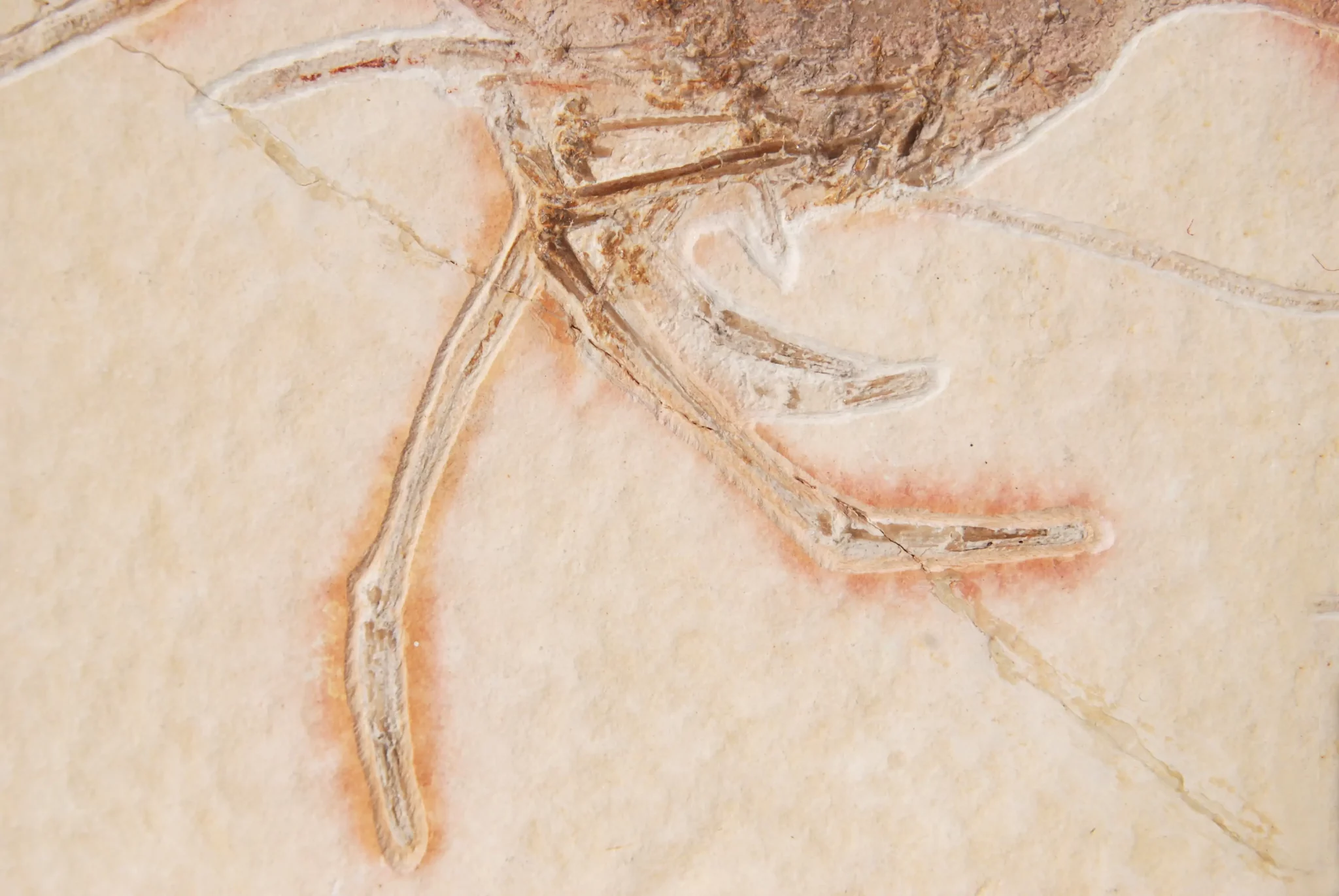
- The scissor feet (chelipeds): Pay attention to the front pairs of legs! Antrimpos has three pairs of scissor feet, whereby the third pair is often clearly elongated. If these legs have survived in their full articulation and with the tiny terminal scissors, it is a museum specimen.
- The organic substance (preservation): A special quality feature of Antrimpos is the color of the shell. The original organic substance is often preserved as a dark, shiny film that contrasts sharply with the light-colored limestone. A high contrast without excessive color touch-ups is the hallmark of an honest collector’s item.
A highlight for every Solnhofen collection
Antrimpos speciosus is the “heavyweight” among fossil shrimps. Its size and striking silhouette make it an eye-catcher. Its size makes it an eye-catcher in any collection.