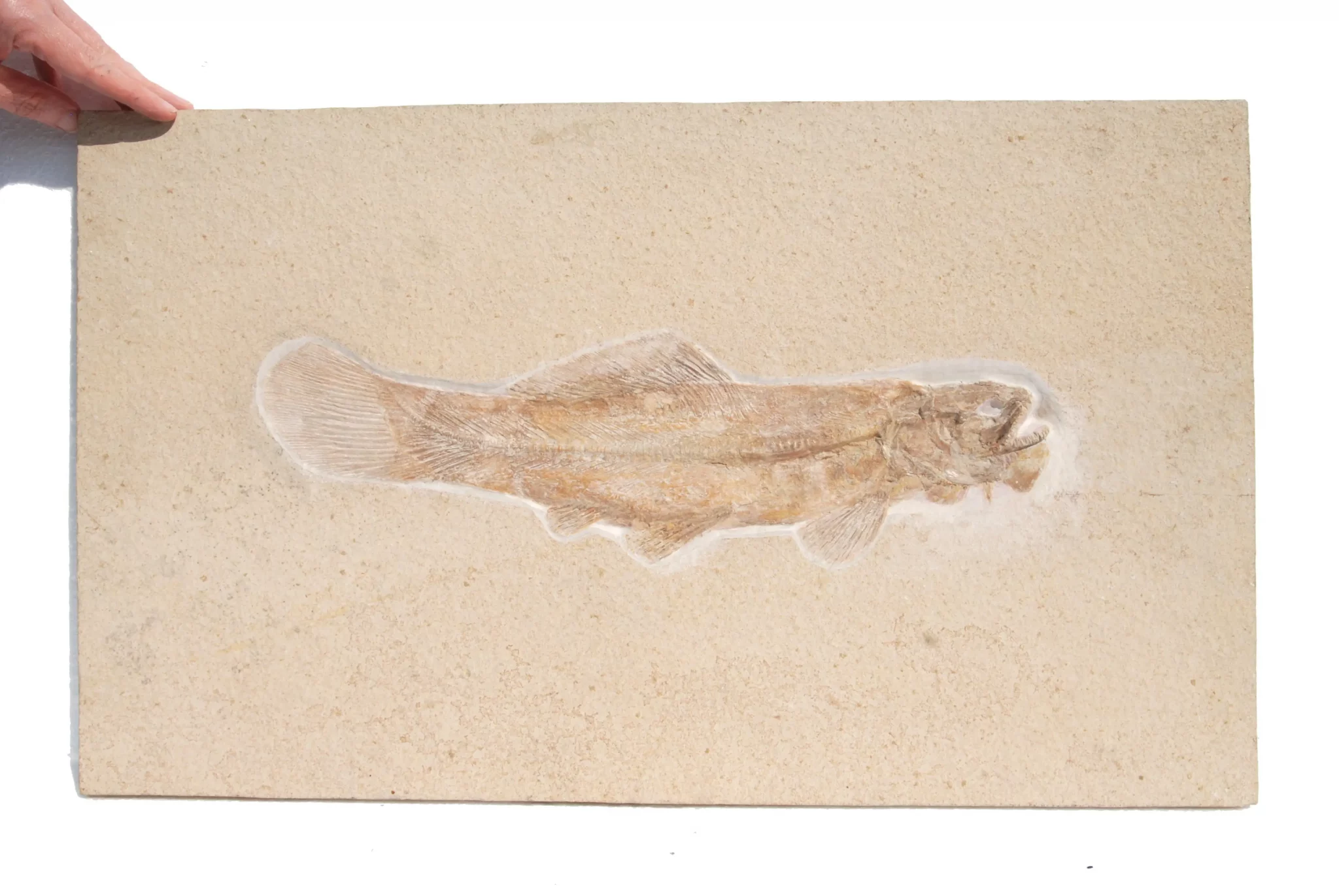
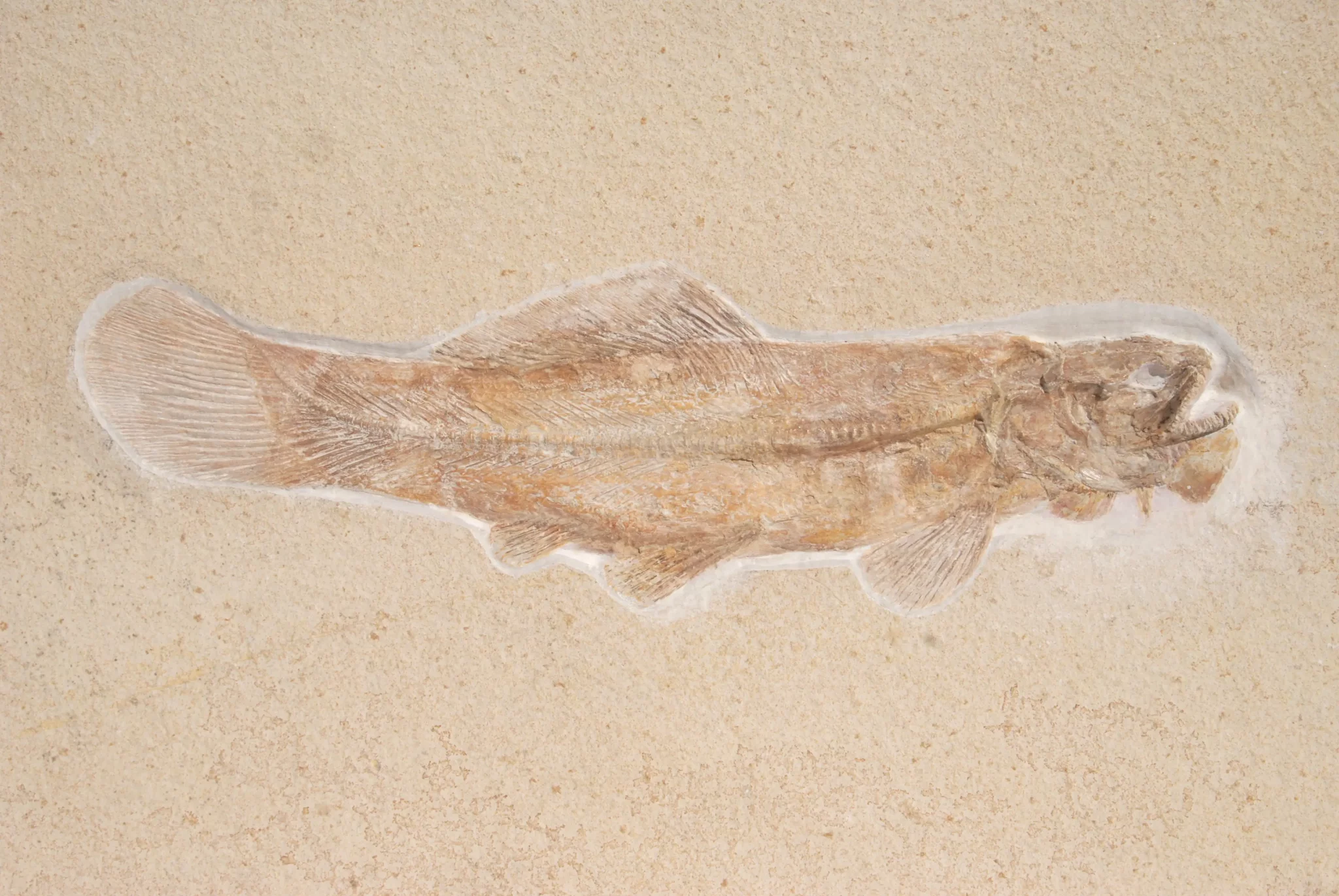
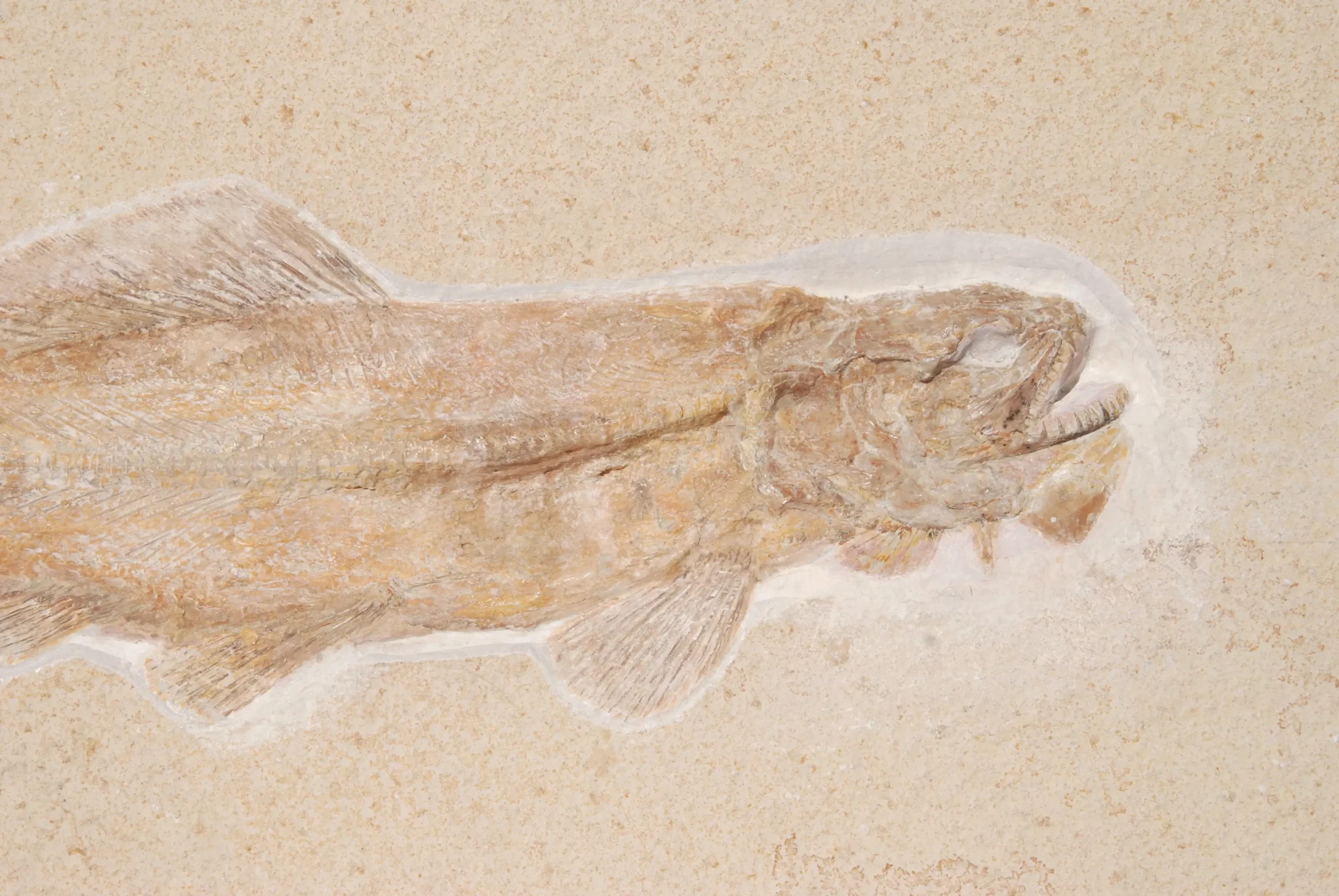
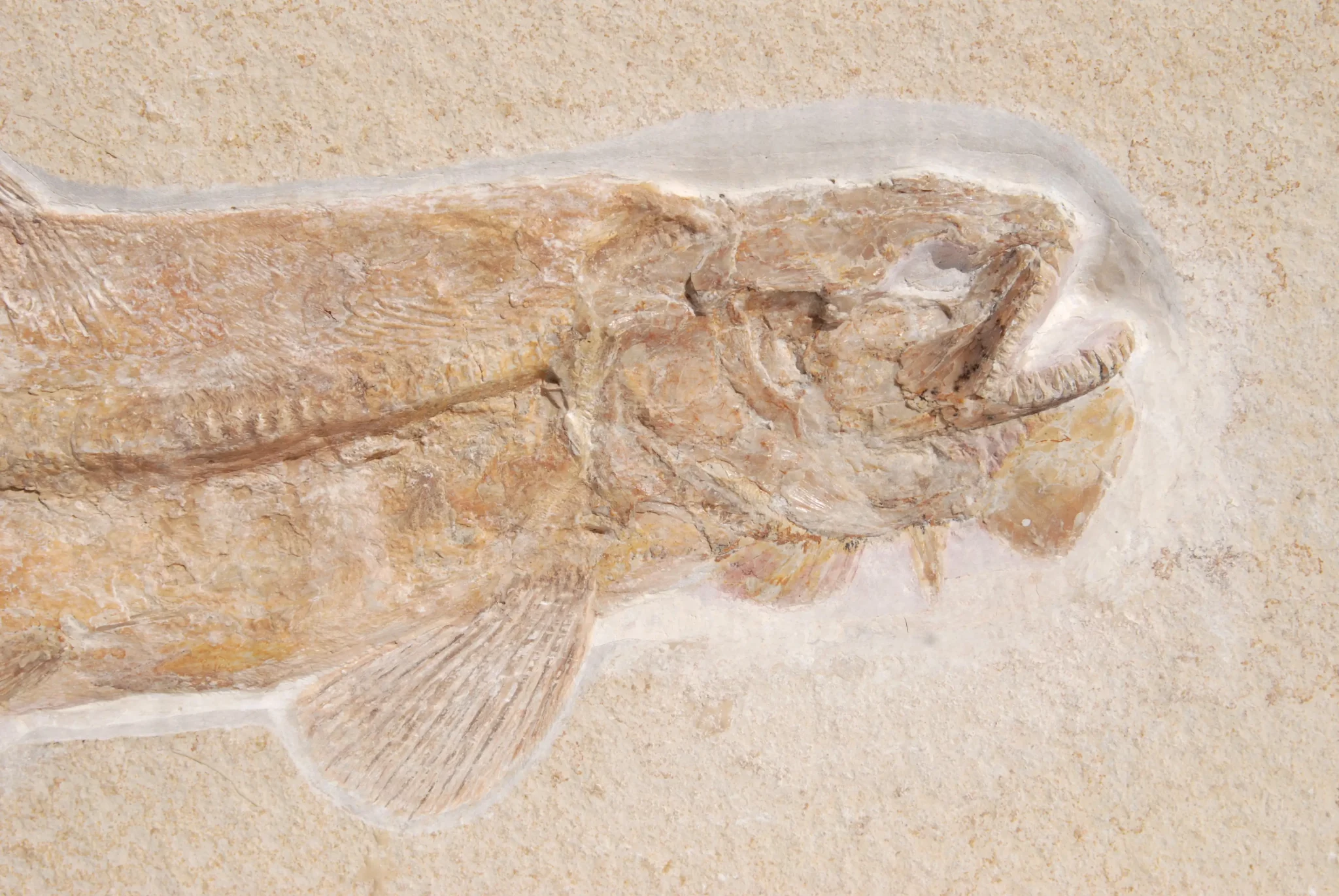
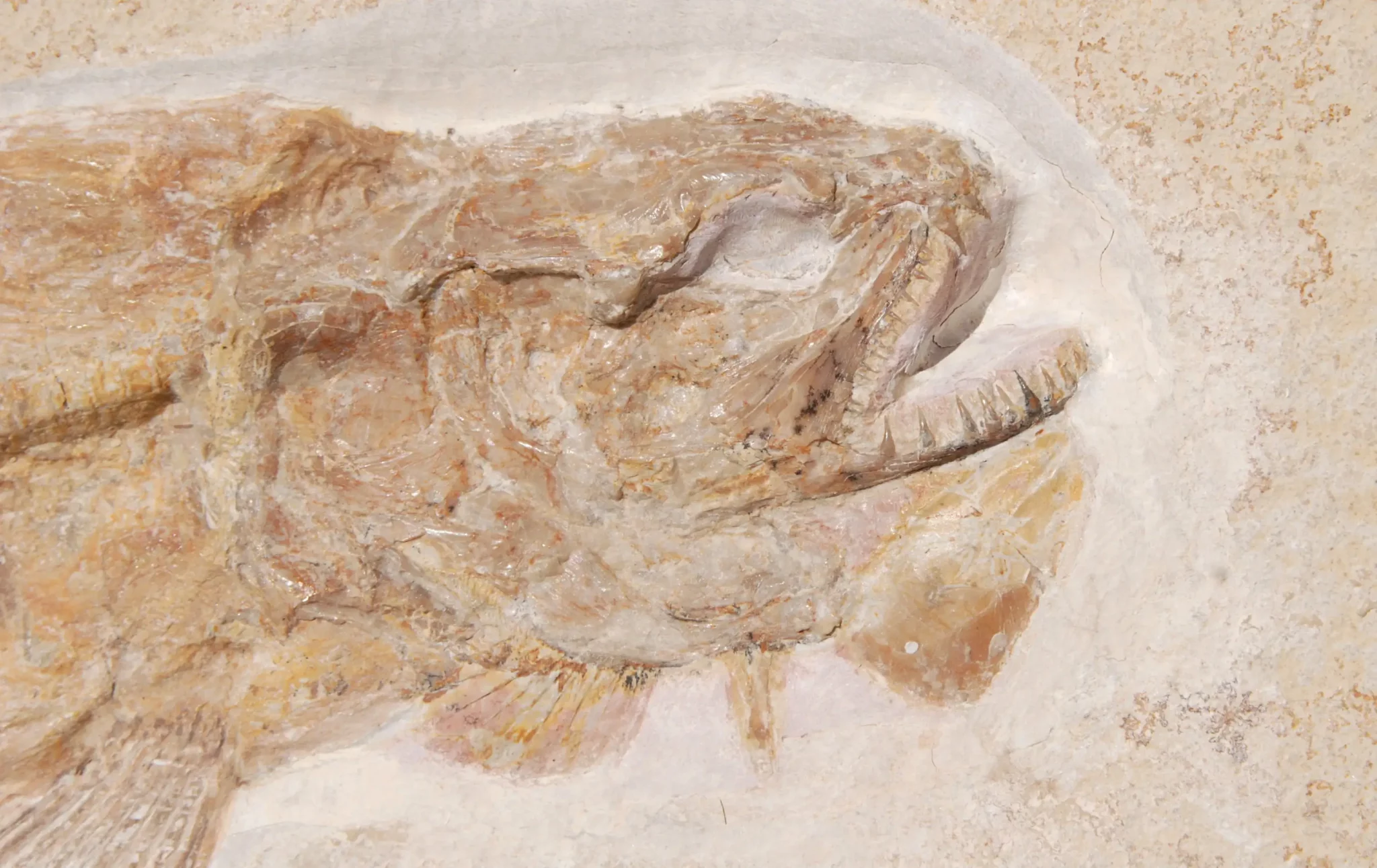
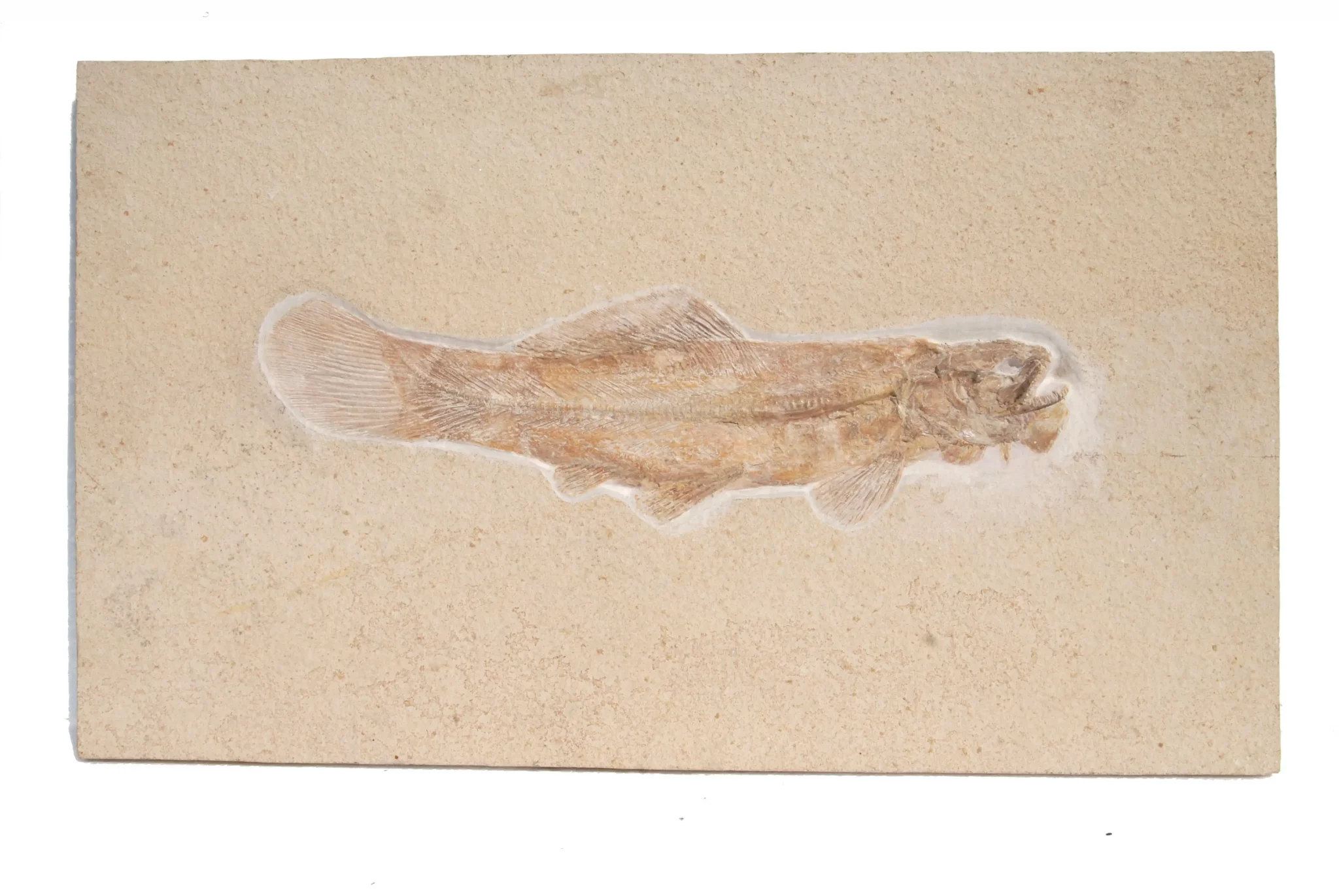
Solnhofen Amiopsis lepidota
Place of discovery: Langenaltheim, Langenaltheimer Haardt; Solnhofener Revier/ Germany
Lithostratigraphy: Lower Tithonian, White Jurassic Group, Altmühltal Formation, Upper Solnhofen Subformation
Biostratigraphy: Hybonotum zone, rueppelianus subzone, rueppelianus horizon
Age: approx. 150.8 – 152 million years +/- 2 million years
Plate size: 60 x 35 cm
Size of fossil: approx. 45 cm (largest size)
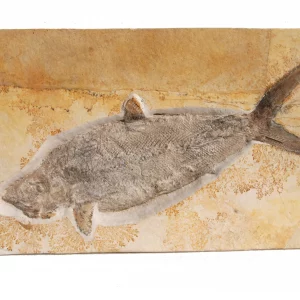
Large, excellently preserved “broom fish” with magnificent dentition.
Centered on a stable support plate. With proof of provenance.
Offered on behalf of the customer. Please do not make a payment in the store. Sale in the name and for the account of the owner.
RESERVED
Amiopsis lepidota – The archaic ancestor of the bald pike
The genus Amiopsis belongs to the Amiidae family and is a close relative of the Bald Pike(Amia calva), which still lives in North America today. Within the Solnhofen fauna, Amiopsis lepidota represents a robust predatory fish that is of great paleontological interest due to its evolutionary stability and its characteristic body structure.
Scientific classification and morphology
-
- Body shape: Amiopsis has a strong, spindle-shaped body. Compared to the delicate ionoscopids, it appears more massive, which indicates a powerful swimmer that could also operate in weedy zones of the lagoon.
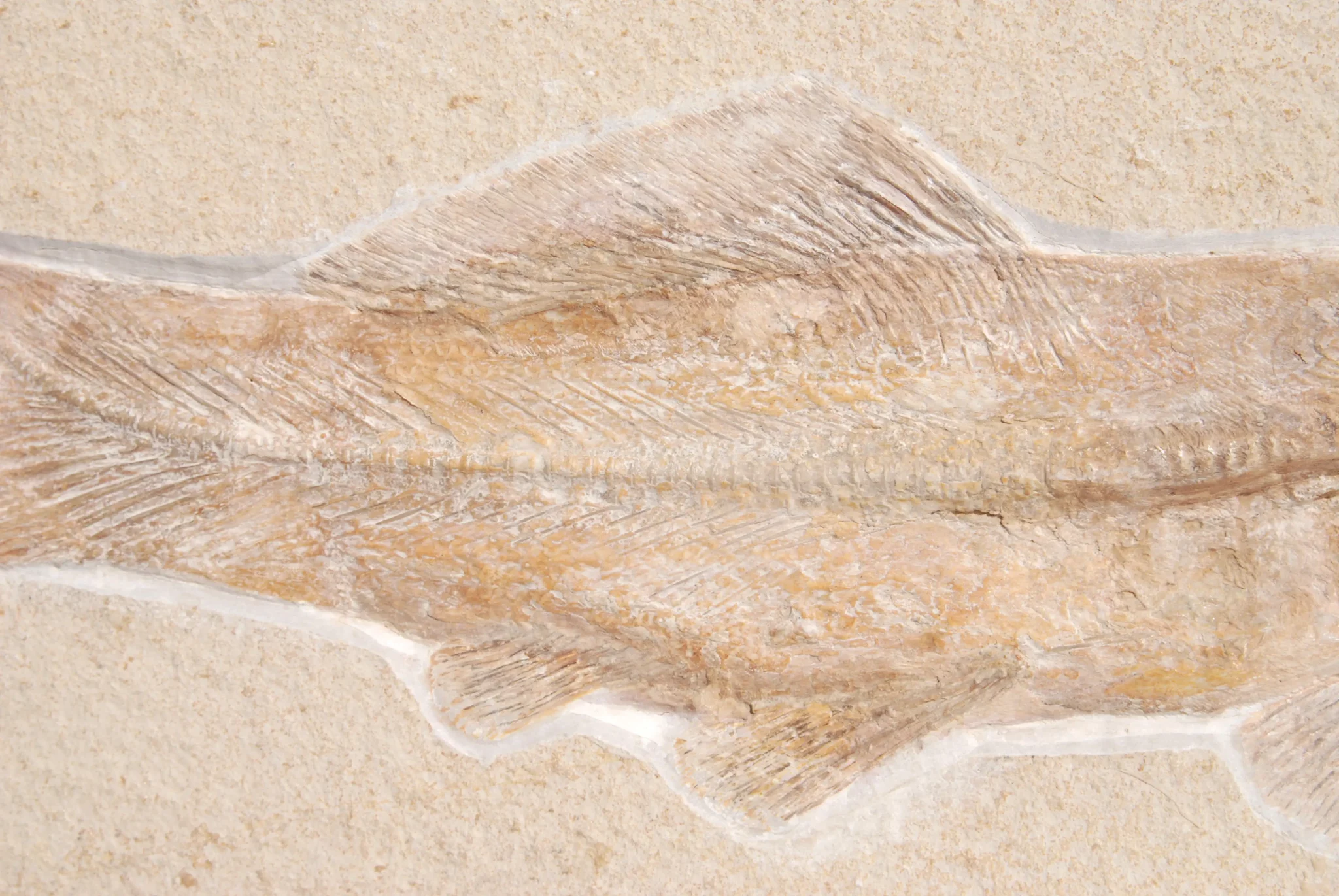
- Dorsal fin morphology: A diagnostic feature is the comparatively long dorsal fin, which takes up almost the entire rear half of the back. This characteristic is a precursor of the extremely long dorsal fin of the recent Bald Pike.
- Jaws and teeth: The skull is strongly built and equipped with strong, pointed fangs. This indicates that Amiopsis was an efficient predator that fed on fish and larger invertebrates.
The fine details – what collectors look out for:
- The scales: The species name lepidota (scaled) refers to the clear tradition of round scales (cycloid scales). In contrast to the hard ganoid scales of other genera, these are thinner, but form a very fine, organic surface pattern when well preserved.
- Vertebral column: In many specimens, the vertebral column is clearly visible due to the moderate scaling. The individual vertebral centers are often strongly ossified and protrude plastically from the matrix.
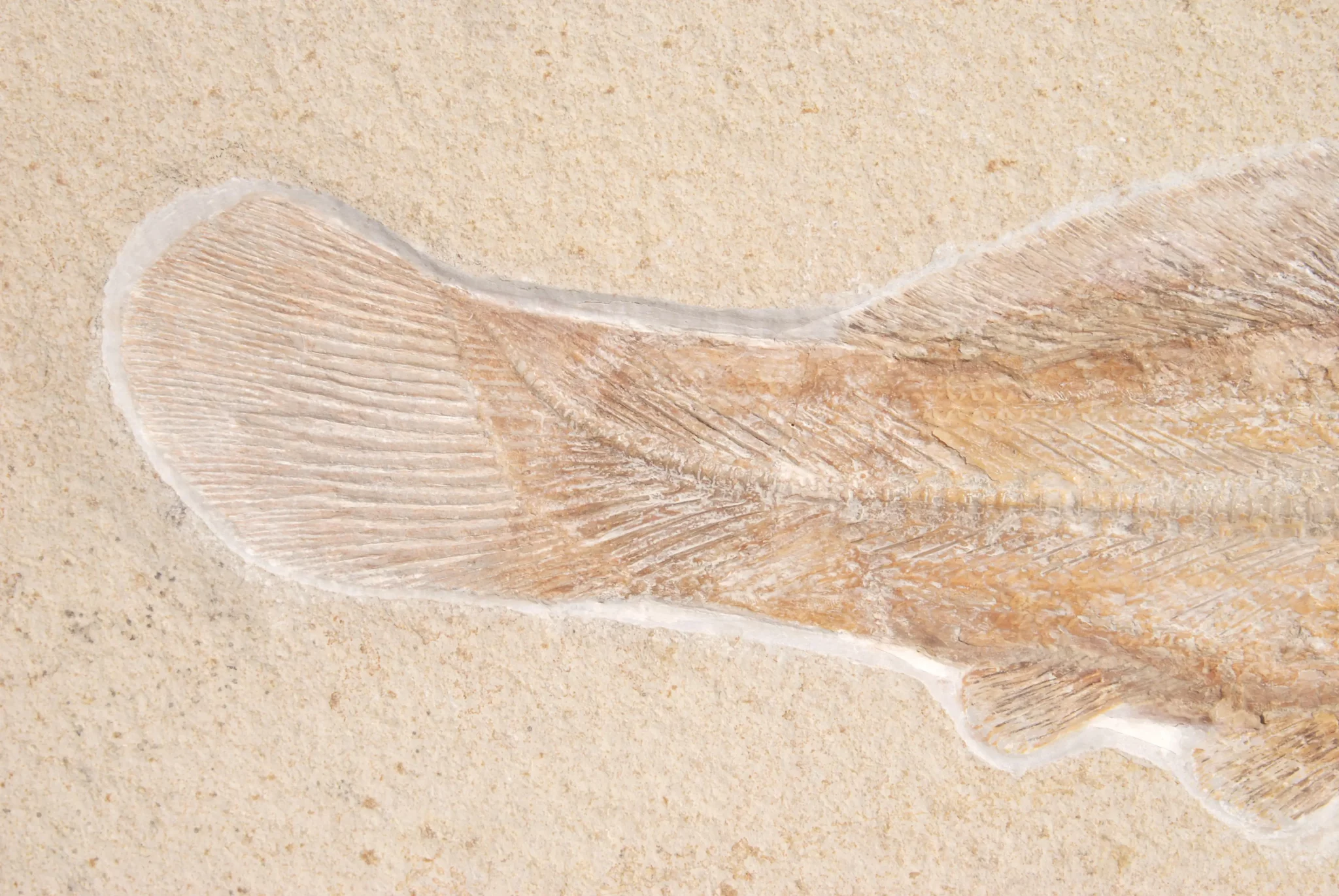
- Caudal fin: The caudal fin is usually rounded or only slightly notched at the rear edge (hemi-heterocercal), which gives the fish a very compact and powerful appearance in the fossil view.
A highlight for every Solnhofen collection
Amiopsis is the ideal centerpiece for collectors who want to document the phylogeny of “living fossils”. It represents one of the most successful lines of fish evolution in an ecosystem that was characterized by high ecological continuity. A fossil like this is not just an investment, but a window into a time when Bavaria was still a subtropical island paradise.