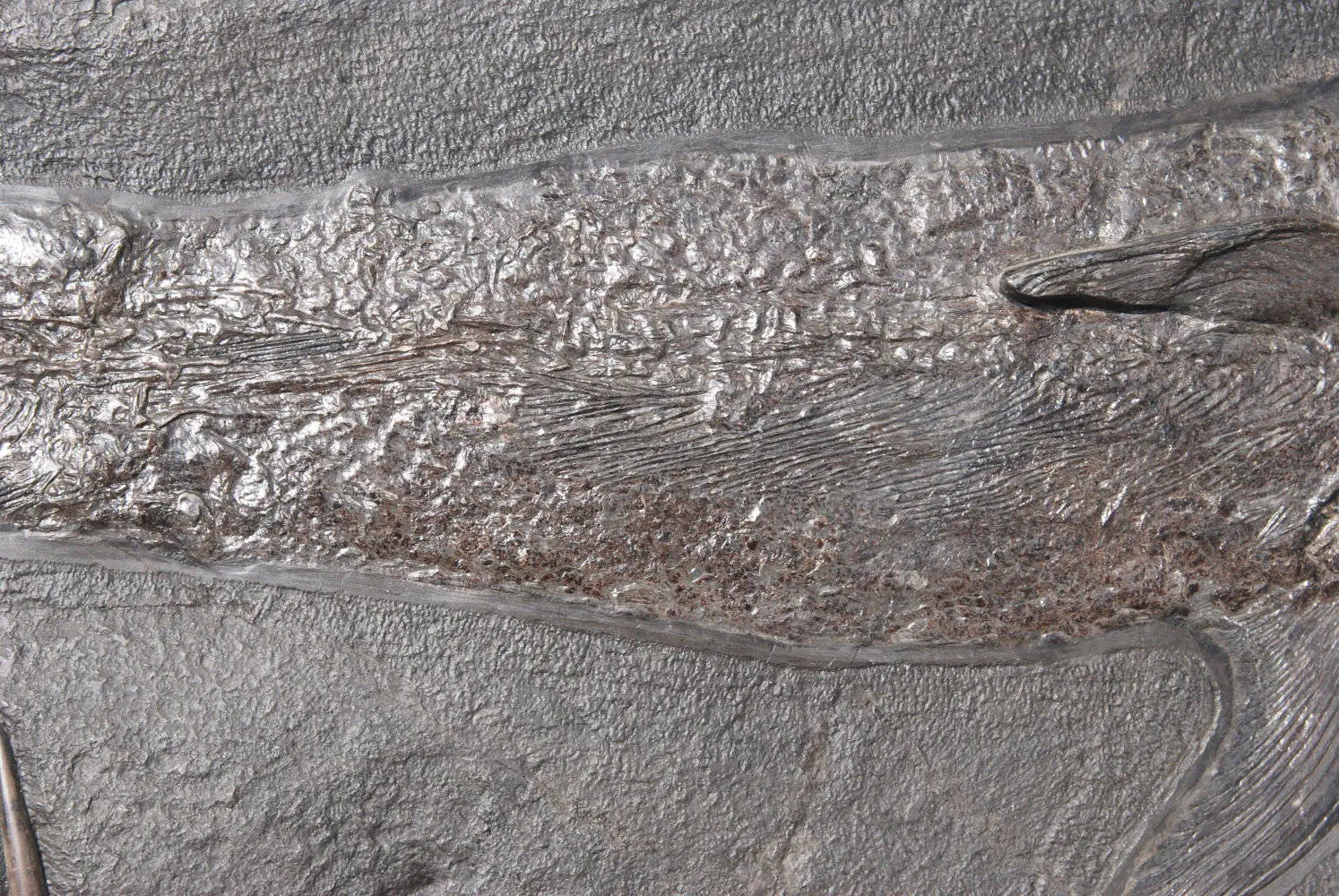
Pachycormus
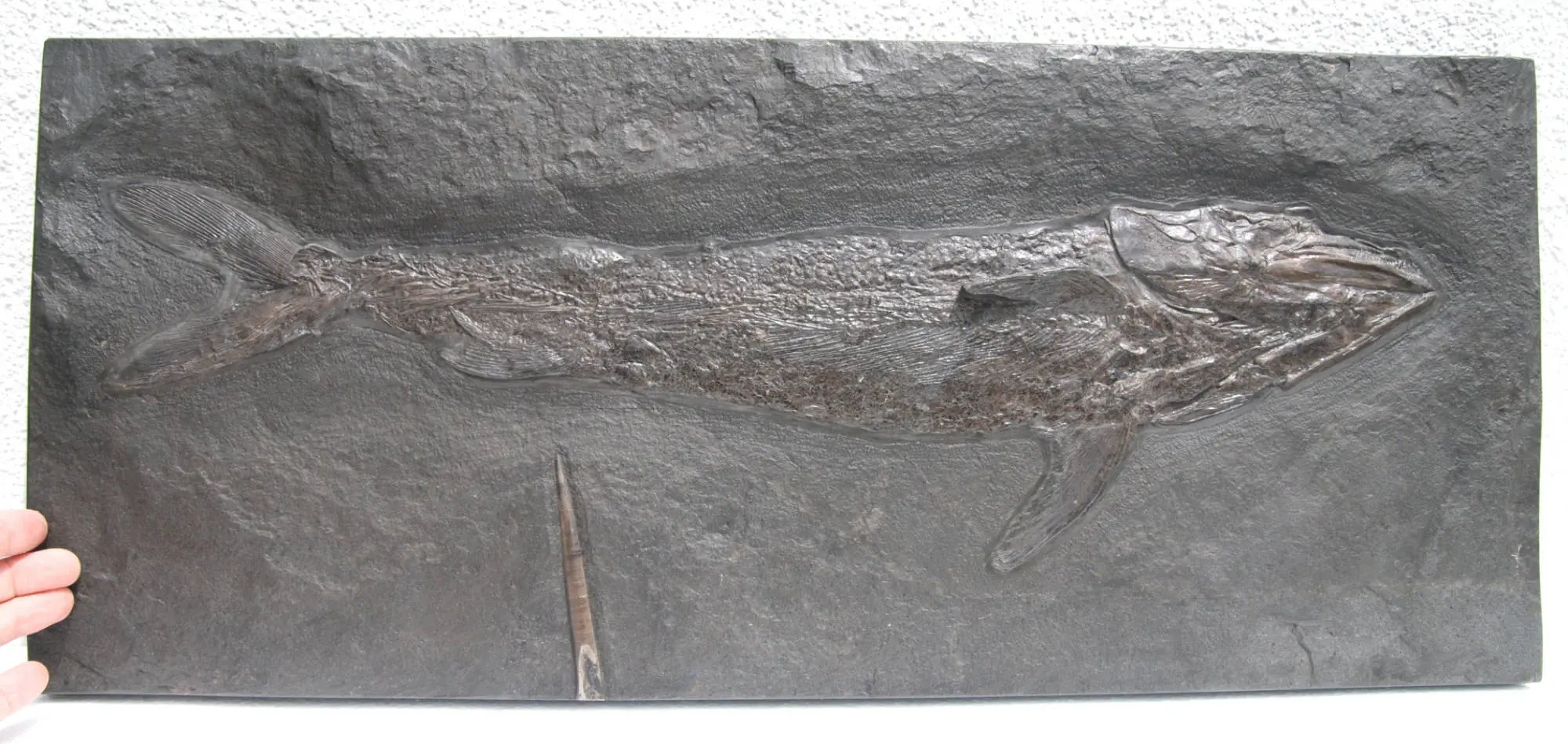
Matrix: 75×32 cm
Holzmaden; Lias Epsilon II/6
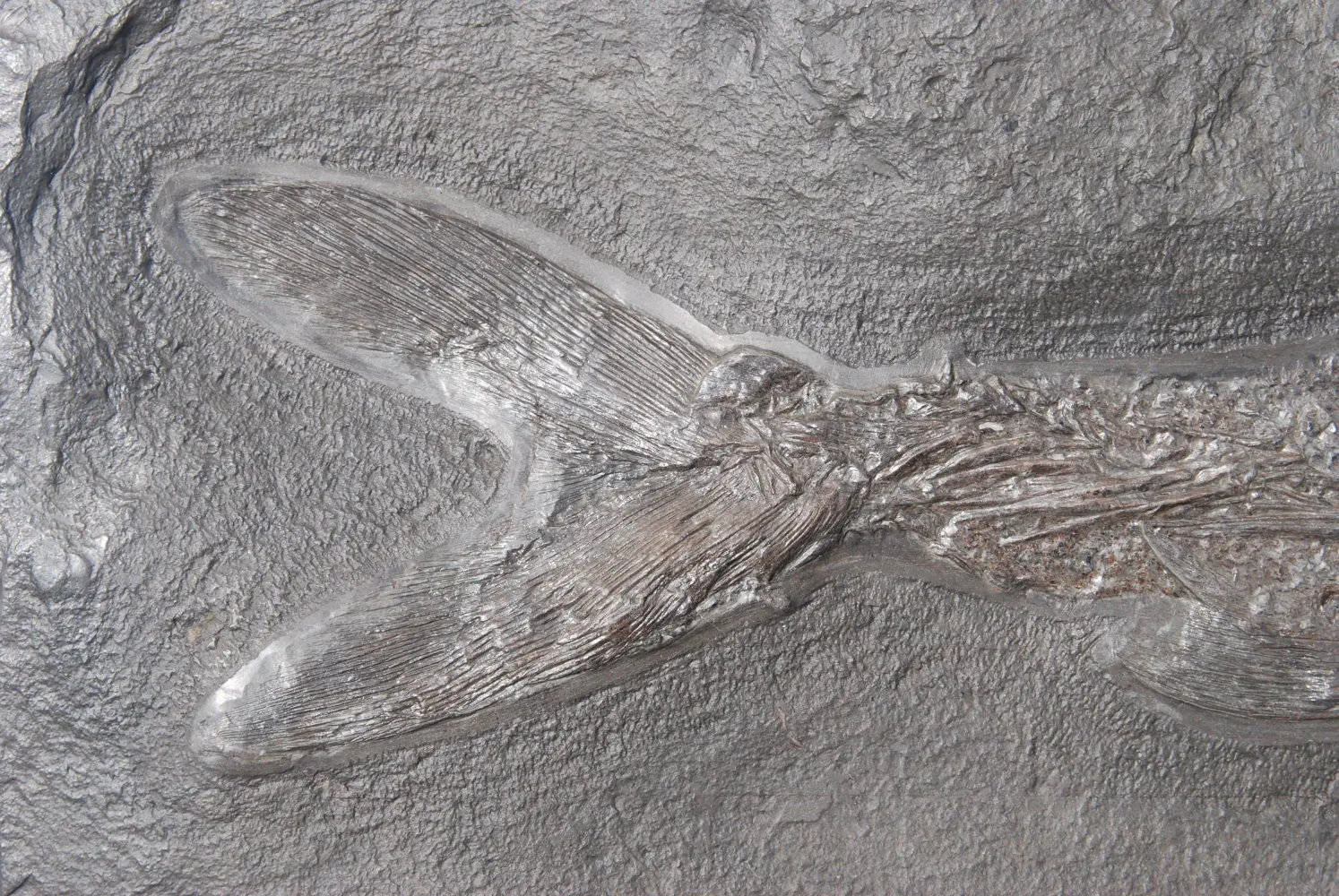
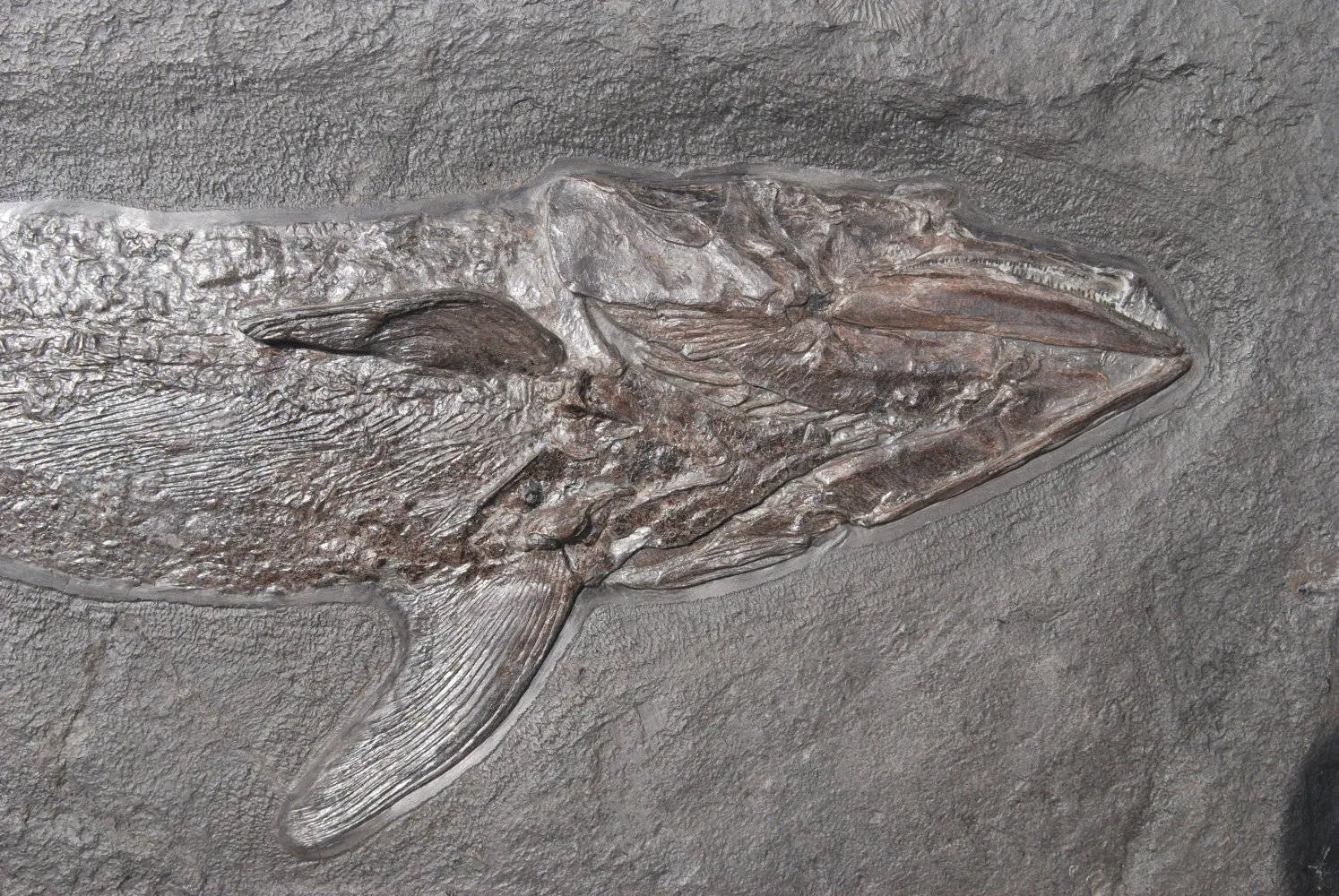
Very aesthetic Pachycormus, embedded in a Fleins plate, excellent quality and preservation, professionally prepared at state of art, with originally preserved fins – no reconstruction, visible teeth.
A museum grade specimen, the best of its kind offered so far at Fossiland with very delicate details, offered at a reasonable price – definitely a good investment, be fast!
Buying this fossil the collector/owner will bill you. Fossiland will provide you all the safety, including 100% satisfaction guaranteed, 14-day return policy and worldwide shipping on request.
sold to Yorkshire Natural History Museum
The elegant hunter of the Jurassic Sea: Pachycormus from Holzmaden
An outstanding representative of the extinct Pachycormidae, a group of bony fish that roamed the subtropical seas of Europe in the early Jurassic period around 180 million years ago. Especially the finds from the world-famous Posidonia slate of Holzmaden are regarded by collectors and scientists as milestones in palaeontology, as they perfectly preserve the dynamics and elegance of this primeval hunter.
Biology and lifestyle
It belongs to the order Pachycormiformes, which are often regarded as precursors or close relatives of the modern Teleostei (true bony fishes). In contrast to the rather sluggish, high-backed Dapedium, this genus was specialized for speed and agility in open water.
Its body was spindle-shaped and streamlined, making it an efficient chaser. Its name (from the Greek “pachys” for “thick” and “kormos” for “trunk”) refers to its strong physique. Characteristic are the sickle-shaped, long pectoral fins and a deeply forked caudal fin, which gave it enormous acceleration.
The teeth of the fish were designed for a predatory lifestyle: Its jaws contained numerous small, pointed fangs that were ideally suited to securely grasping slippery prey such as smaller fish or belemnites (squid relatives). Its large eyes indicate that it was a visual hunter that operated in light-flooded surface water.
The special feature of the Holzmaden finds
The fossils of this genus from the shale quarries around Holzmaden are among the best-preserved fish specimens in the world. As the sea floor of the Jurassic Sea was often oxygen-free (anoxic) at that time, the filigree fin rays and often even soft tissue contours remained protected from scavengers and decomposition.
These pieces often show spectacular pyritization, in which organic material has been replaced by “fool’s gold”, giving the fossil a precious, metallic sheen. While Dapedium impresses with its massive scaly carapace, this predator fascinates with the dynamics of its shape and the fine preservation of its bone structure.
This specimen is far more than a fossilization – it is the image of a highly developed hunter of its time and an aesthetic highlight for any scientifically based collection.