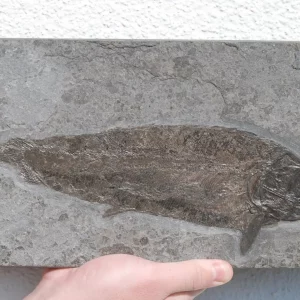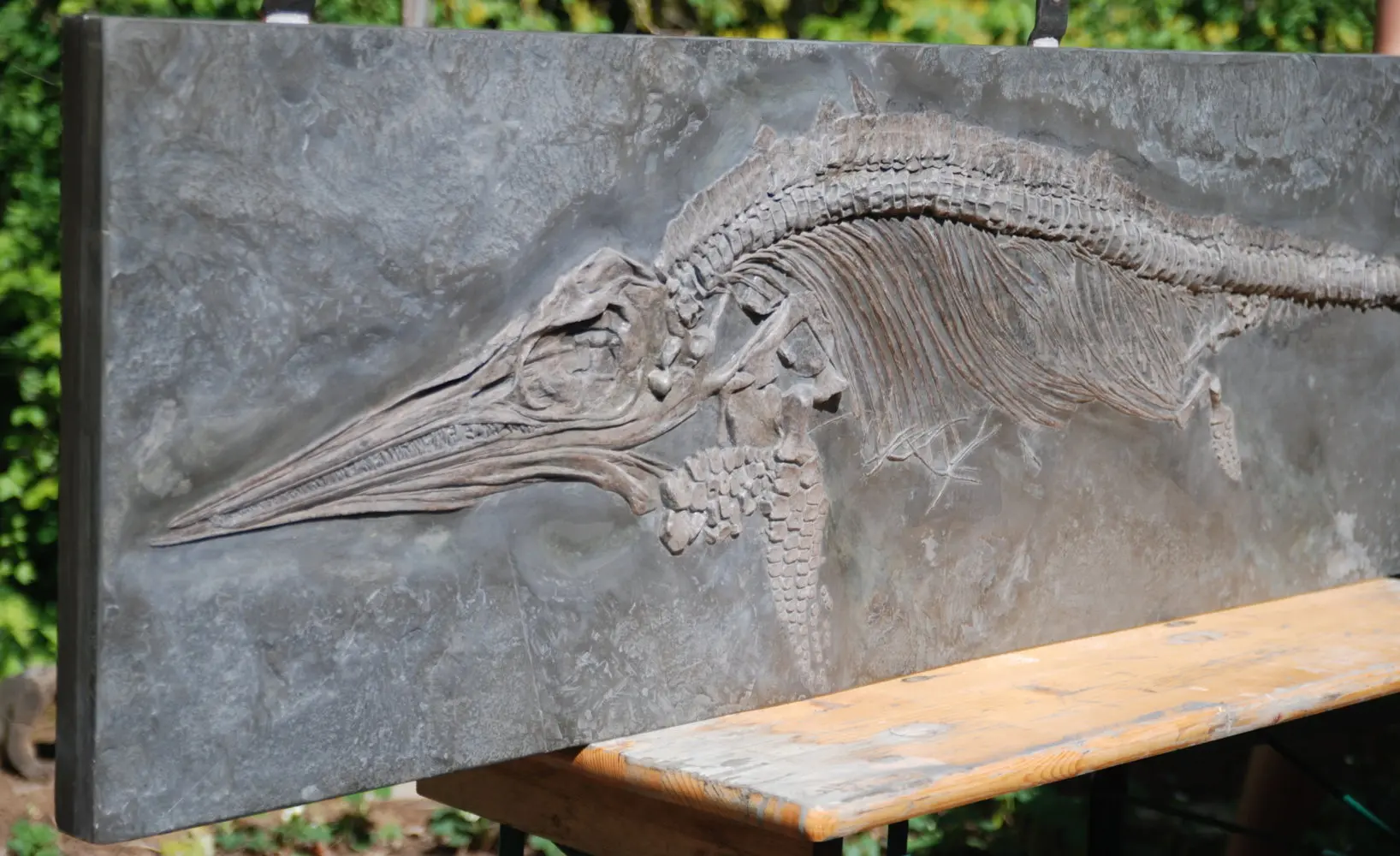
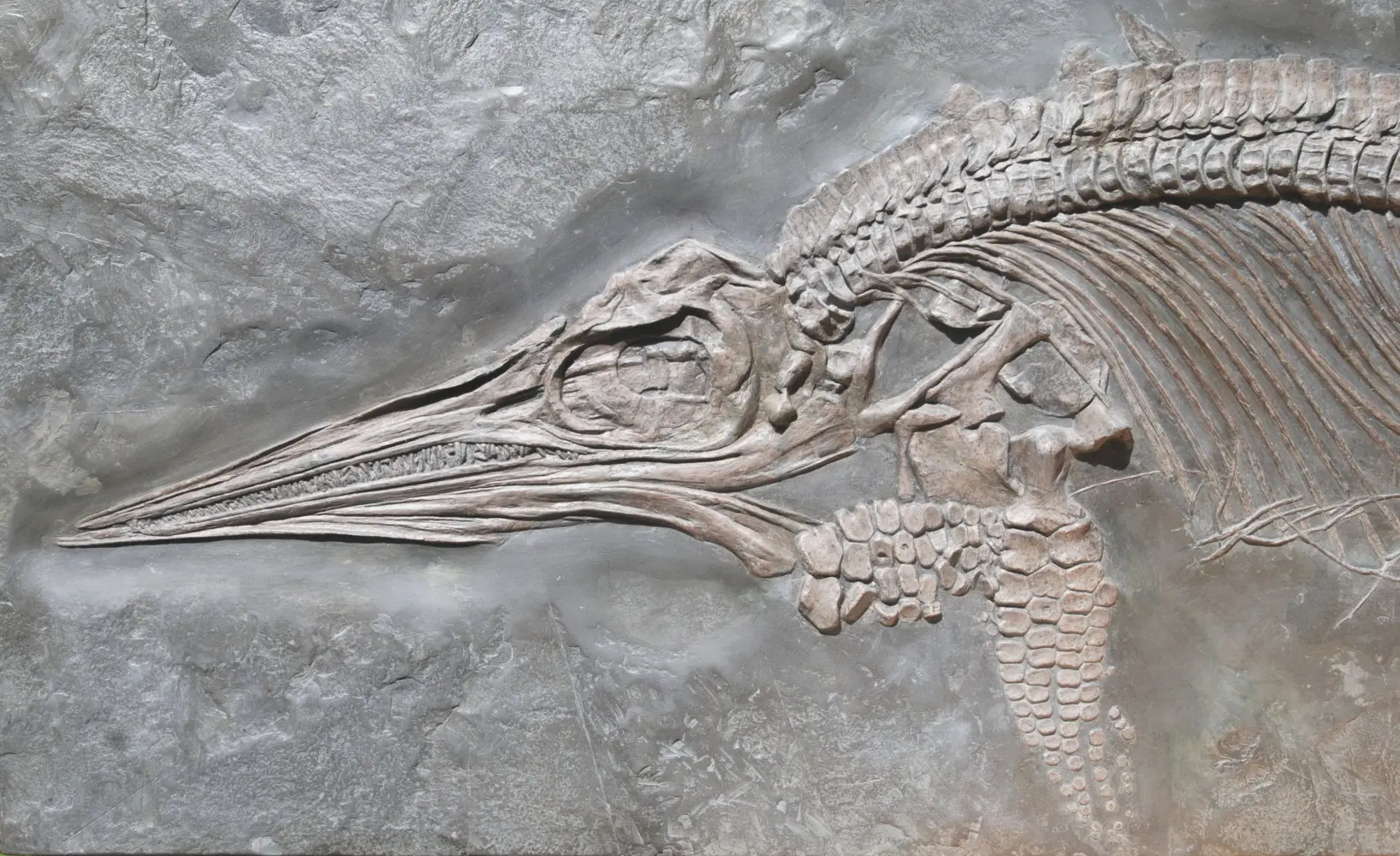
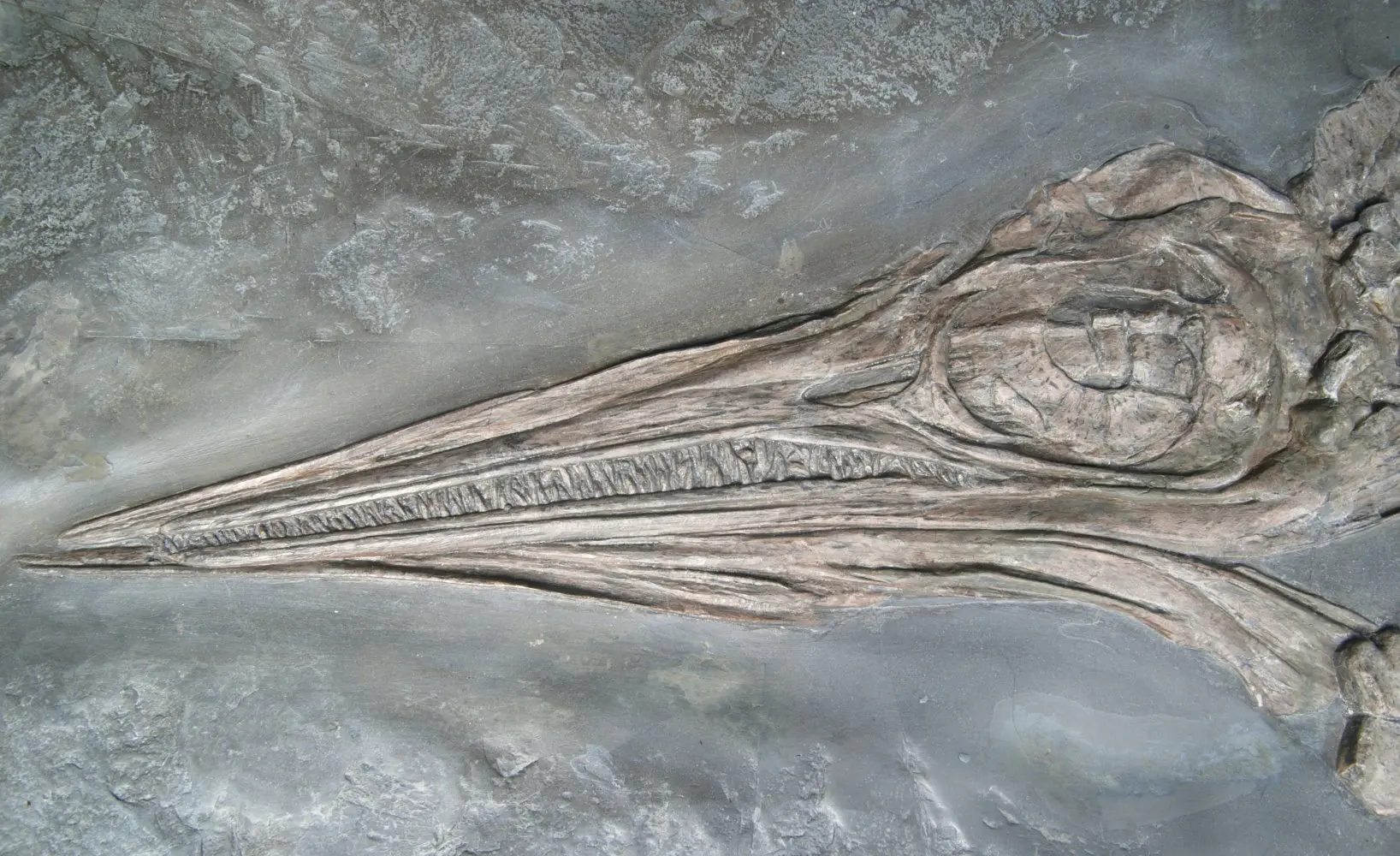
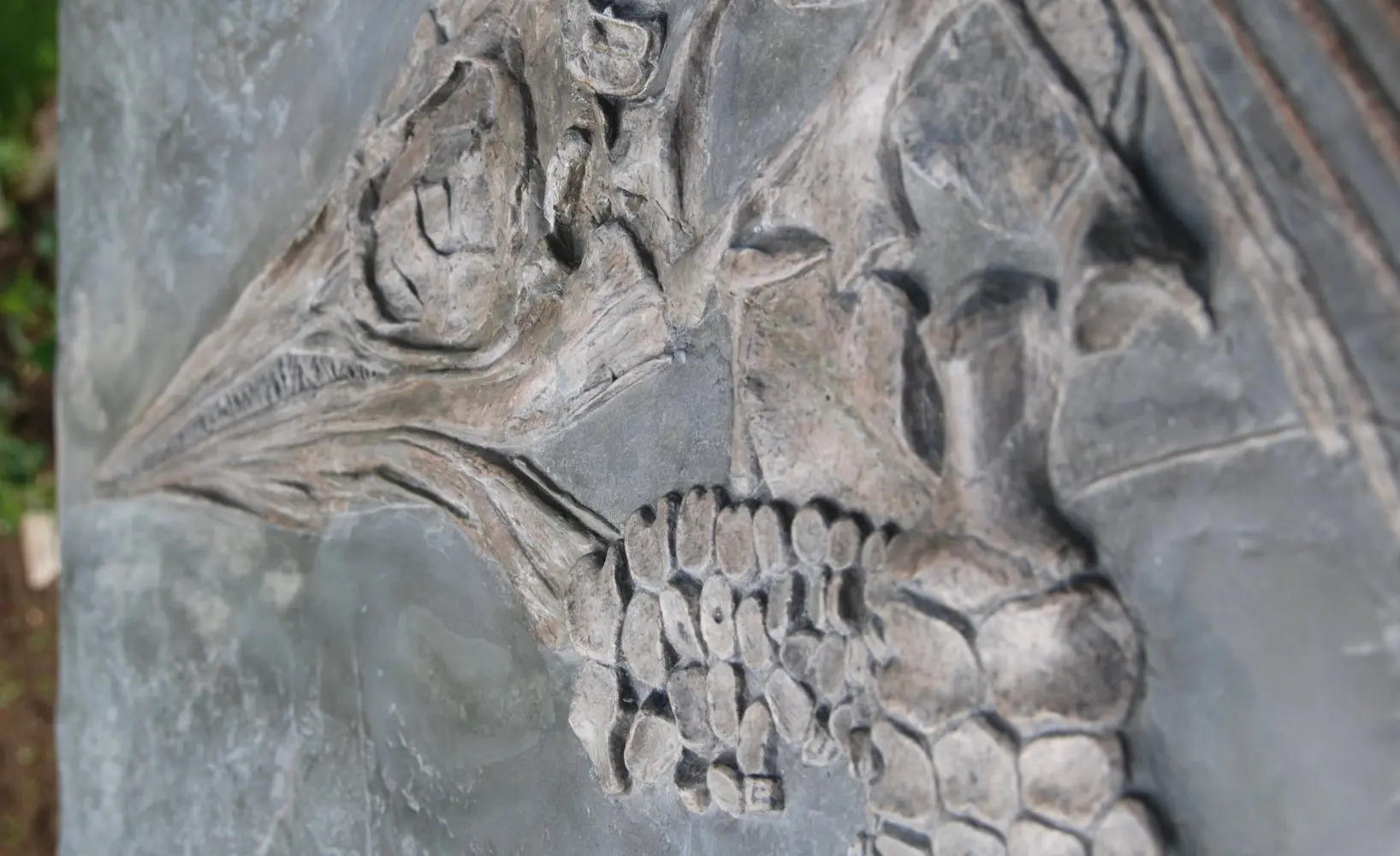
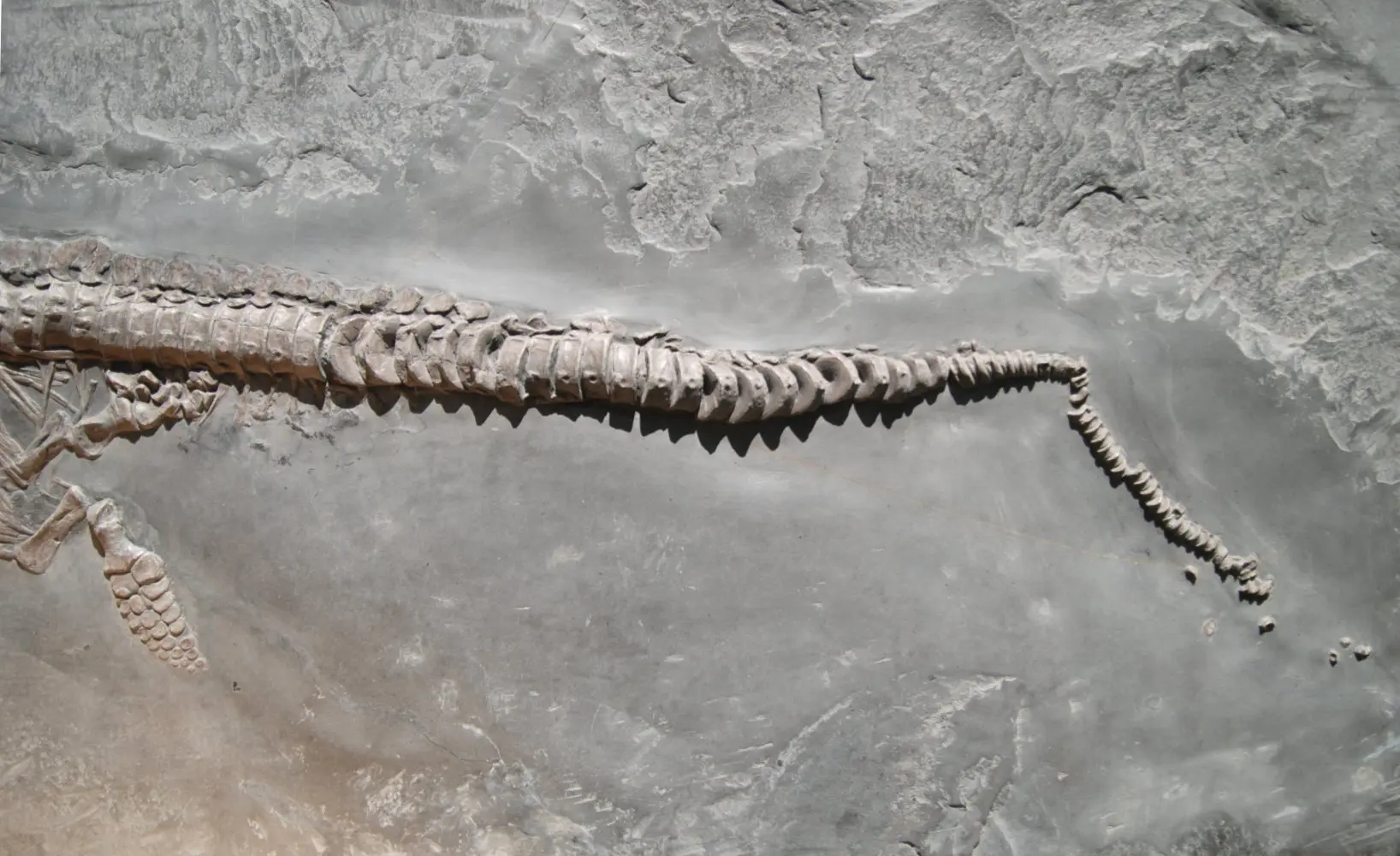
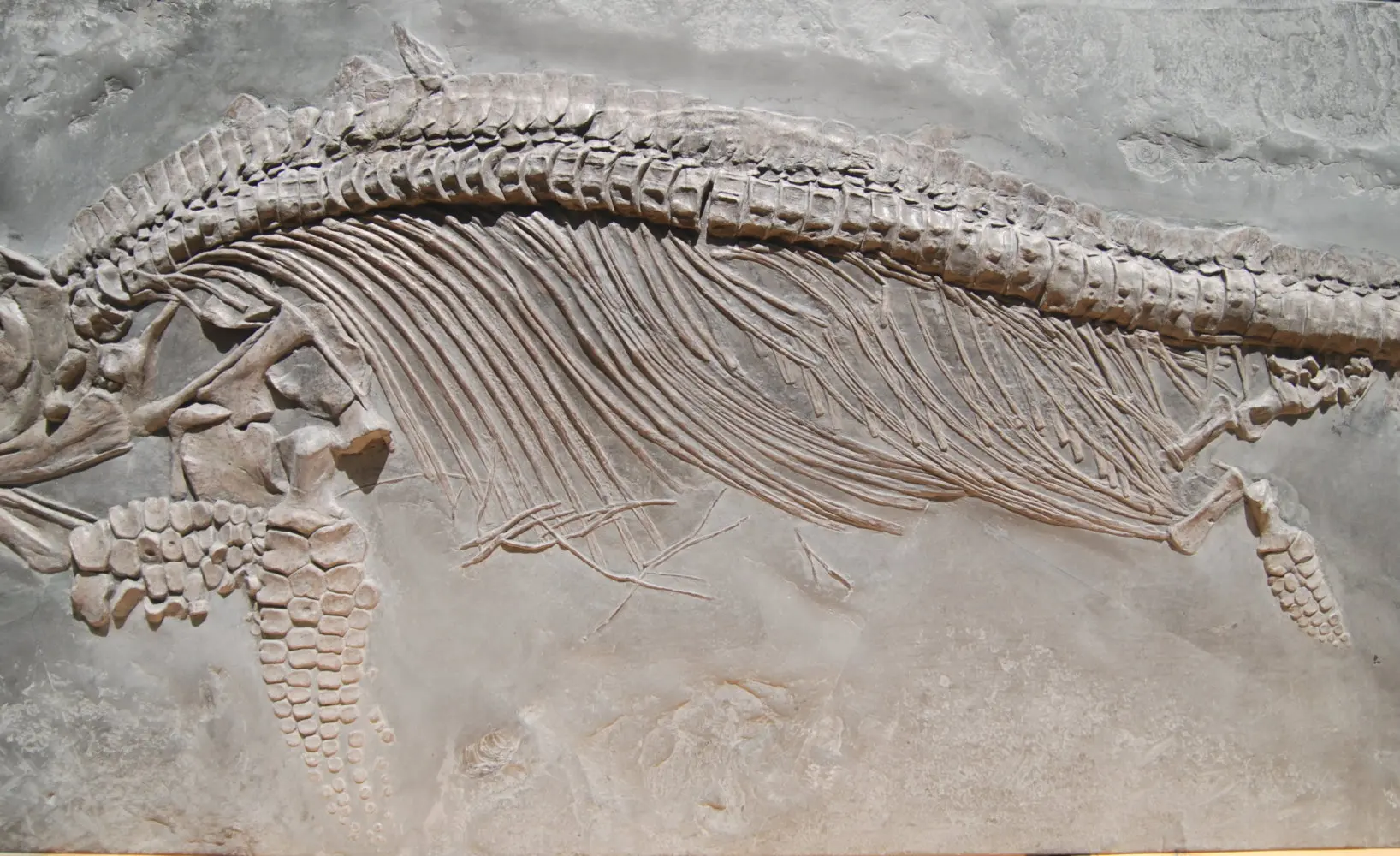
Ichthyosaur Stenopterygius quadriscissus
195x55x5 cm; ca. 100 kg
Holzmaden; Lias Epsilon II/5 (Lower Stone)
This is the one of a hundred, very complete specimens, enbedded in the original matrix!
Undoubtlly the most spectacular Ichthyosaur we offered so far. It has museum quality and comes with an expert report from the Hauff Urwelt-Museum evaluating the fossil.
Bernhard Hauff gave the hint, appraising the Ichthyo, that there are several bite marks visible at the front paddles, when it was attacked by a persecutor, what makes this specimen even more special.
With a length of 195 cm it is not an adult specimen (becoming up to many meters), so it still handable (two persons are able to carry it). The plate is quite stable, with mounds on back ready for wall hanging.
In comparison: For another complete but composed and inserted Ichthyosaur, usually offered by resellers, you will typically pay 30k plus. Located close to Holzmaden, avoiding resellers, we are able to offer a museum quality specimen at significantly less, making this offer an excellent investment. Pieces like that are rarely offered and will get less in the future as quarries close one to the next.
Buying this fossil the collector/owner will bill you. Fossiland will provide you all the safety, including 100% satisfaction guaranteed, 14-day return policy and worldwide shipping on request.
Sold on behalf of a customer.
The dolphin of prehistoric times: Stenopterygius quadriscissus from Holzmaden
Stenopterygius quadriscissus is considered the most iconic fossil of the world-famous Posidonia shale formation of Holzmaden (Lower Jurassic, around 180 million years ago). This species, whose name means “narrow-winged quadruple cutter”, dominated the Jurassic seas as a fast, fish-eating hunter. The fossils from this deposit are of inestimable scientific value due to their breathtaking preservation, which goes far beyond the skeleton.
Biology and lifestyle
Stenopterygius was the prime example of convergent evolution: it developed a body shape that looked strikingly similar to today’s dolphins or tuna (thunniform), even though it was a reptile. With a length of up to 3.5 meters, it was a medium-sized predator that used its streamlined shape and high, sickle-shaped tail fin to chase squid(belemnites) and fish at lightning speed.
Research suggests that Stenopterygius was warm-blooded(homoiothermic) and had an insulating layer of fat (blubber), similar to modern marine mammals. This adaptation helped it to hunt in colder waters. Fossils also show that these animals were viviparous and gave birth to their young in the water.
The special feature of the soft divider posture
The real treasure of the Holzmaden Stenopterygius finds lies in the exceptional preservation of soft parts that are not preserved in most other fossil deposits in the world.
- Skin outlines & pigmentation: Many specimens not only show the skeleton, but also a dark film that traces the outer body shape (fins, dorsal fin, caudal fin). Chemical analyses of these remains have even identified melanosomes (pigment cells) that indicate camouflage coloration: dark on the back, light on the belly(counter coloration).
- Connective tissue & blubber: Remains of a complex network of stiffened fibers were found in the fins, which gave the fins the necessary strength for efficient swimming. Chemical signatures of a layer of fat were detected directly under the skin, the first direct chemical evidence of warm-bloodedness in an ichthyosaur.
- Stomach contents & embryos: Rare finds show the last stomach contents (often hooks from belemnites) under the ribs or even fully preserved embryos in the womb, allowing conclusions to be drawn about diet and reproduction.
Holzmaden Conservation Site: A window into prehistoric times
This detailed preservation is due to the unique depositional environment in the Jurassic Sea: the extremely low-oxygen(anoxic) environment on the seabed. These conditions prevented scavengers and bacteria from decomposing the carcasses and enabled the formation of one of the most important fossil deposits in the world. A Stenopterygius quadriscissus from Holzmaden is therefore a fascinating scientific document that offers deep insights into the biology of a long-gone apex predator.