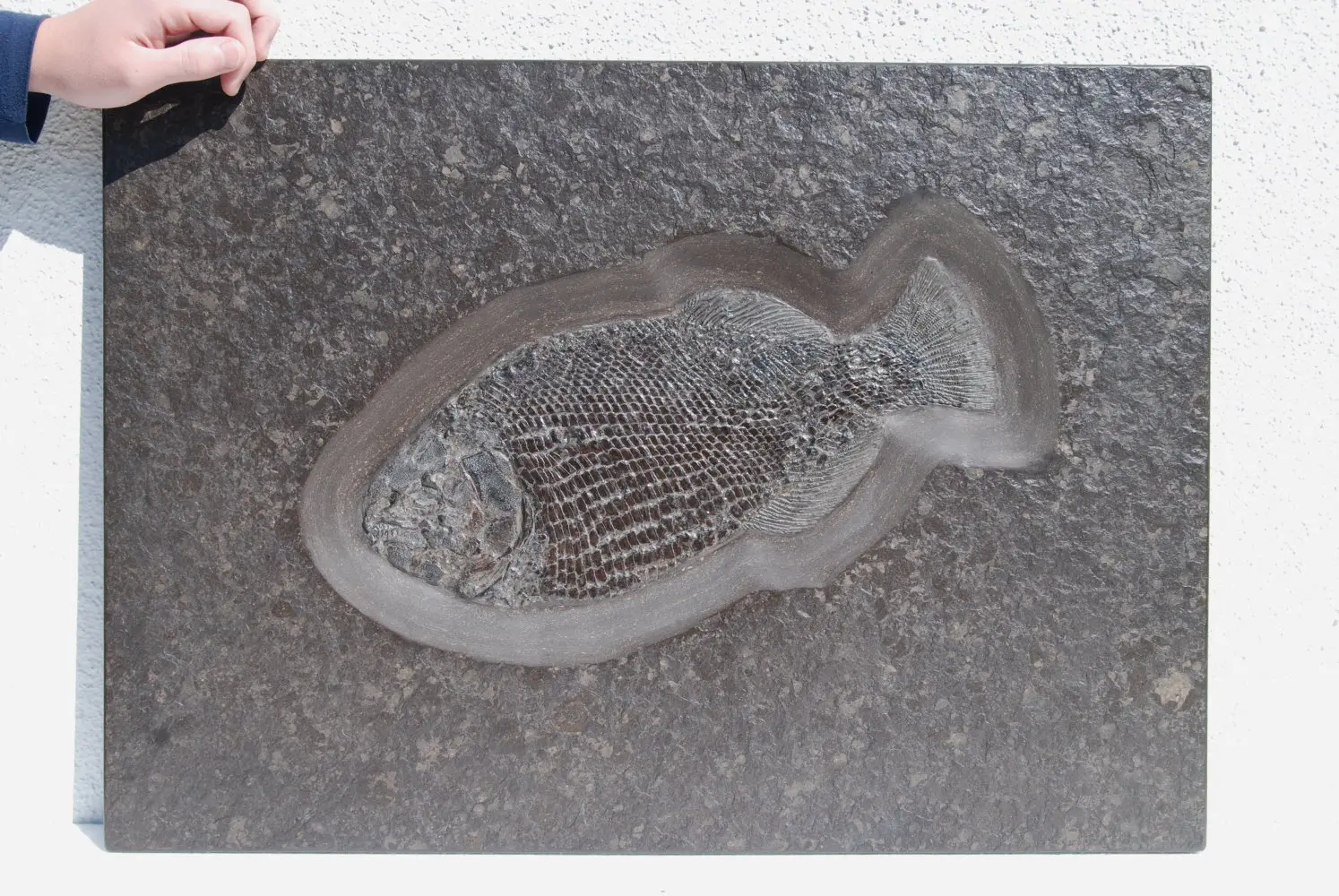
Dapedium caclatus
70x50x3 cm (fossil: 40 cm)
Holzmaden; Lias Epsilon I/2
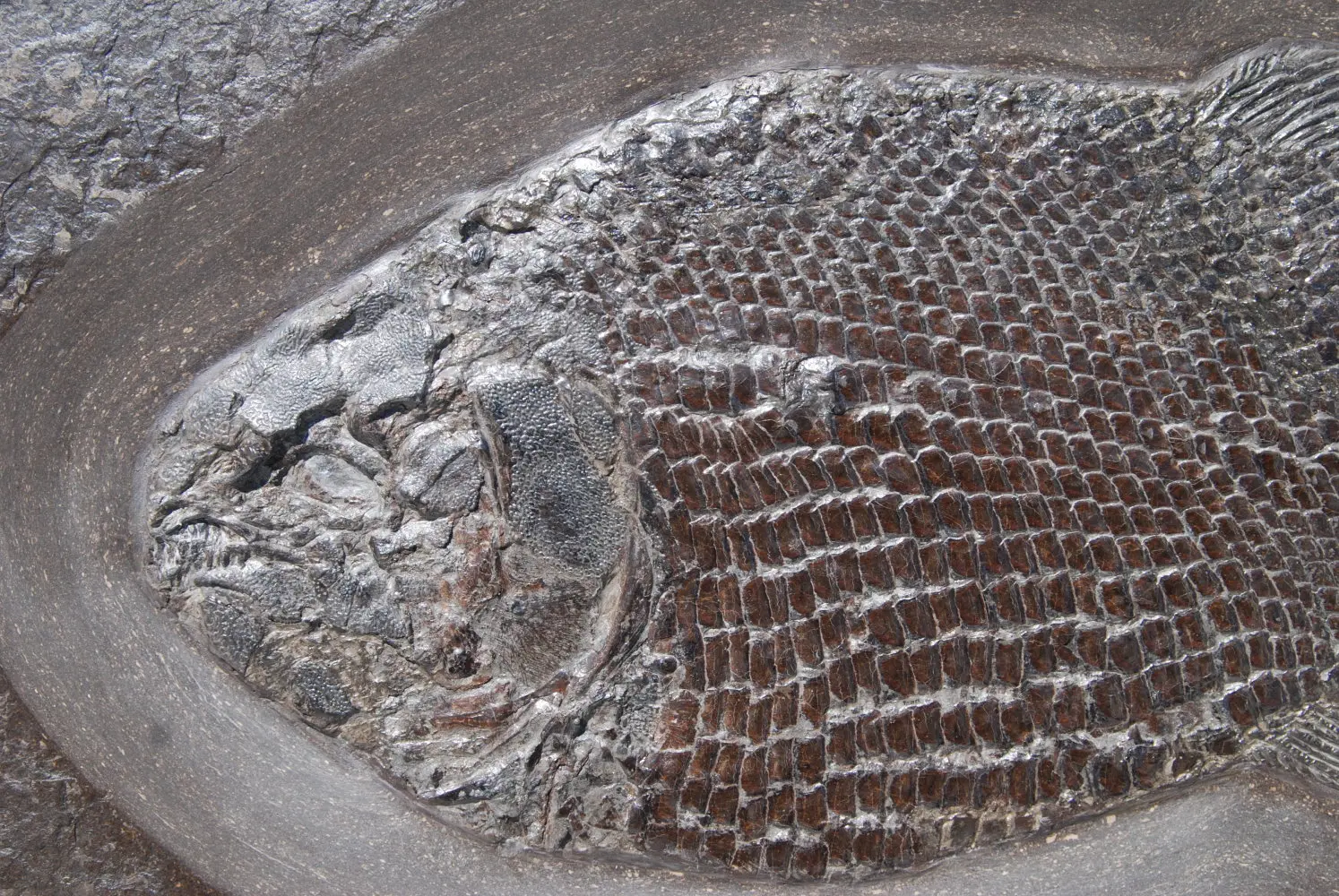
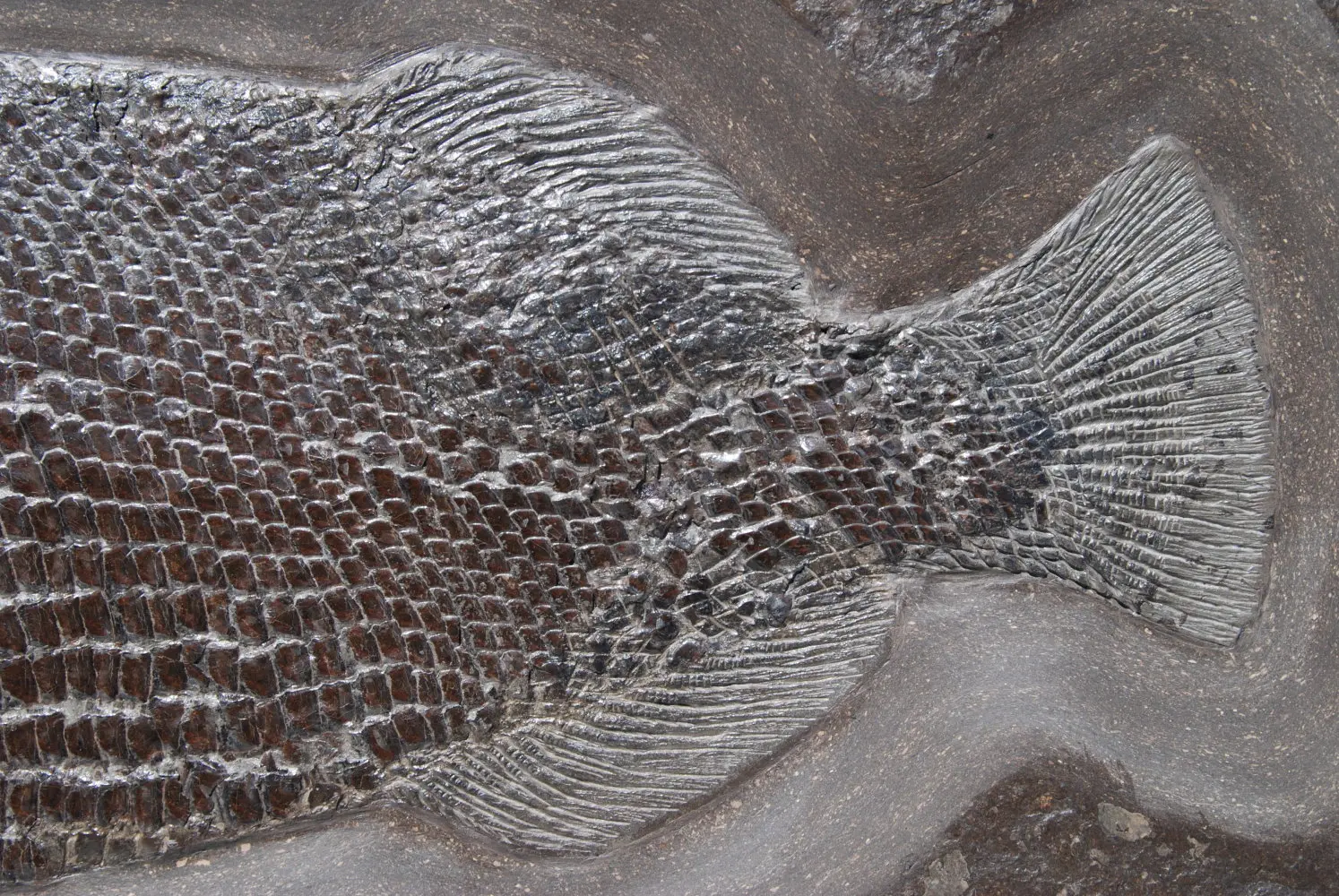
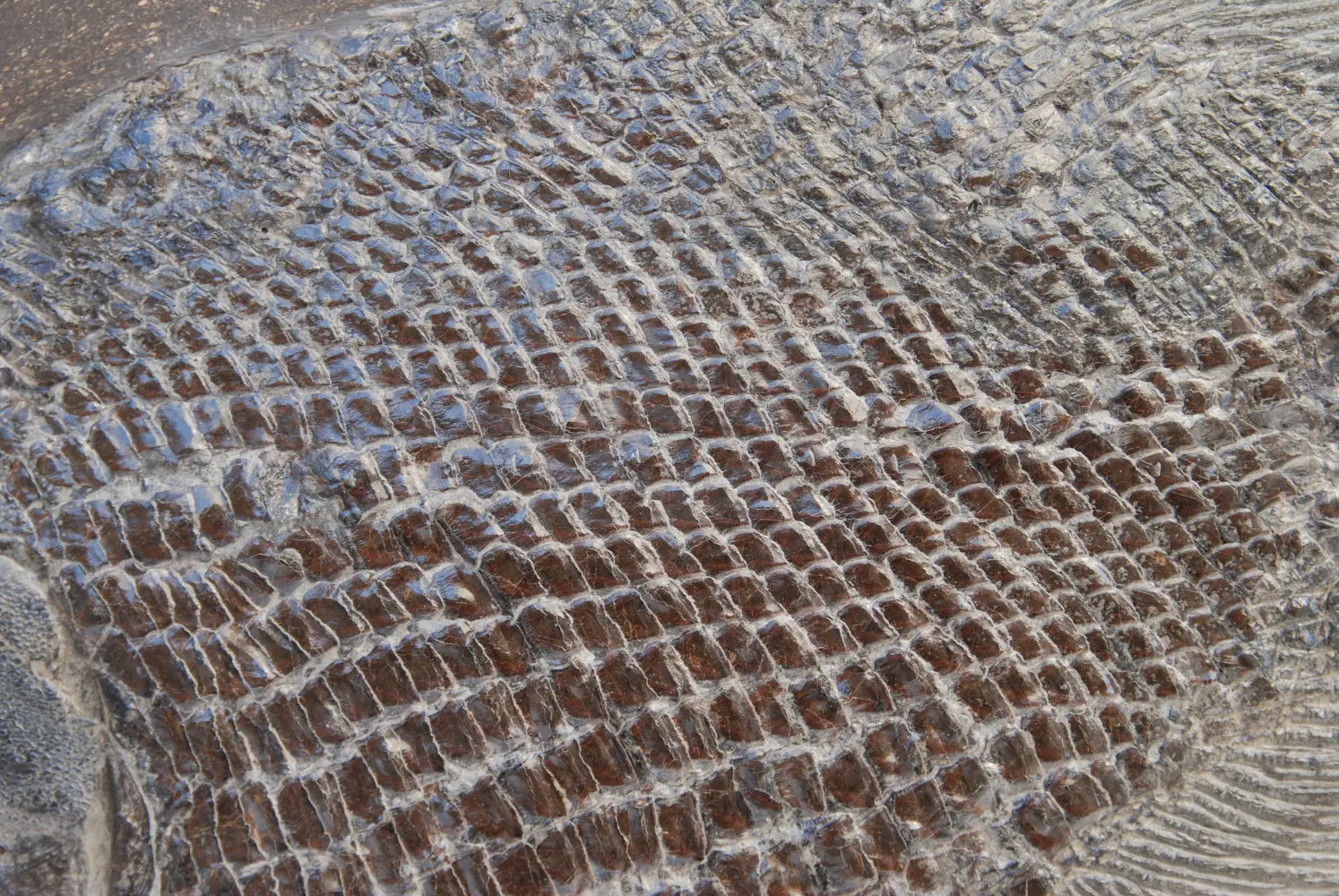
Extremely rare, complete fish, spectacular preservation, original fins (proof by UV light), typically quare-shaped scales and a bony-armored head with detailed teeth and scleral eye ring, enbedded in a stable Fleins slab with wall-hanging molds. Dapedium is much rarer than any ichthyosaur or crinoid.
sold
The armored fish of the Jurassic Sea: Dapedium caclatus from Holzmaden
Dapedium caclatus (or punctatus) is a fascinating, extinct bony fish that colonized the European Jurassic Sea around 180 million years ago. The finds from the black Posidonia Shale of Holzmaden are particularly sought after as they often show exquisite preservation of the thick scale armor that gave this fish its characteristic appearance.
Biology and lifestyle
This genus belongs to the Neopterygii group (“new fins”), a subclass of bony fish to which most modern fish species also belong. Its body was very laterally flattened and almost circular in shape, similar to a modern sea bream or a “dinner plate”.
Its name (from the Greek “dapédon” for “pavement”) says it all: the body was covered with large, thick, diamond-shaped ganoid scales that looked like armor. The skull was also armored with bony plates. This armor was effective protection against large predators such as ichthyosaurs.
Its dentition was robust and consisted of small, conical teeth on the edge of the jaw and additional, cobblestone-like crushing teeth on the palate. This specialization indicates a durophagous (hard-shelled) diet. The fish probably ate mussels, small crustaceans and sea urchins, which it grazed and cracked from the seabed.
The small pectoral and pelvic fins and the strong but short tail indicate that the animal was not a fast chaser in open water. Instead, it used its physique to change direction quickly and to search for prey and hide near the seabed or reefs.
The special feature of the Holzmaden finds
Fossils from Holzmaden impress with their exceptional preservation in fine-grained shale. The anoxic conditions on the seabed prevented decomposition and allowed the detailed preservation of the bony structures and the scaly shell, often with a golden shimmer due to pyritization.
Magnificent specimens like this one are far more than just fossils – they are an impressive document of a highly specialized way of life and an exquisite exhibit for any sophisticated palaeontological collection.