Bundenbach Triacrinus koeniswaldi
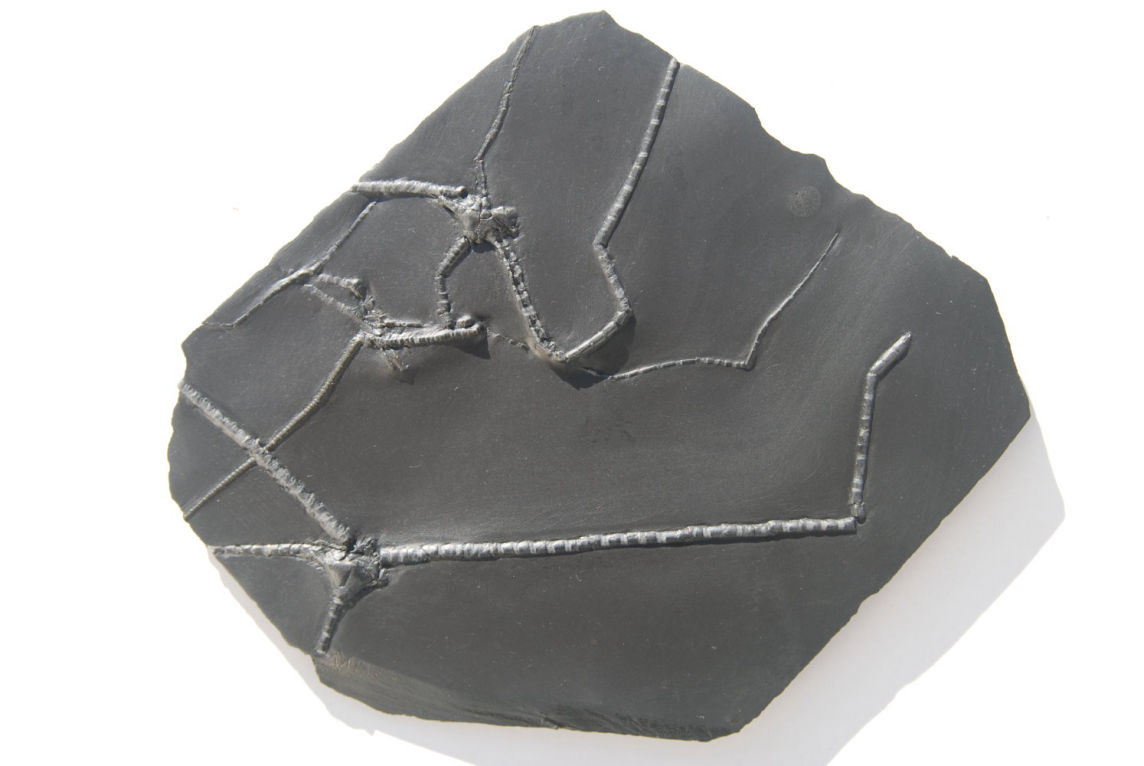
12.5×15 cm (matrix)
Bundenbach; Obereschenbach mine
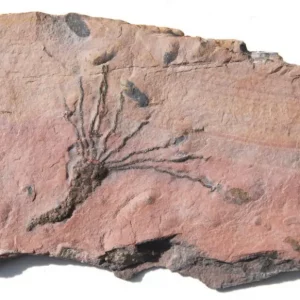
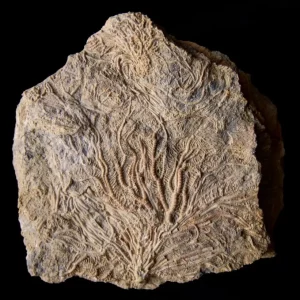
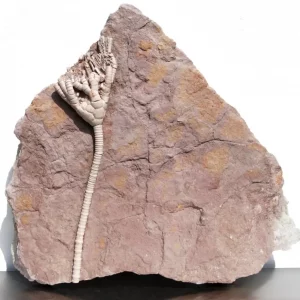
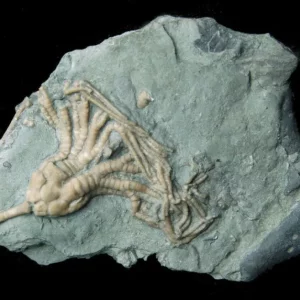
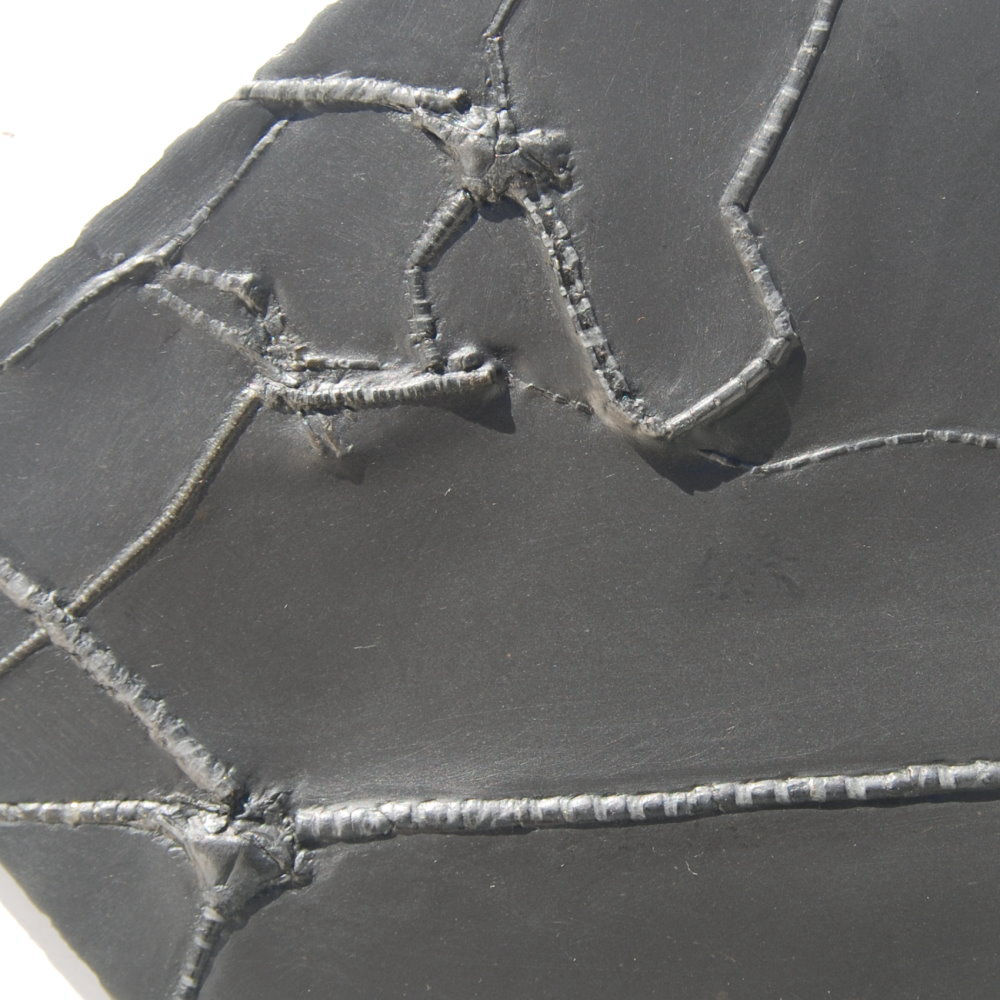
Delicate plate with crinoids of the very rare species T. koenigswaldi, unbroken, decorative.
Triacrinus – The elegant minimalist of the Hunsrück slate
Beauty through reduction: an extraordinary form experiment in evolution.
Sometimes the greatest fascination lies in simplicity. This species is living proof of that. While other crinoids relied on complex arm forks and thorny armor, this species chose a radical path: minimalism. The result is a fossil of captivating, almost modern clarity that immediately stands out in any collection thanks to its unique silhouette.
The fine details – what makes Triacrinus so special:
- The “three-plate base”: The structure of the calyx gives the genus its name. It consists of only three unequal basal plates, on which six radial plates rest. This reduced, conical chalice is a prime example of efficient skeletal architecture.
- Endless, undivided arms: The arms are the most spectacular feature. In contrast to almost all other crinoids, this species has no forks at all. The arms are extremely long, completely undivided and look like fine, elegant lines growing up from the calyx.
- A mirror image in the crown: Fascinatingly, the anal sac looks deceptively similar to the arms – long, narrow and reduced. This gives the fossil an almost perfect symmetry and a vertical dynamic that is unparalleled in shale rock.
- The comparison of species:
- Triacrinus elongatus is the slender, upright form.
- In contrast, the much rarer species Triacrinus koeniswaldi appears much stockier: the calyx is wider, the arms are shorter and the entire skeletal elements are more massive.
A jewel for systematic depth
This representative is indispensable in a collection that shows the diversity of crinoid building plans. It represents the extreme of specialization. Where other crinoids look like magnificent trees, the crinoid is more reminiscent of graceful dune grass swaying in the currents of the Devonian Sea.
Why Bundenbach collectors love this fossil
Triacrinus is not a fossil that impresses with its sheer mass, but with its graphic quality. A well-preserved piece looks like a fine ink drawing on a dark slate. It is the ideal object for collectors who appreciate the scientific peculiarity of reduced forms and are looking for an aesthetic counterweight to the complex branched species.