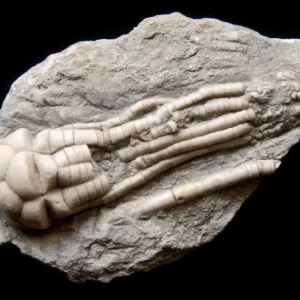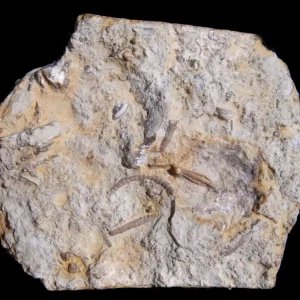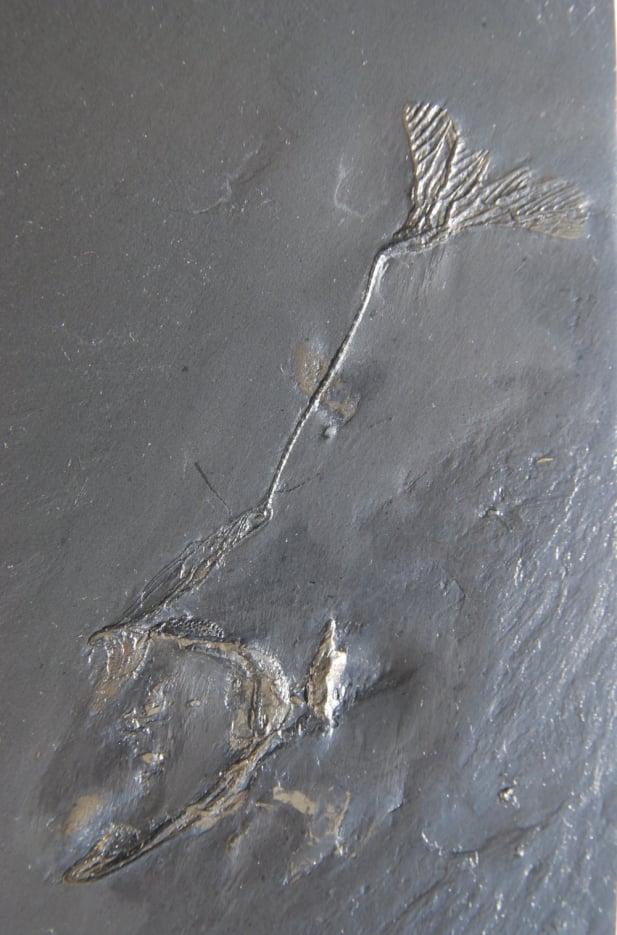
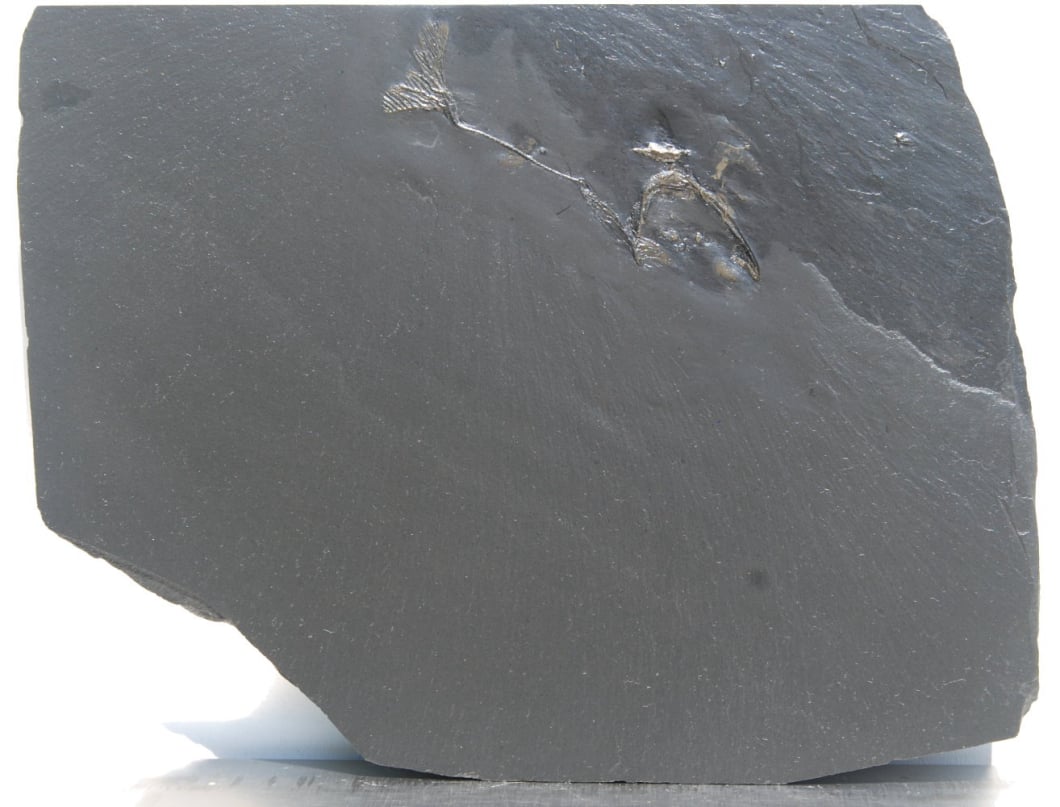
Bundenbach Hapalocrinus elegans on Chotecops rest
7 cm (fossil), 16×21 cm (matrix)
Bundenbach; Obereschenbach pit
Delicate slab with juvenile crinoid, sitting on trilobite rest, unbroken. Jewel.
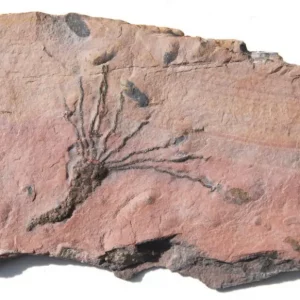
Hapalocrinus frechi – The prickly beauty of the Hunsrück slate
A graceful classic from the crinoid group
Crinoids are among the most aesthetically pleasing examples of prehistoric times. This species is one of the best known and most popular types of Hunsrück slate. With its widely fanned arms and characteristic spiky structures, it lends every slate slab an incomparable elegance.
The fine details – how to recognize Hapalocrinus frechi:
Although the distinction to the related species H. elegans is often blurred, frechi has very specific characteristics that make collectors’ hearts beat faster:
- The “armament”: Characterized by one or two distinctive, long spines directly on the radial plates as well as further, alternating spines on the upper dorsal sides of the arms. These fine details are proof of excellent preservation.
- The arm system: The arms fork at least twice (dichotomous), which usually results in a magnificent crown with 20 arm ends. The fine arm appendages (pinnulae), which are rhythmically attached to every second arm limb, are particularly delicate.
- The stalk: In contrast to other species, the stalk of Hapalocrinus frechi is round and made up of interesting, double-cone-shaped limbs – a structure that gives the fossil additional plasticity.
A special paleontological feature: guest finds
An absolute highlight for specialists: In rare lucky cases, it is possible to observe how the Platyceras snail has attached itself directly to the anal sac of the sea lily. This symbiosis (or parasitism) offers a fascinating insight into the biology of 400 million years ago.
Why Bundenbach fossil collectors love this species
Slates that show not just a single specimen, but entire colonies, are particularly popular. When individuals of different ages – from small juveniles to majestic, fully-grown lilies – lie side by side, the slab becomes a snapshot of an ancient habitat.