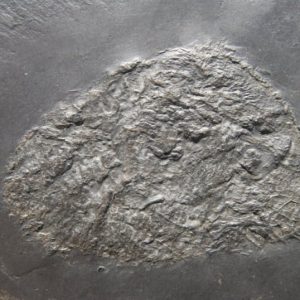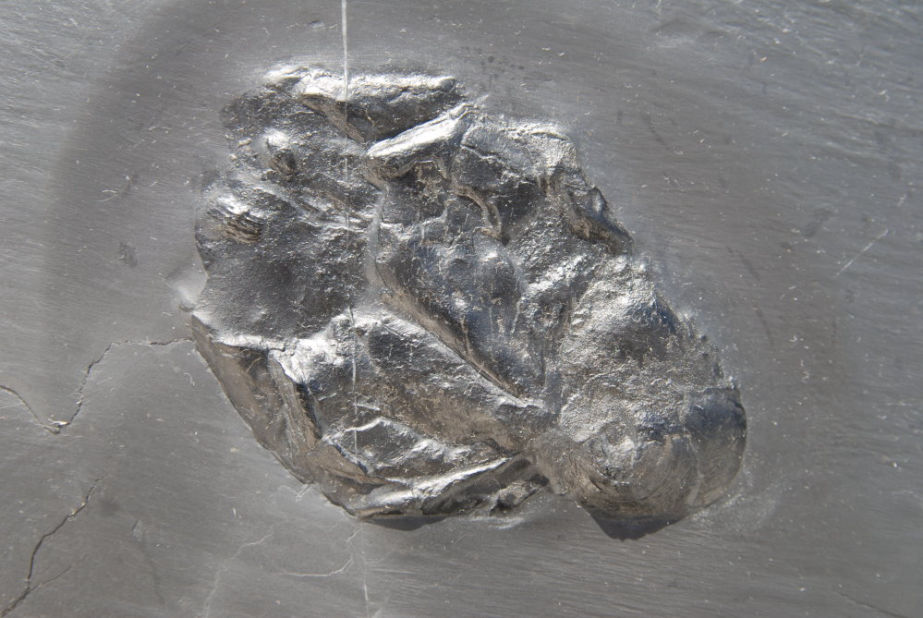
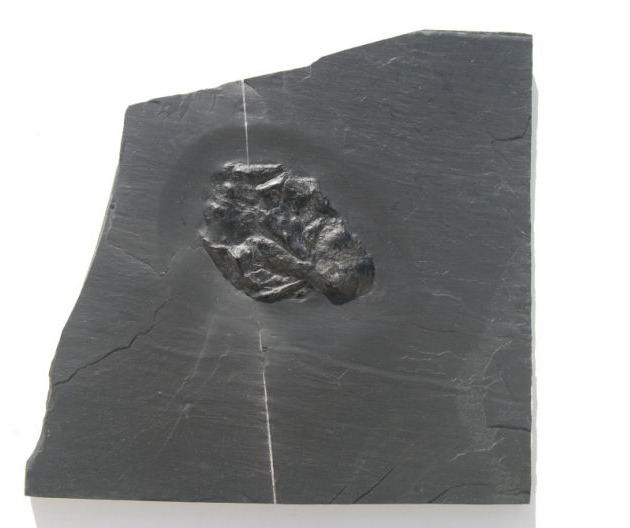
Bundenbach Conularia tulipa on Orbiculoidea with Chotecops Rest
8 cm (fossil), 21×22 cm (matrix)
Bundenbach; Obereschenbach pit
Rare association of a conularia, sitting on brachiopod, with trilobite remnant Chotecops. Unbroken slab with excellent details.
Genus Conularia – The enigmatic pyramids of the Hunsrück slate
Geometry meets mystery: unique, square-edged fossils that have fascinated collectors and scientists for centuries.
In a world full of organic curves, the genus Conularia immediately catches the eye. With its strict, pyramid-shaped form and fascinating surface structure, it almost looks like an artificially created artifact. But behind this bizarre shape lies one of the most interesting inhabitants of the Devonian Sea – a sessile predator that has perfected symmetry.
The distinctive features – what makes Conularia so unmistakable:
- The square pyramid: The body (the testa) has the shape of an elongated, four-sided pyramid. Each of the four sides has an identical structure, giving the fossil a perfect, four-rayed symmetry.
- Finely ribbed cross structure: The surface is a tactile experience. Fine, mostly curved transverse ribs cover the bowl. In the middle of each side surface, these ribs often meet in a striking longitudinal line (the center line), which is reminiscent of a delicate herringbone pattern.
- Phosphatic preservation: In contrast to calcareous shells, conularia shells consist of a mixture of chitin and phosphate. In Hunsrück slate, this often leads to excellent pyritization, with the ribs shining like golden engravings on the dark rock.
- Variability of the species: In Bundenbach, various species are found that differ in their opening angle (slender vs. squat) and the density of the ribs. This variance makes it an exciting subject to collect within a genus.
A paleontological mystery from Bundenbach
For a long time, conularia were misunderstood as snails or tube worms. Today we know that they were probably relatives of jellyfish. They lived with the tip anchored in the mud or attached to hard ground and caught their prey with tentacles that protruded from the wide opening. A piece of Conularia is therefore nothing less than the skeleton of a “sedentary jellyfish”.