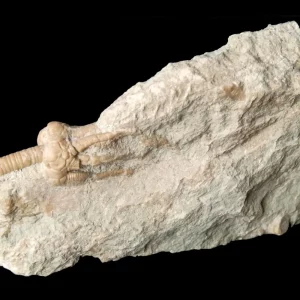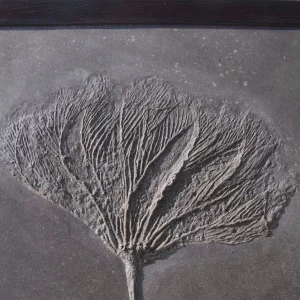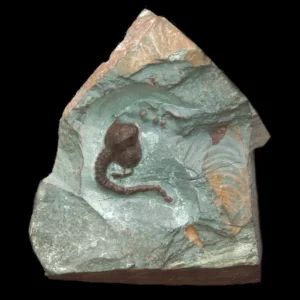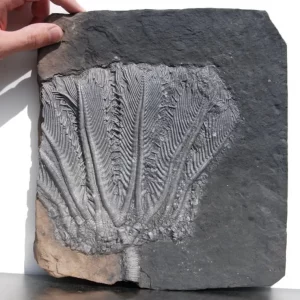
Bundenbach Codiacrinus schultzei
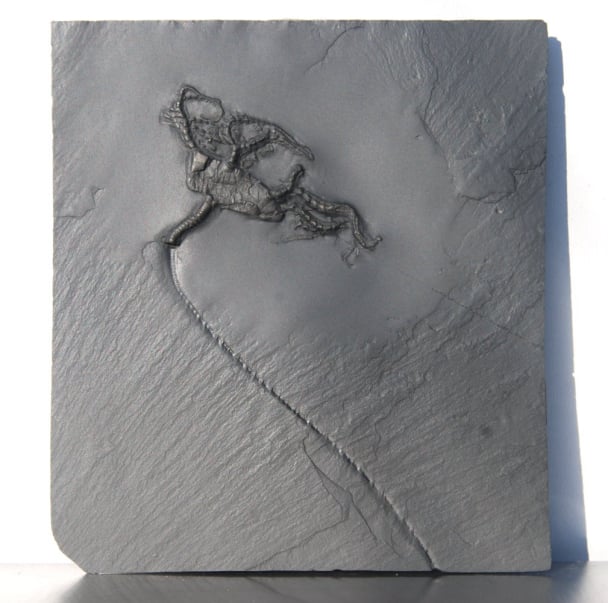
6.0 cm (crown), 11.5×13 cm (matrix)
Bundenbach; Obereschenbach mine
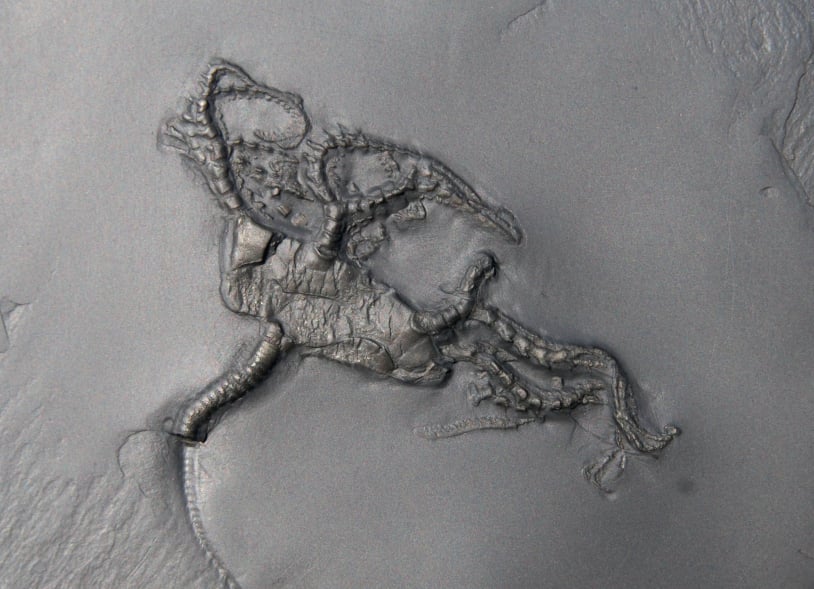
Aesthetic sea lily on unbroken plate, rich in detail.
Codiacrinus schultzei – The imposing sea lily of the Hunsrück slate
Solid, perfectly formed and of rare aesthetics.
If you love Devonian crinoids, this species is a must-have. This crinoid is not a delicate lightweight, but an impressive representative of the Inadunata, which impresses with its unusual dimensions and its clear, almost architectural structure. A gem for collectors looking for something special.
The distinctive features – what makes Codiacrinus schultzei so unique:
- The monumental chalice: The centerpiece of this species is the exceptionally large, bowl-shaped chalice. In contrast to many other species, this body appears solid and stable. The lower arm areas are not rigidly fused here, but “freely” inserted into the calyx – a classic characteristic of the Inadunata that is particularly evident here.
- Horseshoe joints & arm architecture: It’s worth looking through a magnifying glass: the upper radial plates show striking, horseshoe-shaped joint surfaces. From here, a complex system unfolds: the arms fork three times (dichotomous), giving the crown an impressive density.
- The “armored” tips: The often curled tips of the arms are a fascinating detail. Similar to Taxocrinus, they appear almost protective, but this genus goes one better: the tips are covered with fine, small spines – a defensive and at the same time filigree detail that comes into its own with good preparation.
- The characteristic stalk: The stalk is also an identifying feature. It has no side arms (cirri) and tapers elegantly towards the bottom. The strongly serrated seams of the stem limbs are particularly aesthetically pleasing, appearing like fine teeth and giving the fossil a wonderful feel.
A highlight for every systematic Bundenbach collection
The perfect contrast to the fine Hapalocrinus species. It represents the resilience of the Devonian reef. A specimen with well-preserved, toothed stem limbs and the typical horseshoe-shaped arm base is not only a scientific document, but a true design object of nature.