Bundenbach Bactrocrinites jaekeli + Pentremidea
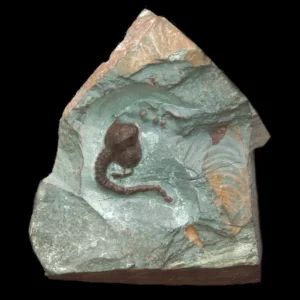
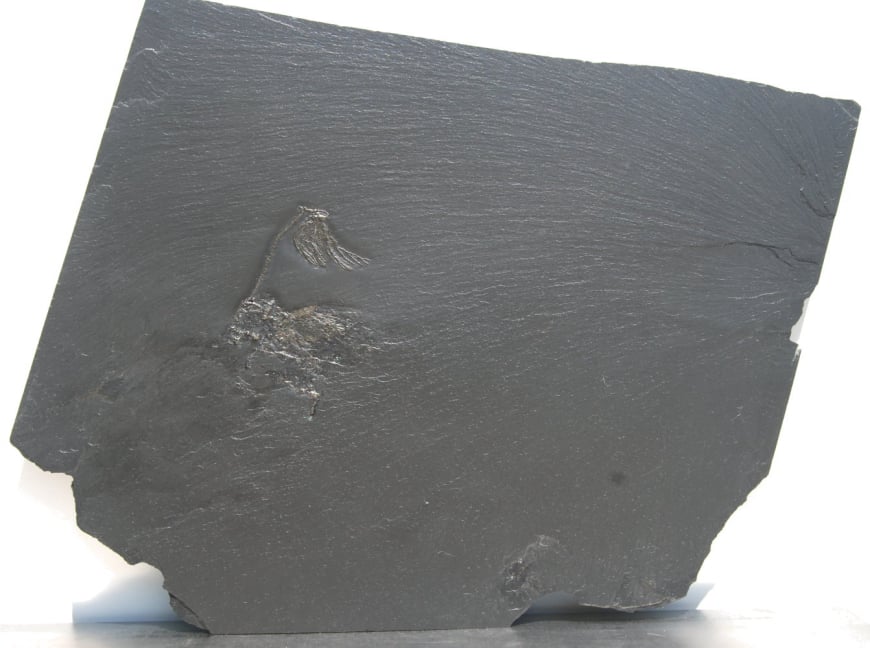
7 cm (fossil), 26×32 cm (matrix)
Bundenbach; Obereschenbach pit
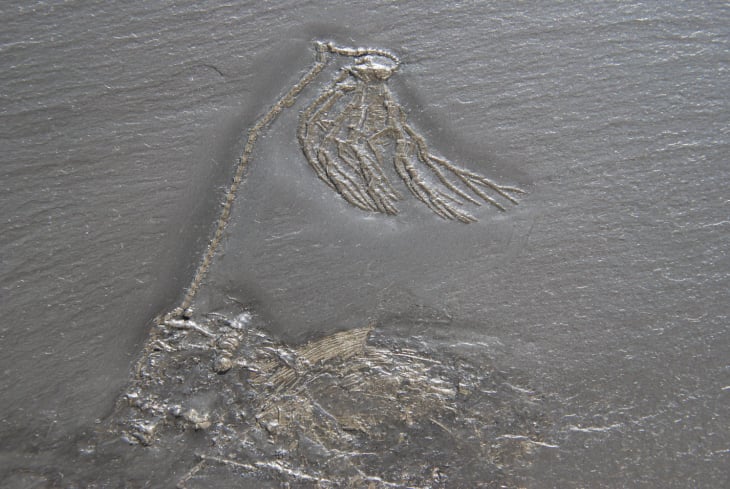
Unbroken slab with complete, juvenile crinoid Bactrocrinites jaekeli, attached to a trilobite remnant and associated with remains of a very rare pentremite. Very delicate.
Bactrocrinites jaekeli – The slender elegance of the Devonian Sea
A masterpiece of symmetry: filigree and of captivating geometric clarity.
When talking about aesthetic crinoids, this species is a must. This genus is the epitome of vertical elegance. While other species are dominated by massive calyxes, Bactrocrinites impresses with an almost fragile, elongated silhouette that immediately stands out as a graphic accent in any collection.
The fine details – how to recognize Bactrocrinites jaekeli:
- The distinctive anal sac: As a representative of a group with clearly visible anal structures, the animal has a long, narrow anal sac. This blends harmoniously into the overall picture and remains discreetly within the crown – a feature that emphasizes the vertical line of the fossil in perfectly preserved specimens.
- The “V-shaped” calyx: The extremely pointed, conical calyx is an unmistakable feature. It looks like an elegant funnel that forms the base for the rising arms. This geometric severity is a highlight for lovers of clear shapes.
- Slender arm architecture: The arms of B. jaekeli are the antithesis of massiveness: slender and without pinnulae (fine secondary branches), they appear puristic and modern. They fork three to four times dichotomously, which gives the crown a fine, fan-like structure without overloading it.
- The “string of pearls” in the rock: The stem is a particular aesthetic delight. While it provides stability directly at the base of the calyx with striking, pentagonal limbs, it transforms into a typical, pearl-like structure towards the bottom. This alternating structure gives the fossil a wonderful dynamic on the slate.
A paleontological specialty from Bundenbach: purism of form
In contrast to the often “playful” or spiny forms of other crinoids, Bactrocrinites jaekeli represents an evolution of minimalism. The absence of pinnulae directs the observer’s focus entirely to the multiple bifurcations of the main arms and the unusual calyx shape.