Bundenbach Eospondylus primigenius
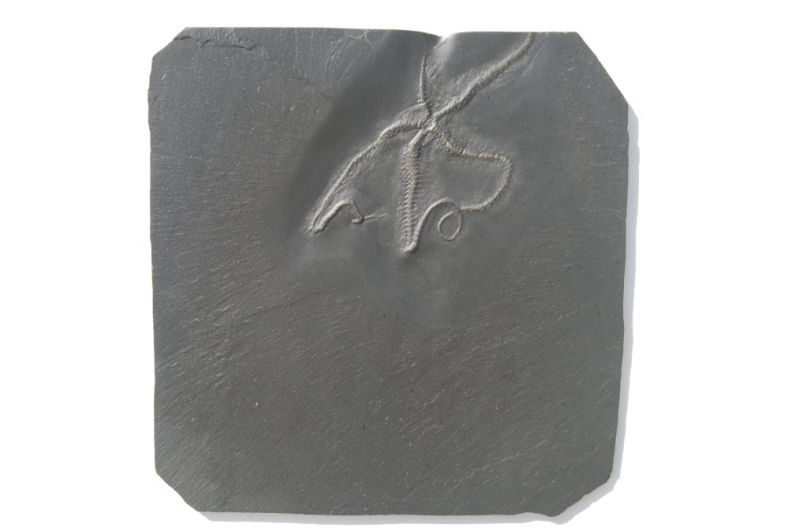
11 cm (fossil), 15×16 cm (matrix)
Bundenbach; Obereschenbach pit
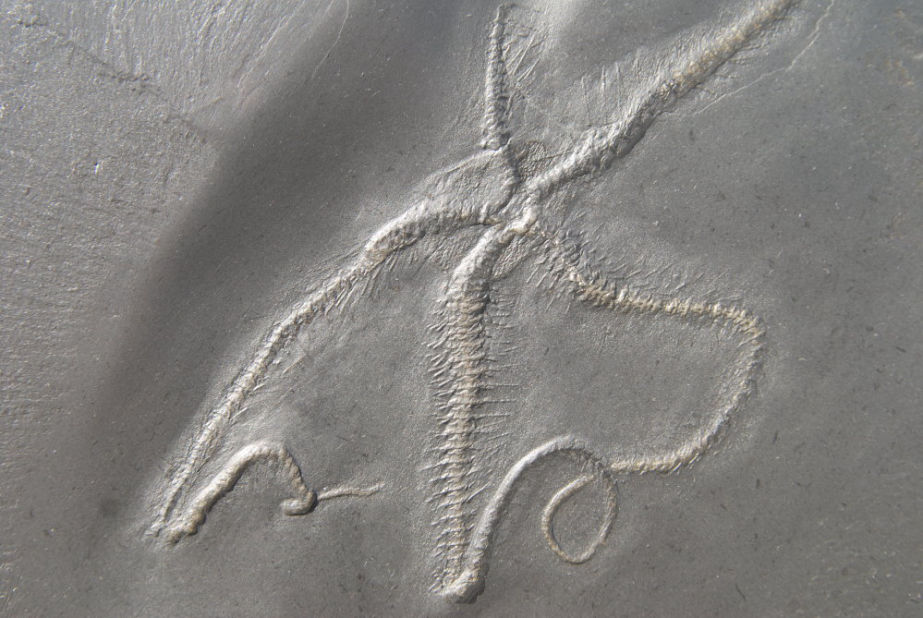
Rare, finely spiked serpent star on an unbroken plate. Excellent details.
Eospondylus primigenius – The rare treasure from Bundenbach
A filigree jewel for connoisseurs of Devonian brittle stars.
While species such as Furcaster are the classics of the Hunsrück slate, Eospondylus primigenius is a real specialty. It is closely related to the genus Furcaster – which can be recognized by the characteristic ambulacral plates fused into vertebrae – but it is much rarer in terms of find frequency. In excellent condition, this genus is therefore often the target of passionate specialists.
The fine details – anatomy in a class of its own:
- Characteristic body disk: The most striking difference to its relatives is the round disk. This only includes two arm vertebrae and is covered with tiny platelets arranged like roof tiles – a structure that gives the fossil an almost scaly, very elegant texture.
- Boots and sickles: The true mastery of nature is revealed under the microscope: The vertebral halves of the arms are distinctively boot-shaped, while the side shields have an elegant sickle shape.
- The showpiece: The spines: The absolute highlight, however, is its spines. Excellently preserved and masterfully prepared, the exceptionally long spines give the animal an almost radiant aura on the dark slate.
- Classical features: As with all true Ophiuroidea (brittle stars), the madropore plate is on the underside (oral) – an important detail for scientific classification.
Why an Eospondylus belongs in every Hunsrück collection:
Due to its moderately long arms, this brittle star appears very compact and harmonious. It is not as expansive as a Furcaster decheni, but impresses with its significantly higher rarity and the unique platelet structure of its disk.
Quality and preparation
As the long spines and delicate disk plates are extremely fragile, this genus requires the utmost precision when uncovering. A piece in which the “sickle shields” and the full crown of spines are visible represents a significant enrichment for any documentation of the Rhenish Lower Devonian.