
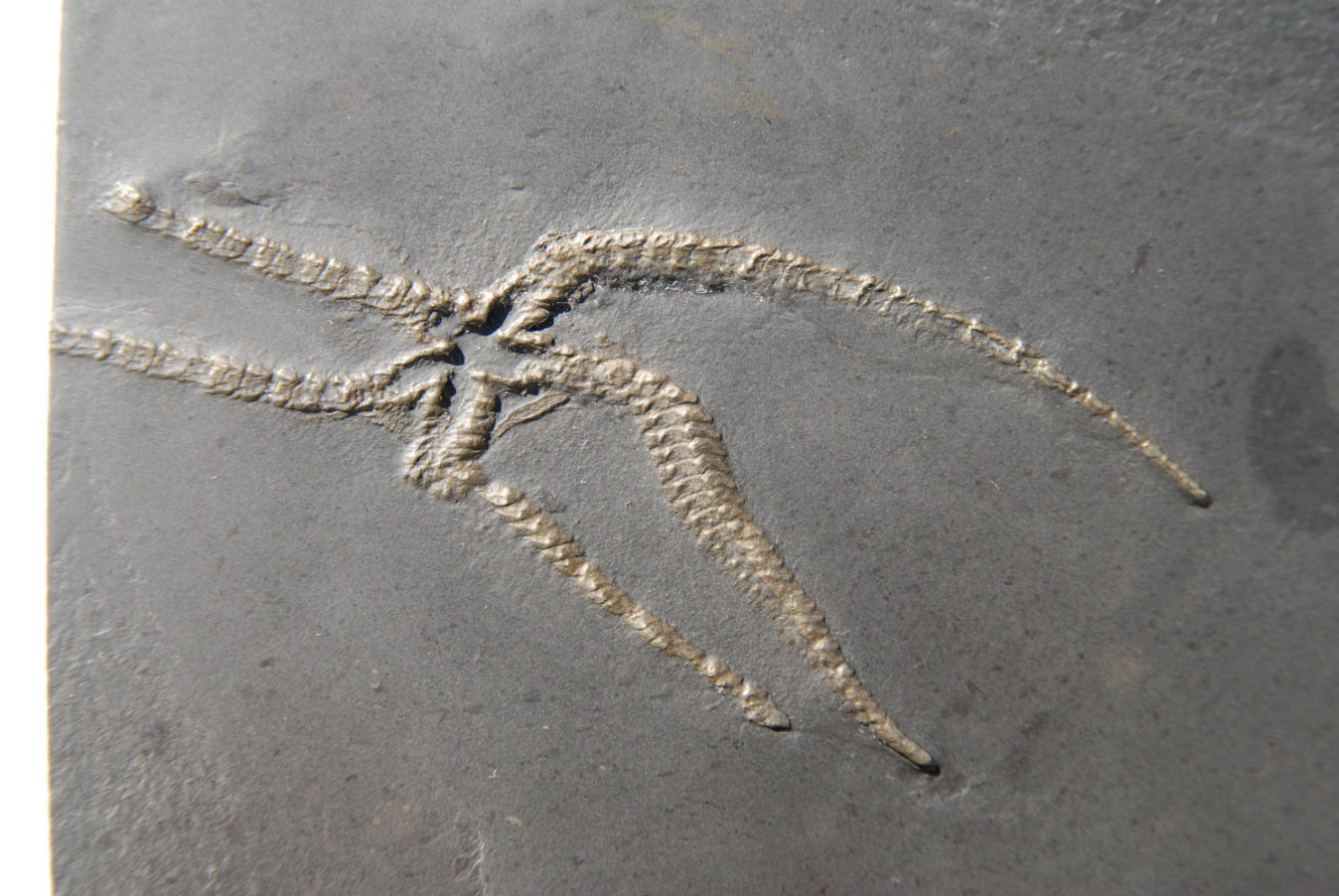
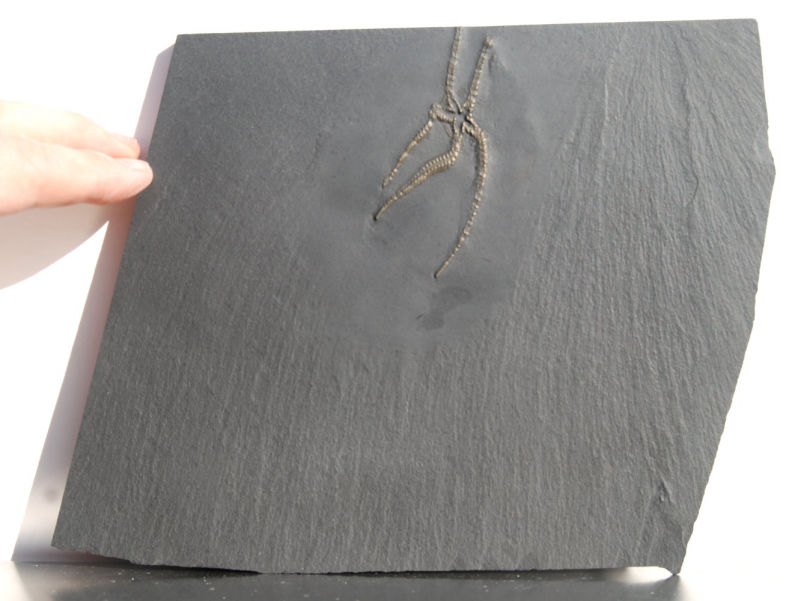
Bundenbach Furcaster palaeozoicus
8 cm (fossil); 17×19.5 cm (matrix)
Bundenbach; Obereschenbach pit
Specimen, adjusted with the flow, on an unbroken plate.
Furcaster – The delicate classic from Bundenbach
The best-known brittle star from the Hunsrück slate.
While large finds often attract attention, it is these finer ones that pose exciting puzzles for palaeontologists. It is considered the “little brother” of the robust Furcaster decheni and is probably the best-known brittle star of the Hunsrück slate. But don’t be fooled by its frequency: A perfectly preserved specimen is a filigree marvel of nature.
Scientifically explosive: A separate species, not a juvenile:
- Lack of intermediate forms: There are no smooth transitions in size that would indicate mere growth.
- Geographical separation: palaeozoicus is widespread in the sites near Gemünden, while the robust species decheni is completely absent there. This impressively proves that we are dealing with an independent, specialized species here.
The subtle differences – what collectors look out for:
- Disproportionately long spines: The most striking feature of this species is its unusually long spines. When these are preserved in the fine slate matrix, they give the fossil an almost graceful, “star-shaped” aesthetic.
- Elegant arm structure: In contrast to its more powerful relative, it lacks the bulging dorsal armor (dorsal vertebral ridges) along the arms. This gives it a much more delicate and slender appearance.
- Perfect aesthetics: Due to its compact size (usually only a few centimeters), these animals can often be wonderfully presented on aesthetic, uncut slates – an ideal specimen for the classic Bundenbach fauna.
A must for every Bundenbach fossil collection
This is the perfect introductory fossil to the world of Rhenish Lower Devonian stars, but is in no way inferior to the “giants” in terms of its scientific significance.


