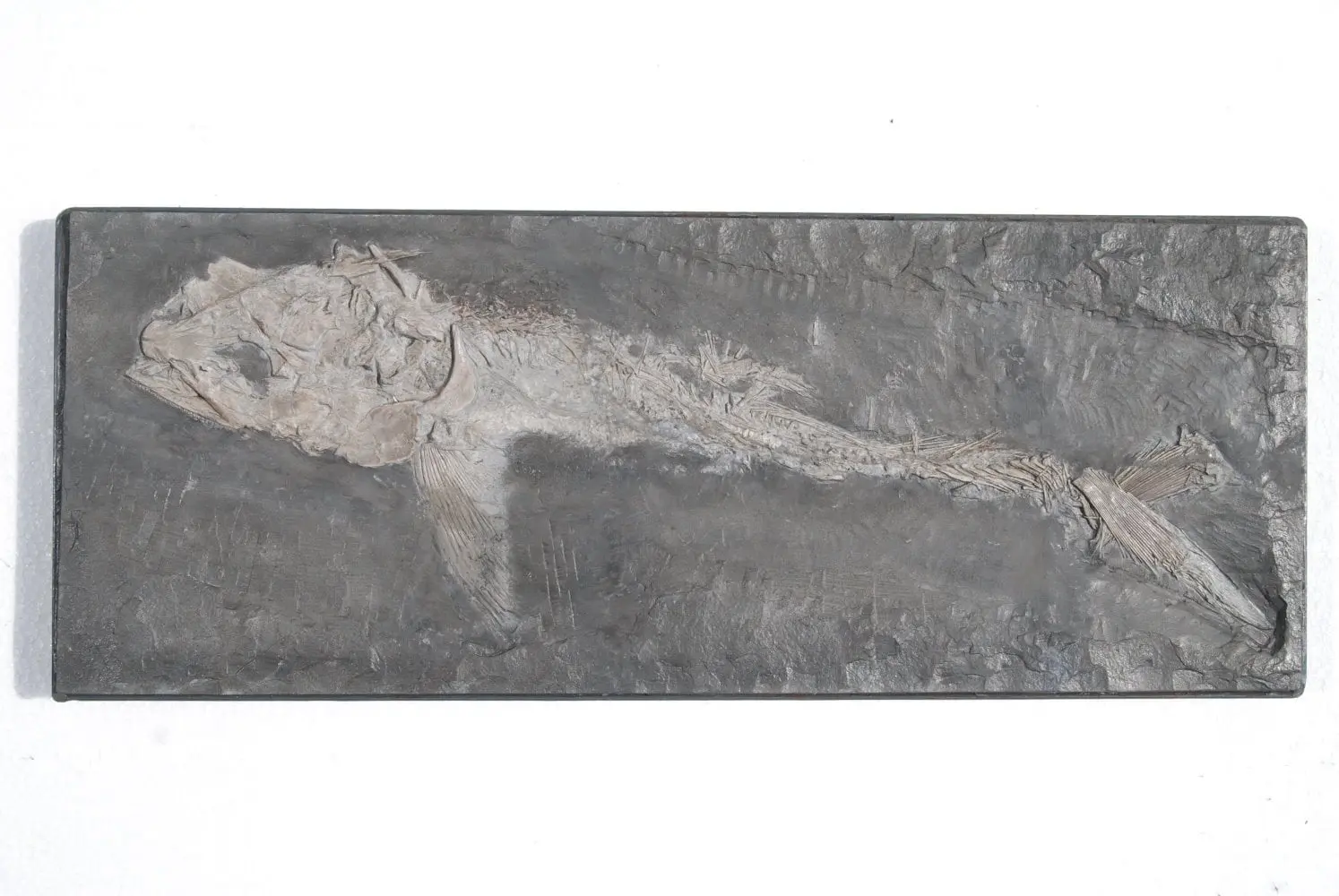
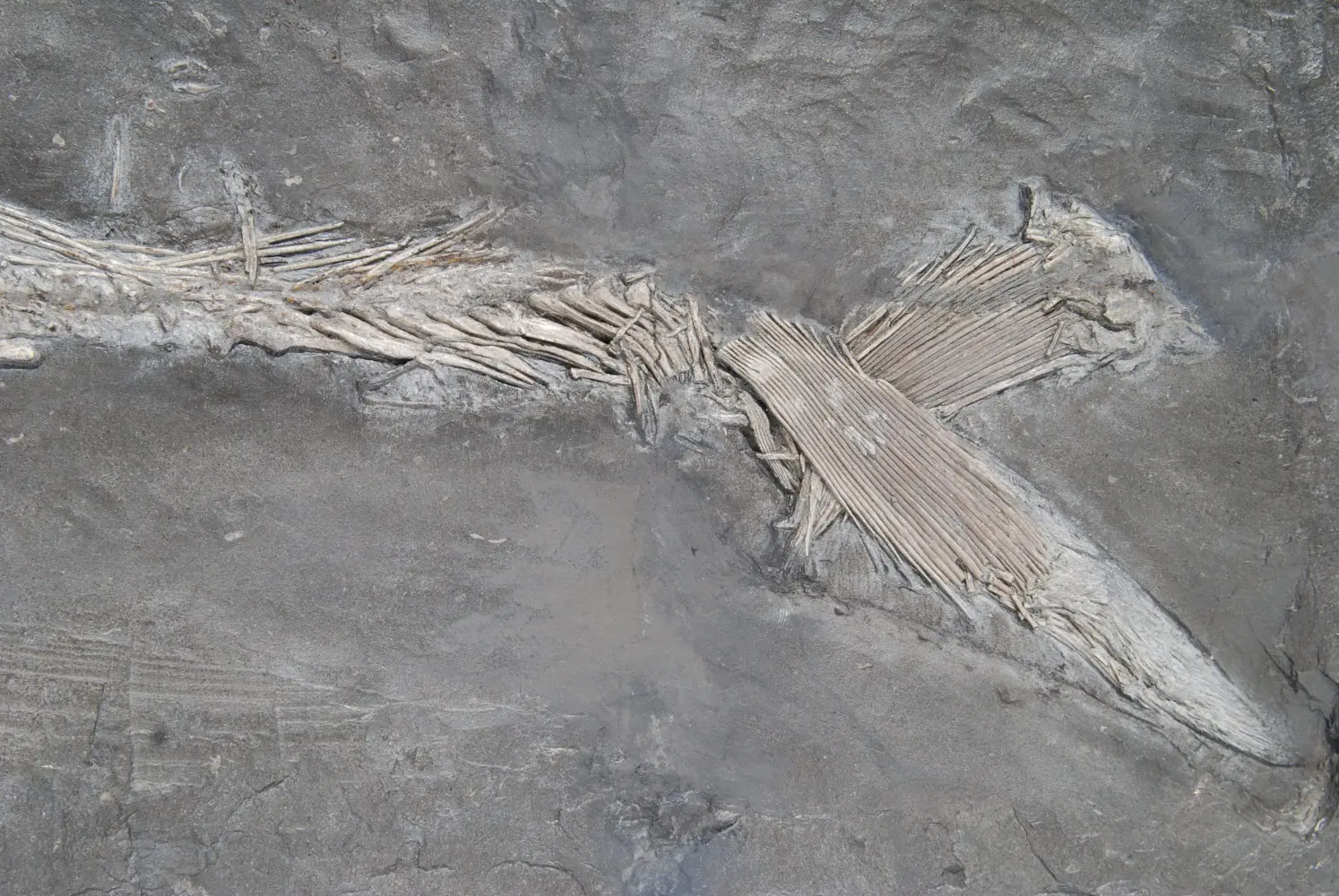
Saurostomus esocinus
54x21x4cm (matrix); 51 cm (fossil); 8.6kg;
Holzmaden; Lias Epsilon II/4
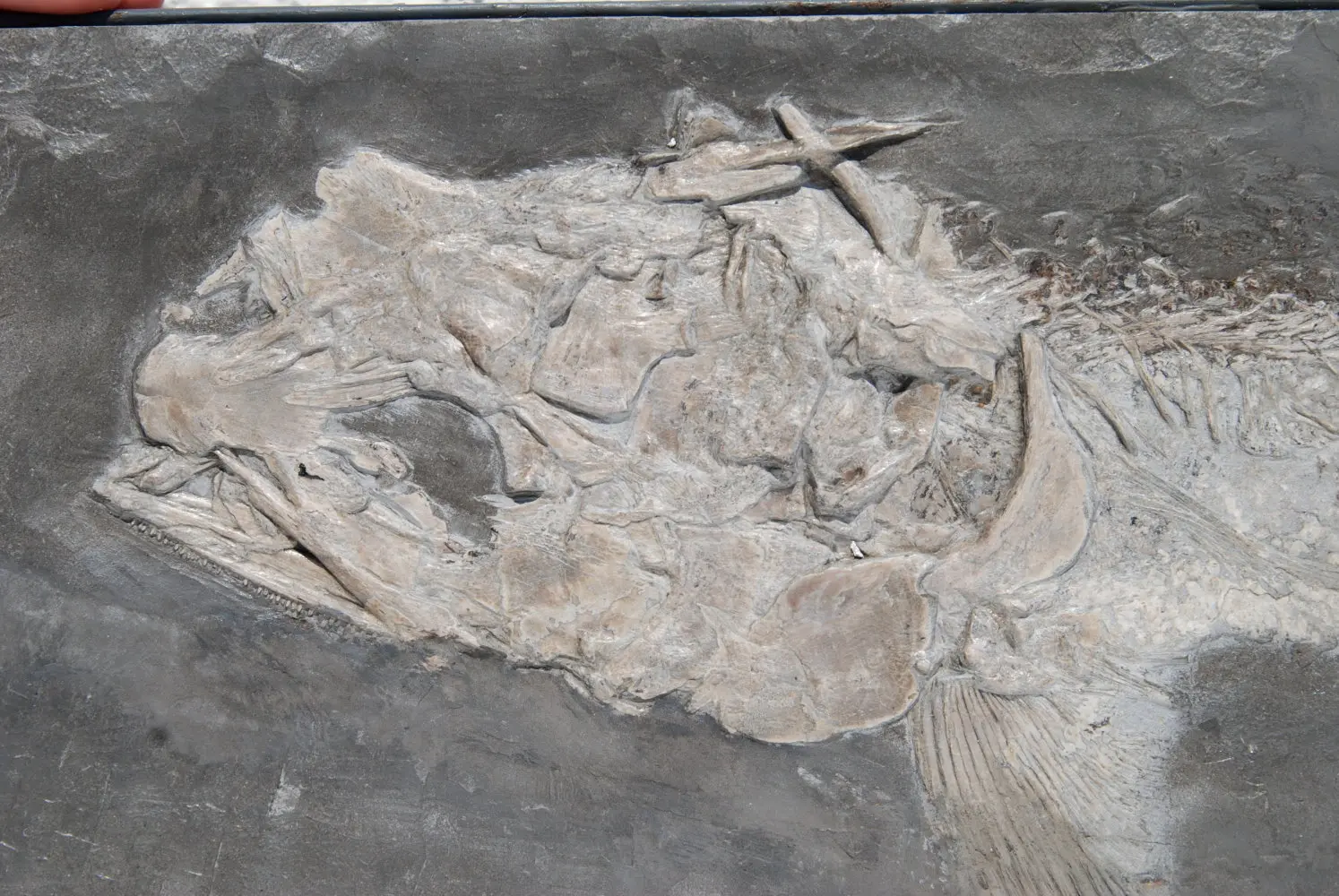
Stunning large, very rare species, with only minor restoration, impressive head with showing teeth, on natural matrix, with steel frame.
A museum quality piece for the serious collector. Offered nowhere else.
Pay
The hunter of the Jurassic Sea: Saurostomus esocinus from Holzmaden
Alongside the famous ichthyosaurs, Saurostomus esocinus is one of the most impressive predators that roamed the Lias Sea around 180 million years ago. The finds from the black Posidonia shale of Holzmaden (Lias epsilon) are sought-after top specimens for collectors and museums worldwide due to their anatomical precision and often spectacular preservation.
Biology and lifestyle
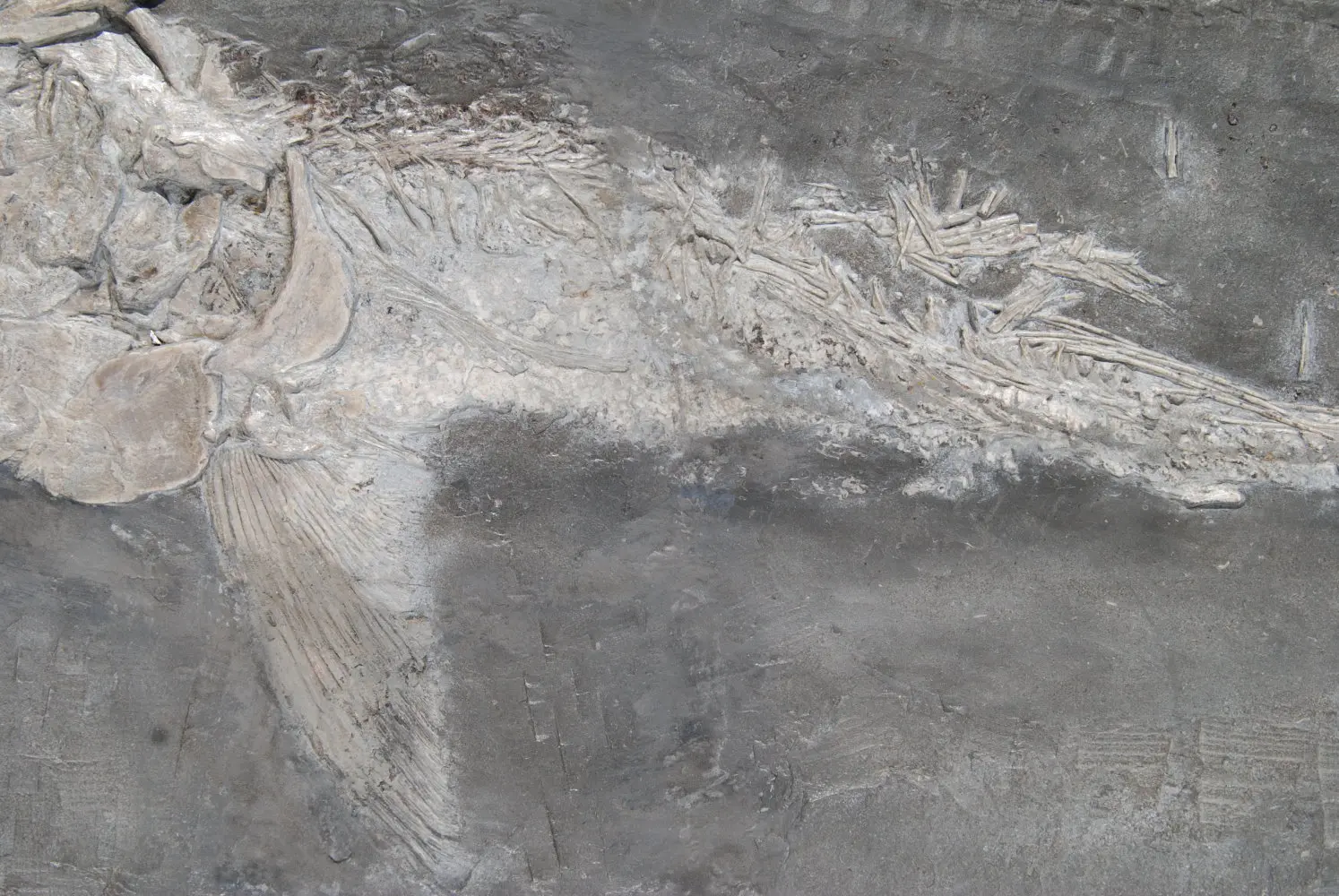
Saurostomus esocinus belongs to the extinct family Pachycormidae, a group of bony fish that morphologically already strongly resemble modern predatory fish. Its name – “pike mouth” – says it all: with its elongated, streamlined body and deeply cleft mouth, which was armed with numerous pointed teeth, it was a highly specialized hunter. It fed primarily on smaller fish and belemnites, with its powerful tail fin giving it the necessary acceleration for lightning-like attacks in the open waters of the Tethys.
The special feature of the Holzmaden finds
A Saurostomus fossil from the shale quarries around Holzmaden impresses with its exceptional preservation. In contrast to finds from other regions, not only the massive skull bones but also the filigree fin rays and even outlines of the soft tissue or stomach contents are often preserved here. The embedding in the fine-grained, dark rock allows the bony structures to stand out vividly and gives the piece a timeless, almost graphic aesthetic.
Holzmaden Conservation Site: A window into prehistoric times
Like the famous crinoids, this predatory fish owes its preservation to the extremely low-oxygen (anoxic) environment at the bottom of the Jurassic Sea. These conditions prevented decomposition by scavengers and enabled the formation of one of the most important fossil deposits in the world. A specimen of Saurostomus esocinus is therefore much more than a fossil – it is an impressive document of prehistoric hunting dynamics and an exquisite exhibit for any sophisticated palaeontological collection.