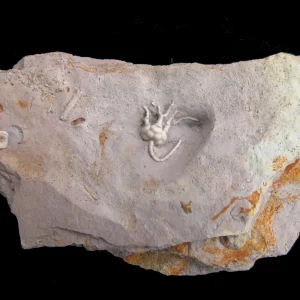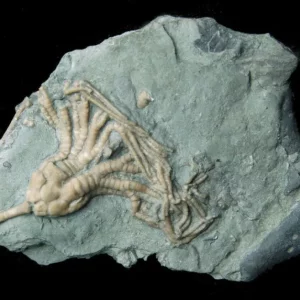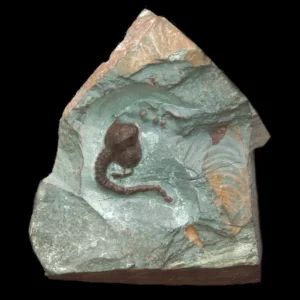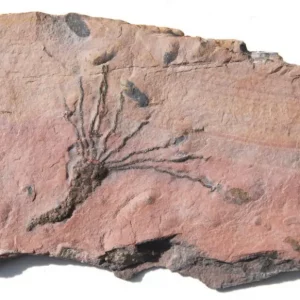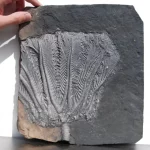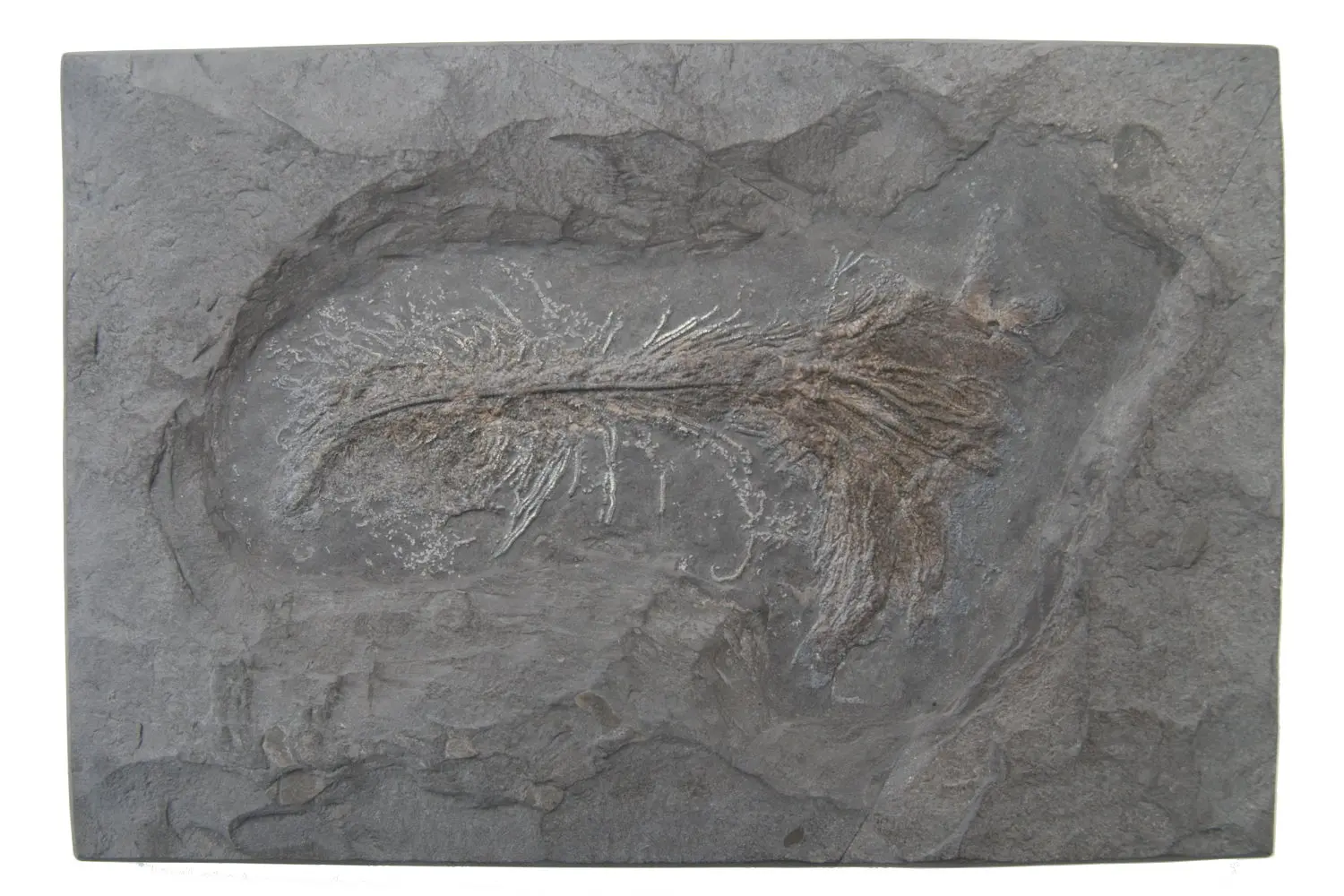
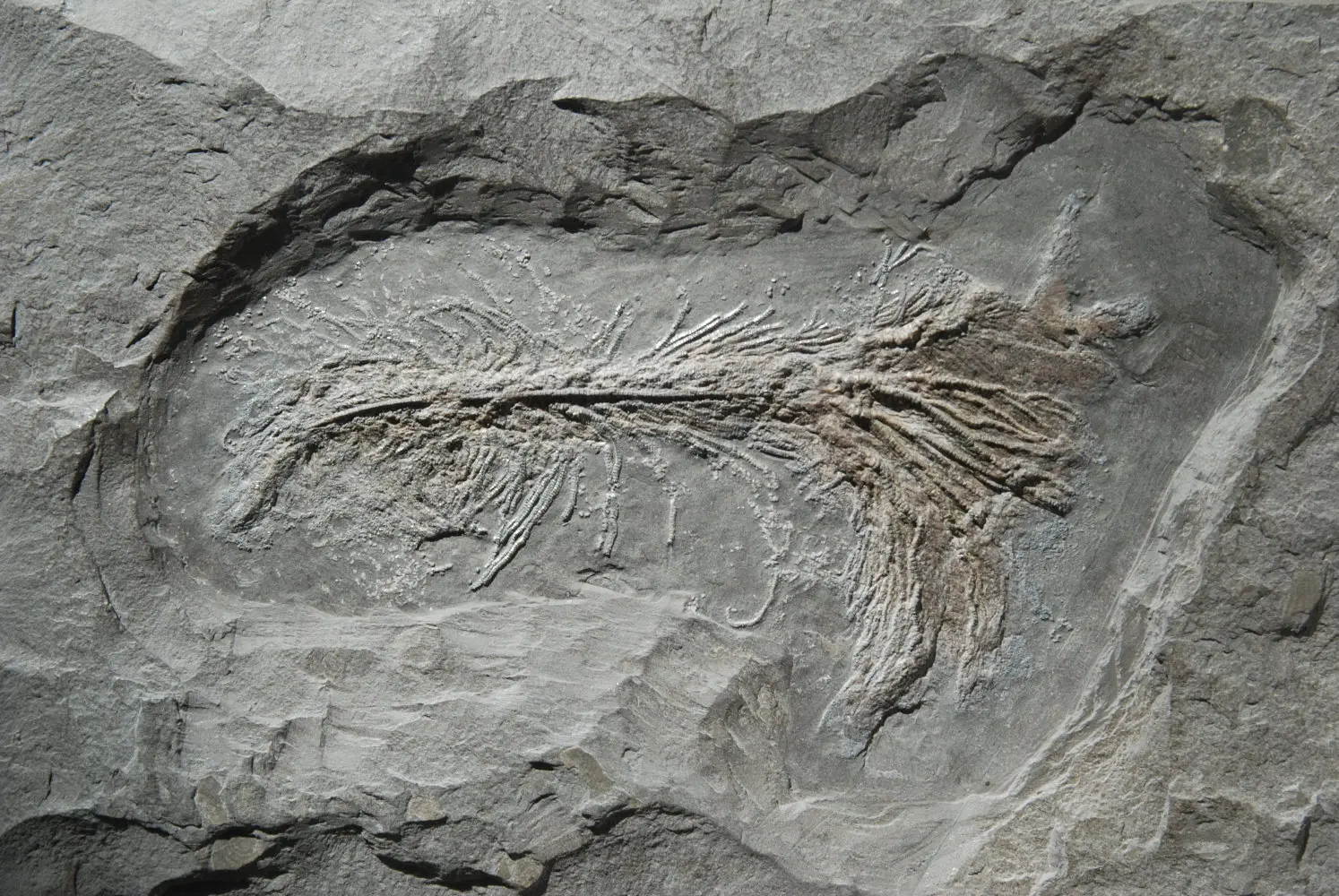
Pentacrinus dichotomus
50x50x4 cm, 7.2 kg,
Sinemurium, Black Ven Marls, Lyme Regis, England
Crinoid colony with over 12 perfectly preserved individuals.
A spectacular old find from about 50 years ago, finds of this type have not been made since then. Comparable pieces can be found in numerous museums.
Pentacrinites of this locality is of a similar age as Holzmaden, the deposit environment and the pseudoplanktonic way of life are also identical.
Pieces of this size are inevitably always recovered in several parts and must be put together professionally. There was no need for any additions (no composite), the back was stabilized by attaching two hooks for wall mounting. An extremely rare piece of museum quality.
sold
The “flower” of the Jurassic Sea: Pentacrinites dichotomus from Holzmaden
Although its name and appearance are reminiscent of a plant, Pentacrinites dichotomus is a fascinating animal from the group of echinoderms (Echinodermata), related to sea urchins and starfish. The finds from the Posidonia slate of Holzmaden are among the most spectacular fossils in the world, as they often form huge, filigree colonies that look like a fossilized garden.
Biology and lifestyle
Pentacrinites belongs to the class of crinoids (Crinoidea). Unlike many of its bottom-dwelling relatives, Pentacrinites dichotomus led a pseudoplanktonic lifestyle. The animals attached themselves with their long, flexible stalk to drifting tree trunks (driftwood) that drifted in the Jurassic Sea. They traveled through the ocean as passengers and fished plankton out of the current with their fern-like arms.
The name “dichotomus” refers to the multiple, fork-like division of the arms. This arm crown functioned as a highly efficient filtration apparatus. By attaching themselves to driftwood, they bypassed the often oxygen-poor conditions on the seabed and benefited from the nutrient-rich surface currents.
Anatomy and structure
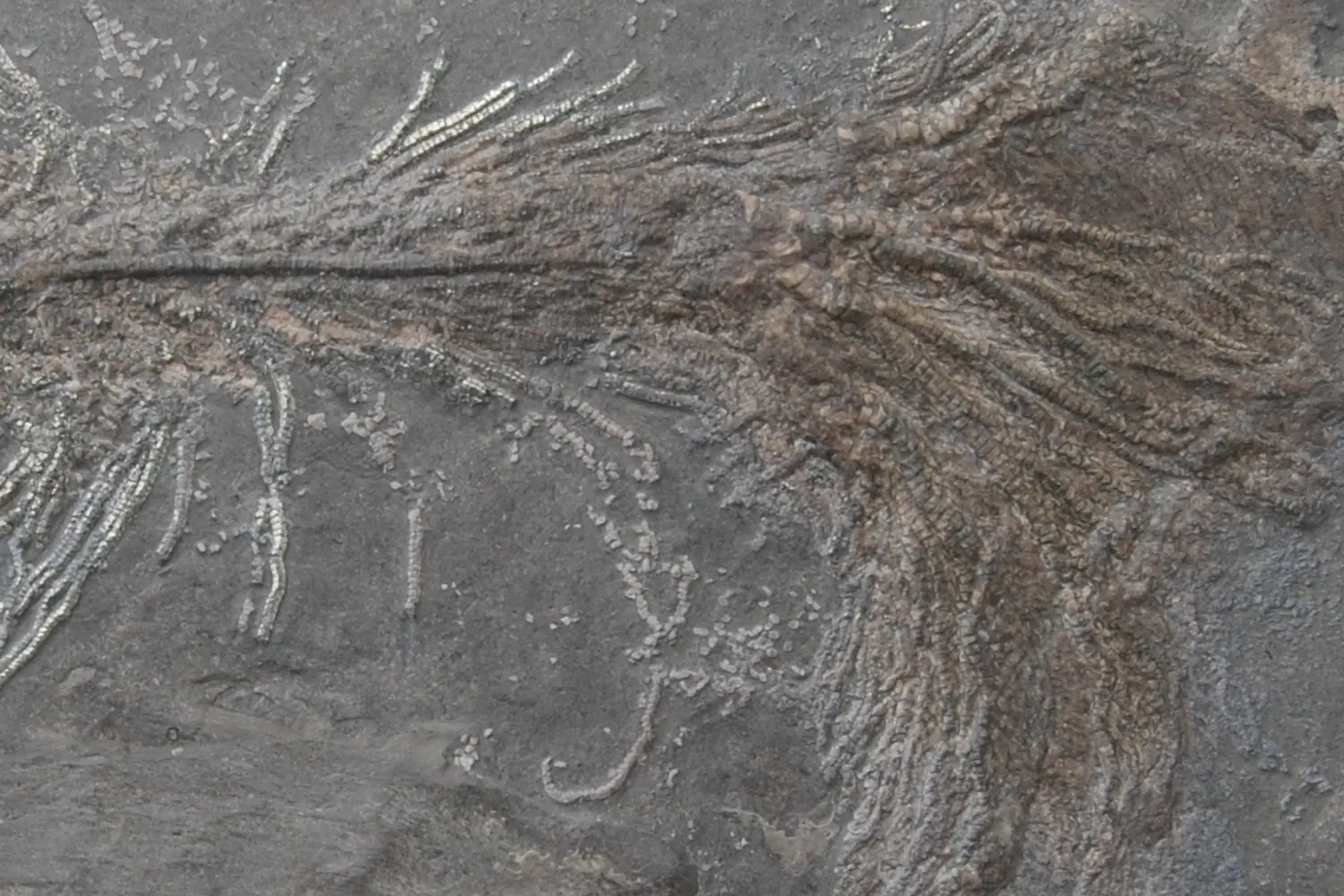
The skeleton of the pentacrinites consists of thousands of individual limestone limbs, the so-called trochites.
- The stalk: It has a characteristic five-rayed star shape in cross-section, which gave the genus its name(penta = five).
- The crown: The crown consists of countless fine pinnules, which often look like delicate feathers in the fossil. This enormous increase in surface area allowed the animal to sift even the smallest food particles out of the water.
The special feature of the Holzmaden finds
The preservation of pentacrinites in Holzmaden is a paleontological sensation. As the animals were often abruptly embedded in the anoxic mud when the driftwood sank, the filigree arm crowns were preserved in their full splendor.
- Golden sheen: Specimens in which the limestone links have been replaced by pyrite (fool’s gold) are particularly sought-after. These shine golden on the dark slate background.
- Colonies: Entire “lawns” of these animals are often found on a plate, documenting the former splendor of the drifting ecosystem.
A specimen of Pentacrinites dichotomus is a masterpiece of nature – a highly complex skeleton of incomparable symmetry and elegance that adds an almost artistic component to any sophisticated collection.