Bundenbach Chotecops ferdinandi
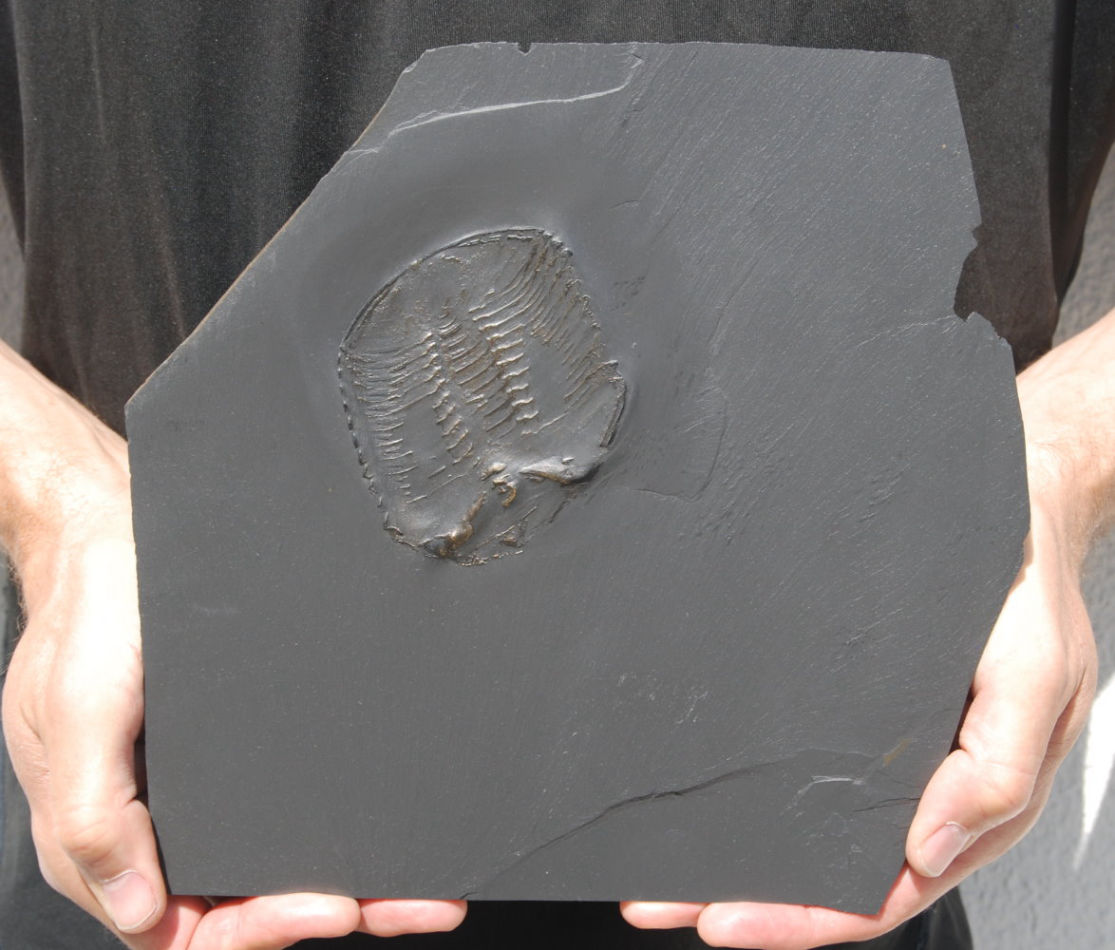
8×9 cm (fossil), 25×26 cm (matrix)
Bundenbach; Obereschenbach pit
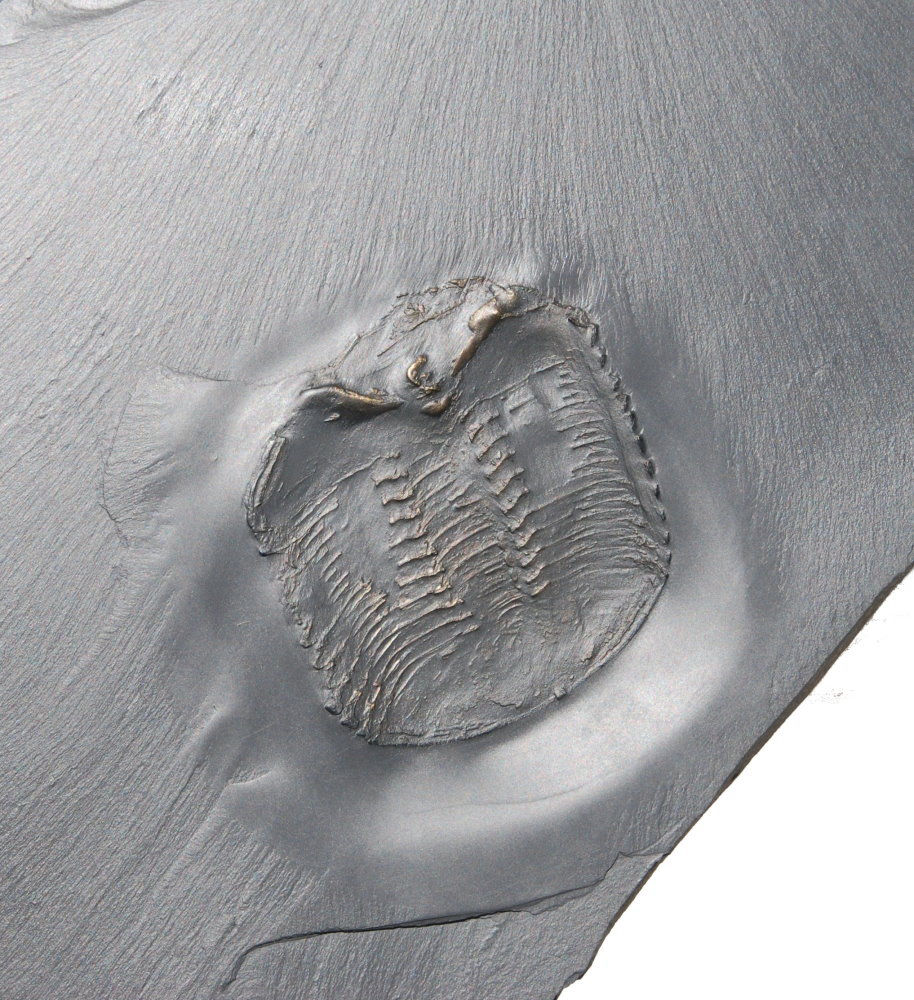
Unusually large specimen of a trilobite in ventral position, on unbroken slate.
Chotecops ferdinandi – The trilobite icon of the Hunsrück slate
The epitome of the Devonian trilobite with compound eyes.
When you think of fossils from Bundenbach, you immediately have its image in mind: Chotecops ferdinandi. It is the face of the Hunsrück slate. Even though it is considered the most common trilobite in the region, a perfectly preserved specimen – often transformed into radiant pyrite – is an aesthetic masterpiece that bridges the gap between biology and art.
The fascinating details – what makes Chotecops ferdinandi so special:
- The “hyper-eye”: One of the most spectacular features of this genus is the schizochroal eye. The large, individual lenses are often so excellently preserved that the complex optics of this hunter can still be studied today. Recent research even points to a highly complex visual system that concealed a separate small compound eye under each lens – a unique feature in the animal kingdom.
- The “pustule” glabella: Typical for this representative of the Phacopidae is the strongly curved glabella (the front of the head) covered with fine nodules (pustules). This structure gives the trilobite a striking, three-dimensional presence on the dark slate.
- Variability of husbandry: It is found in two fascinating forms of conservation:
- Elongated: Spread out in full splendor, often with visible thoracic segments (typically 11 in number).
- Curled up: In the classic protective posture reminiscent of modern woodlice – proof of the dynamics at the moment of embedding.
- Soft tissue miracle: The real highlight for Hunsrück slate specialists! Due to the unique pyritization in Bundenbach, structures are often visible in this trilobite that normally disappear: Feelers (antennae) and walking legs can protrude from the body like fine golden threads when masterfully prepared.
A leading fossil with a history from Bundenbach
Already described in 1880 in honor of the geologist Ferdinand Roemer, Chotecops ferdinandi is today considered the leading fossil of the Hunsrück slate. It represents an era in which Bundenbach became famous worldwide for its “X-ray fossils”, which revealed the secret anatomy of arthropods under the slate.