
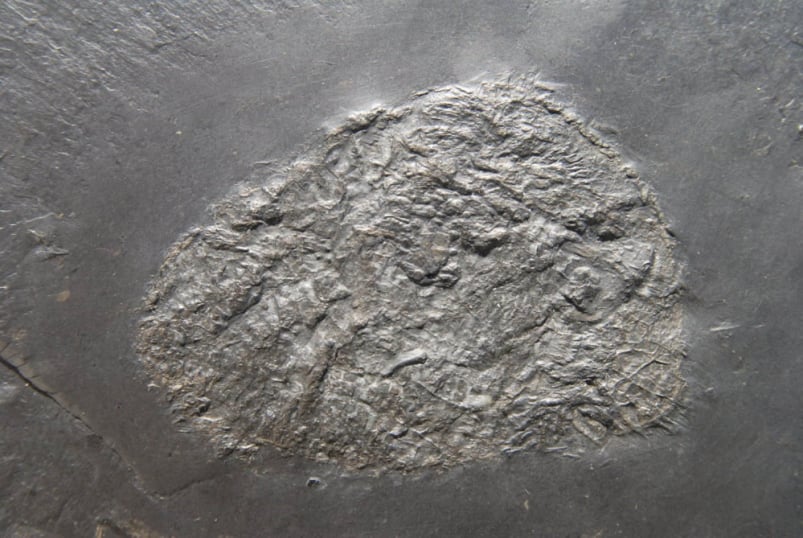
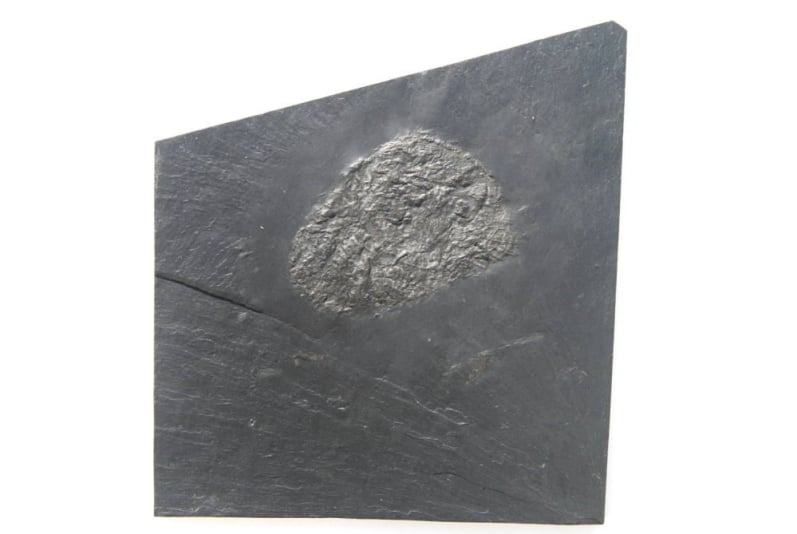
Bundenbach Plectodiscus discoideus
7 cm (fossil), 14×15.5 cm (matrix)
Bundenbach; Obereschenbach pit
Very rare specimen of a sailing jellyfish on unbroken plate with good details.
Plectodiscus discoideus – A miracle of tradition in the Hunsrück slate
The delicate trace of a medusa.
It is nothing short of a miracle that the soft, gelatinous bodies of jellyfish have survived for over 400 million years. Plectodiscus discoideus is not the shell of a mollusc, but the fossil imprint of a benthic (bottom-dwelling) or free-swimming jellyfish. To possess such a piece in the Hunsrück slate is to hold a moment of absolute transience in stone.
The fascinating details – what characterizes Plectodiscus discoideus:
- The shade geometry: The most striking feature is the disc-shaped shape of the shade. The concentric rings and radial structures show the fine anatomy of the Medusa. In the slate, Plectodiscus looks like a cosmic seal – flat, circular and of captivating graphic clarity.
- Soft tissue preservation par excellence: Since jellyfish have no skeleton, their fossilization is extremely rare. In the case of Plectodiscus, it is often the imprints of the gastral cavities or the umbrella edge structures that have been preserved by the fine sedimentation of the Hunsrück slate. A true testimony to biological fragility.
- Metallic shine in the dark: the organic material of these cnidarians has often been replaced by pyrite. When the fine structure of the jellyfish emerges as a shiny golden film on the black slate, the fossil becomes an aesthetic highlight that almost looks like a modern work of art.
- A look into the depths: the presence of Plectodiscus gives us valuable clues about the ecosystem of the Devonian Sea. As a predatory cnidarian, it was an important part of the food chain at that time – a “ghost” that now tells of past worlds carved in stone.
A rarity for connoisseurs of paleontology
While trilobites and crinoids are the classics from Bundenbach, medusae such as Plectodiscus discoideus are among the great specialties. For collectors who specialize in the evolution of invertebrates or unusual fossilization conditions, this “slate shell” is an indispensable document of the earth’s history.


