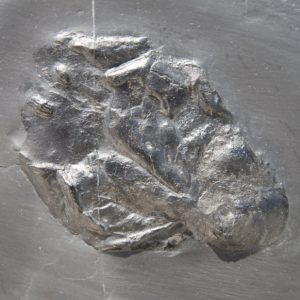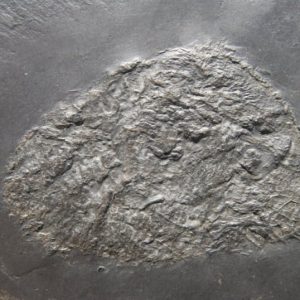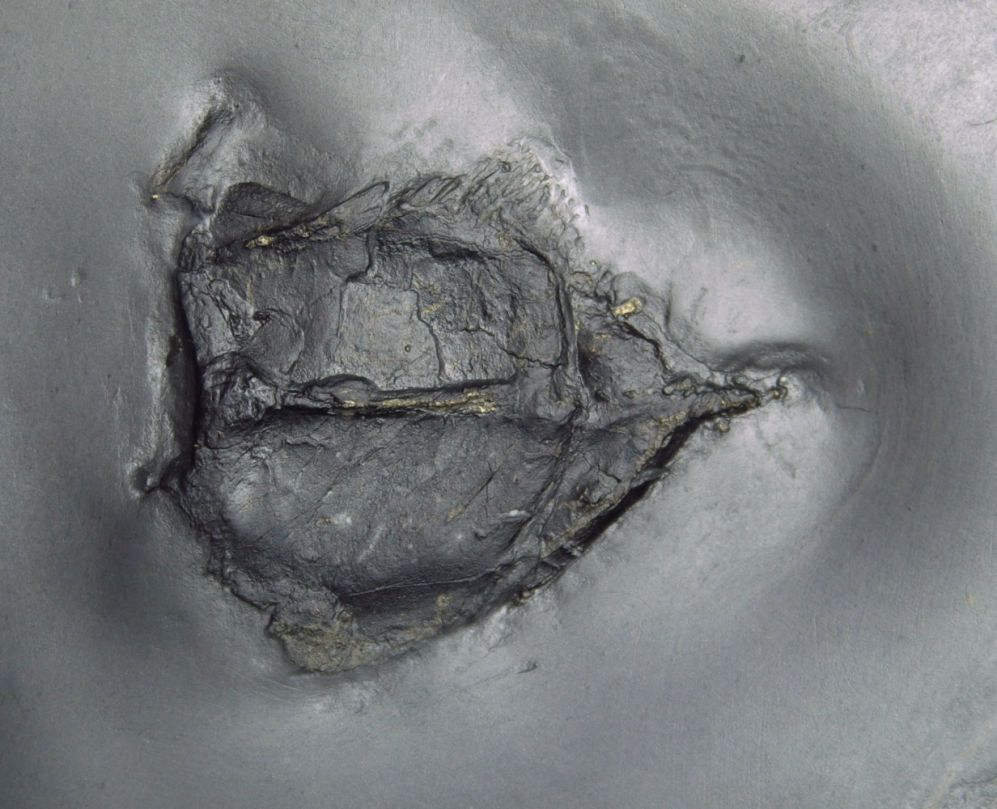
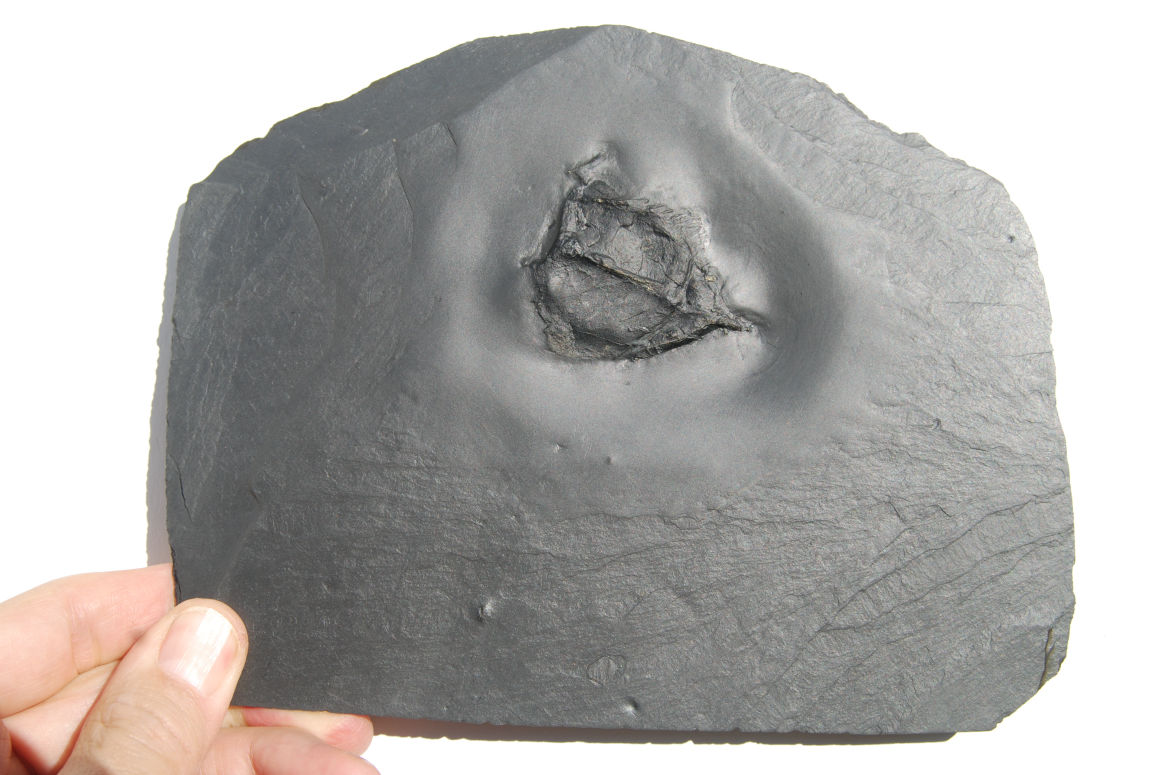
Bundenbach Nahecaris stuertzi
6 cm (fossil), 16×20 cm (matrix)
Bundenbach; Obereschenbach pit
Crab shell on unbroken plate. Beautiful example at an attractive price.
Nahecaris stuertzi – The armored submarine of the Hunsrück slate
A masterpiece of evolution: unique in its preservation, spectacular in its form.
Forget everything you know about ordinary crabs. Nahecaris stuertzi is a paleontological sensation. This large representative of the leaf crabs (Phyllocarida) looks like a cross between a modern lobster and a futuristic armored vehicle. A find from Bundenbach is the only opportunity in the world to see this animal in its soft-shelled form.
Scientific details – what makes Nahecaris stuertzi so unique:
- The two-lobed carapace: The most striking feature is the large, laterally compressed dorsal carapace. It enveloped the front body like two protective shells. In excellent finds, the surface shows a fine ornamentation that develops an impressive depth in grazing light.
- The “multifunctional tail” (abdomen): The powerful abdomen emerges from behind the carapace, ending in a fan-shaped tail spine (telson). This was often flanked by two lateral appendages (furca) – a perfect rudder for hunting in the Devonian sea.
- A miracle of X-ray palaeontology: Nahecaris became world-famous thanks to the X-ray studies of Wilhelm Stürmer. The slate often conceals the delicate limbs, such as the large prehensile antennae and the sensitive gill legs, which would inevitably have been lost in conventional fossilization.
- Predatory habitus: With its large compound eyes and powerful mouthparts, Nahecaris was a highly specialized hunter or scavenger that dominated the bottom zone of the Hunsrück Sea.
A fossils icon from Bundenbach
A Nahecaris is not a “mass fossil”. Its preservation requires extremely fortunate circumstances, as the organic carapace and long appendages decayed easily. A specimen in your collection documents not just an animal, but the gold standard of fossil preservation.