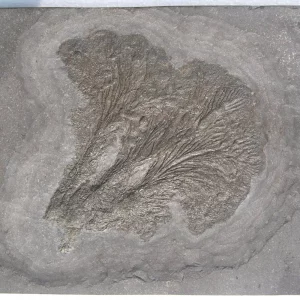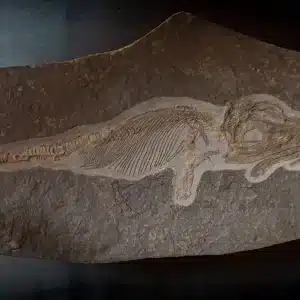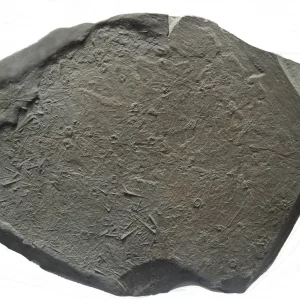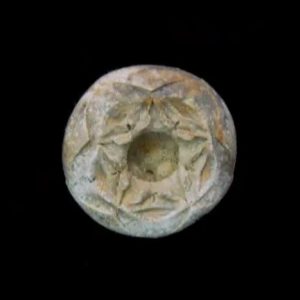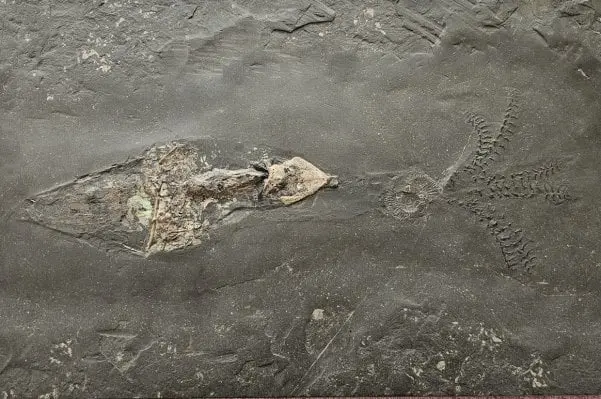
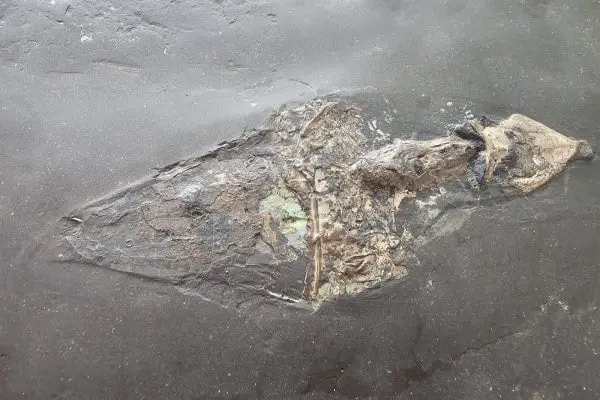
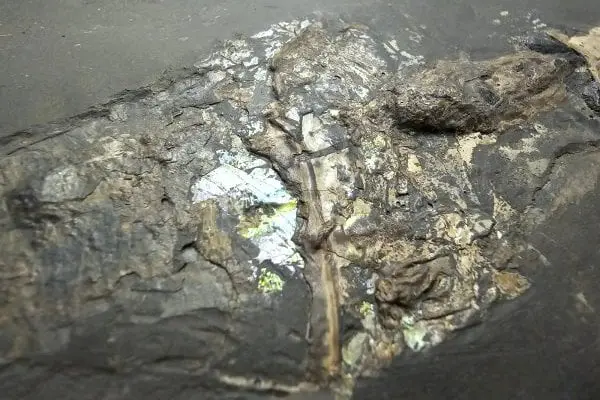
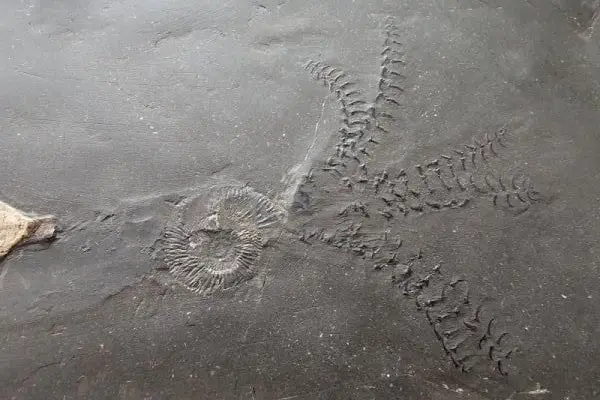
Phragmoteuthis conocauda
35×20 cm
Holzmaden; Lias Epsilon II/1 (Koblenzer)
Very rare specimen in mint condition with excellent details – a unique piece of museum quality.
Offered on behalf of the owner.
Sold on behalf of a customer.
The Primitive Squid of the Jurassic Sea: Phragmoteuthis from Holzmaden
Phragmoteuthis is a fascinating member of the extinct Belemnoidea and plays a key role in the evolution of cephalopods. While most people think of fish when they hear “Jurassic fossils,” Phragmoteuthis was one of the most successful hunters in the midwater zone of the Jurassic Sea some 180 million years ago. Finds from the Posidonia Shale in Holzmaden are unique worldwide, as they reveal far more than just the skeleton.
Biology and lifestyle
Phragmoteuthis was an octopus-like cephalopod that looked very much like a modern squid. Its body was perfectly adapted to a swimming lifestyle. Inside, it had a cone-shaped, chambered body part, the so-called phragmocone, which served as a buoyancy organ for the animal. This allowed it to float in the water and maneuver through the tank with little energy expenditure.
Phragmoteuthis had a crown of tentacles on the front of its head. However, these were not equipped with suction cups, but with numerous small, chitinous hooks. With these grasping tools, it was able to securely hold onto small fish or crustaceans. Like its modern relatives, it had an ink sac, which it emptied when in danger in order to flee from predators such as the Hypsocormus under the protection of a dark cloud.
The special feature of the Holzmaden finds: soft tissue preservation
Normally, only the hard internal skeletons (belemnite grids) of squids remain. However, the anoxic conditions at the bottom of the Jurassic Sea in Holzmaden allowed for an extraordinary level of preservation:
- The ink sac: In many pieces, the ink sac is still preserved as a deep black, fossilized dye. Sometimes the original ink can still be dissolved with water.
- Arms and hooks: The fine hooks are often visible in their original arrangement, giving a direct insight into the animal’s hunting strategy.
- Muscle outlines: In rare cases, the outlines of the mantle are recognizable as fine organic films on the stone, giving the fossil an almost three-dimensional presence.
Unique collector’s item
A specimen of Phragmoteuthis is not a “stone” fossil in the classical sense, but a delicate document of biological soft tissue. It represents the less armored, highly intelligent side of the Jurassic marine fauna and is an indispensable exhibit for any collection that wants to fully represent the biodiversity of Holzmaden.